THE TALK WITH PLUM SYKES
Murder can be most foul, but that doesn't mean it can't also be thoroughly fabulous. We talk to Plum Sykes, the Author behind Party Girls Die in Pearls.
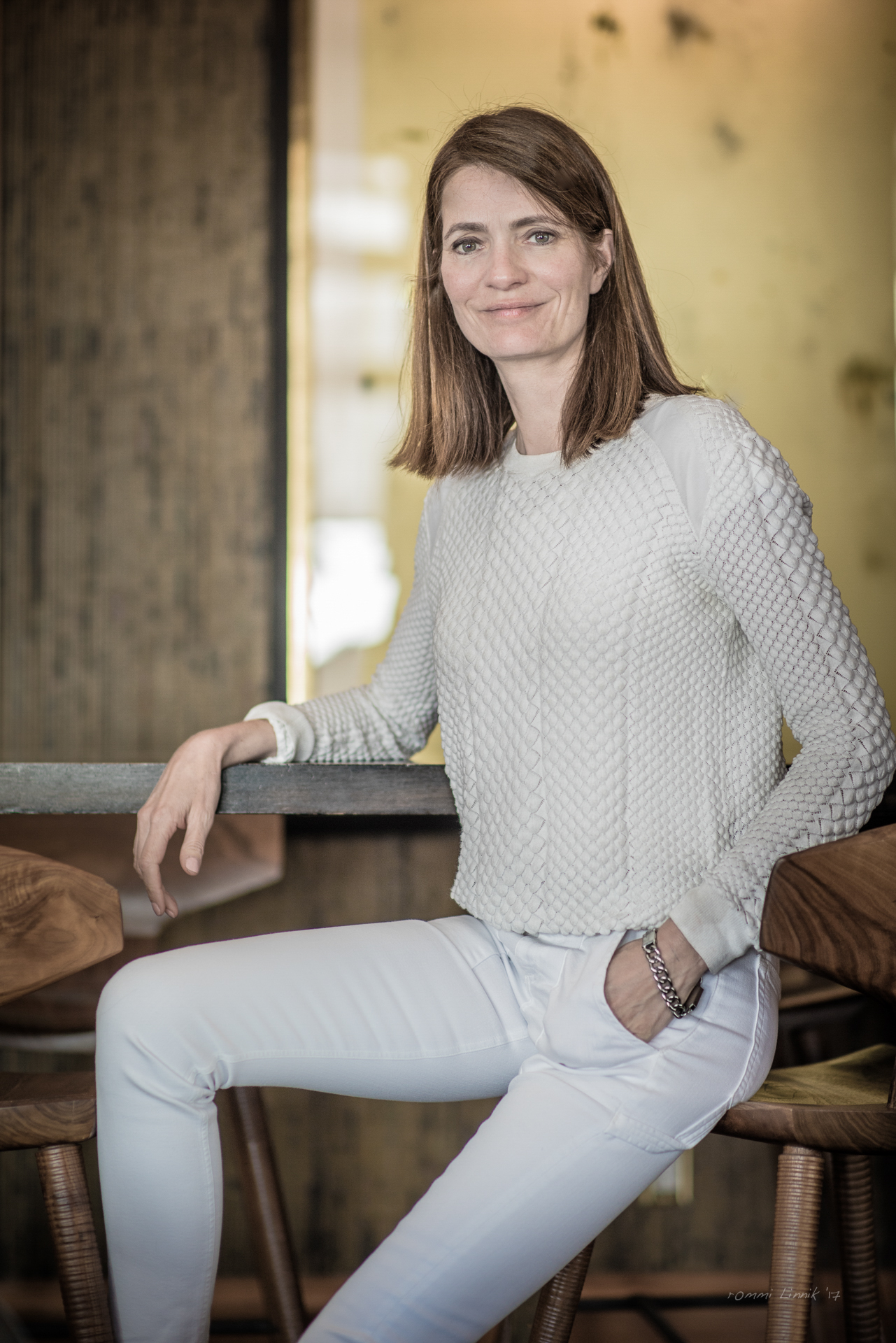
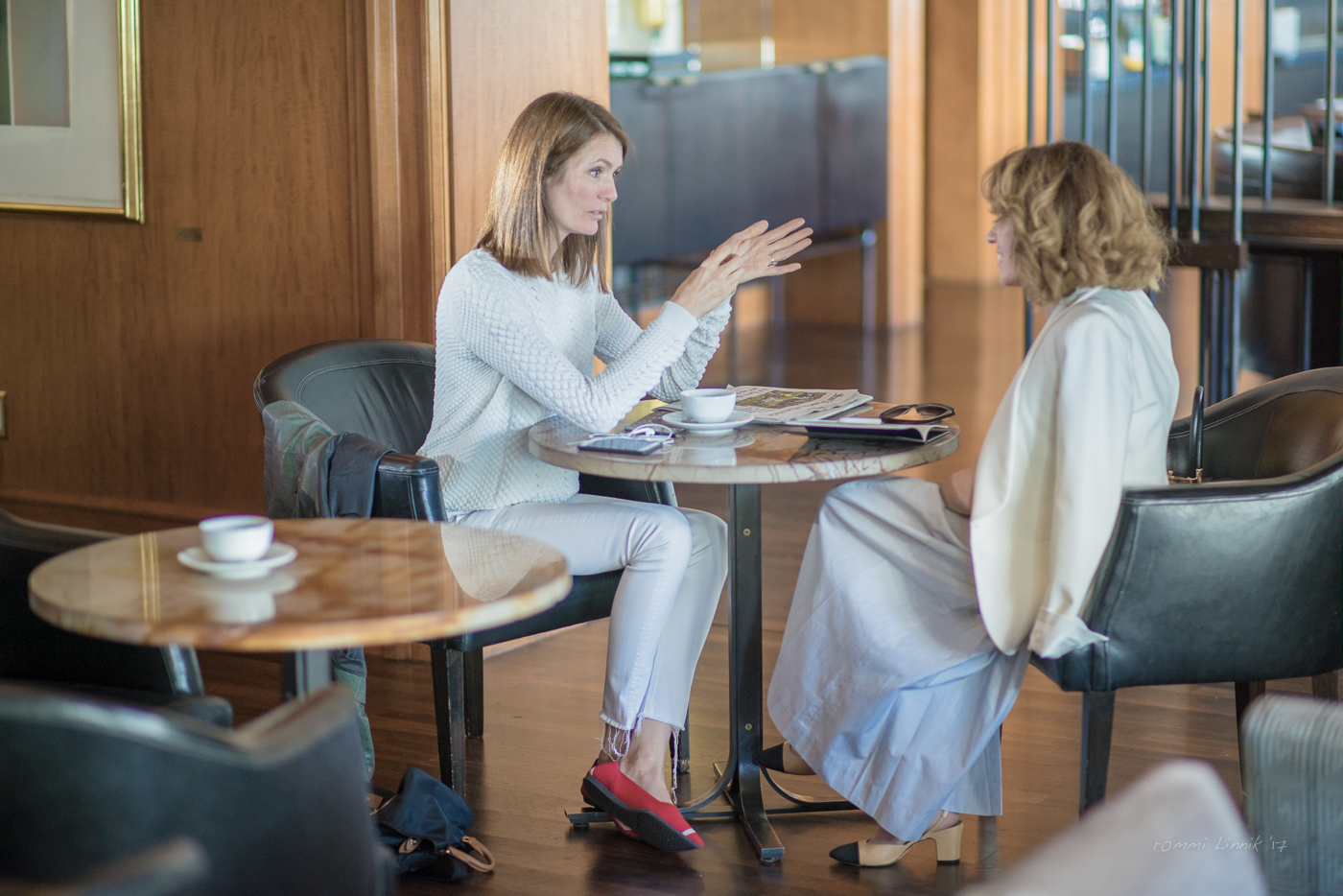
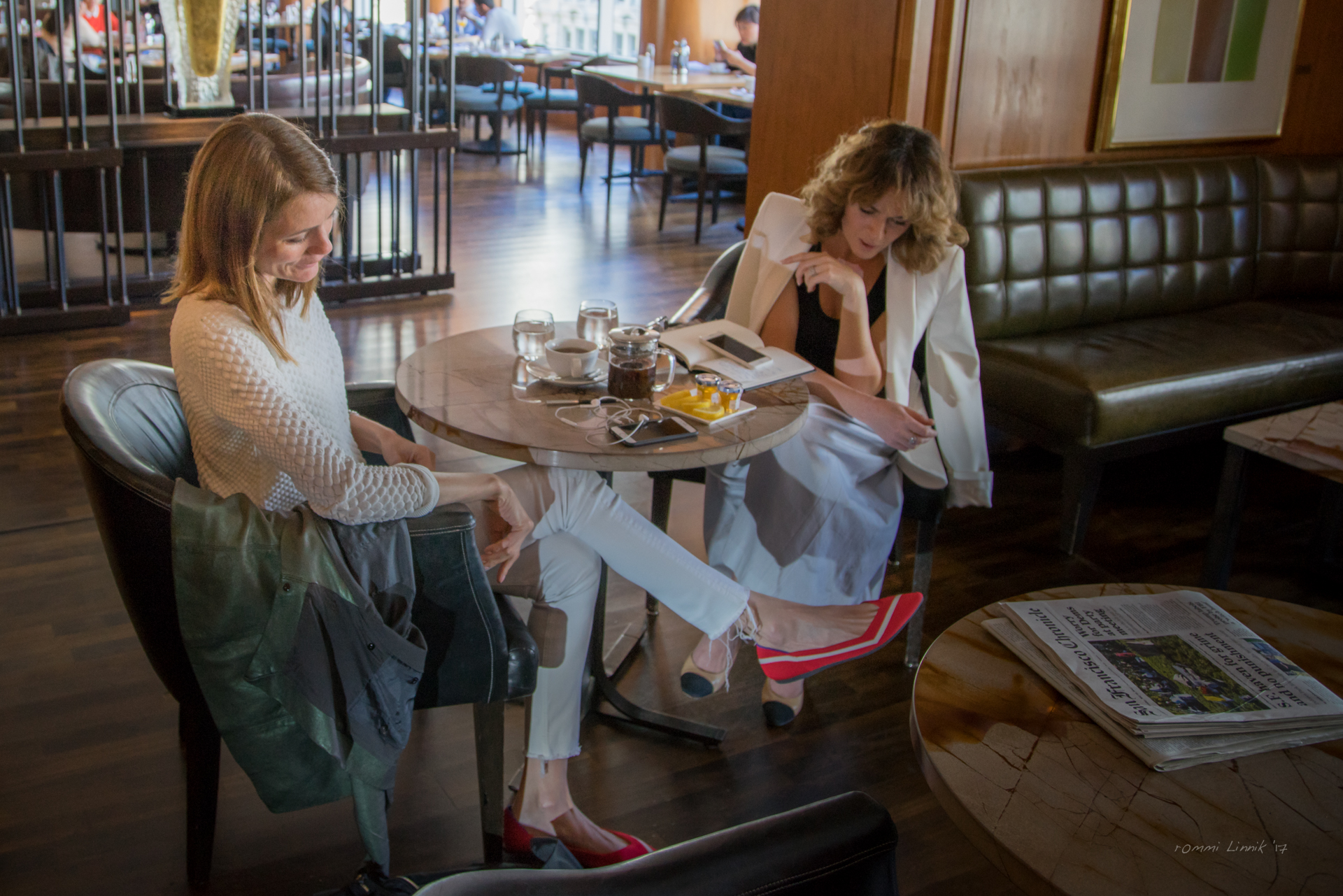
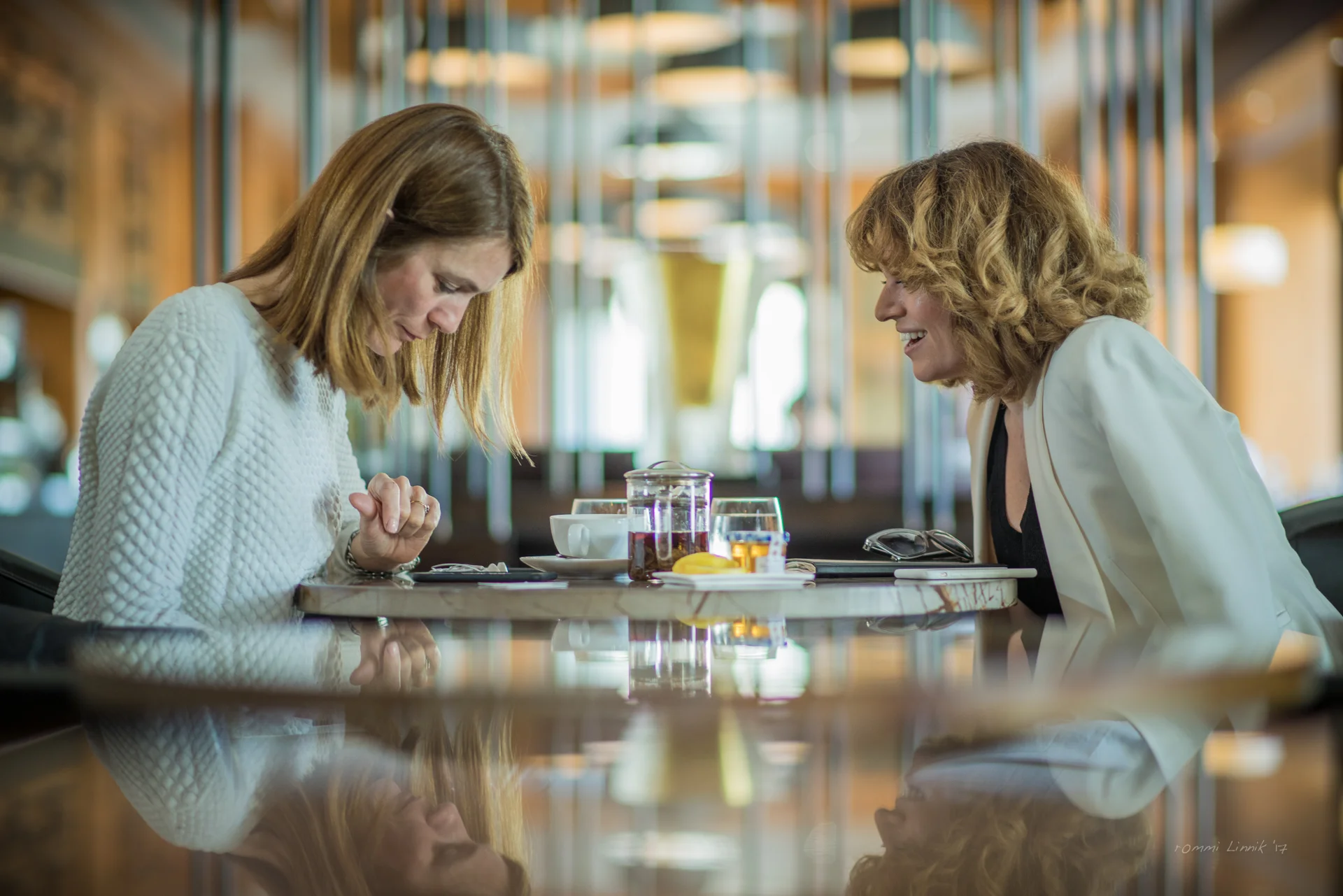
Photo by Rommi Linnik for Gazette du Bon Ton
What could be better than an afternoon tea with Oxford alumnus, muse and friend of Alexander McQueen, contributing editor to American Vogue, brilliant author and my personal idol, Plum Sykes. To say that I wasn't nervous would be a lie. Plum Sykes modeled for Alexander McQueen, graduated from Oxford, wrote three novels and works closely with Anna Wintour, nevertheless her pleasant demeanor and positive attitude was so infectious, it made our talk the most enjoyable.
Victoria "Plum" Sykes was born in London, one of six children of dress designer, Valerie Goad and father, Sir Mark Sykes, 6th Baronet, diplomat who represented Great Britain in the Sykes-Picot negotiations.
Our tea time took place at Four Seasons Hotel in San Francisco, just before Plum's book signing event at Burberry San Francisco store, where she made a stylish appearance and chatted about her new book, 'Party Girls Die in Pearls'.
You were a fashion writer for a long time working for first British Vogue, then American Vogue.
I worked for American Vogue since 1997. Long time, twenty years. I worked for them full time and I am still a contributing editor.**
What motivated you to start writing books ?
I've always loved writing since I was a child. I wrote stories for school, but I never had any confidence about it at all. Sometimes still my confidence is really low. My grandfather was a writer, he was in a very literary circle in England. He wrote historical biographies. He was very witty, funny and very clever man. A lot of my family wrote and we know a lot of writers, so for me it wasn't something new. My mother was a fashion designer, so the fashion writing came naturally. I mean when I went to Vogue, I didn't have to go to Saint Martins to learn about fabrics, I already knew all of it from growing up. **
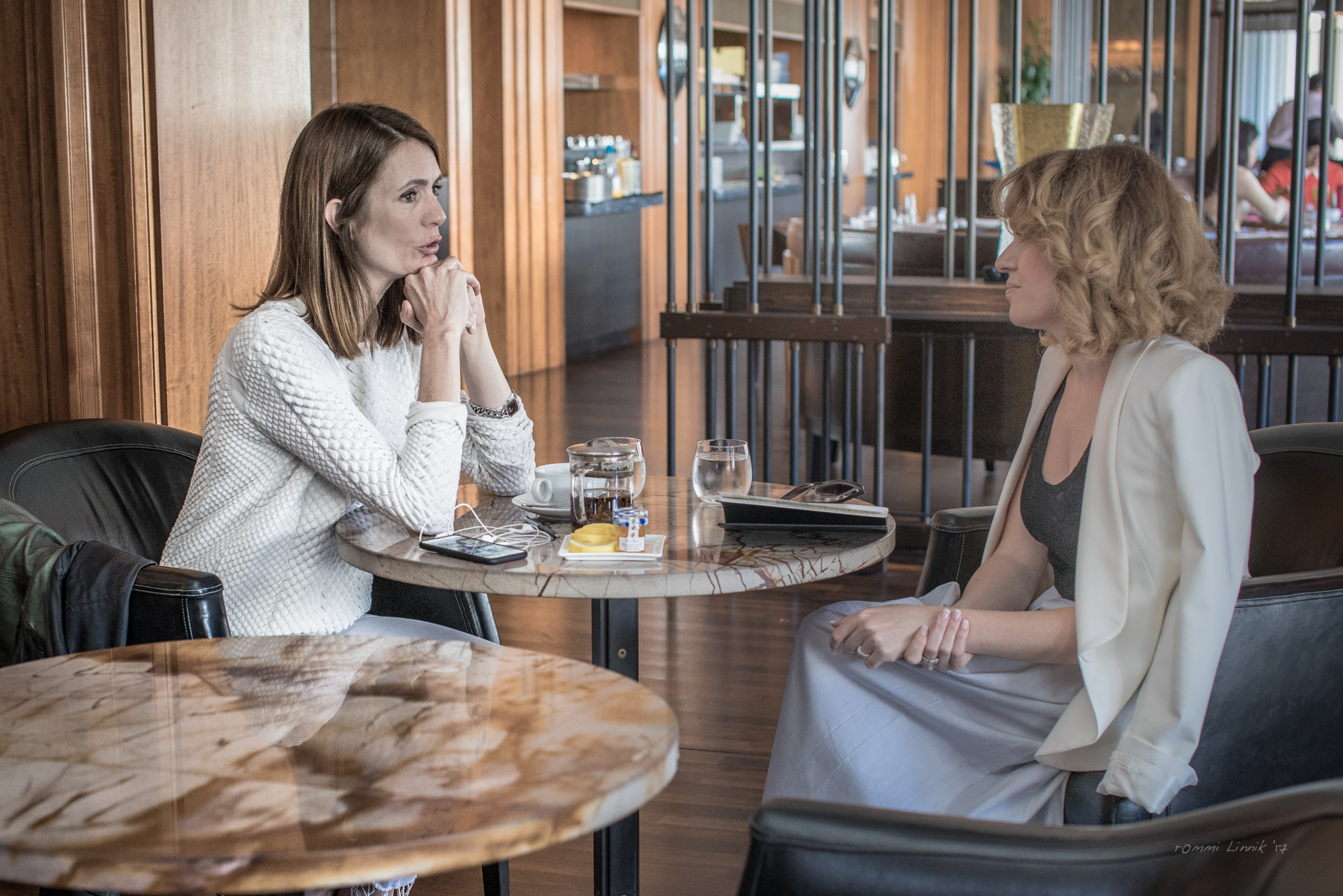
Photo by Rommi Linnik for Gazette du Bon Ton
You started as an intern for British Vogue?
Yes, I started out as an intern writing for British Vogue for a month and then I got a job with them. I was in my early twenties. When I turned twenty seven I moved to an American Vogue.**
How did the idea about writing a book come up?
This is my third book . The first book came up after writing about a lot of Park Avenue princesses for the magazine. It was so funny and so entertaining that I thought, hmmm, maybe I can turn this into a book and soon after Bergdorf Blondes became my first book.**
I've read from one of your interviews that it was Anna Wintour who gave you the idea for writing.
I was writing a column for the magazine that was about these girls and Anna said to me, "This could be a book one day".**
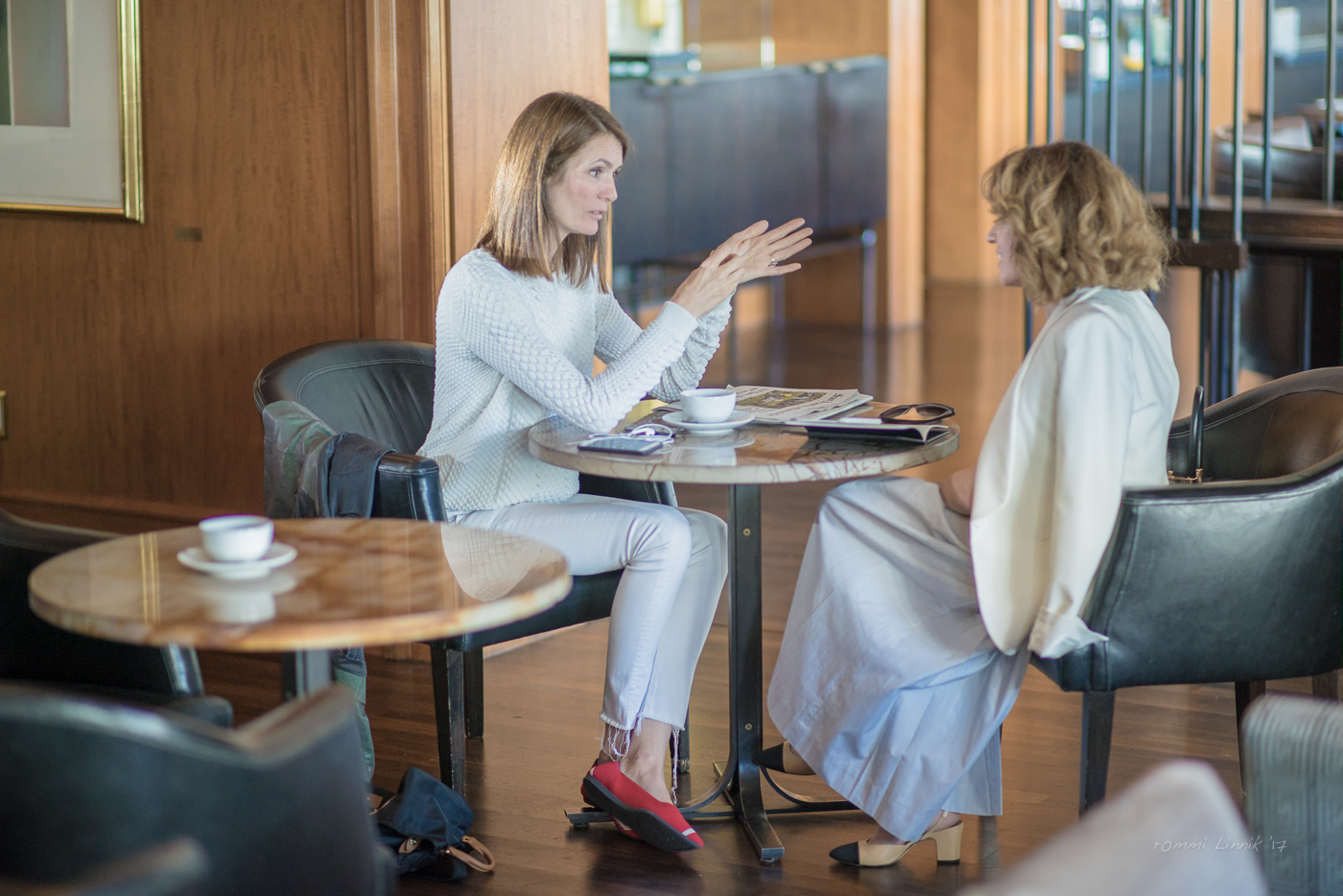
Photo by Rommi Linnik for Gazette du Bon Ton
Party Girls Die in Pearls is based on your experience while being a student at Oxford University?
Apart from the murder. (laughing) **
Is this a murder mystery book?
One of the critics described it as Clueless meets Agatha Christie. So, it's actually is a comic murder mystery. It does have the murder mystery, but it's not particularly dark. Even the murder scene is Glamorous. I wasn't wanting to write something that was very, very dark, very frightening book. I basically wanted to write another sort of high society comedy. **
Can you share your experience during your time at Oxford, which are source of inspiration for the book?
The book is about two girls who arrive for their first weekend at Oxford and they are expecting lots of books and ball gowns, and they come across a body. Their mission is to solve it. Along their way, they go to lots of parties, black tie, white tie, champagne and all that stuff. When I arrived to Oxford back in 80's I was hoping that it was going to be very social and it turned out that it was far more social that I could possibly imagine. It was obviously lots and lots of work, but there was lots and lots of socializing and lots of parties, and it was very glamourous. **

Photo by Rommi Linnik for Gazette du Bon Ton
Were there a lot of snobby people at Oxford?
I wouldn't call them snobs, necessarily, but they were definitely posh. There were a lot of very privileged private school kids. The majority, particularly in the 80s, which was the time when I was there, were like, the ultra, ultra privileged British. In a way, as a subject to write about, that made it more amusing to write about. It wasn't politically correct. There were far more man, than women, that kind of stuff, but it did mean that it was the fun thing to write about. There were lots of kinds of Sloane Ranger kids and kids who wanted to look like the Kingsroad girl.**
Are characters Ursula and Nancy based on any real life characters?
My daughter's name is Urusla. She is only 10. But it's not really based on her. I would say the Ursula character is an English country girl. She is my kind of English Country girl alter-ego and Nancy is a New York girl and she is my kind of New York girl alter-ego as well. All these characters come from your own heart. Particularly with an American girl, I went to research to know what it's like for an American girl to go and study in London. Because it seems so weird to them when they come there, they go "Oh My God!" . Everyone in American college wear sweatpants and sneaks, but it's very different in London. It was really fun talking to some of these American girls who've done that. They loved the dressing up part, they absolutely loved dressing up. **
It's surprising to know, as you don't see much enthusiasm in American girls to dress up in colleges here.
There were so many parties in the evening and everyone would dress up. If everyone else is doing it, you would start doing it too. One girl I spoke to, American girl, she had to get an entire evening wardrobe so she could go to Oxford University. **
There is definitely a difference between European girls and American girls.
Yes, big difference.**
Talk about the murder part? Is it based on a true murder at Oxford?
Funny enough there was one case while I was there. There was a case of a student who had killed his girlfriend. And I think maybe when I was thinking about that, I wanted to do this book set in Oxford, there must have been some atmosphere that was coming back to me, that I was thinking I want this book to be a comedy, but I want it to be a bit spooky too. **
Who are some of the other authors do you relate to, love?
I love reading Agatha Christie. I love watching CSI, America's Most Wanted. I love comic books, like Nora Ephron, but I also do love true crime stories. I love Stephen King. So, in a way it was a progression from my other books which were comic novels. I was thinking can I add murder mystery and still keep it a comedy and I actually think it's still really is a comedy. The girls who are reading it, the feedback that I am getting is that they love it.**
Your style is incredible. Whose style, designers are you loving right now?
Obvioiusly I am wearing a lot of Burberry at the moment. I love Burberry, I love Christopher Bailey. I also did a party in New York with Zac Posen, I love his work. My style for the daytime is basically a uniform. I am always in some kind of pair of jeans. Right now I am wearing Rag & Bone, J Brand. I love MAJE. These shoes, by the way, are from Rothy's and they are made of recycled water bottles. They are so comfortable and you can put them in the washing machine. In the really classic part of me, there is a tailor in London, called Henry Rose, who I found through Stella McCartney, he used to work for Stella. If I need a jacket, he'll make a jacket for me. In the last 15 years he's made four suits for me. I love to have a really proper jacket and I am much more likely to buy a jacket from him now, than a brand.**
What about emerging designers. Who is your favorite?
In Vogue this month, they wrote about this fashion collective. It's not Vetements. The guy behind it is Christophe Decarnin, who was behind Balmain before Olivier Rousteing. They are very cool. I don't own any of their clothes, but I am in full admiration for them. Today the brands have gotten so big and so impersonal, but now it's all about personality again. There is another designer who I really love is called Anna Mason London. Just like the books. I always read new authors, but I love the traditional. I love to read my Jane Austin, but I'll try a new book as well.**
Do you reference Fashion in your books?
A lot. There is lots and lots of reference to 80's fashion. In fact, the clothese are almost a character in a book, because the American girl has this incredible 80's party wardrobe that she's got at Bloomingdale's and it's all about yellow ball gowns with polka dots, very 80's. The funny thing is, when I was writing about it, it felt like I was writing about clothes from now. Those 80's clothes keep coming back. The fashion icon for the American' girl character Nancy in the book is Ivana Trump, because back in the 80's she was such a fashion icon with those big shoulder pads. There is lot of reference to hair and makeup. It was really, really fun to write about.**
Every writer dreams to bring their book to life. Would you want to see one of your books on big screen one day?
Of course! It would be a dream to see it on big screen. But it's years and a lot of money and a lot of people invovled who really have to believe in it.**
What advice would you give to a new writers today?
New writers have to be internet savvy, very savvy about social media and they've got to be able to write long and short pieces.**
What is next for Plum Sykes?
I am promoting my book in England. Then I am going on a holiday to Hamptons and to Ireland as well. Then sometime in September I will start writing a sequel to Party Girls die in Pearls . I will continue writing for Vogue throughout all of this of course. I feel like I've slightly neglected my Vogue stories because I was so busy with the book, so I wll try and write more for Vogue again.**










THE TALK WITH MISHA GREEN
An American television writer and producer, best known as creator and executive producer of the historical period drama Underground
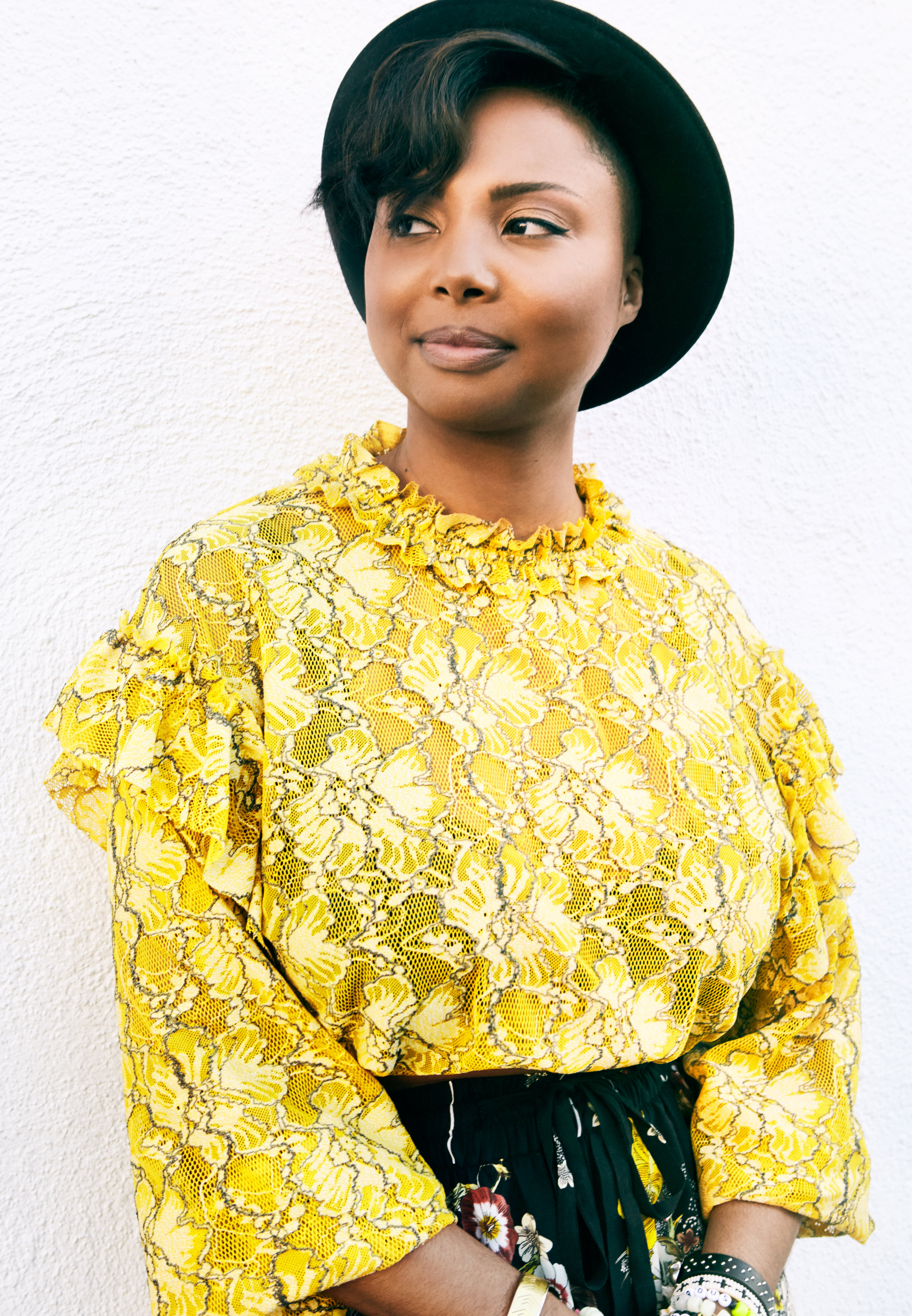
Photography Ryan West for Joliegazette.
Misha Green is bold in her writing and producing, and has been unwavering in her efforts to make sure the story of the Underground Railroad is told with an unapologetic truth and a focus on strong female characters.
The 32-year-old is a creative force behind the hit drama Underground produced by John Legend. Misha has written for shows like FX’s Sons of Anarchy and NBC’s Heroes. Her writing career began when she gratudated New York University and moved to Hollywood. Green got several gigs writing for Heroes, Sons of Anarchy, and Helix Her after landing on the Black List–a service that connects screenplays to producers, studio execs, and directors. Since then her career has skyrocketed. Green’s latest project, WGN America’s Underground, has millions of people tuning in and talking each Wednesday night. Green created Underground in 2016, together with fellow Heroes alumnus Joe Pokaski. Underground is a period drama about the Underground Railroad, which takes place primarily in the Antebellum South and bordering free states of the North. The first season premiered on WGN America on March 9, 2016 and the show received an overwhelmingly positive critical response. We caught up with Misha before the season finale.
Juliet: What were you like as a child?
Misha: I got a dollhouse for Christmas when I was 6 and I never stopped playing with it. I didn’t have just one imaginary friend, I had entire imaginary worlds inside the walls of that pink and white plastic dollhouse. On the outside I was mostly quiet, kept to myself, but on the inside, in my head, I had all the adventures a girl growing up in the suburbs of Sacramento could imagine. And I imagined a lot.
Juliet: What books have fortified you as a writer?
Misha: My favorite genre is horror, so Stephen King’s IT is at the top of the list of books that have inspired me. It sparked my love of genre, and this idea of exploring metaphorical problems through a physical monster. Pennywise is still the face of every villain in my head as I write.
Juliet: Underground is based on the darkest American History. How did the idea for the show Underground Railroad come up?
Misha: Sometimes you don’t realize what really sparks an idea. More often then not, it’s a feeling. Something inconspicuous happens, like your sister saying the Underground Railroad might be a good idea for a TV show, and you thinking, “Wow, Underground is a good title…”, and that sits with you, and then you tell a writer you worked on Heroes with, Joe Pokaski, who will eventually become your co-creator, that you’ve thought about doing a show about the Underground Railroad, and he says he’s going to do some research, and then you start researching together, and that takes you to the enslaved narratives at the Library of Congress, and listening to formally enslaved people tell their stories in their own voices, that’s when the feeling you didn’t know you had, hits you: those who were enslaved suffered, but they also laughed, and loved, and fought back. Those are the stories that have been missing from the collective consciousness. That feeling you had, you were tired of seeing the occupation, and ready to see the revolution. That’s the DNA of Underground.
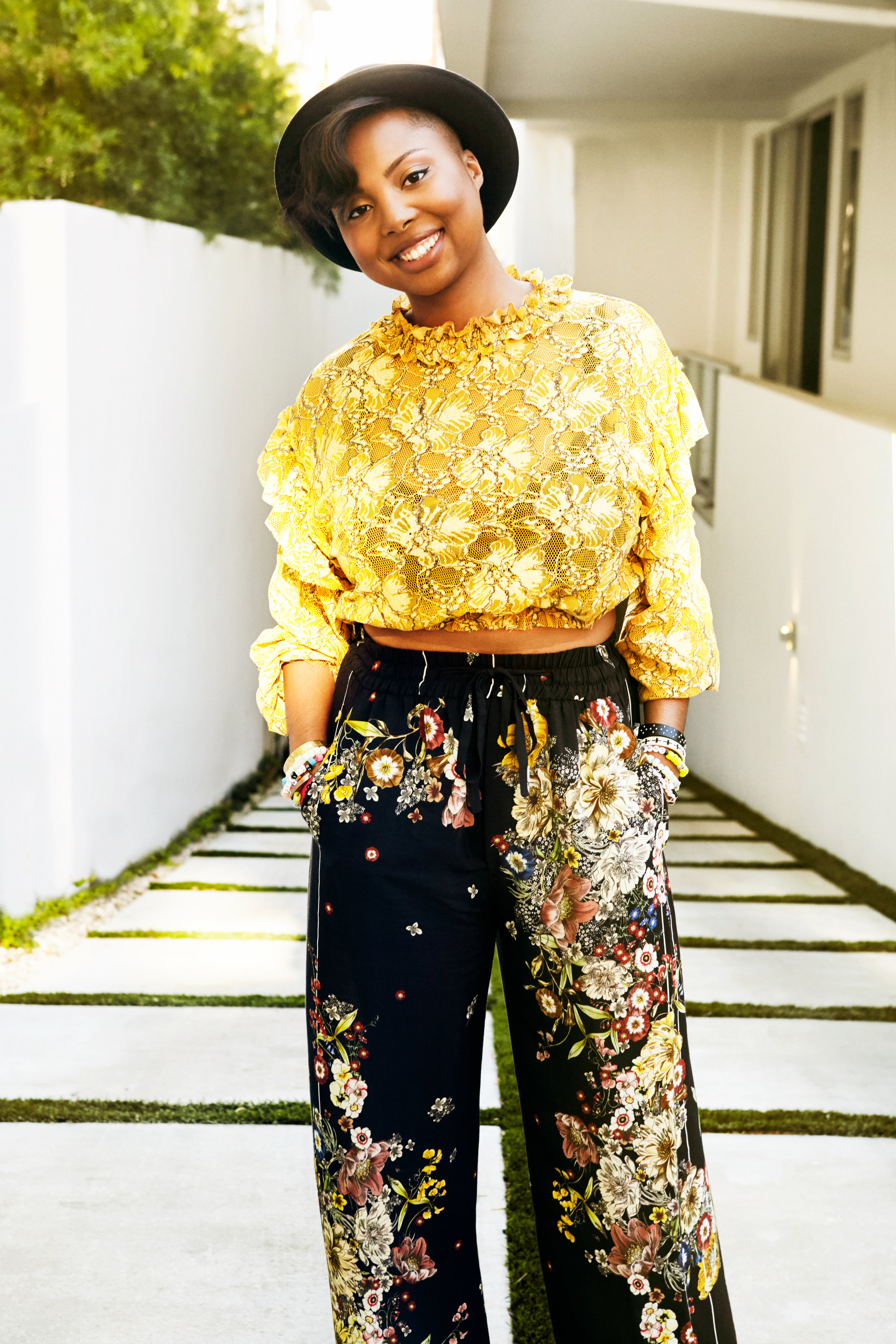
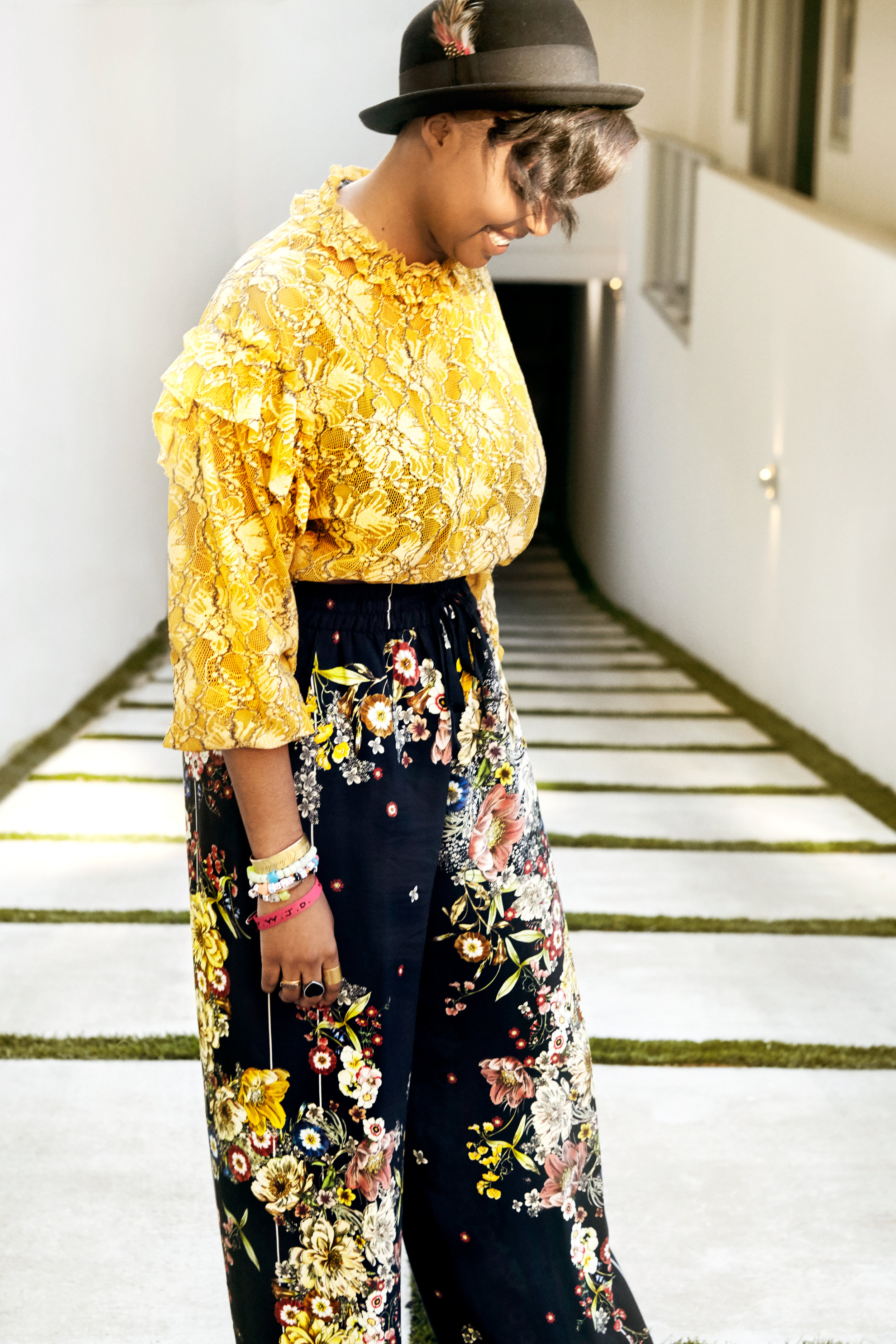
Juliet: What / Who inspired you?
Misha: Maya Angelou inspires me. She was a phenomenal woman, and she made a conscious effort every day to be a phenomenal woman. She said, “We need the courage to create ourselves daily. To be bodacious enough to create ourselves daily.” Those are words to live by. **
Juliet: It is such a sensitive subject for the show. What is your number one goal as showrunner?
Misha: My number one goal as a showrunner is a selfish one. I love to tell stories, and that’s where it starts and ends: with a good story told well. Everything after that is icing on the cake.
Juliet: Tell about music for the show? What is it like having John Legend producing the show ?
Misha: We figured out early on that we wanted to use contemporary music in the show, we wrote Kanye’s “Black Skinhead” into the pilot script. Mixing contemporary music and period music is a delicate balance, and we also knew we wanted to bring on a musical “godfather” who could help us strike that balance. John Legend came on board and did just that. He really worked with us and our composers, Laura Karpman and Raphael Saadiq, to mold the sound of Underground.
Juliet: How did you go about building the cast for the show?
Misha: Our actors fought for their roles. They came in with passion, and they attack every scene with that same passion. We love to challenge our characters, and our cast is always up for the challenge. It’s freeing to know there’s no limit when you’re writing, because our cast can do anything.
Juliet: What impact do you think these stories will have today. What can modern America learn from this?
Misha: There has been a lot of talk about the parallel’s between that tumultuous time in American history and today, but through the research done for Underground, we see that it’s not so much a parallel, as a continuation. A lot of the issues we face today in this country, were born during this time, and they’ve never gone away. It’s only through understanding the root of it, can we hope to change it. What I’ve learned making this show, is that it’s possible to fight back. This season we introduced Harriet Tubman, and in researching her life, we tried to find the woman behind the myth, and what we found was that woman was pretty mythical. We can all be Harriet Tubman’s.
Juliet: Is there a particular actor / actress that you'd like to see play in Underground? Who?
Misha: Angela Bassett was in an episode this season. I’m still recovering from that.
Juliet: Is there anything you can share about the storyline(s) for season 3?
Misha: We’re getting excited as we get closer and closer to the Civil War when the Underground became a natural spy network for the North.
Juliet: What is next for Misha Green?
Misha: More Underground.
Photography Ryan West for Joliegazette.
“Green and Pokaski deserve a huge chunk of praise for writing such an episode — the term ‘tour de force’ comes to mind.”
“Unlike anything the frequently heart-pumping and heart-stopping drama has even done before”
“A unique hour of television” and “Remarkable ‘Underground’ Episode”
Sponsored.
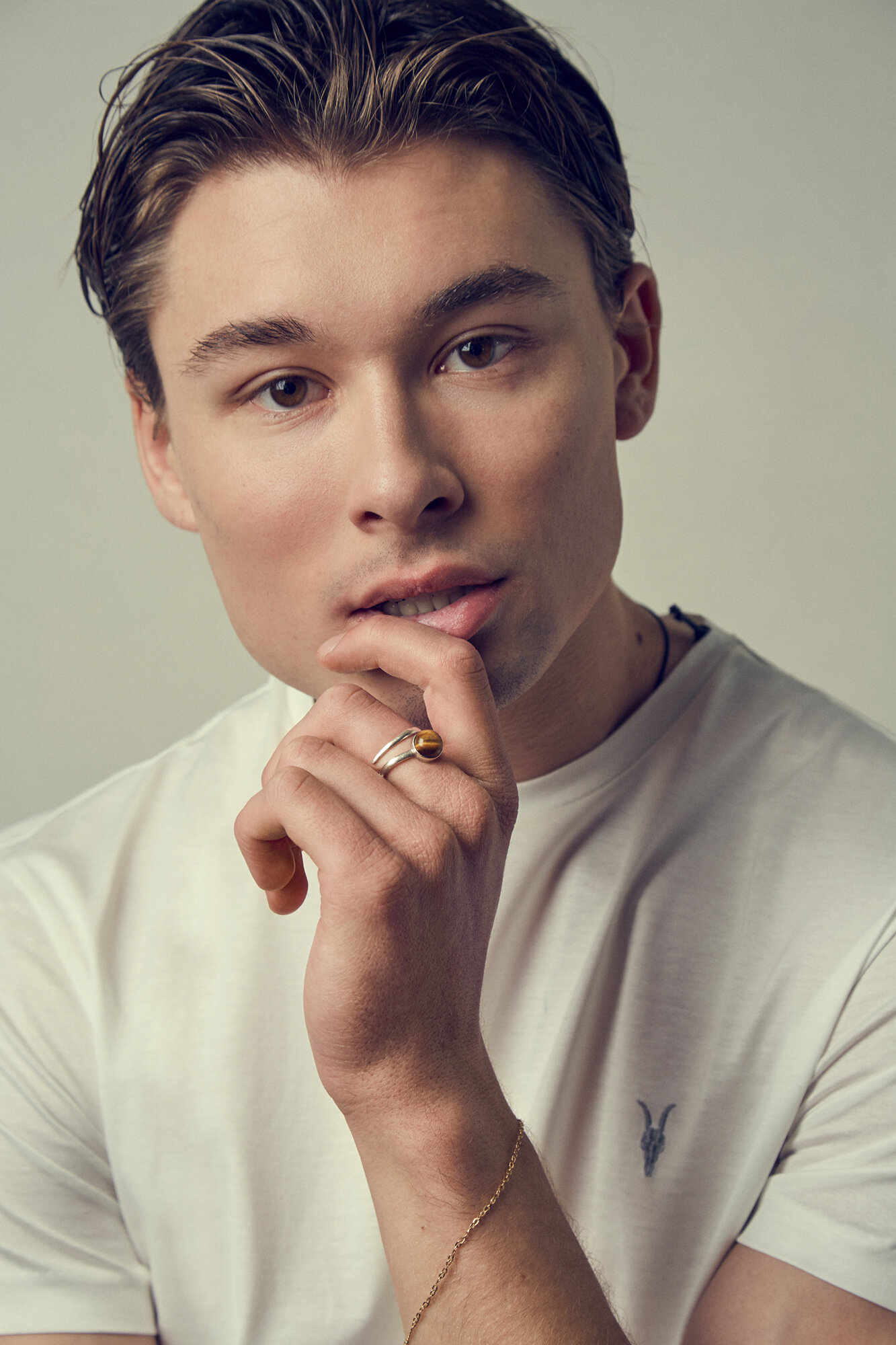




THE TALK WITH SIMON DOONAN
Simon Doonan about his humble background, working with Diane Vreeland, the Swinging Sixties and so much more.
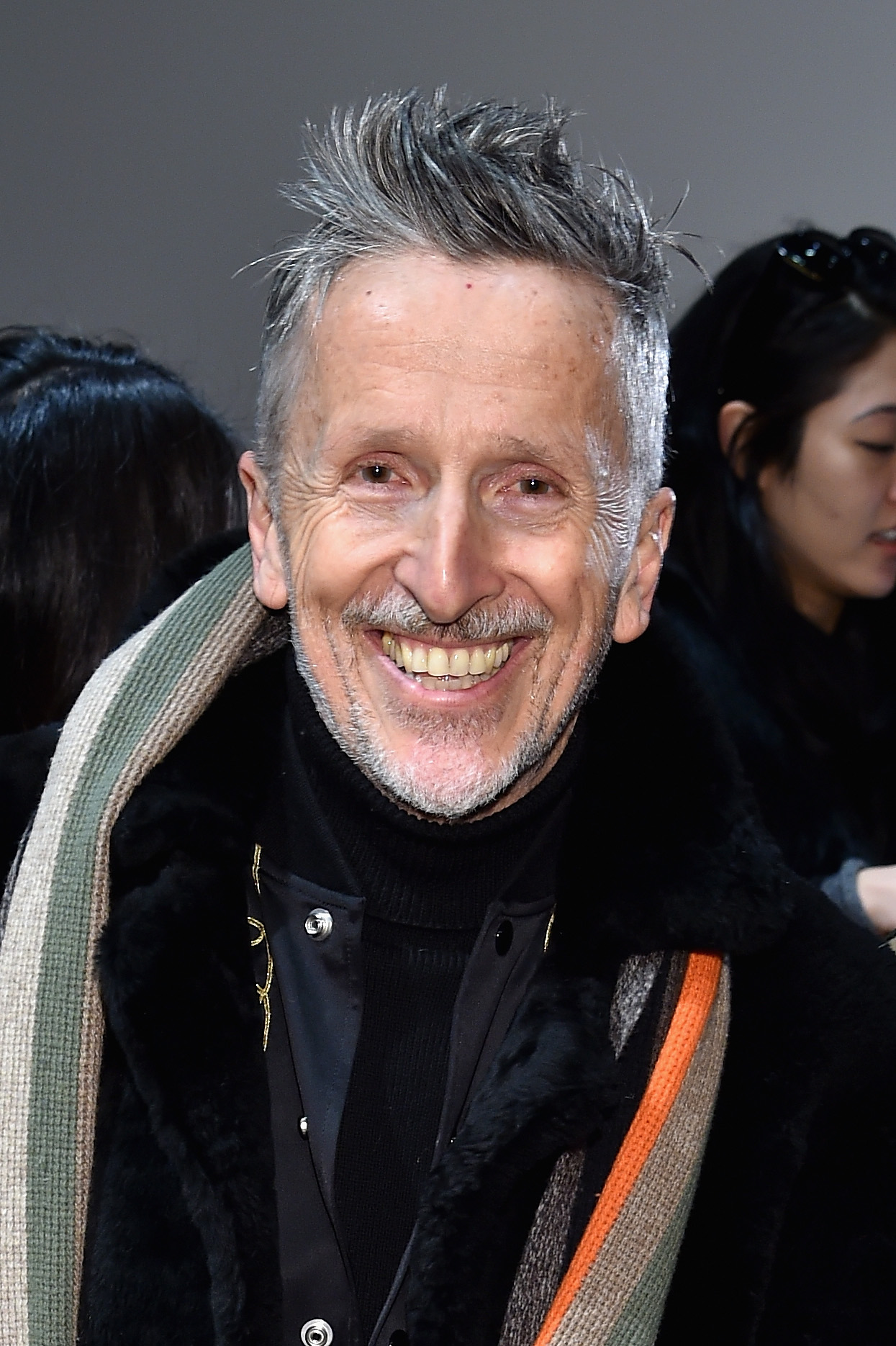
Photo by Dimitrios Kambouris/Getty Images Entertainment / Getty Images
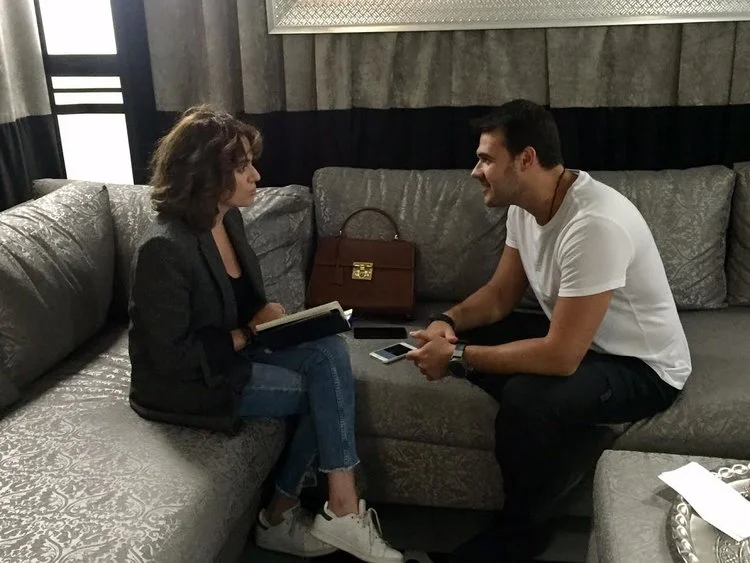
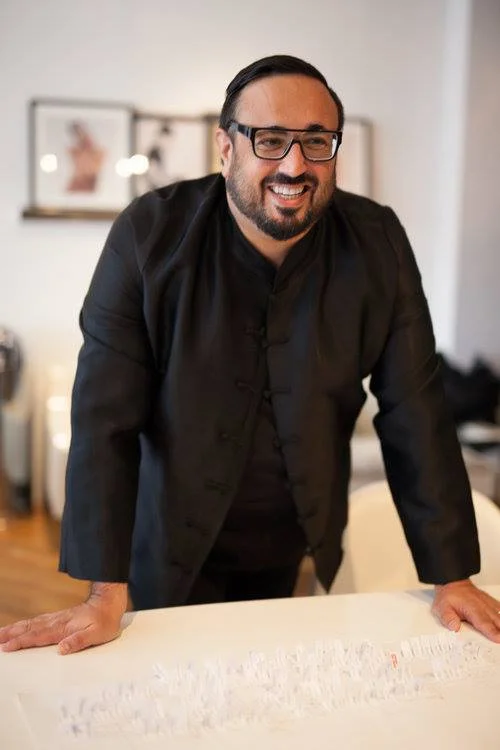
Practically speaking, Simon Doonan is one of American fashion's iconic characters. Writer, Bon-Vivant, media personality, famous window dresser, Creative Ambassador-at-Large for Barney's New York , Simon Doonan is a man of many talents. He was a guest star on three seasons for America's Next Top Model to teach the models about style. He has appeared on Bravo's Fashion Hunters to authenticate an Issey Miyake piece, judge on Iron Chef America for Battle Sparkling Wine, he escorted Blair Waldorf on Jenny Packham's show in Gossip Girl's fifth season "The Jewel of Denial." Doonan made a cameo in an Alexander Wang advertisement with comedian Anjela Johnson's character Bon Qui Qui and the list goes on. For someone who's reached such an influential position in the fashion industry, Doonan has a remarkable personality.
Juliet: Simon, what were you like as a child?
SD: I was born in Post-War England in a rooming house, surrounded by lodgers and crazy relatives. I was a terrified/amused spectator. The Swinging 60’s came along and I started to find a groove.
Juliet: I love that you build your career from the bottom up, it wasn't given to you. You gradually worked your way up and rose to the top. Could you please share your story with us. What were some of the great lesson you've learned along the way?
SD: I never tried to build a career. My drive came from desperation. I craved financial independence. My focus was always on finding a way to pay my bills. Along the way I discovered my need for creative stimulation.
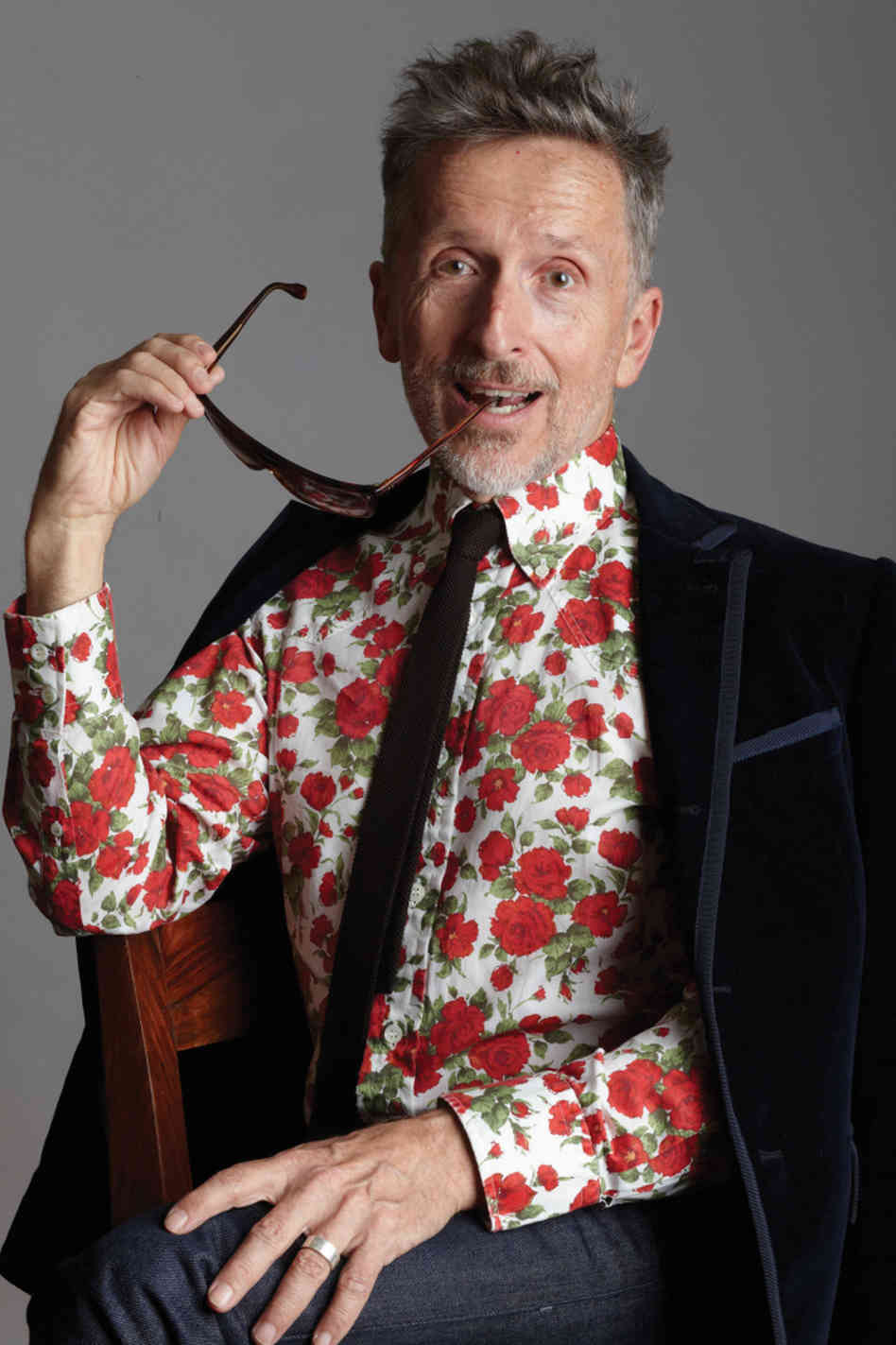
Photo Albert Sanchez.
Juliet: What was it like working for Diane Vreeland in New York?
SD: She was a genuinely unconventional person. She understood the tastes and the mores of the bourgeoisie but she herself was a visionary and a rule-breaker.
Juliet: Who are your style icons, past and present?
SD: I like anything which is excessive and expressive. I gravitate towards theatricality and glamour. My style icons are Bowie, Liberace, Carmen Miranda, The Kinks, Louis XIV, James Brown, George Clinton, Lady Gaga and Bruno Mars.
Juliet: What would be your top 3 style tips for men?
SD: Stop worrying about what other people think. Stop being self-critical. Buy a leather jacket.
Juliet: Your style is so fabulous and you are so incredibly talented at what you do, have you ever thought about having your own clothing line?
SD: I cannot think of anything more horrifying. Designing, manufacturing,wholesaling, and distributing clothing is VERY challenging. I have tremendous admiration for people who go into this field. It takes enormous guts and resilience.
Juliet: Do you think that in the past, it was easier to succeed in the business of fashion, or is it better now?
SD: In the past it was easier to have fun in fashion. Rents were so cheap that you could open a boutique and fill it with strange ideas and create your own little Warhol factory, and then close it when you got bored. BUT, overall, things are better now. The landscape is infinitely larger. Fashion has become a global spectator sport. There are more opportunities and points of entry for everyone.
Juliet: Do you think we should never be writing about Silicon Valley clothes? And if you had to, what would you say?
SD: Silicon Valley is changing. The successful people are learning the joys of playing dress-up. They are becoming more connoisseurial about fashion.
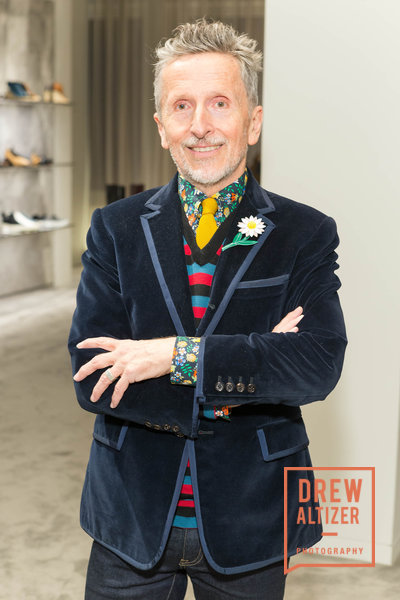
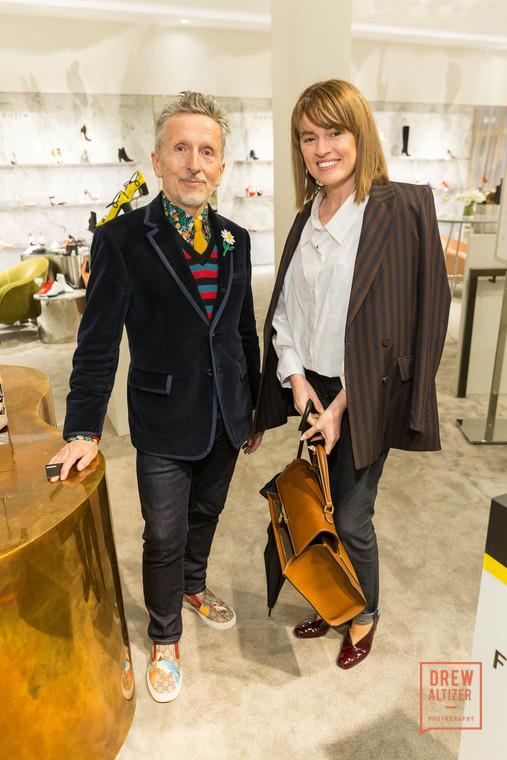
Juliet: What is the best part of your job as Creative ambassador at large for Barney's New York?
SD: I love watching people shopping and buying new clothes. Clothing is transformative. Fashion is life-enhancing. I am a retailer.
Juliet: NYC is now home to you and your spouse designer Jonathan Adler, now, what are your favorite spots around town?
SD: We love Saint Ambroeus, Cafe Cluny and Il Cantanori.
Juliet: What is next for Simon Doonan? Are you working on a new book?
SD: My new book is all about the relationship between Soccer and Fashion. I have been working on it for three years. It comes out 2018 - the next World Cup!!!
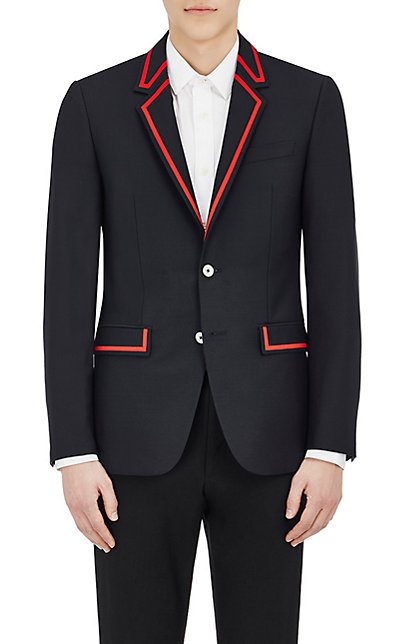
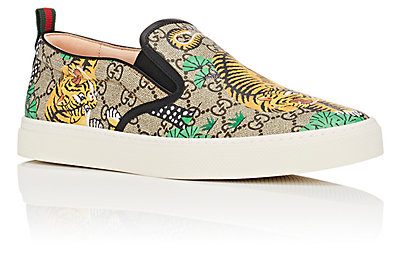
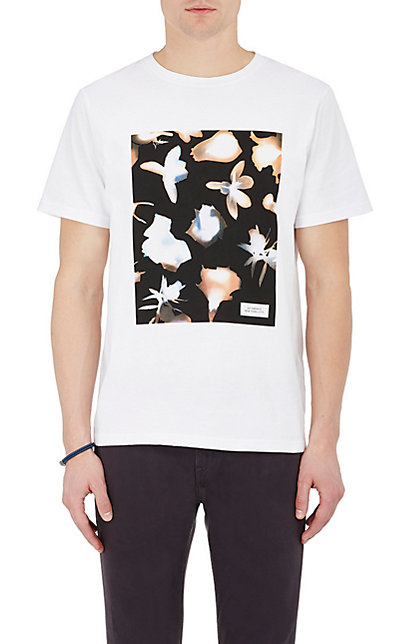
SHOP BARNEYS
THE TALK WITH BRANDON MAXWELL
GAZETTE DU BON TON IN COVERSATION WITH DESINGER/ STYLIST BRANDON MAXWELL
“My entire design process takes place on a real woman, as she moves through the studio. It’s important that the clothing is impeccably tailored and makes her feel beautiful and powerful.” Brandon Maxwell
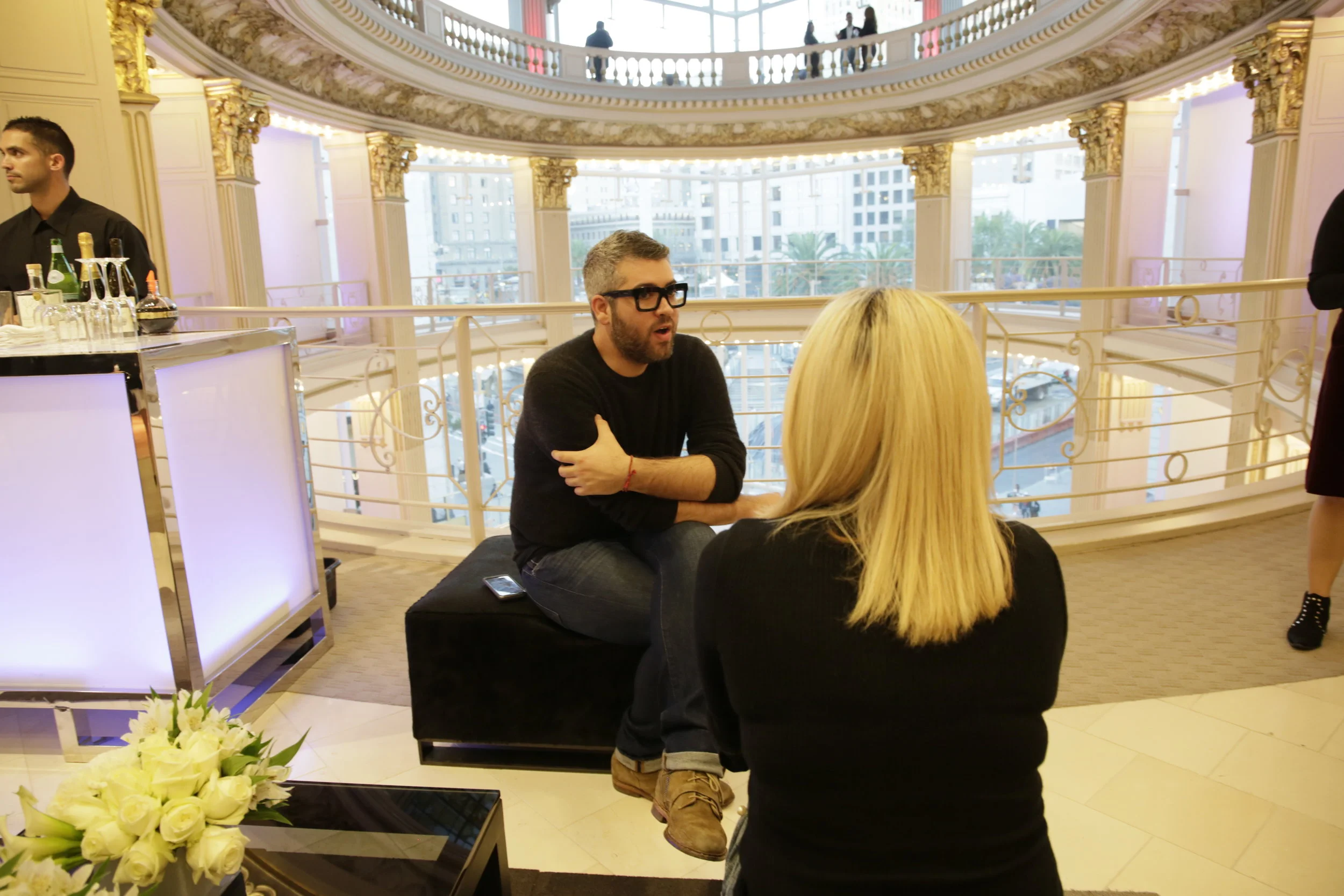
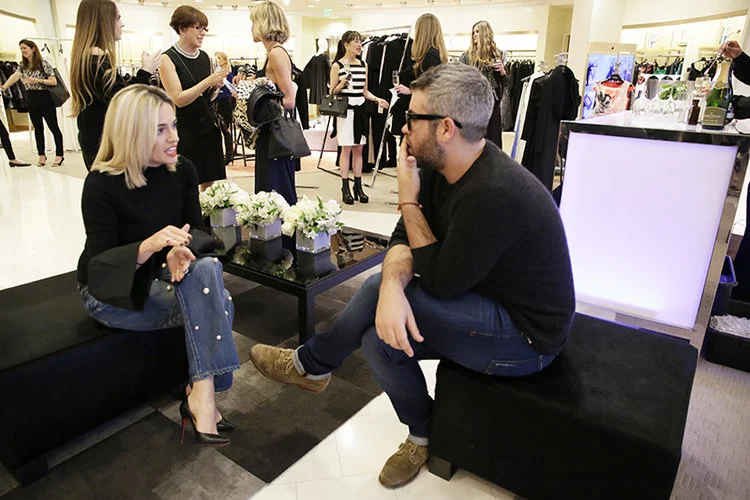
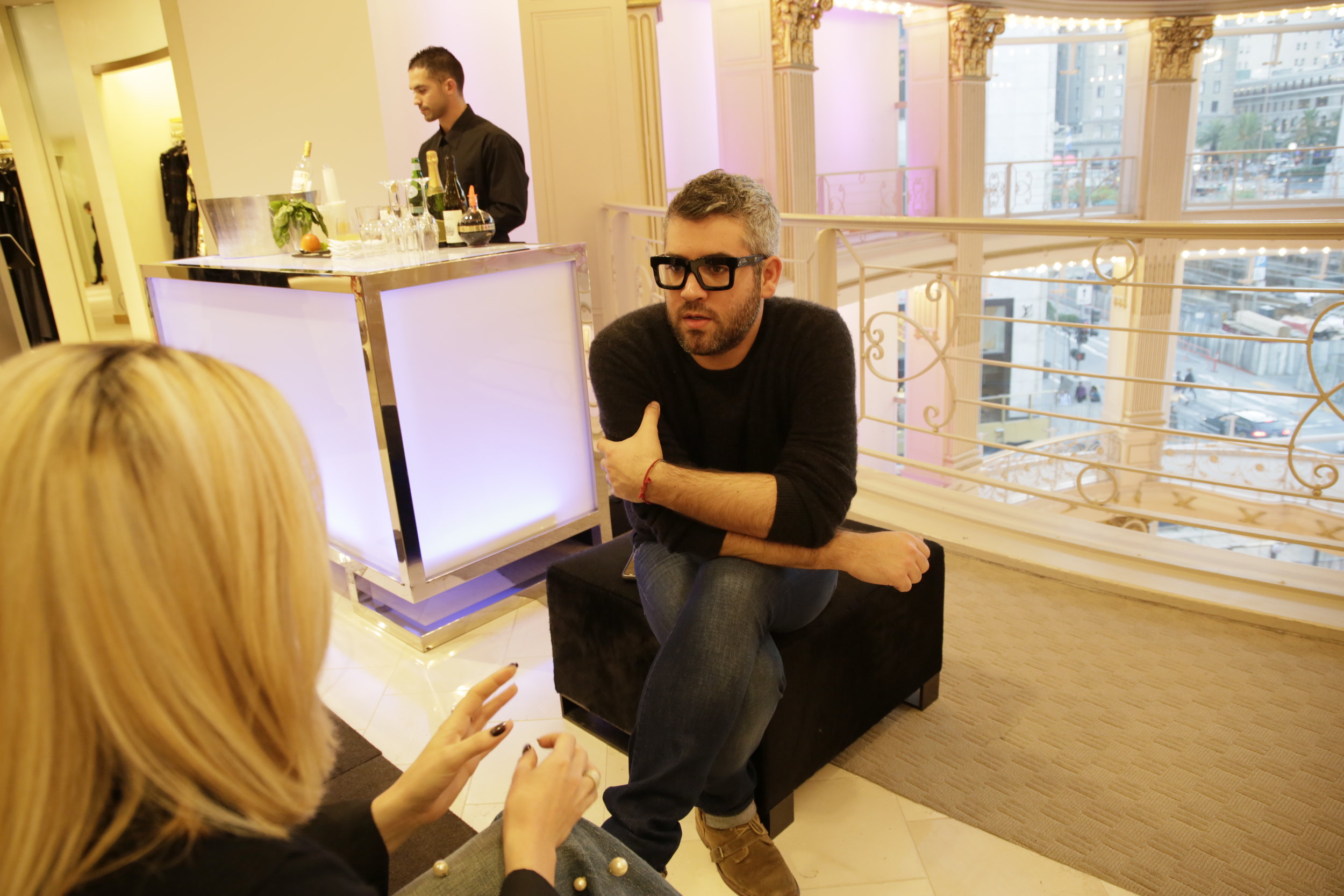
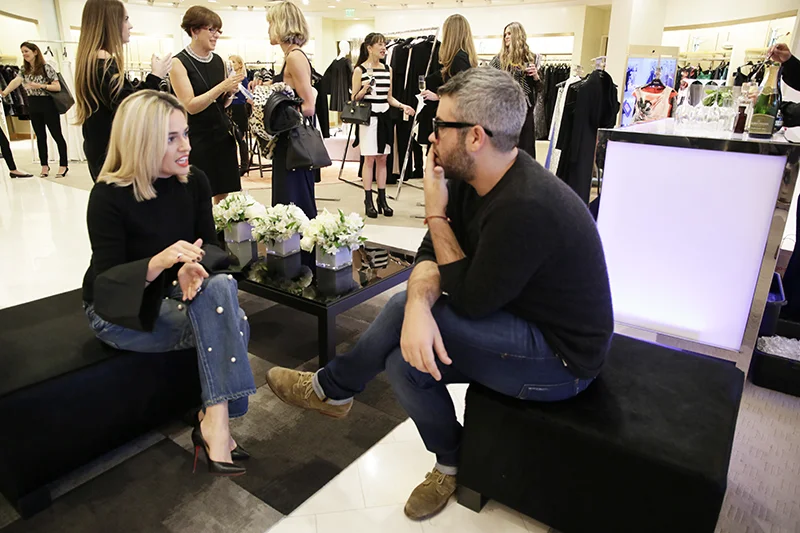
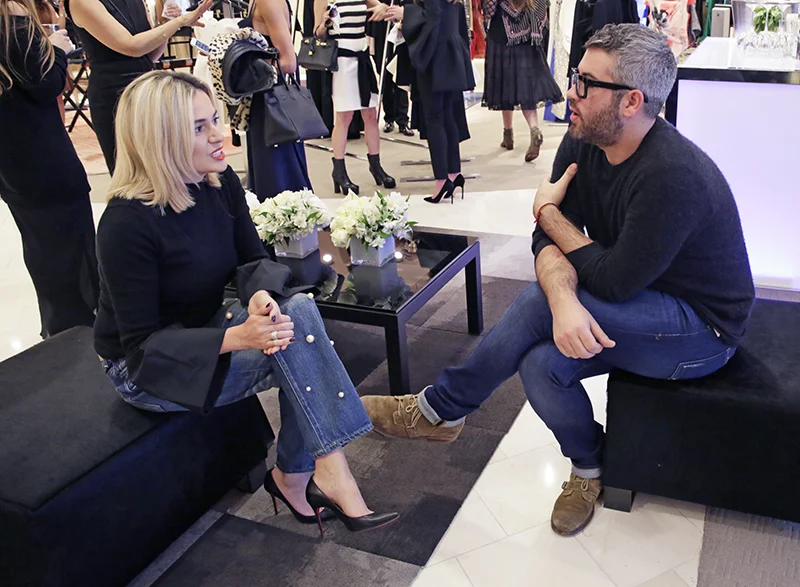
One of the hottest designers to emerge from New York Fashion Week in years, 2018 CFDA Swarovski Award winner for Womenswear, longtime friend, stylist to Lady Gaga, Brandon Maxwell made an appearance at Neiman Marcus, San Francisco. The stylist-turned-designer made waves at the Oscars with a white gown/jumpsuit made for longtime client Lady Gaga, and at the Met Gala with a carved white column worn by Karlie Kloss. The powerful women who surround him are his greatest source of inspiration.
Maxwell sat down with us to chat about his childood in hometown of Longview, Texas and his first experience styling his sister with bedsheets and his road to success.
Juliet: What were you like as a child?
Brandon: Creative, inquisitive, and very, very social.
Juliet: Why did you decide to become a designer?
Brandon: I had been thinking about my own collection since I was young. Growing up in Texas, I would create these dresses for my sister from thrift store pieces or sheets in I found in the house. Then we would have a little photoshoot. Finally after working in the industry for years and learning so much of the business from the great people I worked with, I saved up enough money to start this on my own. I also had a lot of encouragement and support from colleagues, friends, and family. I’m not sure there was one defining moment where I decided this is what I wanted to do, it was a feeling that was always there. I always wanted to create pieces that women would feel beautiful wearing.
Giulia: Did you have any business knowledge when going into the line's launch ?
Brandon: Fortunately, I have a businessman for a father who urged me to focus on the business side as much as the creative. He guided me in creating a business plan and continues to offer advice and encouragement on a daily basis. It’s very important to me that this brand is sustainable and continues for a long time.
Giulia: What did you learn along the way?
Brandon: There is so much to this business that I am continuously learning each day. There are aspects to production, materials, design, and of course how to build a successful business. It is a constant learning process.
Giulia: Who/ what was the inspiration behind your latest collection?
Brandon: The collections are driven more by emotions than inspiration. When I go into the studio, I turn on music that fits my mood and then the clothes really take on what I’m feeling at the time. For example, I was very concentrated on the second collection because I felt there was a lot expected of me after the 1st collection and so the pieces for Fall 16 were a bit more structured and rigid. For Spring 17, I was in a comfortable place and feeling great – so there is a lot of fluidity to the collection.
Giulia: Who is your muse?
Brandon: We design a collection that can dress all generations – from the daughter to the grandmother. I think about all of the strong women that have come in and out of my life since I was young and I think about what they would want to wear.
Giulia: How did you manage to switch Lady Gaga from avant-garde style to Old Hollywood glamour?
Brandon: It's a truly collaborative process. We sit down and bounce ideas back and forth and work together to find the look that best represents the moment.
Giulia: Who would you want to see wear your designs?
Brandon: I aim to design for all women.
Giulia: Where do you see yourself in the next five years?
Brandon: I hope I’m still here designing the Brandon Maxwell collection!
Giulia: What are your words of advice for designers starting in fashion?
Brandon: I always advise people to stick to your guns and go for what you want. You won’t be happy if you compromise.
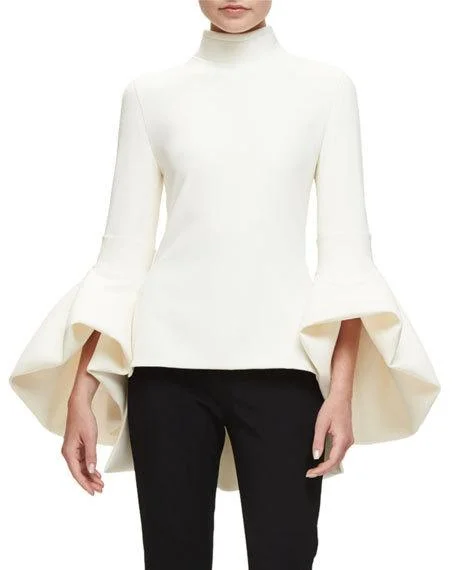
SHOP BRANDON MAXWELL
THE TALK WITH FRANCIS FORD COPPOLA
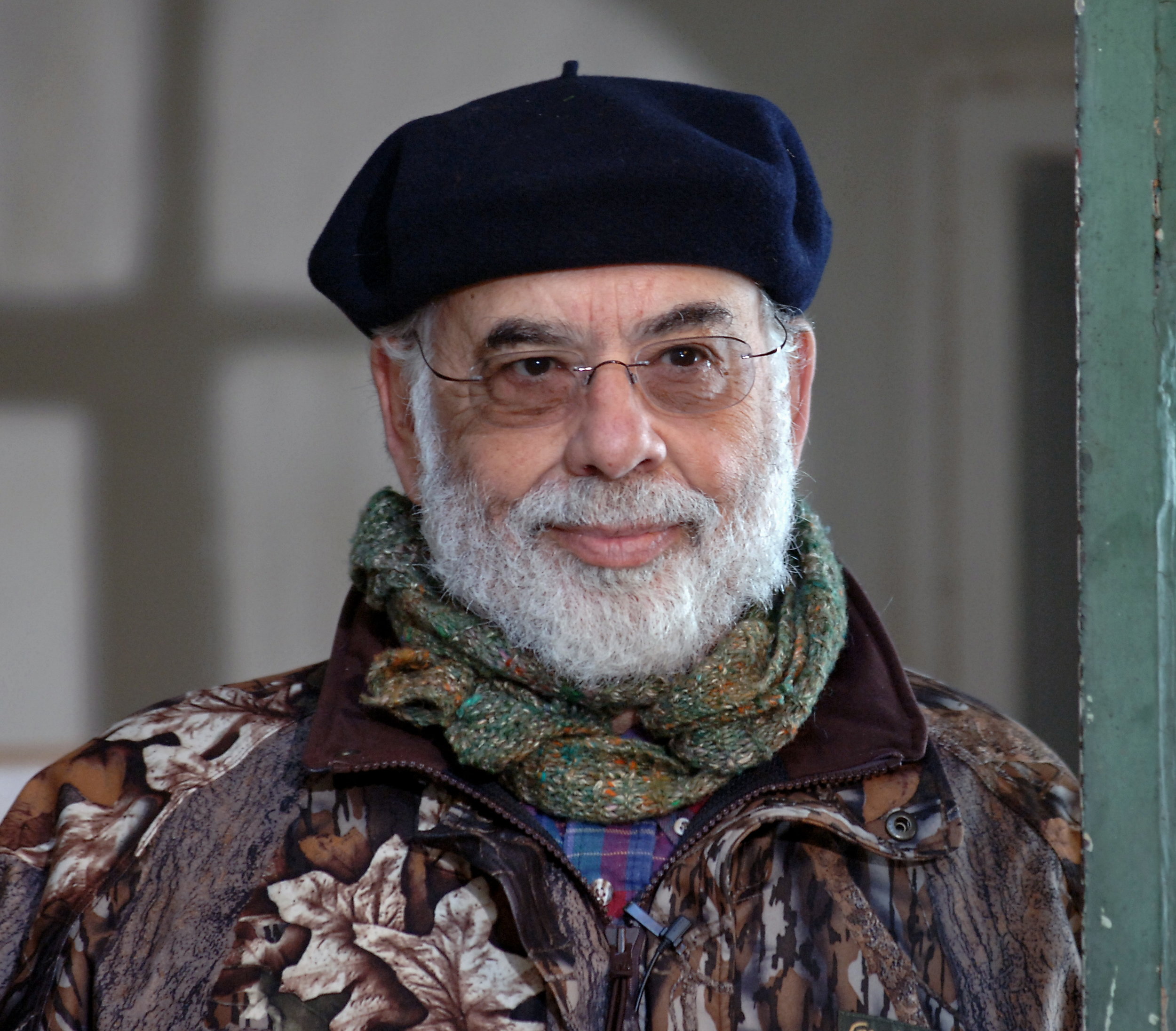
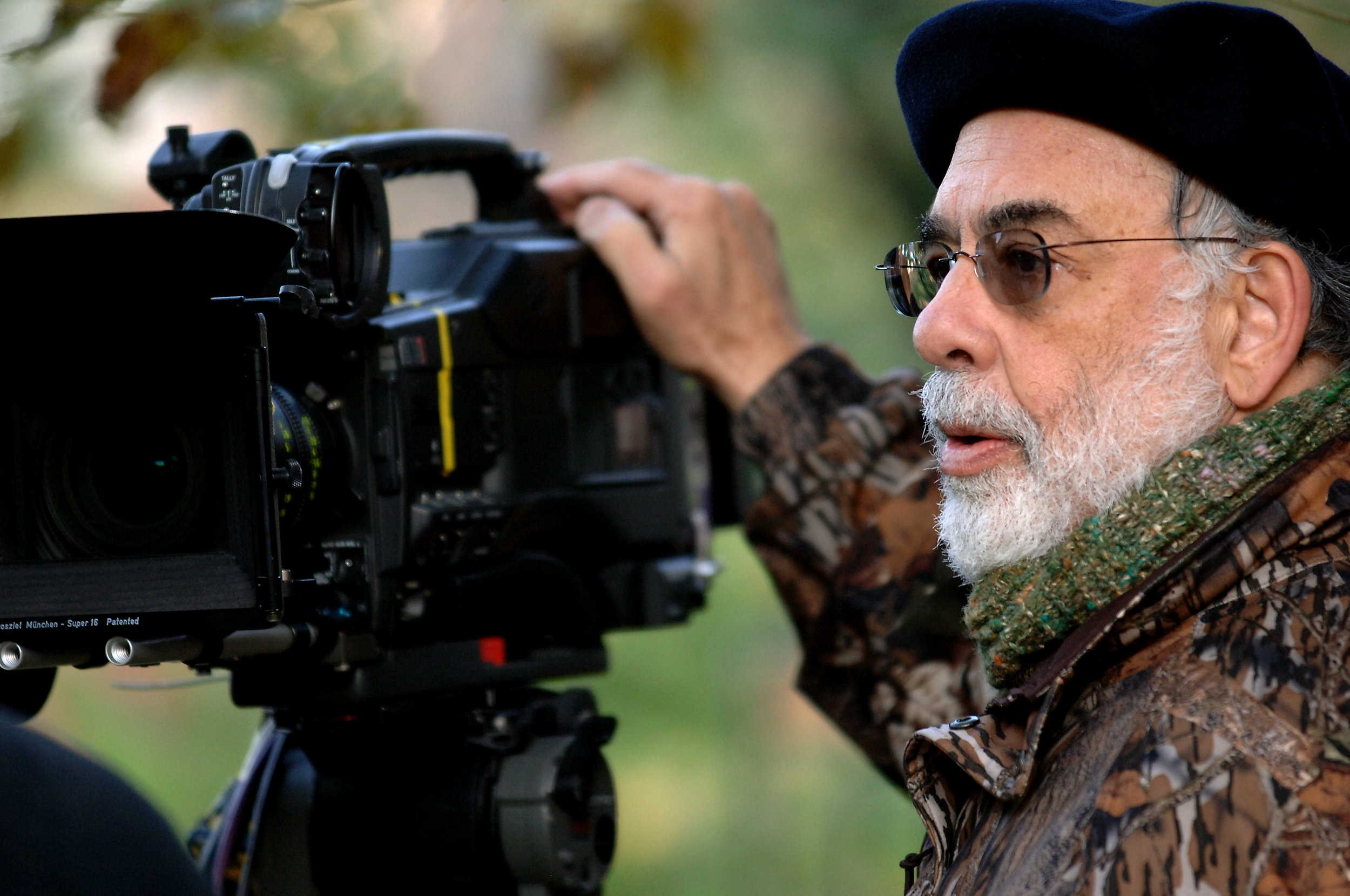
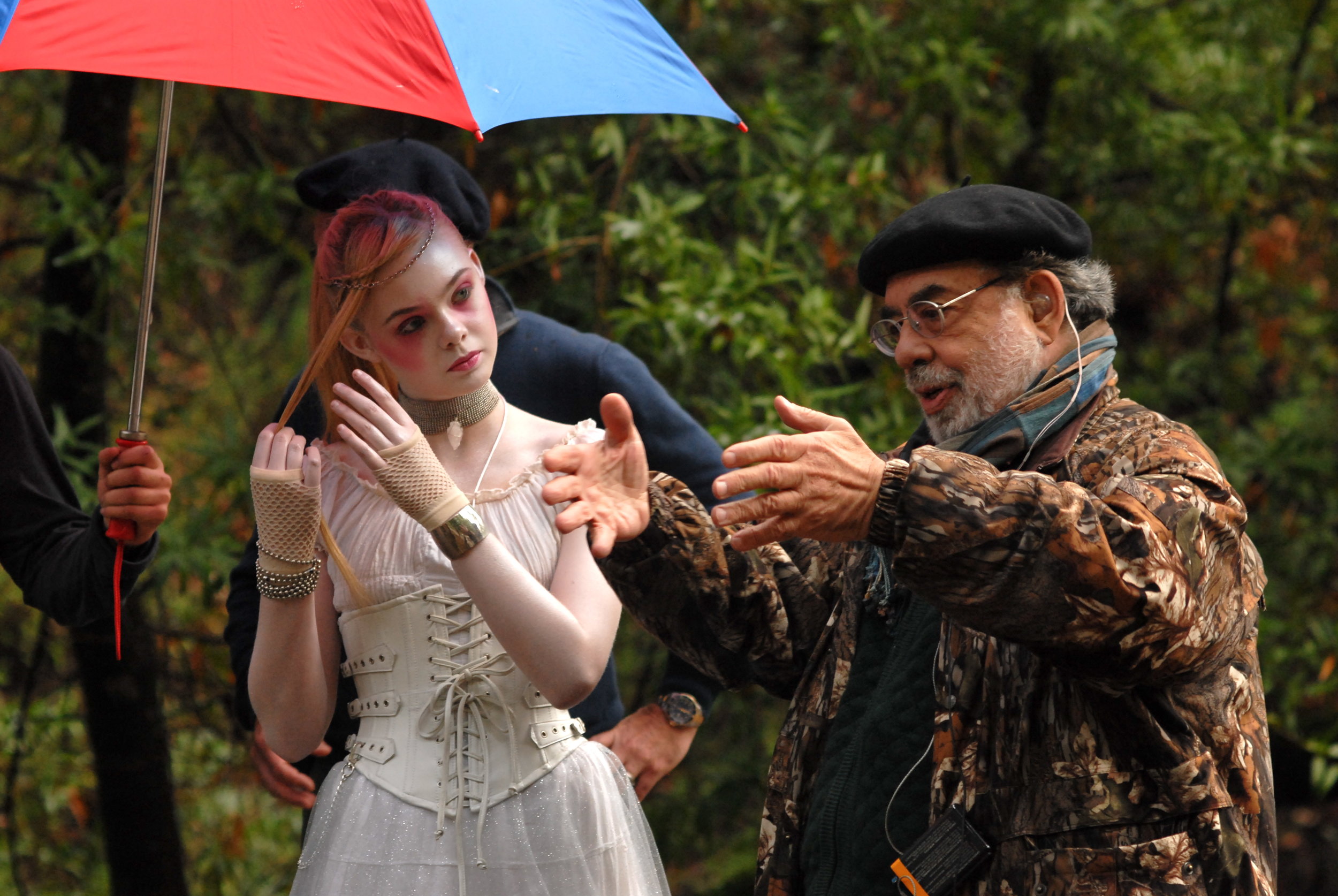
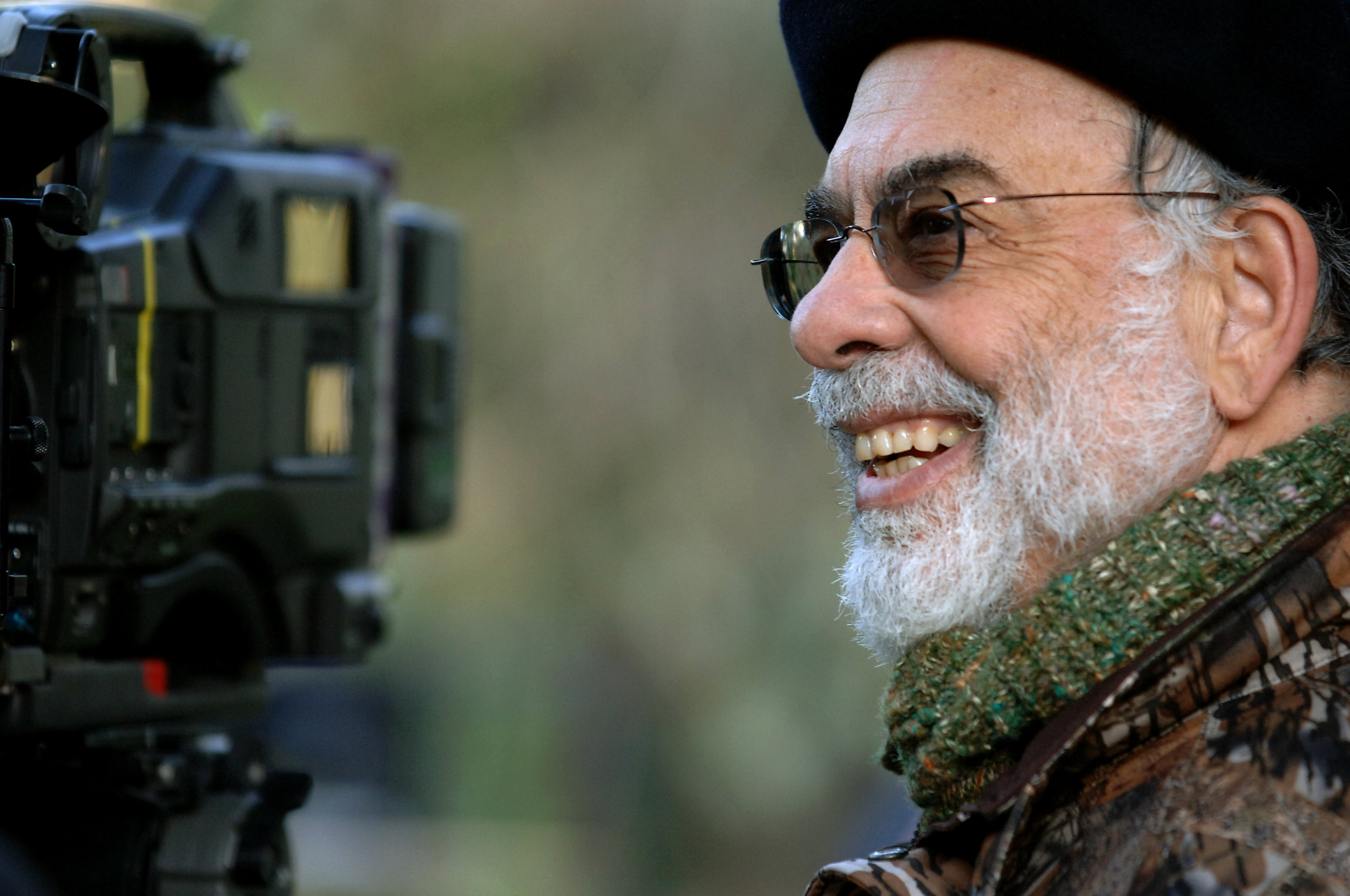
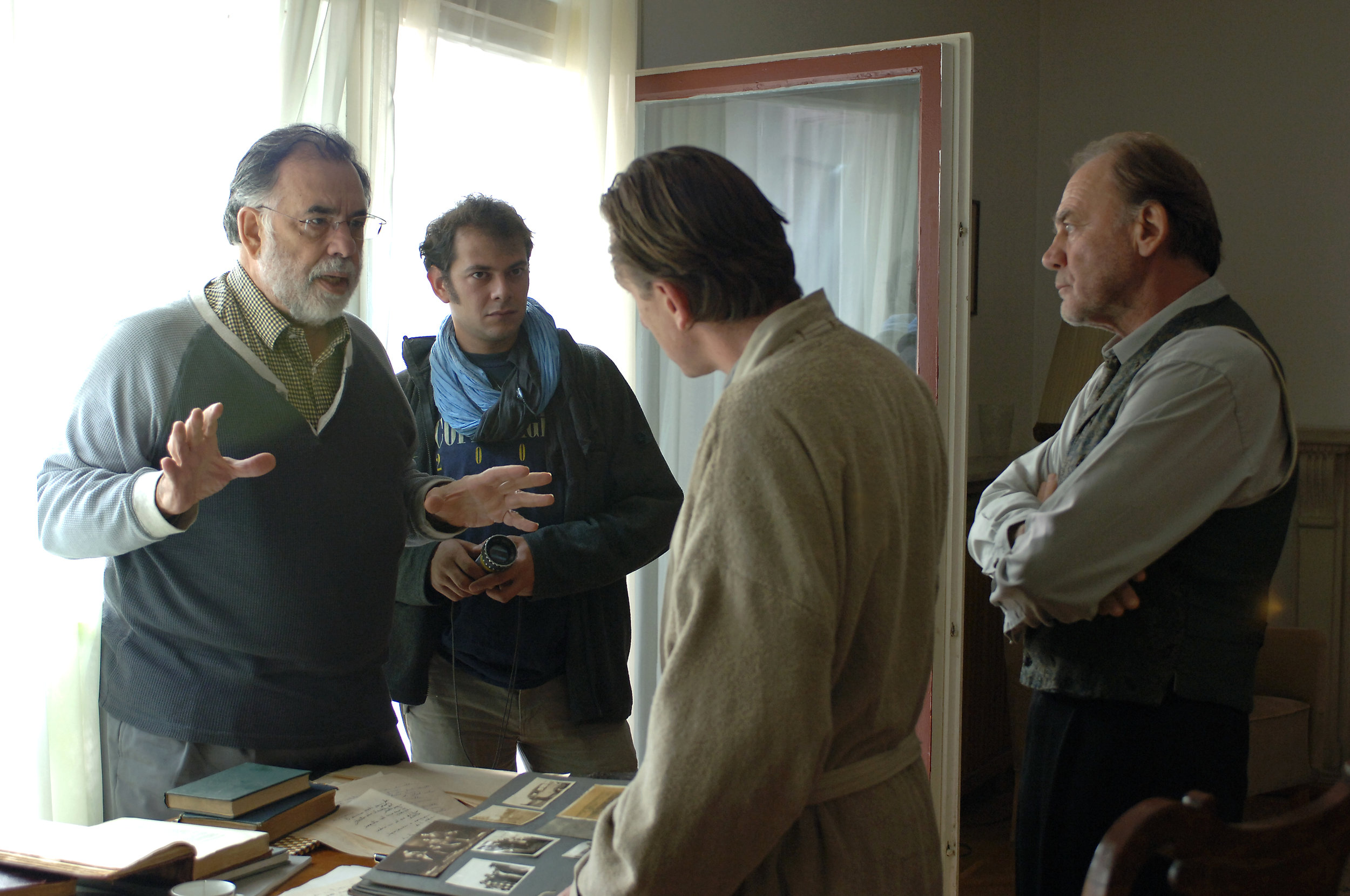
Legendary film director FRANCIS FORD COPPOLA joins Gazette du Bon Ton community to talk about his live cinema experiments, his challenges and the greatest hope for the future.
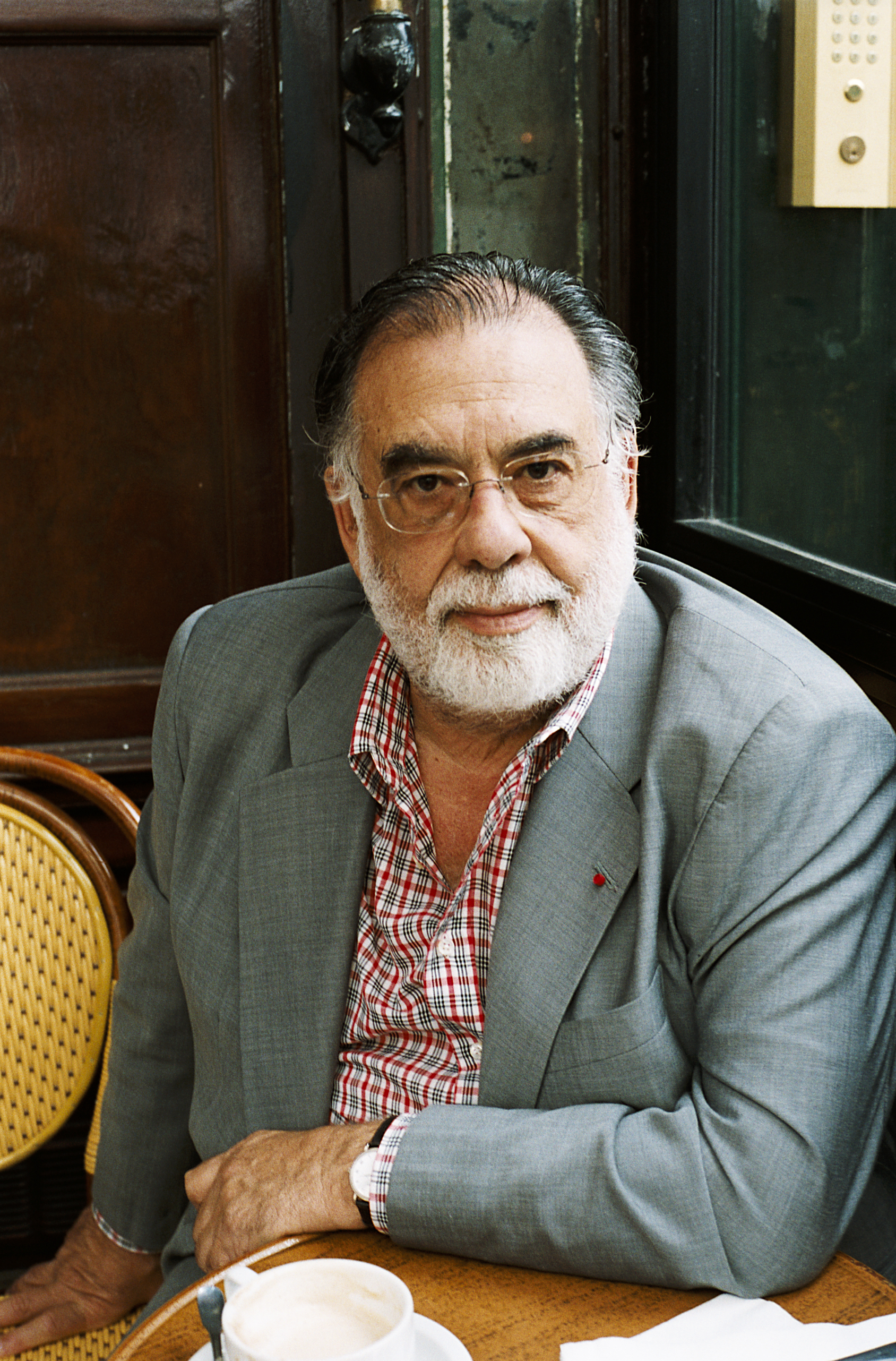
Francis Ford Coppola, American film director, producer and screenwriter the world fell in love with for his directorial hit of “Godfather” and “Godfather 2,” has been experimenting with the form of cinema for many years. To Coppola the idea of Live Cinema is the best of moviemaking, television and theater because it is an in-the-moment immediacy of live performance. Today Coppola has launched an ambitious “Distant Vision” project as a “live cinema” experiment at his alma mater, the UCLA School of Theater, Film and Television. American Zoetrope is Francis Ford Coppola's and co-founder George Lucas's privately owned American film studio centred in San Francisco. American Zoetrope produced four films that are included in the American Film Institute's Top 100 Films. Company's films received 15 Academy Awards and 68 nominations. Legendary film director Francis Ford Coppola talks to us on his live cinema experiments, his challenges and the greatest hope for the future.
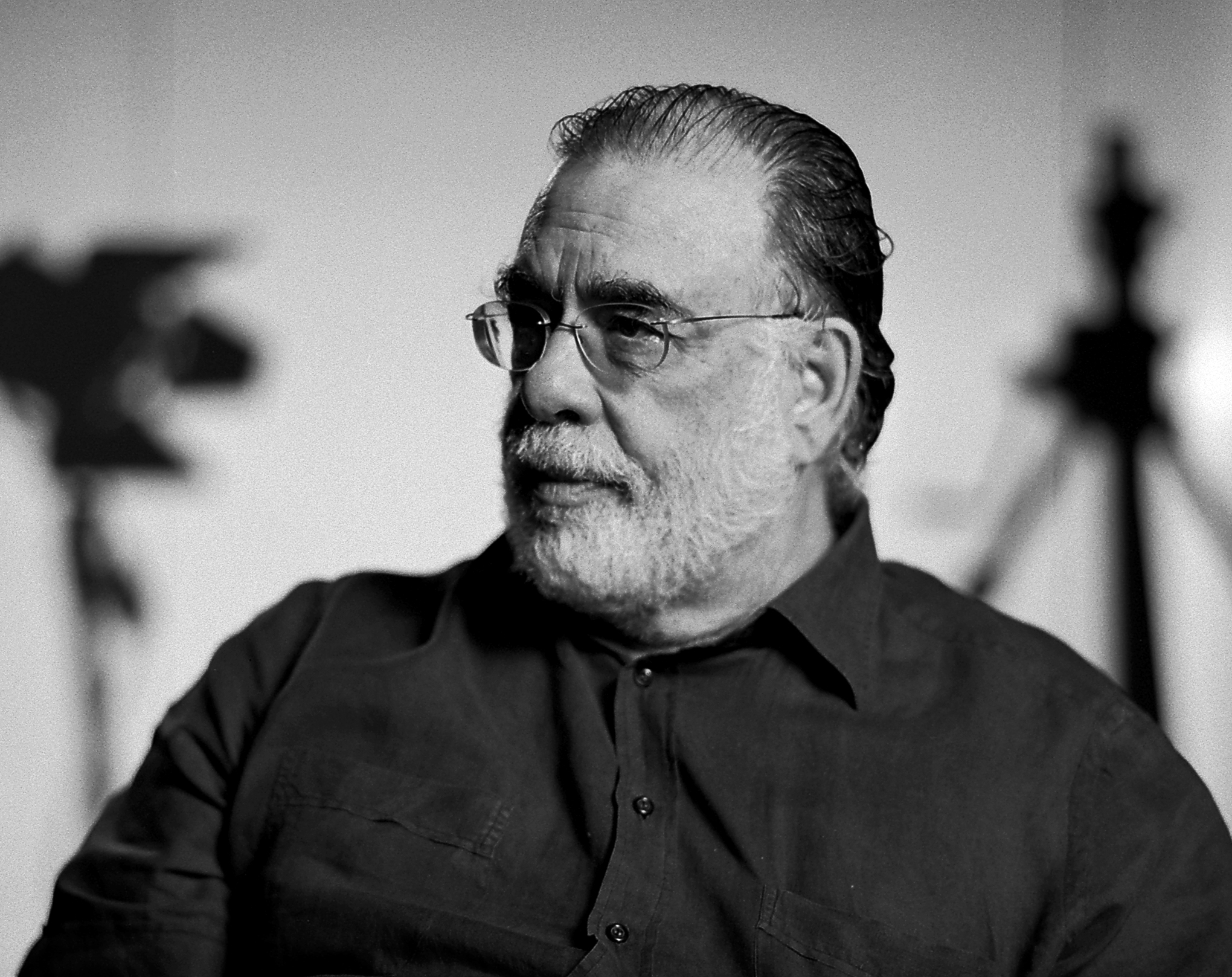
Photo by Mihai Malaimare, Jr. for Gazette du Bon Ton
Could you give us an insight into the creative process behind American Zoetrope?
Francis Ford Coppola: The concept was to assemble a group of like-minded filmmakers and focus on making personal, (not industry) films.
How did you envision the emergence of a new art Live Cinema concept? Is this something similar to 4-D films or completely different? Did you get inspired by the sports, live music events and production on television of a “live event”?
Francis Ford Coppola: To explore the creation of cinema and works using cinematic language (i.e. focused on the 'shot', but still enabling performance to be 'live'.
Do you think Netflix will be the company that could produce Live Cinema films or do you want to make your own studios and theaters like The Uptown Theater?
Francis Ford Coppola: Seems to me that live cinema could be made available throughout the world at both theaters and in home venues, etc.
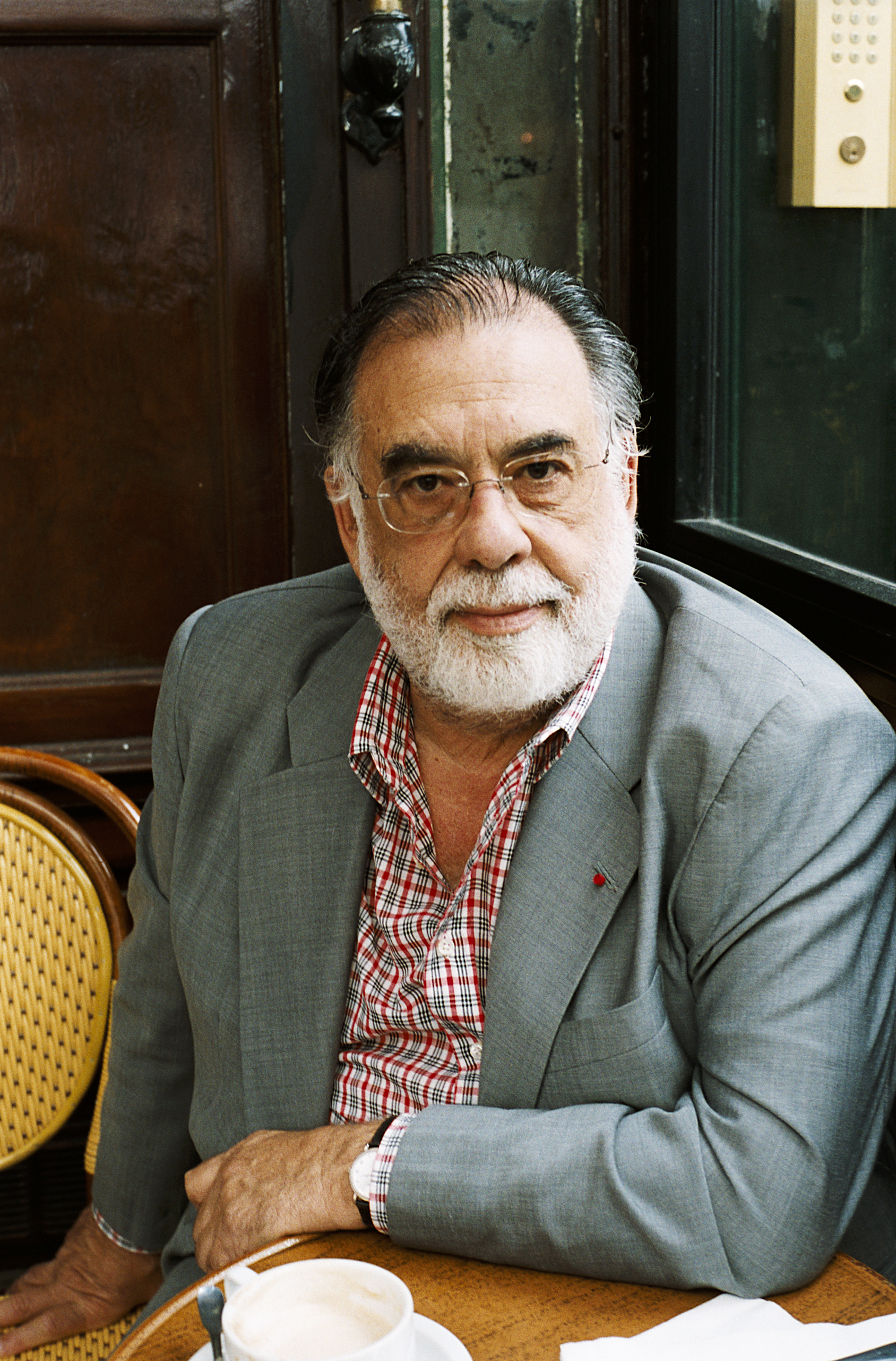
Photo by Sofia Coppola for Gazette du Bon Ton
What was the process like writing the screenplay of "Distant Vision"?
Francis Ford Coppola: No different than writing screenplays or cinema plays.**
Could you share with our readers about your mobile technical facility ,"the Silverfish"?
Francis Ford Coppola: The Silverfish is a mobile video facility built for 'one from the heart containing all necessary technology, video board, editorial etc to mount a production.**
Do you want to make more workshops around the world similar of what you did at UCLA?
Francis Ford Coppola: Not sure. Now I am writing a short book (manual) entitled 'Live Cinema and its techniques' based on what I learned during the two workshops and next I will focus on the writing of the piece.**
What are your challenges?
Francis Ford Coppola: To figure out a good basis to go forward in what I am doing and to continue to learn.
What role does music play in your filmmaking philosophy process?
Francis Ford Coppola: Music of course is a powerful ally in dramatic work as it is in Opera or Music Drama.
What advice can you share with the world on the importance of empowering others to reach one’s full potential? How do you empower others in your daily life?
Francis Ford Coppola: LearN to trust one's own instincts and cultivate them even while young. I never saw a painting of a two year old that wasn't beautiful yet by the time they are twelve that natural talent is compromised. Try to maintain a relationship with one's child-self.
Would you describe yourself as a spiritual person?
Francis Ford Coppola: Yes, in that everywhere I look I see beauty, creativity and love. That must be the creative spirit and it is within all of us.
What is your message to entrepreneurs who struggle to launch their ideas?
Francis Ford Coppola: Don't be afraid of risk.
What is your regular day like Mr. Coppola?
Francis Ford Coppola: Answering questions like these and trying to do the things I love in between what is asked of me.

Photo by Kalman Muller for Gazette du Bon Ton
What are your hobbies?
Francis Ford Coppola: Reading. Watching little children.
Who are your top three living thought leaders?
Francis Ford Coppola: Let me think about that.
What is your greatest hope for the future?
Francis Ford Coppola: The our race will grow up and spend its time enjoying each other; being involved in creative activities and celebrating.
What is next for Francis Ford Coppola?
Francis Ford Coppola: I have no idea.
How would you like to be remembered?
Francis Ford Coppola: As a man who loved little children.
by Karolina von Kühnberg and Giulia Belkin


THE TALK WITH DEBORAH AYORINDE
Reunited with‘Mr. Luke Cage’ himself, Mike Colter, and director Malcolm Lee (Barbershop: The Next Cut) Deborah with appear in Girl Trip (starring Queen Latifah and Jada Pinkett Smith) due in theaters in 2017. Read more about the rising star Deborah Ayorinde!
Photography: Lauri Levenfeld
MUA/Hair: Alla Peysakhova
Born in London, England, Deborah Ayorinde started performing in her first play with a drama school in the Forest Gate community. It was there that she developed a passion for the arts. When she was eight years old, she and her family relocated to San Jose, California. She continued to develop her talents by participating in talent shows and contests, performing with dance teams, cheerleading teams, and choirs, and continuously training. In May of 2009, she graduated with honors from Howard University's John H. Johnson School of Communications with a Bachelor of Arts in Film Production. During her matriculation at Howard, she won the coveted Paul Robeson Best Actress award for her performance in a short film she wrote and directed (The film also won the award for Best Cinematography).

Photo by Lauri Levenfeld
Juliet: Did you always know you will be an actress?
Deborah:I always knew I'd be a performing artist. I always thought like an artist. When I look back on the way I perceived things, the music that moved me, and the ideas I had as a child; I realize I've always been an artist. I performed in my first play at about 7 and although I thoroughly enjoyed the experience, it wasn't until I was in college, majored in film production, started acting in student films, and got my first agent in New York that I decided to particularly focus on acting.
Juliet: How were you discovered?
Deborah: I spent a lot of the summer before my junior year at Howard university submitting to various agencies in DC and New York. Right before I went back to DC to start my junior year, I got an email from one of the agencies I submitted to saying they wanted to meet with me. I was so thrilled. A few weeks after I school started, I traveled to New York, had a great meeting with them and they were my first agent. They sent me on a lot of auditions in New York. I would take the bus from DC early in the morning, go to auditions, take the bus back to DC and go to class like nothing happened. Not a lot of my peers knew what I was up to. I didn't book anything at that time probably because I was so green but it was a great preparation for what was to come. Transparently speaking, it was extremely hard to keep going after my dream and to not see any type of reward especially with graduation approaching but I kept going. By the time I graduated, I was out of ideas. My parents moved to Atlanta from California while I was in school, and although I submitted to a few agencies in Atlanta during the winter break before I graduated and although I was trying my hardest to hold on to my independence and not move back home, I had no other options. One of the Atlanta agencies I submitted to, Atlanta Models & Talent, reached out to me so I knew it was time to go home. The move ended up being a great choice because I booked my first role on a television show, Tyler Perry's Meet the Browns, about a month or so after I moved to Atlanta and signed with the agency. I ended up spending about 5 and half years there working and building my credits before I moved to New York. It was not an easy journey and it still isn't but l am so grateful for every bit of it.
Juliet: What is your ideal role?



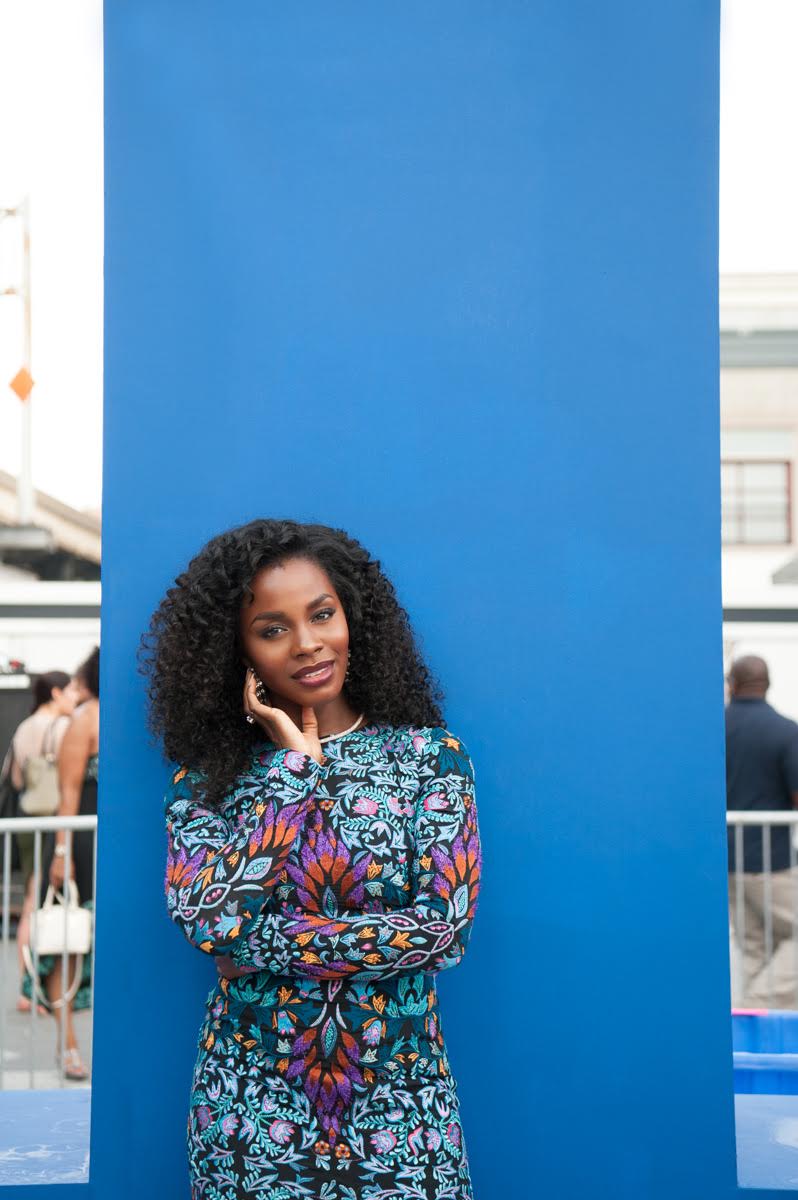
Deborah: I really don't have one. My idea of ideal roles are roles that I am deeply connected to. As long as I am connected to the role and connected to the story, that is an ideal role for me.
Juliet: Tell us about your latest role?
Deborah: In Luke Cage I play Candace Miller. She works alongside Luke Cage at Harlem’s Paradise as a bottle service hostess. She has strong discernment and witnesses a lot and that’s what makes her such a huge asset and a huge problem at the same time. She has a constant internal battle between staying true to herself and what she knows is right even if it means putting herself in big danger and making choices that may not be right thing but would keep her and her loved ones out of harms way. People who watch the season will see that she holds a lot of power, more power than she realizes.
Juliet: Who is your Hollywood inspiration?
Deborah: I have quite a few: Viola Davis, Meryl Streep, Debbie Allen, Shonda Rhimes, Tracee Ellis Ross, Simone Missick, Issa Rae, Ava Duvernay, the list goes on and on. I'm also very inspired by Erykah Badu, Jill Scott, India Arie, and a plethora of other artists. I just love seeing these women thrive. They inspire me to unapologetically be my complete self. They inspire me to work hard, to bring 'me' to the table and to not worry about trying to be like anyone else. I have so much respect for them.
Juliet: What is your personal style like? Deborah: My style is very feminine. Even when I'm sporting a 'tomboy' look, it still has to have a feminine touch. I love the 'Bardot' trend. It's my go to.
Juliet: Favorite designers?
Deborah: Right now, I would have to say Balmain, Versace, Michael Costello, Deola Sagoe, and The Blonds.
Juliet: What type of women is Deborah ?

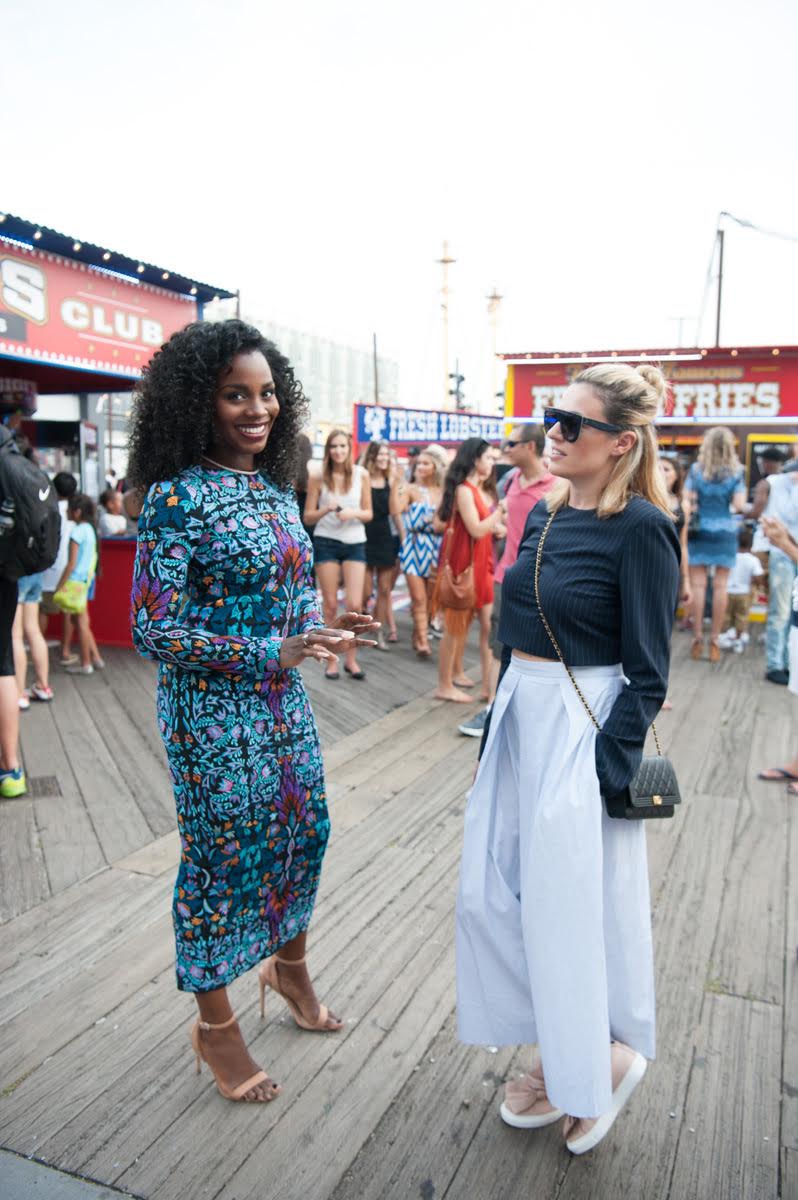
Deborah: I am a free spirit, funny, awkward, an explorer, perfectly imperfect, passionate and an artist to my core. I love love. What is most important to me is staying as connected to God and my true self as possible. When I feel connected to God and myself, I feel like everything else flows.
Juliet: What's next for Deborah?
Deborah: What's next is the film Girl Trip which is premiering in 2017. Other than that, I have a few other things in the works that I can't wait to reveal when the time is right. This journey has proven to be an awesome one thus far and I'm just going along for the ride.
Juliet: Favorite quote?
Deborah: "Let go and let God." I don't know who said it first but my mother always says it to me and it calms my spirit everytime.
To learn more about Deborah Ayorinde head over to The Project for Women.





Sponsored.



THE TALK WITH HEIDI ROIZEN
Conversation with one of the best-connected executives in Silicon Valley
World’s most powerful women are the smartest and toughest female business leaders, entrepreneurs, investors and CEOs making their mark in the world today. These women build billion-dollar brands and call the shots in the financial markets. Their accomplishments are outstanding, given how hard it can be in the industries and jobs that are traditionally dominated by men. One of those powerhouse females is Heidi Roizen - a venture capitalist, corporate director and Stanford lecturer. Heidi co-leads the Entrepreneurial Leaders Fellowship program in the engineering department at Stanford University. She co-founded software company T/Maker and served as its CEO for over a dozen years until its acquisition by Deluxe Corporation. After a year as VP of Worldwide Developer Relations at Apple, she became a venture capitalist, and now the Operating Partner at Silicon Valley-based venture firm DFJ. She is also a corporate director for DMGT (LSE:DMGT), ShareThis, ICIX, Intematix and Zoox.
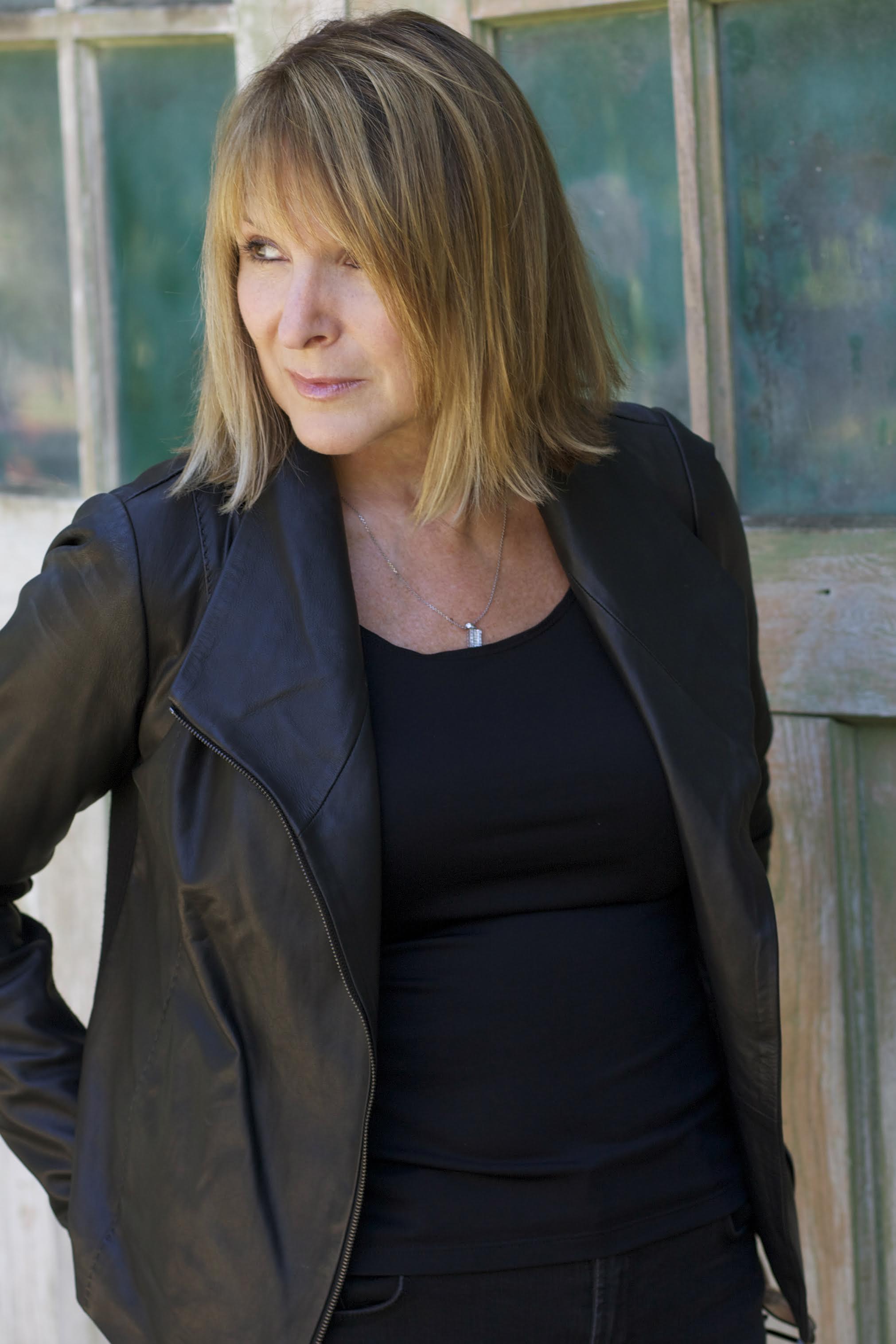
Photo courtesy Ross Pelton.
Juliet: What were you like as a child?
Heidi: That was so long ago I barely remember :-) . I was always pretty outgoing and loved school and learning. I was also an entrepreneur from an early age — I started a ‘professional puppet show’ business at age 12 doing shows for childrens birthday parties. When I started out, I wasn’t much older than the children! I did that until into my college years and was doing 25 or so shows a month at my height.
Juliet: In the tech world dominated by man, you managed (to list only a few of your career highlights), to serve on the board of TiVo, work as VP for Apple Computer, and become the first female director in the Daily Mail and General Trust's 116-year company history. How did you become a technology pioneer? And what is it like to be a woman in the male-dominated industry?

Photo courtesy Ross Pelton.
Heidi: My goal at 23 was not to ‘become a technology pioneer’ (and frankly no one exactly sets out to be a pioneer.) However, I was so fortunate to be in the right place at the right time in the ‘80s in Silicon Valley and knew the personal computer was something life changing — not the least of which was for me personally. As an English major and someone whose first job was as a writer, the word processing software on early personal computers was in fact life changing for me, and I was passionate about spreading that functionality beyond tech geeks to ‘normal’ people like myself. That is what drove me early on and is still a founding principle of what I spend my time on today — bringing the advantages of technological advances to every day people and every day lives.
As for being a woman in a male-dominated industry, most of the time I just didn’t notice it that much. When you are the only one of a set of N things that is different, you often don’t realize you are different (for example I am pretty sure my dog thinks she is human since every other being in the house is a human.) I felt more disadvantaged because I was not an engineer or CS major more than because of my gender.
Juliet: What triggered you to speak out against the harassment of women in technology. Did you find any difficulties along the way working with some of the top business professionals?
Heidi: I definitely faced issues in my career that were due to my being a woman. I do think that being different affords both pros and cons, but on the con side, I think not only for me but for virtually all the compatriot women I know, we all faced issues where we were singled out and treated differently because we were female. And, since I was a CEO, it was more about receiving unwanted and sometimes aggressive attention rather than for example being passed over for promotion. For most of my career, I considered it just negative table stakes for the career I had chosen, and I didn’t elaborate on it nor speak out until a few years ago, when I was disturbed by the number of people scoffing at the stories of some women in today’s news who were telling their stories and being maligned for them. So, I decided to write a blog post about things that had actually happened to me, simply to validate that in fact these things do happen and they are an extra burden women have to bear in the workplace.
Juliet: What attracted you to Venture Capital?
Heidi: For 14 years of my life I was the entrepreneur, and I knew from first hand experience how hard but also how rewarding it could be. I thought venture capital was a way to apply what I had learned about the world of entrepreneurship without actually having to have the tough job!
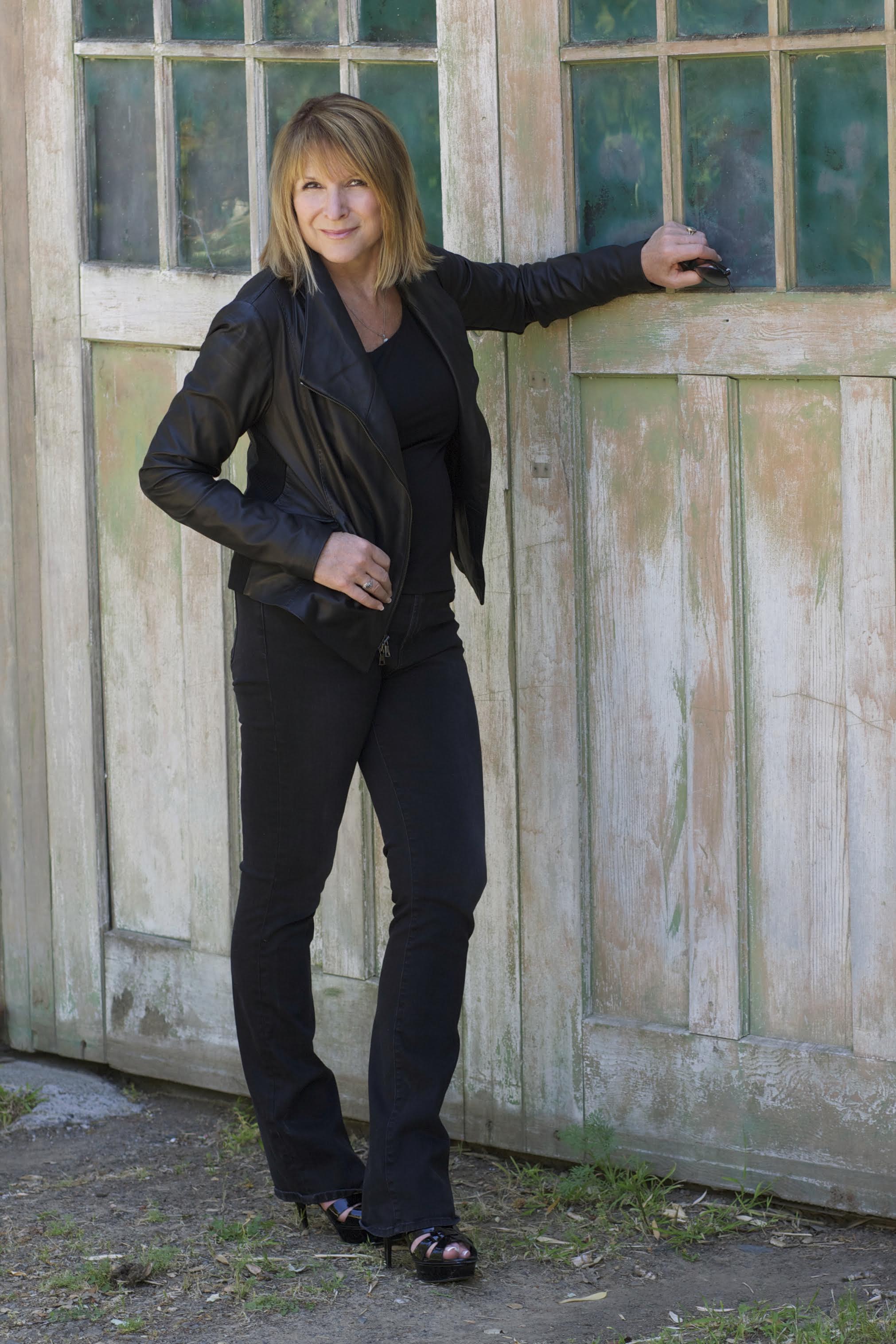
Photo courtesy Ross Pelton.
Juliet: As a Venture Capitalist, what do you look for in companies specifically?
Heidi: First it is about the founders — why are they driven to create this company and why are they so compelled to solve this problem. We then assess what the total market opportunity is, as well as what advantages this team brings to the endeavor and what the competition looks like.
Juliet: What do you think of social media today and how is it useful for entrepreneurs?
Heidi: I think social media can be a boon or a bane — or both — to the entrepreneur. I believe entrepreneurs can use it to their advantage to represent themselves and their ideas and build awareness and momentum for their products or services, also to help them recruit people. That said, Facebook is Forever, so be careful what you post, tweet, or blog about!
Juliet: Any success stories you can share?
Heidi: Successes? Well I’ve had plenty of successes and plenty of failures. I’m very proud of T/Maker, the company I co-founded — proud of the products, of the culture, of the terrific people who were there, many of whom remain close friends of mine even 20 years after our sale, and proud that we delivered a good return to our investors. I’m proud of all the companies DFJ helps to fund and grow. Most of all, I’m proud of my two children.
Juliet: What women do you admire?
Heidi: There are many trailblazers I admire such as Kay Koplovitz, Gloria Steinem and Sandy Kurtzig. I was lucky to have Ann Winblad as my first investor and also now one of my closest friends. I also admire the next generation of entrepreneurs and investors — Emily Melton, Aileen Lee, Kirsten Green, Selina Tobaccowala, Kyna Fong, Minnie Ingersoll, Ayah Bdier — I’m glad the list is growing too!
Juliet: How do you balance your personal and professional lives?
Heidi: The older I get the easier that gets for me, but I think in part it is because I love what I do and I integrate my work into my life (also my kids are 21 and 23 so they take care of me more than I take care of them at this point.) I also pay attention to sleep, exercise, and daily meditation — I’m not perfect but the older I get the more I realize taking care of one’s self is critical. Finally, I constantly have to be at peace with saying no. I am overwhelmed with good fortune that there is always another interesting person to meet or investment to consider. But even with good things you have to draw the line somewhere so you have the time to also take care of yourself and your loved ones.
Juliet: Knowing what you know now, what single biggest piece of career advice would you give yourself if you could go back and talk to yourself 10 years earlier?
Heidi: Trust your gut. Surround yourself with the best people. Don’t tolerate assholes. And don’t worry so much, it will all work out.




















THE TALK WITH DONNA KARAN
“Everything I do is a matter of heart, body and soul” ~ Donna Karan.
The world of Fashion was shocked when in 2015, Donna Karan announced she’d be stepping down as chief designer of Donna Karan International, a company she founded in 1984.
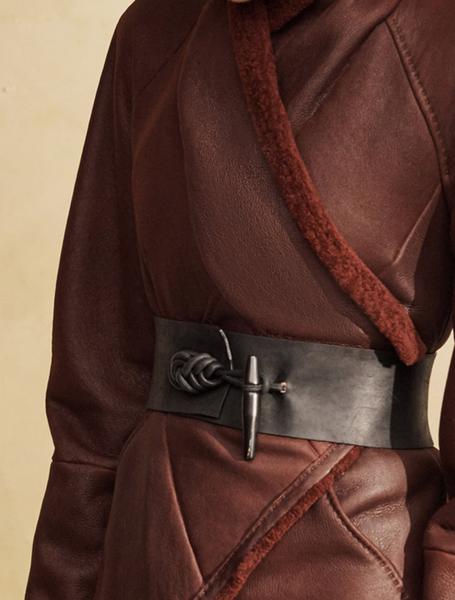
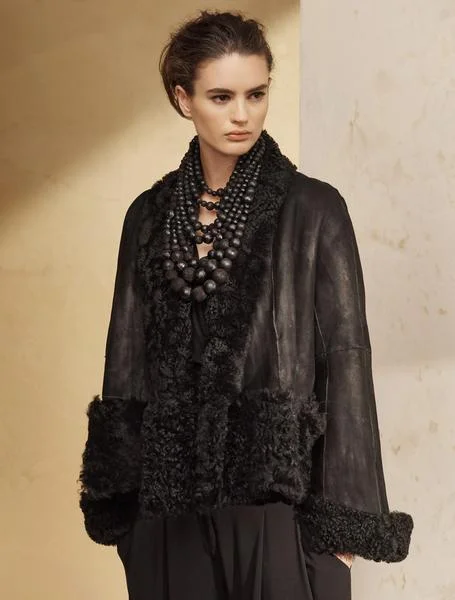
But Donna Karan did not leave the chaos of fashion, instead she founded Urban Zen, a philanthropic fashion and lifestyle brand. She put her artistic talent where her heart is, in preserving the culture and artistry of ancient nations and peoples in the emerging world. For Donna, Urban Zen is a way of fashion communicating and addressing things.
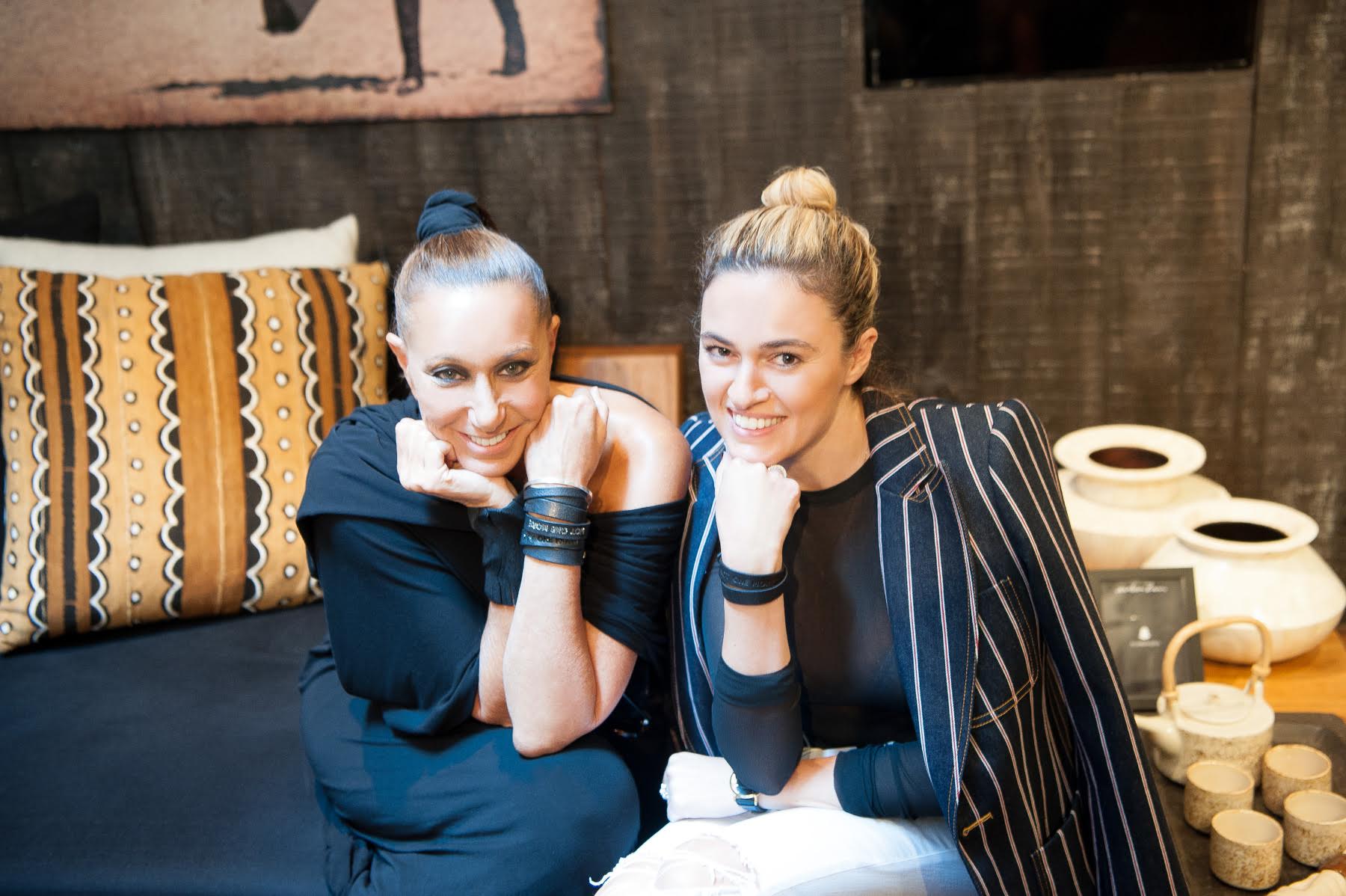
Photo by Lauri Levenfeld.
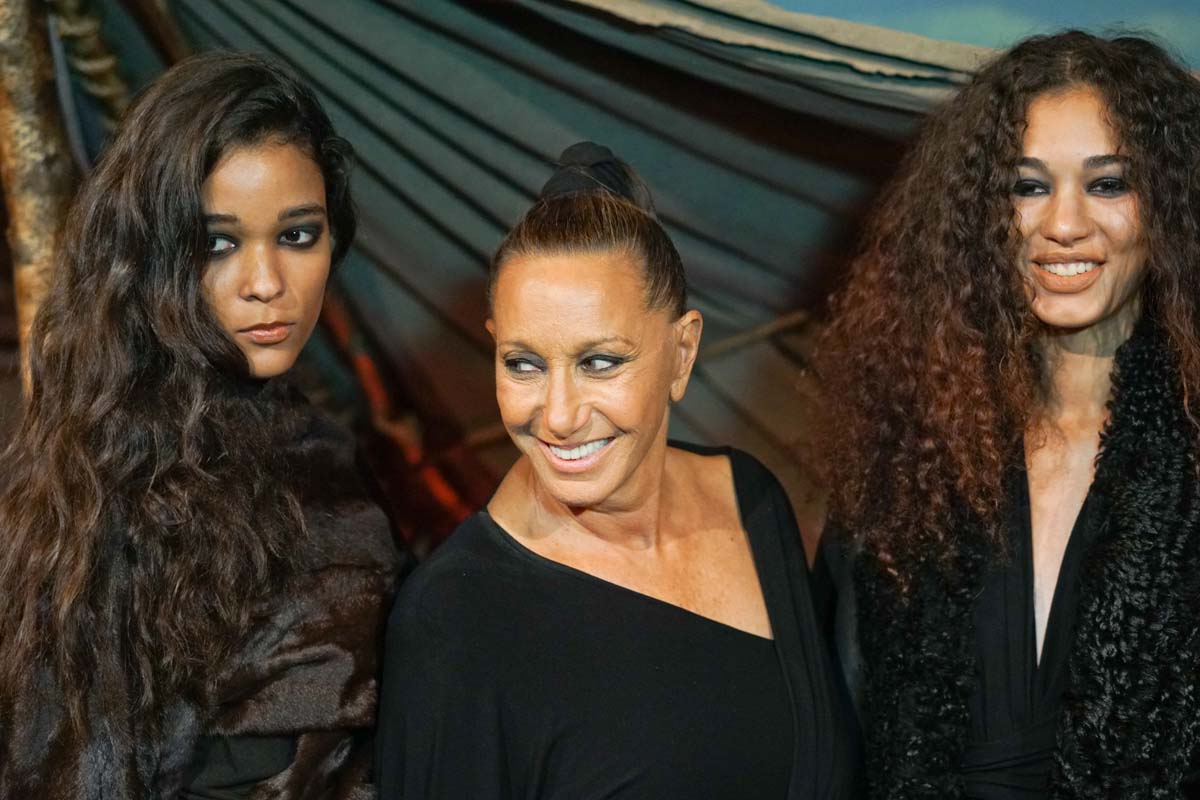
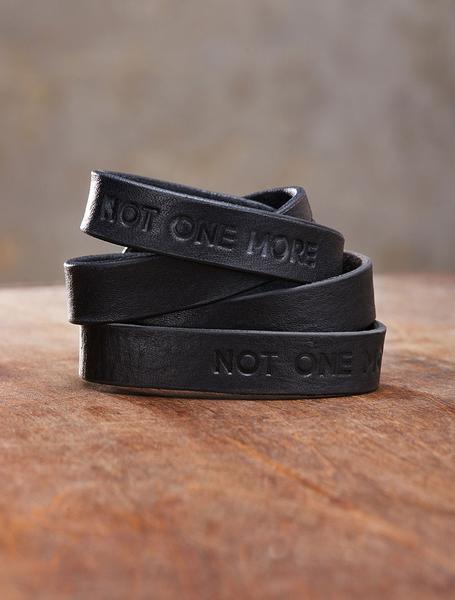
Everything about Urban Zen, chic store and studio space on Manhattan’s Greenwich Street, carries a vibe that is distinctively Donna. As I walk inside, I find Donna sitting on a beautifully crafted futon, wearing one of her signature scarf dresses which compliments her so well. In all black, her hair tied in a ponytail and on her arm, a number of leather bracelets. Donna designed it to campaign against gun violence. It reads three powerful words, NOT ONE MORE. As I introduce myself, Donna notices the bracelet on me and almost immediately we pose for a photograph. So elegant, beautiful and so majestic in manner and appearance. Donna Karan and I engage in conversation.
Giulia: What were you like as a child?
Donna Karan: Creative, but also tall, awkward, and not the best student. I loved any kind of sports and was passionate about art – those were my favorite classes of all.
Giulia: What triggered you to leave your namesake label?
Donna Karan: It was such a hard decision, and I put it off for as long possible. I had been juggling Donna Karan New York, DKNY and Urban Zen for over seven years. I was stretched thin and knew I couldn’t continue to do all of them. Urban Zen was the youngest and needed me the most if it was to continue to grow and thrive.
Giulia: Where did the passion come from to start Urban Zen line?
Donna Karan: I’ve always believed in a marriage of commerce and philanthropy. When I founded the Urban Zen Foundation, I wanted it to have a retail counterpart to help support it. And closer to my heart, I wanted to create clothes that suited my lifestyle on a creative, global level.
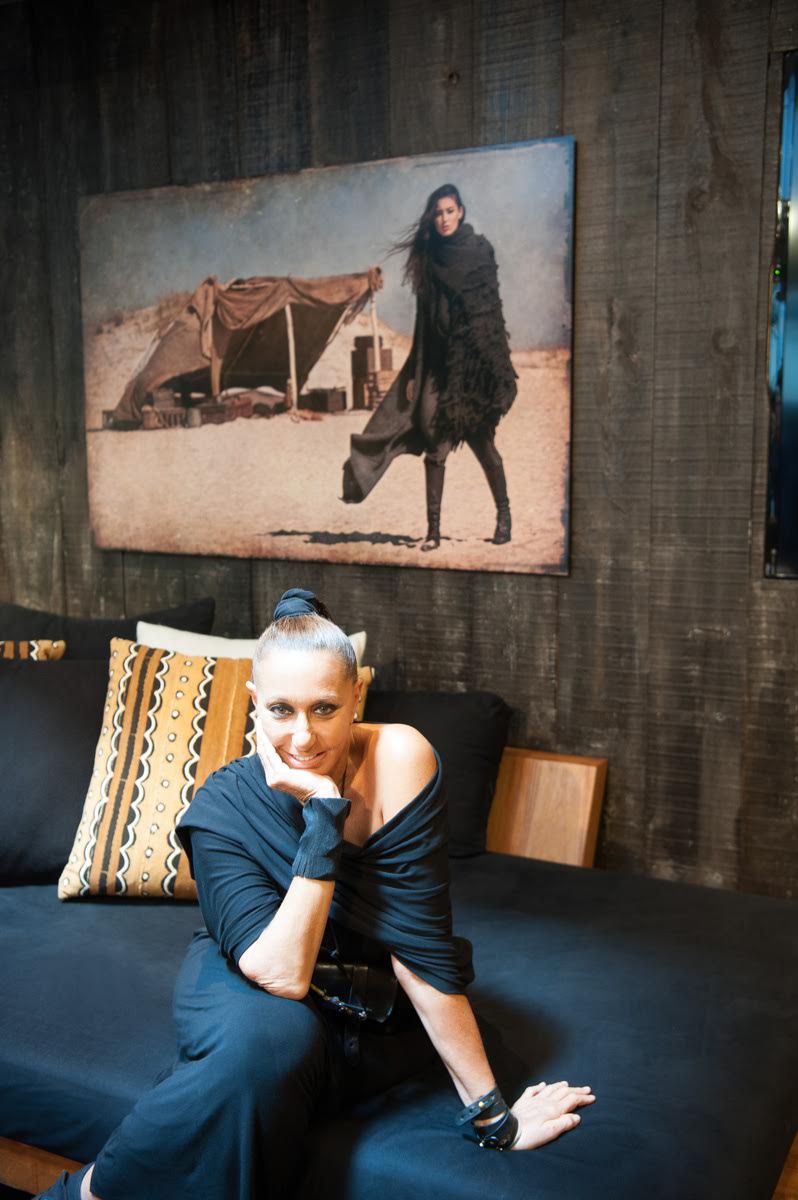
Photo by Lauri Levenfeld.
Giulia: What is an inspiration behind Alchemist collection?
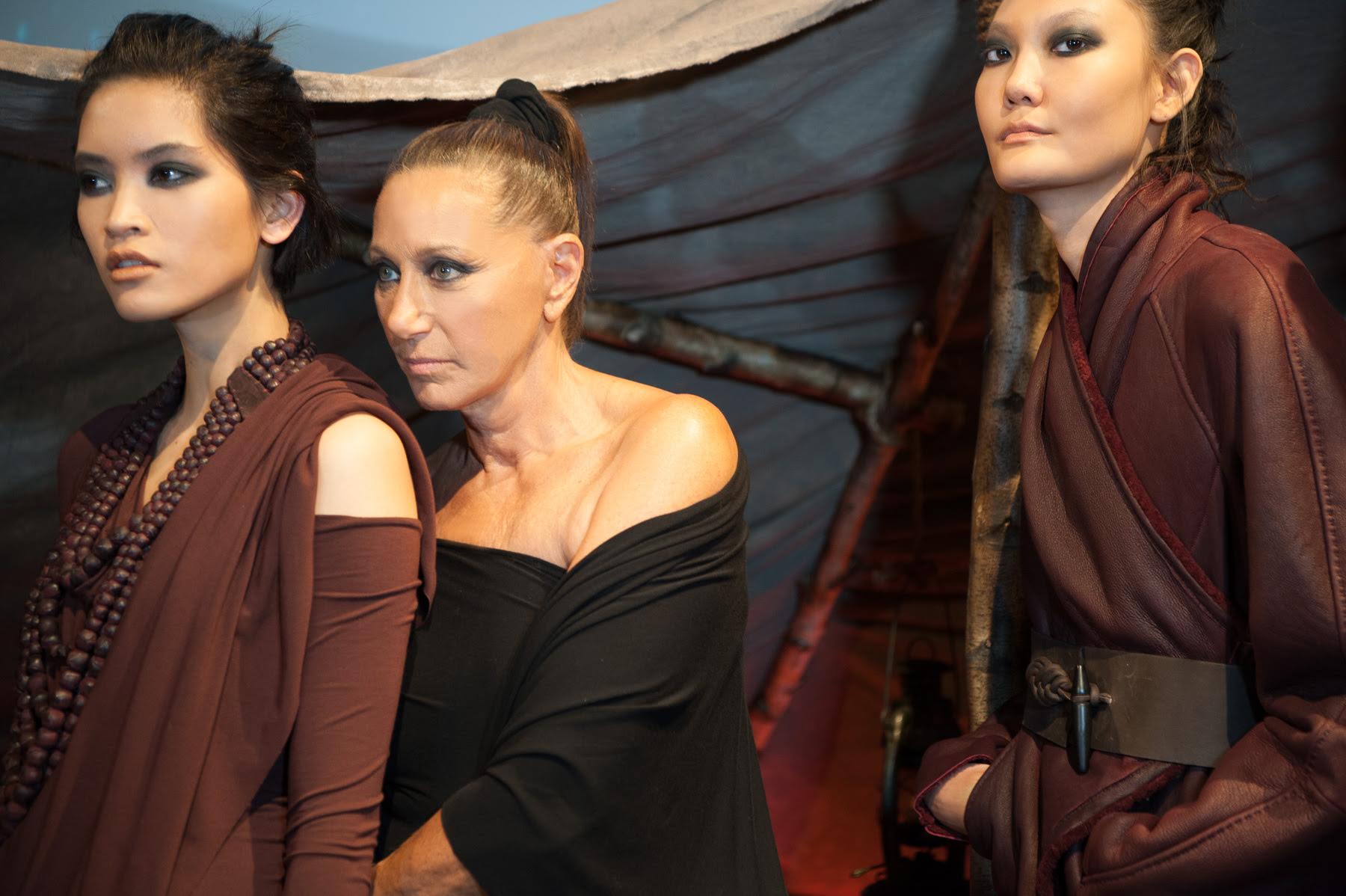
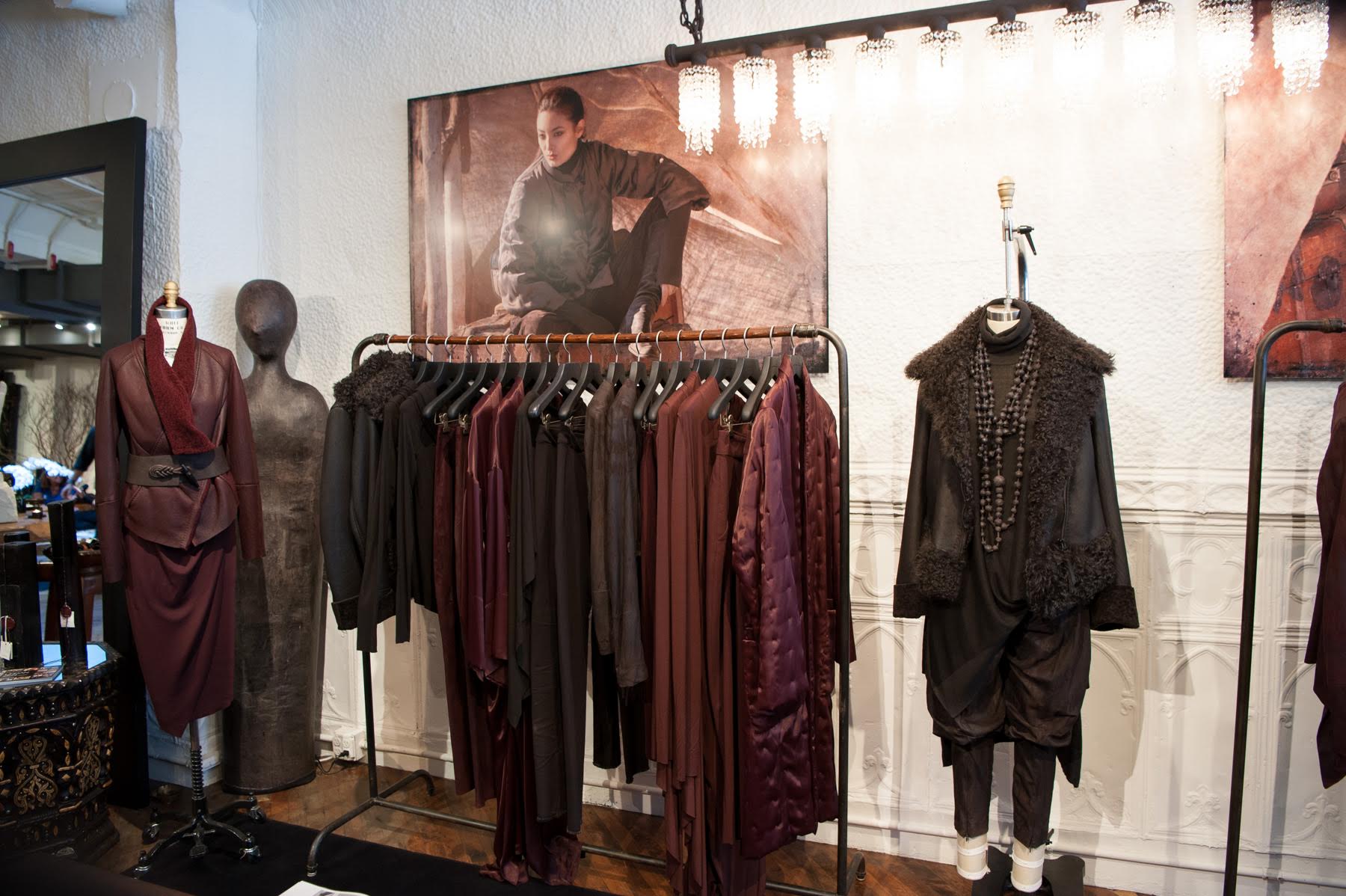
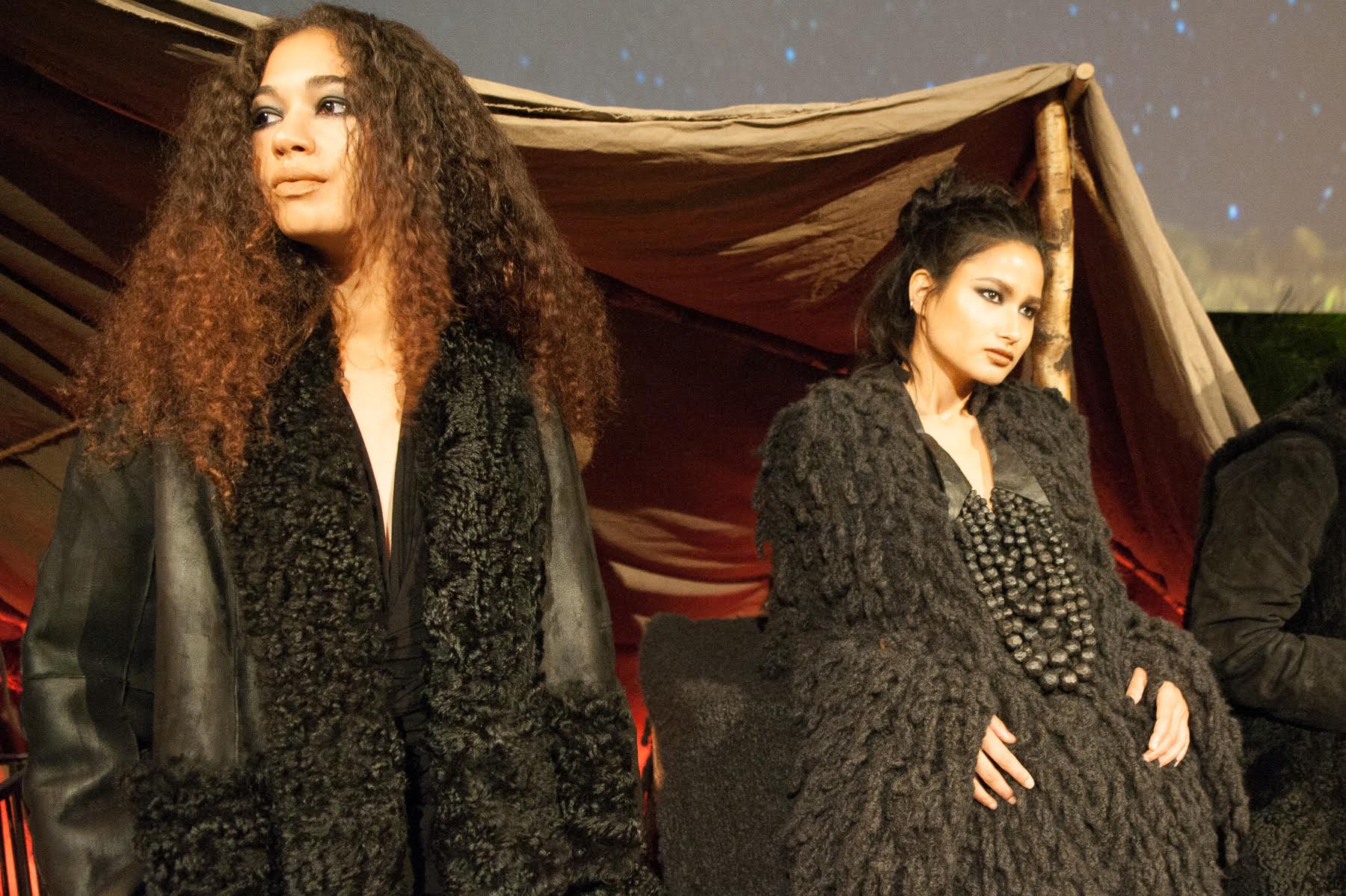
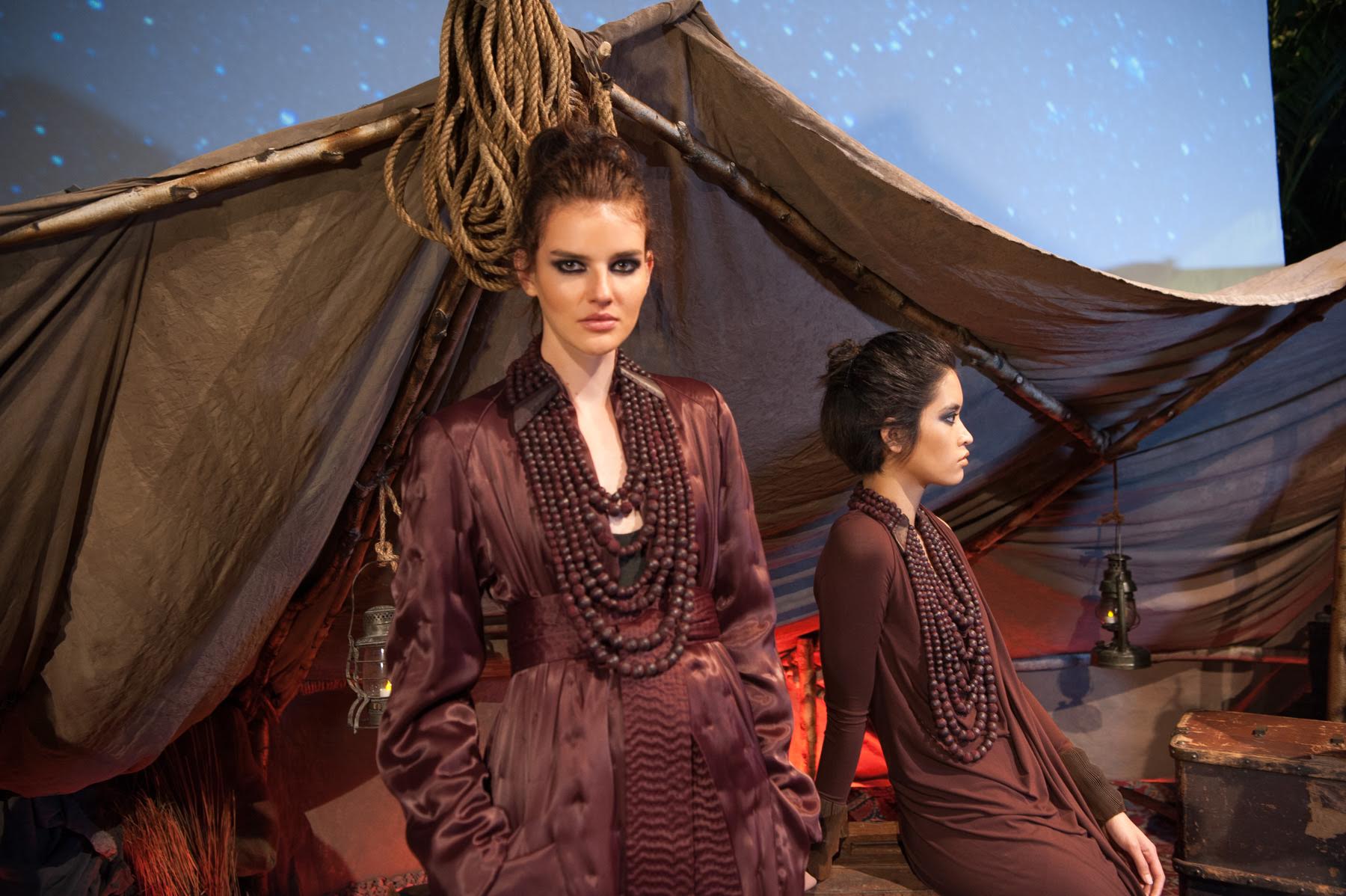
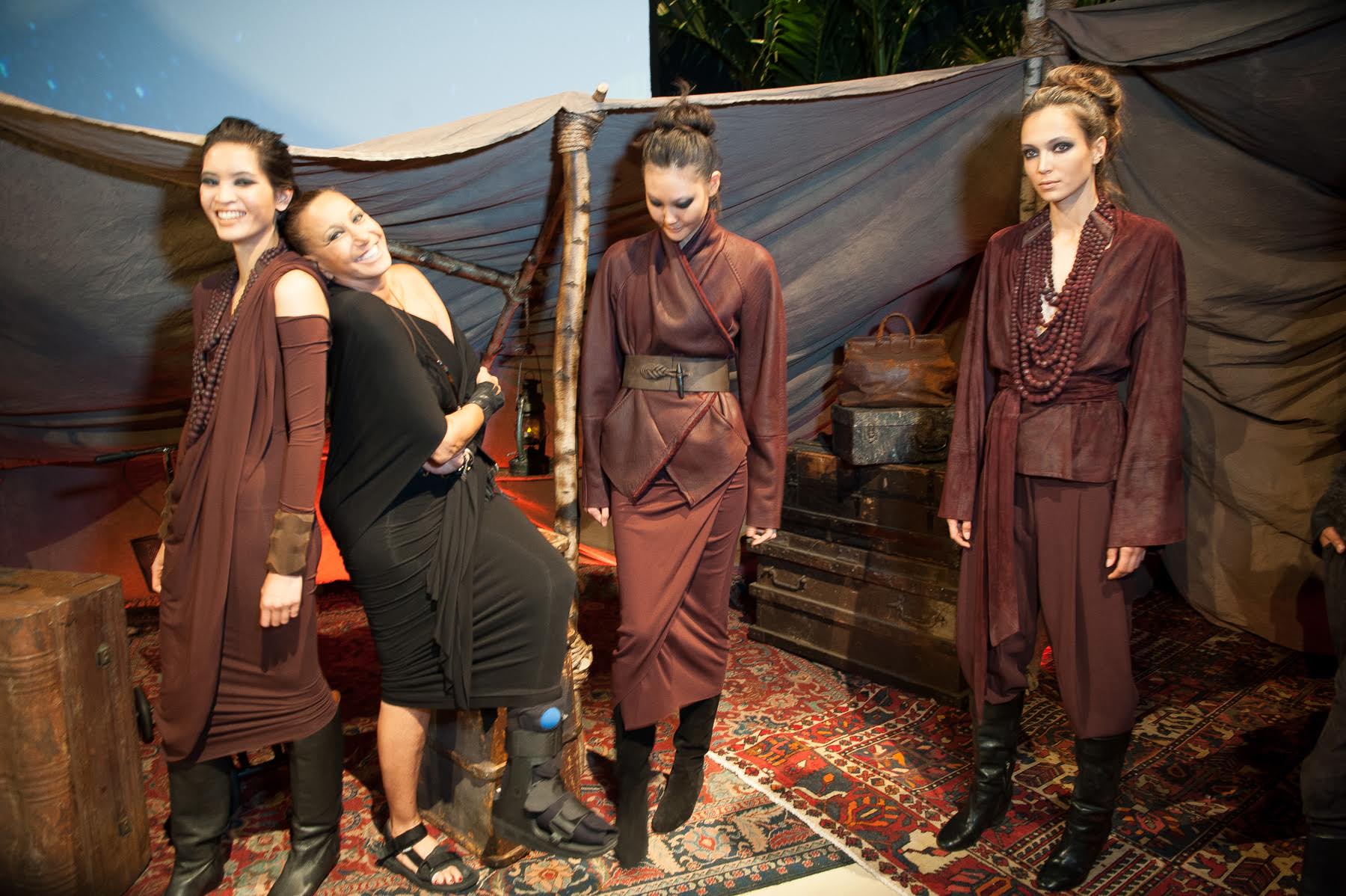
Donna Karan: I’ve always been obsessed with artisan nomadic lifestyle, only reimagined for a modern urban woman. I also love when east meets west, masculine meets feminine. This collection melts all of those elements in a contemporary, luxurious dress up/dress down way.
Giulia: You work with Haiti a lot. What is it about that culture that attracts you?
Donna Karan: There’s so much to love, starting with the beautiful island itself. But it was the vibrancy and spirit of the people - people very much in need of our aid – who really inspired me. In spite of how difficult their life is – especially with the earthquake and recent hurricane – they are lovely, warm and uplifting. You can’t help but fall in love. From a cultural point of view, their artistry is amazing – but undeveloped for a global market. I knew I could help make a difference with support, vocational education and building awareness.
Giulia: What is the DNA of Urban Zen?
Donna Karan: Inspiring change and raising awareness for three passions: preserving culture (past); integrative wellness (present) and empowering children through education (future).
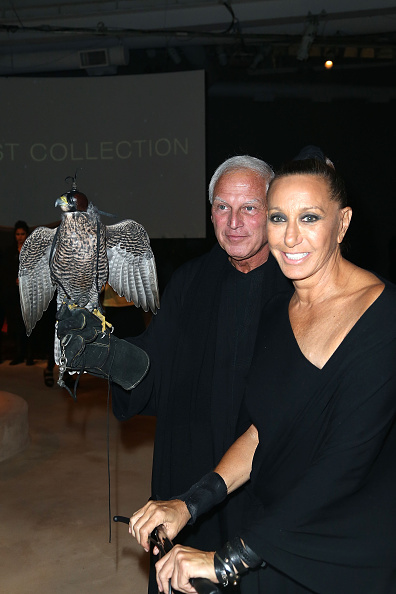
Giulia: Who is your ultimate muse?
Donna Karan:It may sound strange, but I’ve always been my muse, along with my friends and of course my daughter, Gabby. I’m addressing and dressing a creative, urban professional. A woman who travels the world, who needs and wants both sophistication and comfort.
Giulia: If you were not a famous designer today, but were financially successful, would you still help people in developing countries?
Donna Karan: Absolutely! You can’t travel, see the world and not want to help people in need. Because I’m a creative spirit, I’m drawn to the visual arts, so that’s how I chose to help.
Giulia: How do you feel about new designers today?
Donna Karan: These are exciting, but challenging times for fashion. The old rules of head-to- toe looks don’t apply because the consumer is curating her own looks with great pieces from different sources. So it’s about grabbing her attention by not being too out there and unwearable but not being too simple and boring. It’s a fine line. The exciting part is the creative freedom of fashion today. Trends don’t matter in the way they used to. You create and tell your own story.
Giulia:What role does social media play for your company?
Donna Karan: In many ways, it’s our dressing room. When I first started designing, I insisted on joining my customer in the dressing room, where I dressed and addressed her. We spoke woman to woman, I learned about what she needed and wanted, and what she didn’t. The internet does that for us now – we can show her our clothes, our philosophy of living, our Foundation work, and she can write back to keep the dialogue going, no matter where she lives. The world is truly a global community and the internet keeps us connected.
Giulia: NotOneMore campaign. Why gun violence and how do you feel about legalized death penalty?
Donna Karan: NotOneMore speaks to gun safety. 88 people are killed every day in our country – we have to stop this senseless killing so that not one more family goes through the pain of losing a loved one.
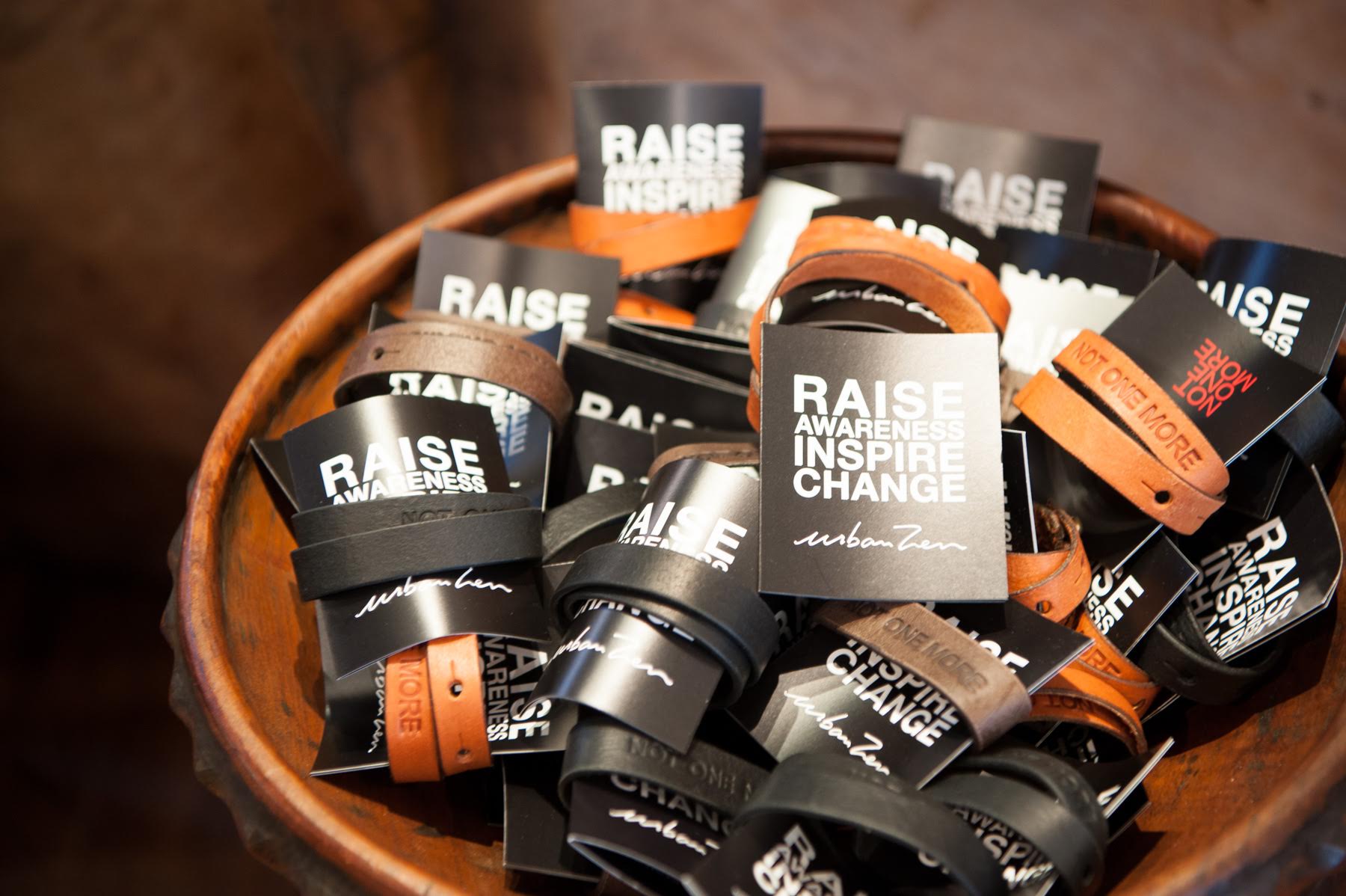
Photo by Lauri Levenfeld.
Giulia:Handling three labels, family, traveling can get chaotic. How do you navigate through it all?
Donna Karan: I don’t handle it all – I have wonderful teams around me – people who have been with me for years - who help me do all that I do. You’re only as good as those you work with.
Giulia: How does yoga help you?
Donna Karan: Yoga is my calm in the chaos. It centers my mind, body and spirit and grounds me. When I’m on my mat, I’m able to go within to the stillness that’s inside all of us. I surrender myself to the practice, which is really a moving meditation.
Giulia: What is it about you that has made your dreams come true? What advice can you offer to new designers?
Donna Karan: I’m a problem solver by nature; I see a void, I have to fill it. That’s what drives and motivates everything I do. For me, a challenge is an opportunity to be creative. My advice to new designers is two-fold: see the world and get inspired. It’s only by seeing the world that you can shift perspectives and learn to create in a whole new way. My second piece of advice is to get a job in retail. Nothing better prepares you than getting to know your customer, understanding what inspires and motivates her to buy what she does.
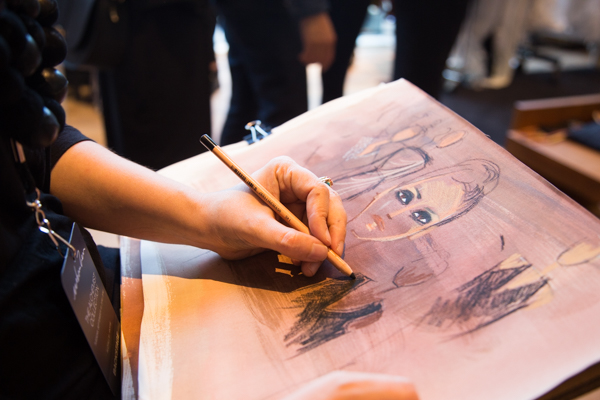
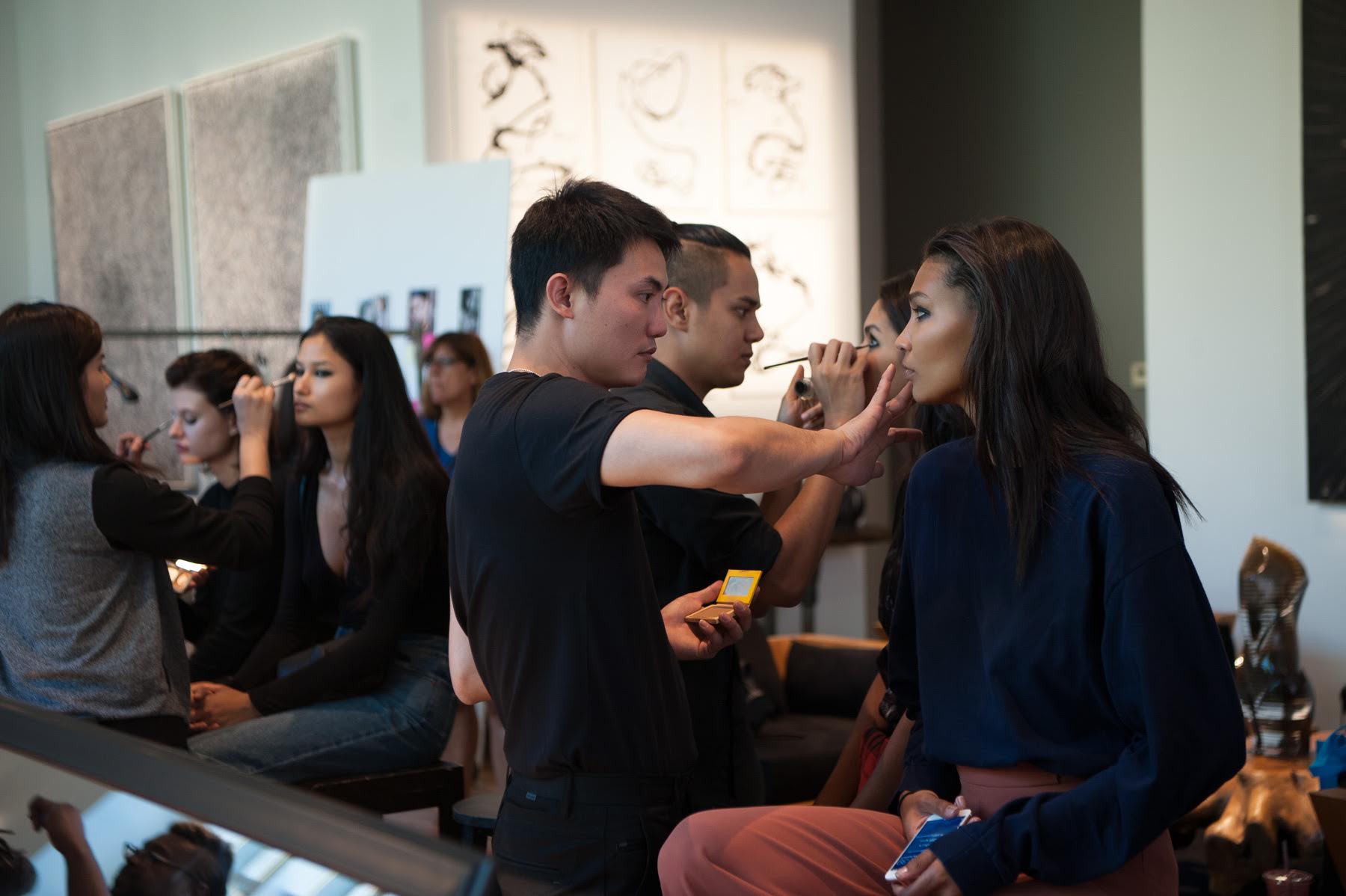
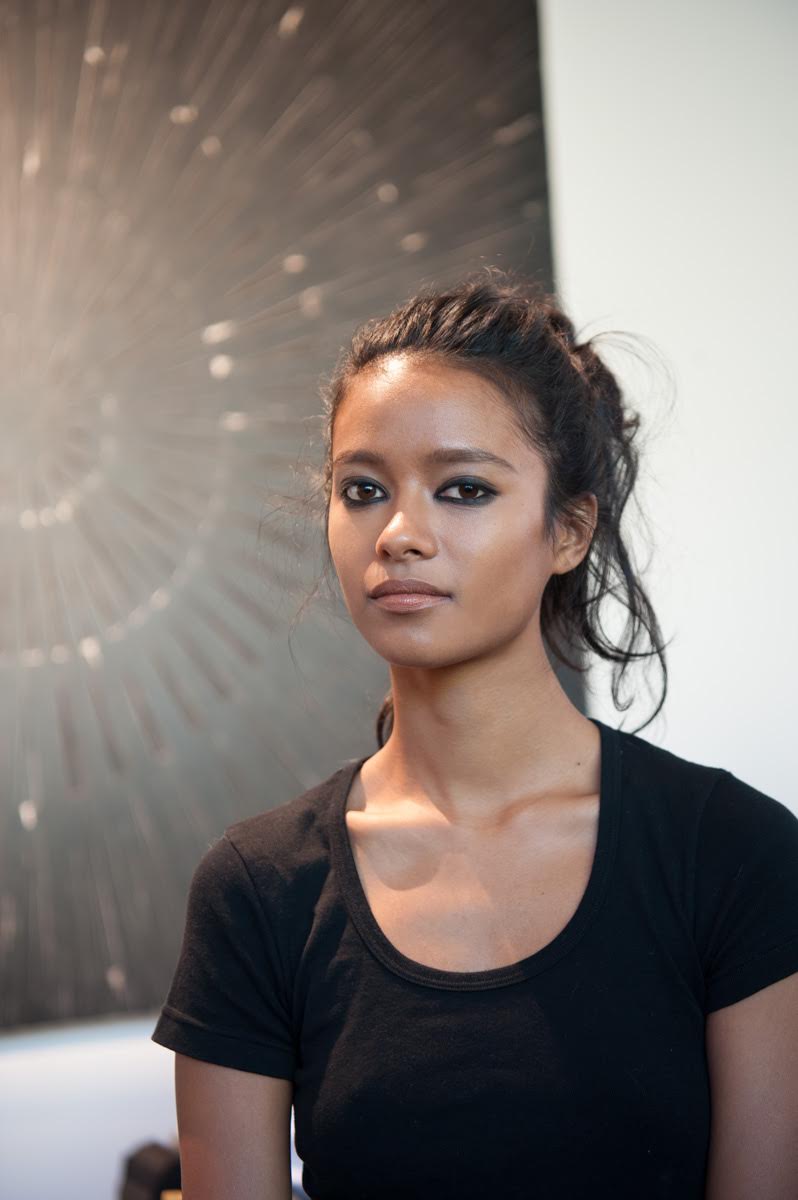
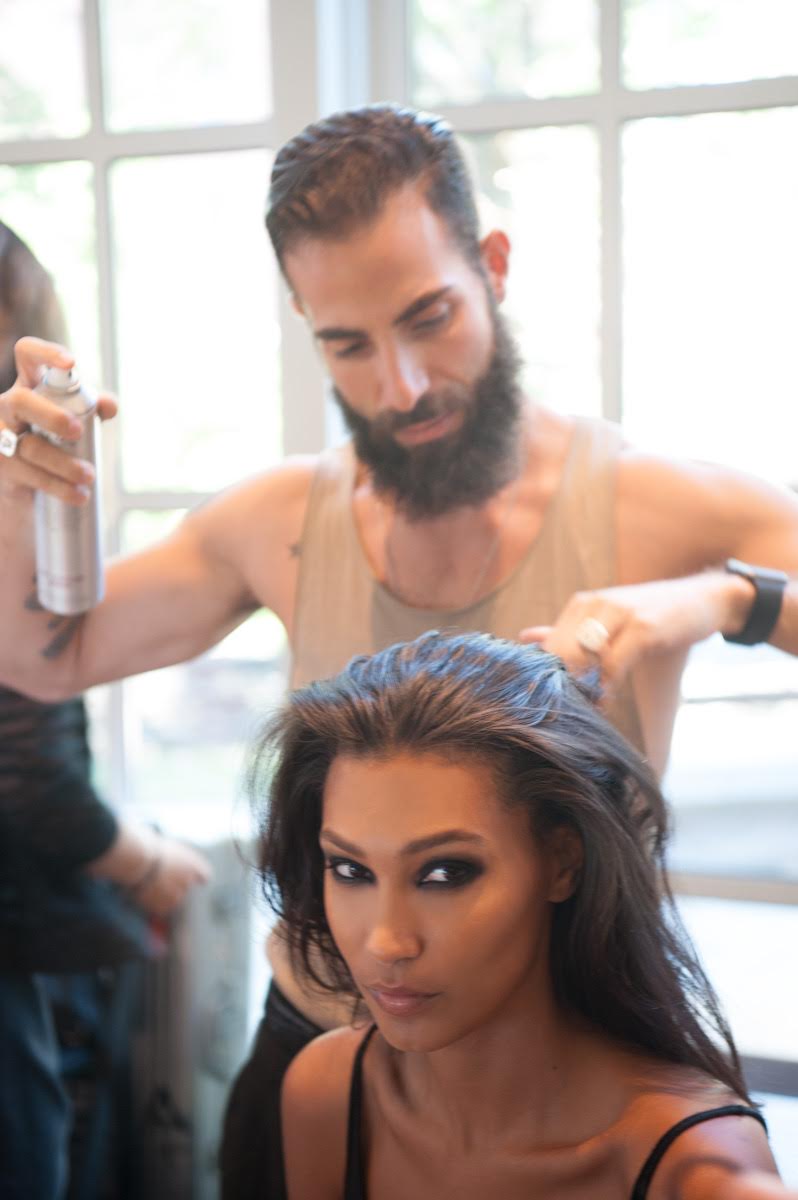
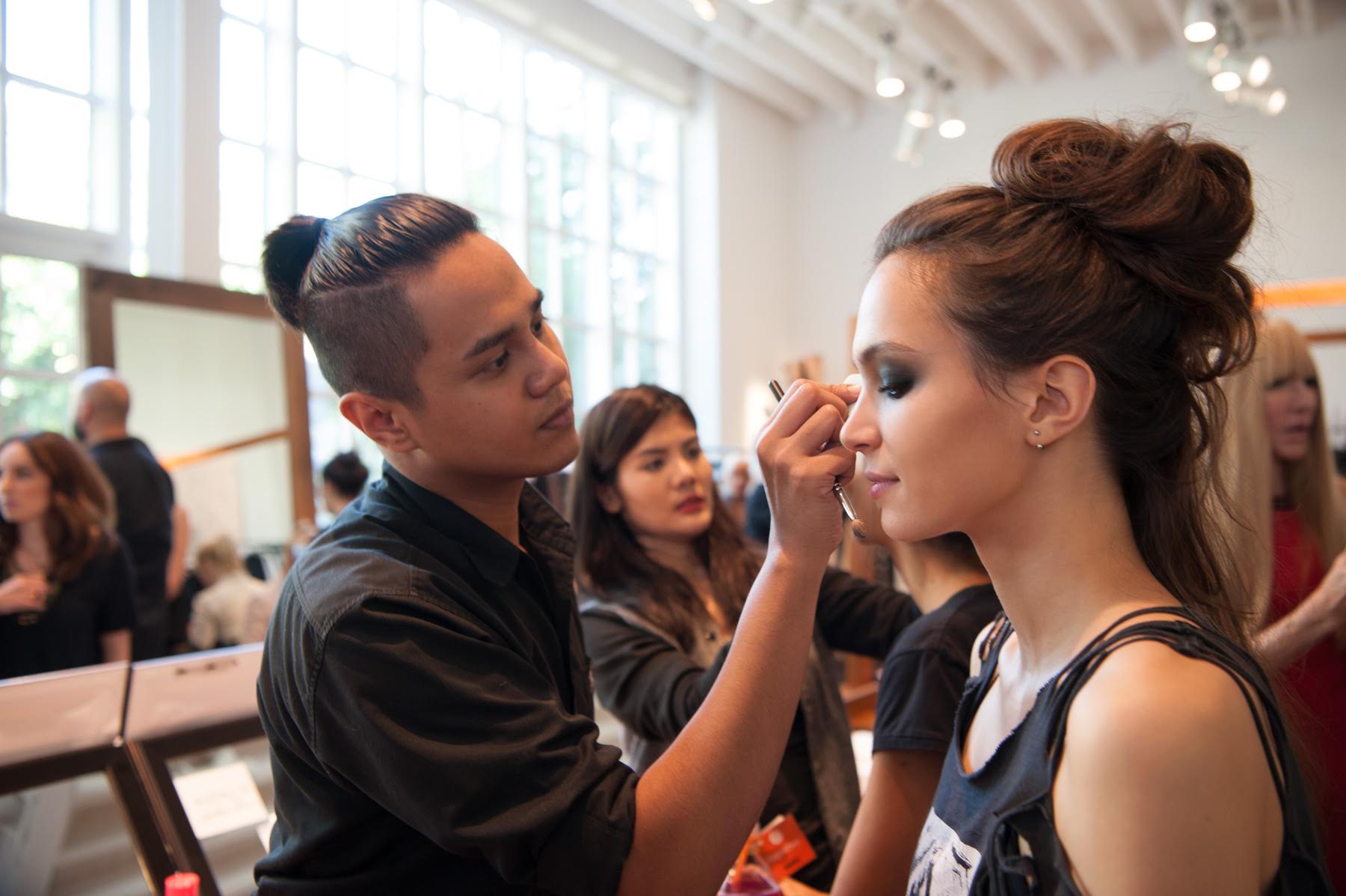
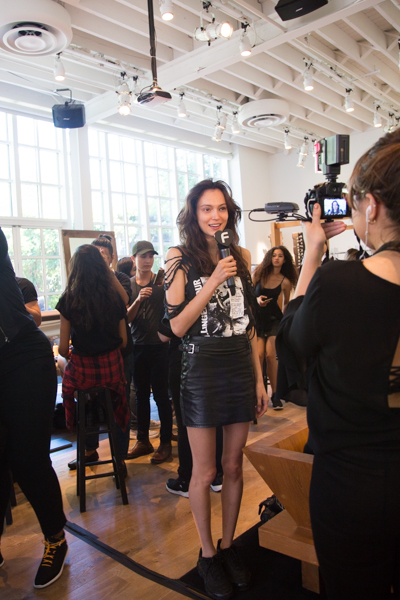
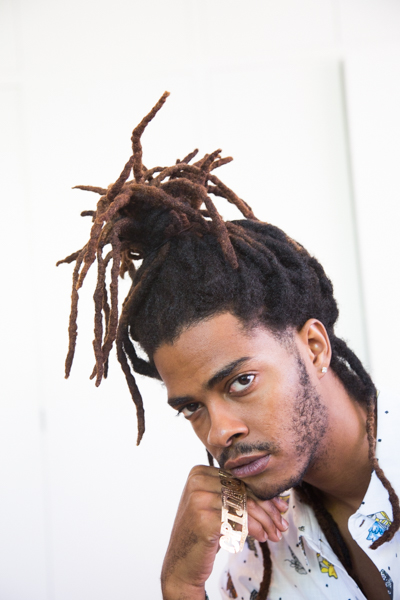
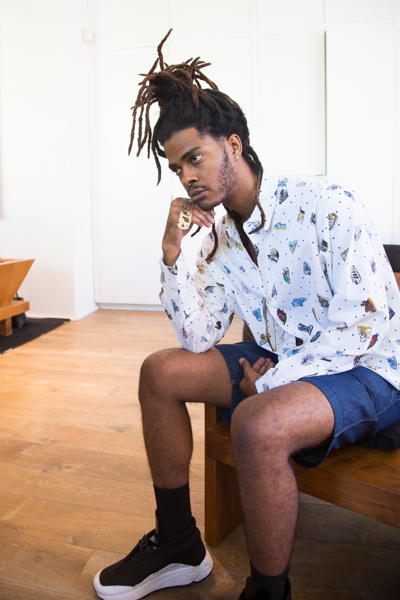
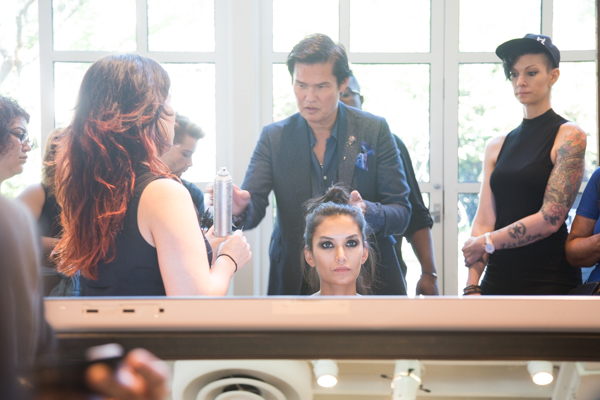
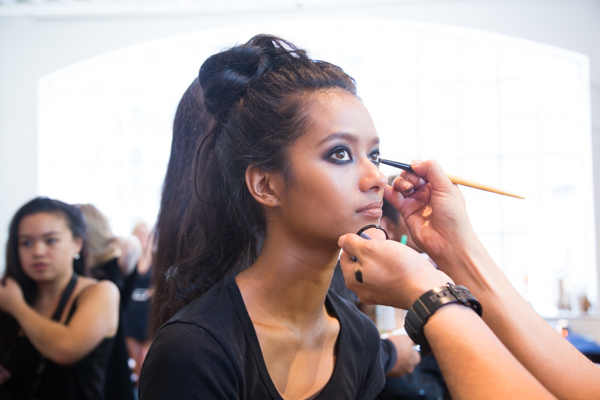
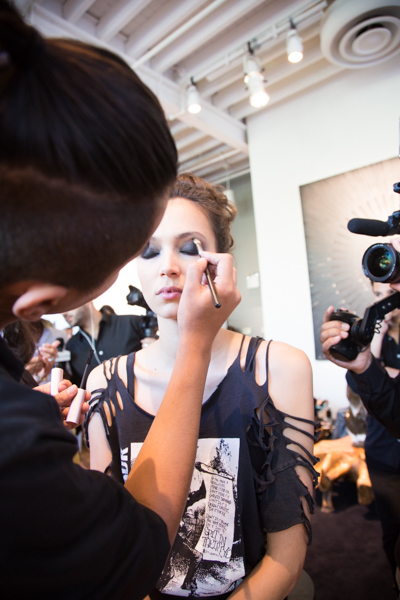
Backstage at Urban Zen
SHOP URBAN ZEN







THE TALK WITH GEORGE MALKEMUS
PRESIDENT OF MANOLO BLAHNIK IN CONVERSATION WITH JOLIEGAZETTE
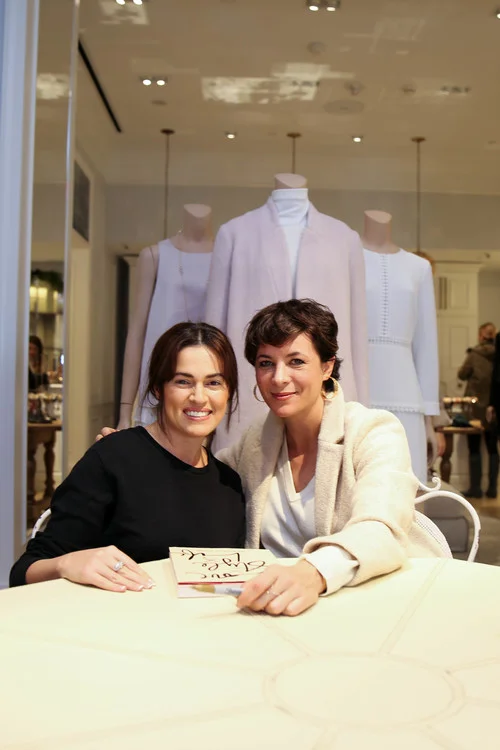
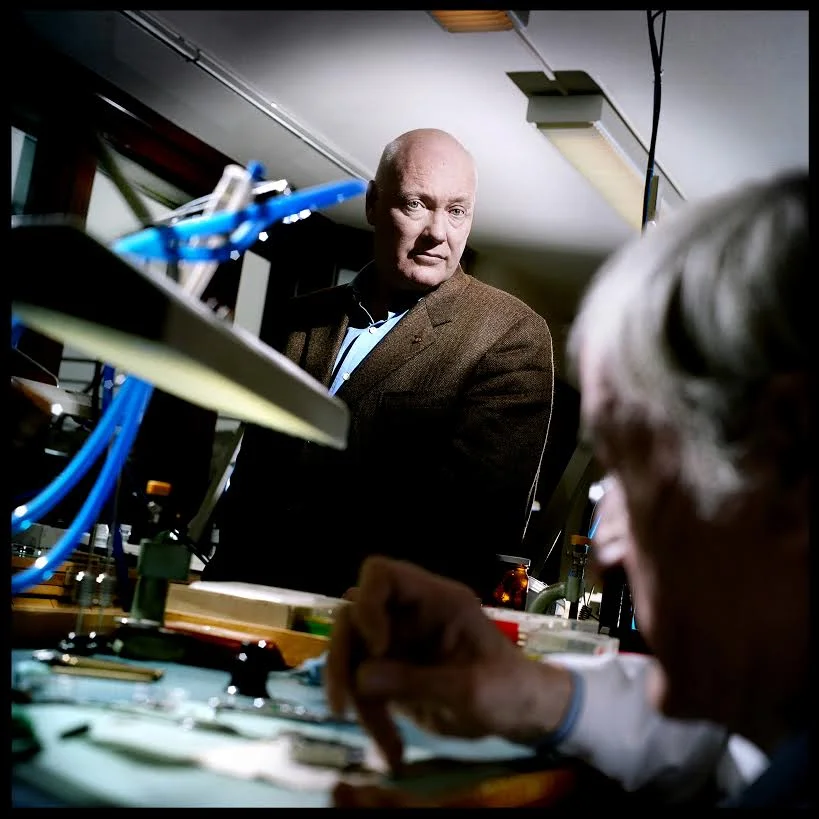
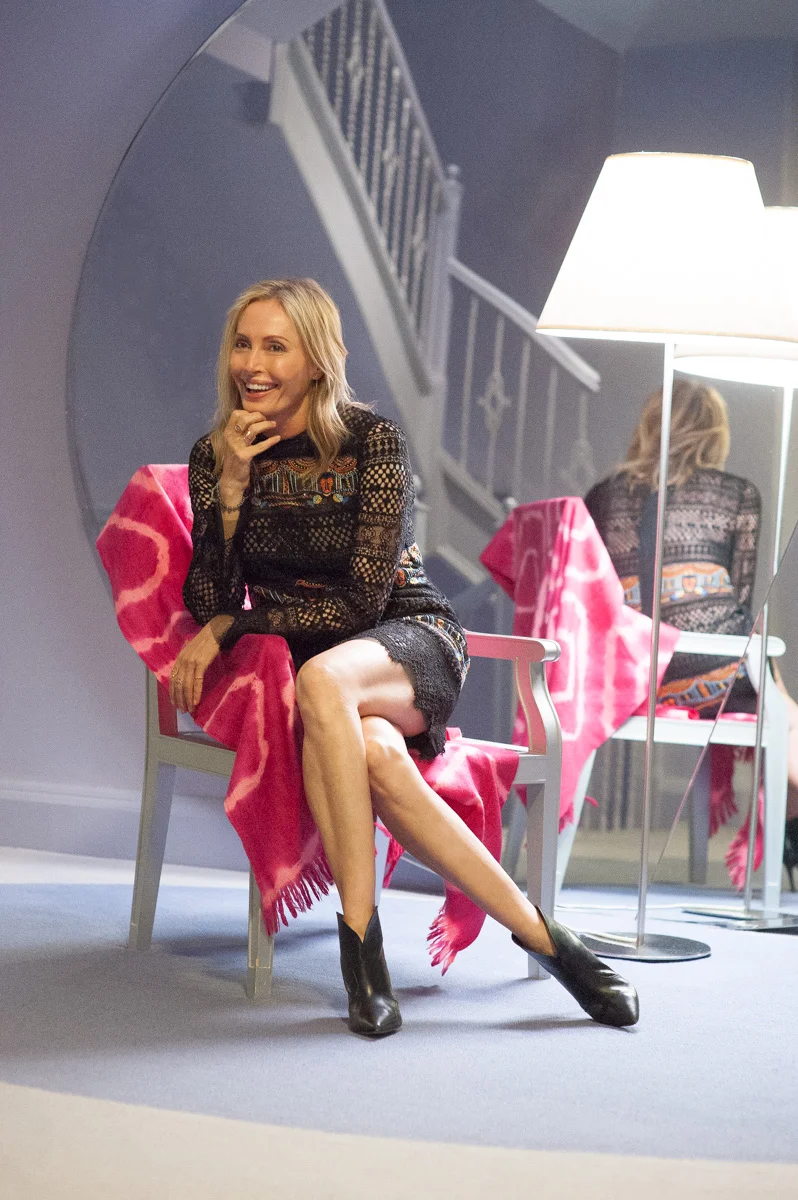
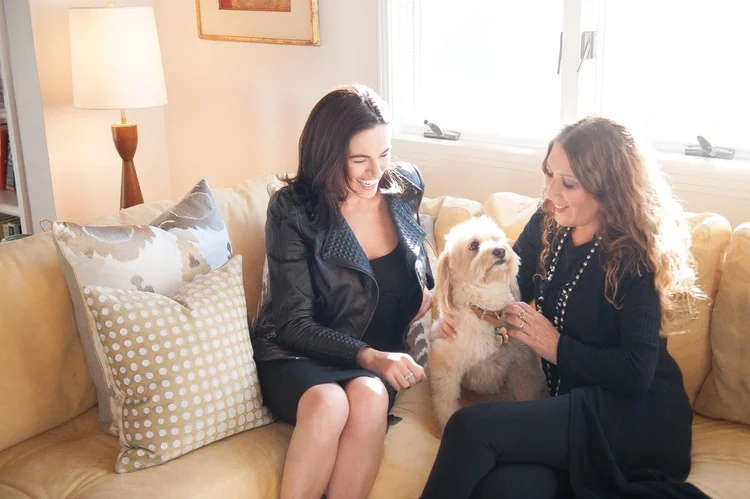
Manolo Blahnik has become a household name thanks to the brand's endorsement on the popular series "Sex & The City." Sarah Jessica Parker's character, Carrie Bradshaw, is obsessed with her Manolo Blahnik collection and let's face it...we don't blame her! The high end shoe brand has a flare of elegance and glamour every woman desires. Last week, we had the pleasure of interviewing George Malkemus - the President behind this powerful worldwide brand. George arrived to Neiman Marcus store in San Francisco and chatted with us . The shoe lovers had the opportunity to meet and speak with George later about the latest designs and colors for the season. Guests enjoyed the champagne, hors d'oeuvre and a little music while shopping around the shoe salon for their favorite new pair of heels.
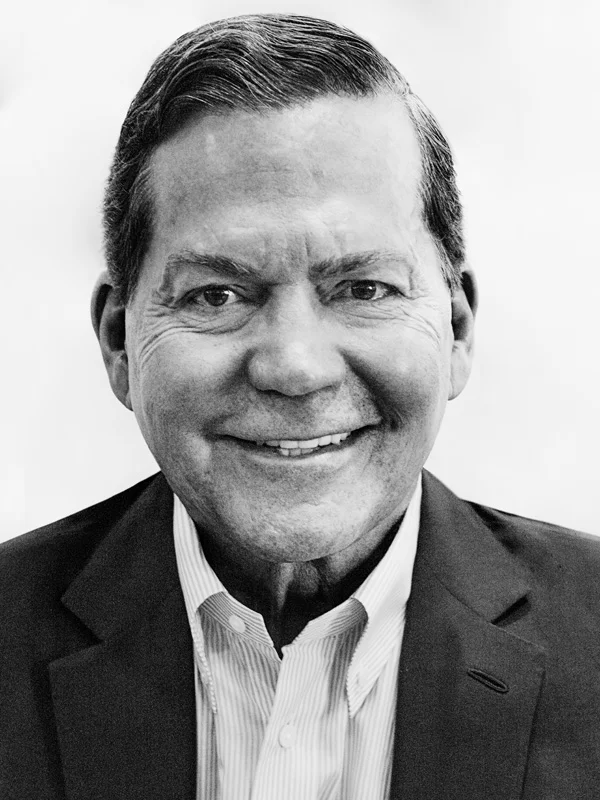
Photo by Amaris Granado for Gazette du Bon Ton
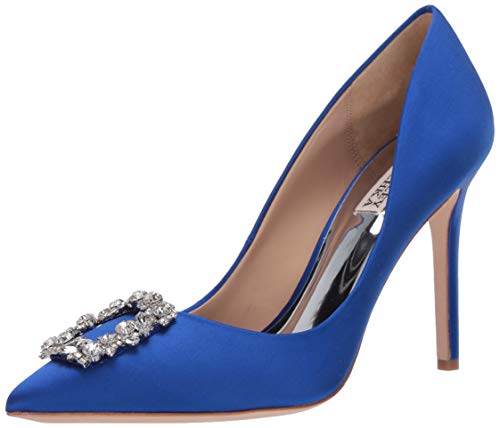
Giulia: Tell us a little bit about Hangisi shoes by Manolo Blahnik ?
George: Hangisi was designed by Manolo with costume designer Patricia Field for the movie "Sex and the City". Actress Sarah Jessica Parker was personally involved, as she is involved with everything.
Giulia: So Hangisi shoes were designed specifically for the movie?
George: Yes. Sarah Jessica Parker said it should be something blue, not pale blue, not baby blue, strong blue. They already knew that it was going to be in the apartment that Mr.Big had bought for her. They knew it was going to be in the closet, however Sarah Jessica did not know it was going to be in the closet. It was designed for the movie and still is a number one selling shoe.
Giulia: What does Hangisi mean?
George: Hangisi mean The Goddess in translation from Turkish.
Giulia: Those shoes is The Goddess!
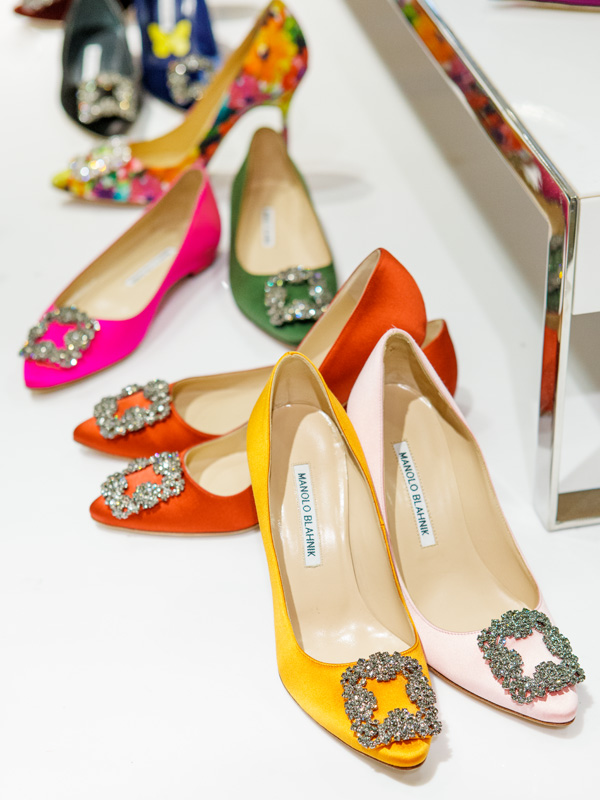
Photo by Amaris Granado for Gazette du Bon Ton
Giulia: Let's talk about crème de la crème of the dairy world. You've opened an Arethusa Dairy farm and now leading a highly successful cow breeding operation?
George: Yes, it’s a great farm with milk like it used to taste.
Giulia: Do you find any similarities between fashion and farm?
George: When we first bought Manolo Blahnik, no one even knew how to pronounce Manolo Blahnik; it was a risk. To me life is about risk, but more importantly I think that you have to have a passion for what you do, and this is really all about passion.
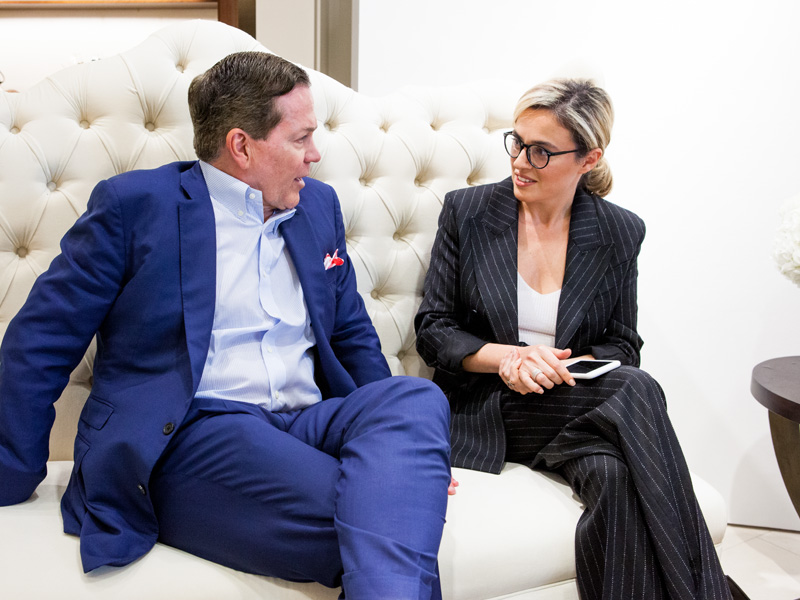
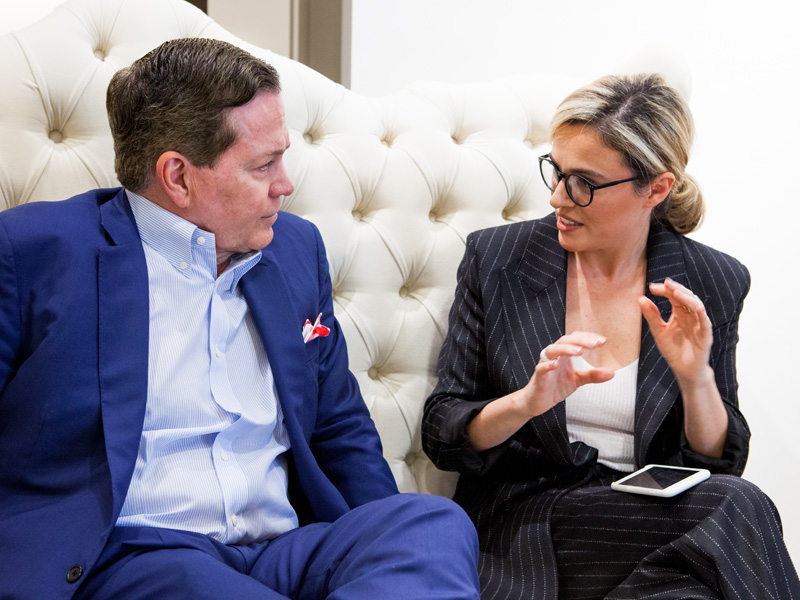
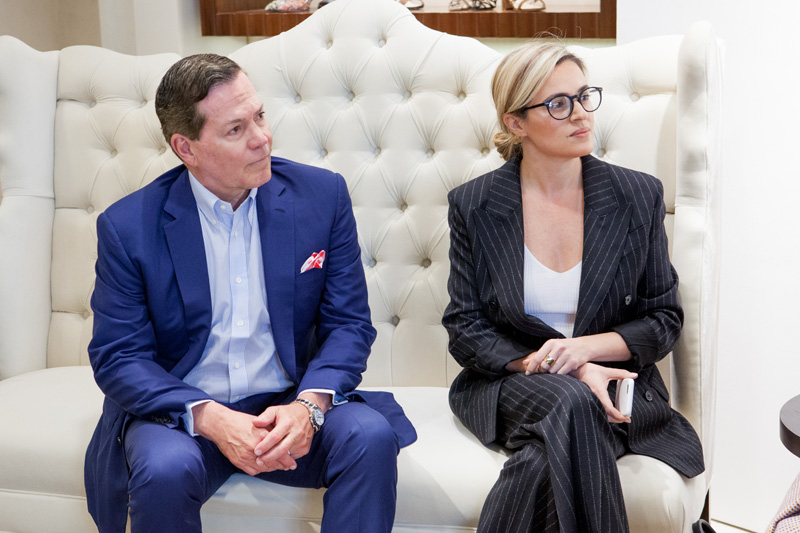
Giulia: Is Manolo Balhnik planning to collaborate with anyone else, like he did with the movie "Sex and the city" ?
George: Last year Manolo did a project with Rihanna. Right now he is in works with Vetements. He did a collection for Vetements last season.
Giulia: That's right. He took the beloved Hangisi silhouette, and then reimagined the style with a deconstructed interpretation.
George: Yes. It wasn't something outrageous. It is something that Manolho was doing for years and years and years. I mean who knows? Manolo finds collaborations useful and inspiring, so he loves when they come along and if he likes the idea he does it.

Photo by Amaris Granado for Gazette du Bon Ton
Giulia: What is Manolo Blahnik like?
George: He is incredibly intelligent, he is so observant about everything. He is passionate like me. He loves enthusiastic people. He can't stand mundane, boring people. He has to be enthused, exhilarated all the time.
Photography: Amaris Granado Text: Giulia Juliet Belkin
The Talk with Emma Ferrer
Though she grew up knowing that her grandmother was a film and style icon, Emma Ferrer (granddaughter of the legendary Audrey Hepburn) is a product of self-discovery.
Photo by Megan J Merkley.
ART DIRECTION AND STYLING: Giulia Juliet Belkin
Though she grew up knowing that her grandmother was a film and style icon, Emma Ferrer (granddaughter of the legendary Audrey Hepburn) is a product of self-discovery. Today she is a model, artist, dancer and spokesperson for UNHCR. Emma was born in Morges and spent her first year at La Paisible, the Hepburn family's country house in the Swiss village of Tolochenaz, near Lausanne. At the age of 14 Emma moved to Florence, Italy with her parents - the birthplace of the Renaissance, the center of art and culture. Emma is a graduate of Florence Academy of Art. She recently moved to Manhattan to pursue an acting and modeling career. We caught up with Emma for a chat during New York Fashion week.




What were you like as a child and how did it shape to who you are today?
I have always been shy and introverted. I was a book worm from the day I learned to read. I would drown myself in books and stories, and stay in the library during the lunch break. I loved to do ballet and to paint. I would often do these activities alone. I used to think this was a bad thing- that I needed to be like other kids: more social, and with more friends. Today, I am learning to accept who I am…and to love myself for being a little different!**
You lived in Italy for some time before moving to New York. What made you make the move?
I have always been attracted to the energy of New York. It’s magnetic. There is so much to become involved in here. For someone my age looking to experience life, it’s the best place.**
When did you become passionate about art?
I think I was born passionate about art**
Who are some of the artist you admire?
Giorgio de Chirico, Rembrandt, Arnold Bocklin, Klimt, Magritte, Jules Bastien Lepage, Zurbaran, Mark Rothko, Van Gogh…to name a few!**
What is your favorite place to see art?
In New York: The Met or the Neueu Gallery. In Paris: Musée d’Orsay. In Florence: The Palazzo Pitti or the Uffizi.**
What inspires you?
Dreams, the metaphysical, meditation, the 4th dimension, The Sublime, daily life, daily activities, ancient Greek poetry, Plato, Orpheus, Dionysus, Autumn**

How did modeling start ?
With a cover story I shot with Harpers Bazaar. It was totally a fluke, the editor at Bazaar tracked me down…I was just an art student living in Florence, Italy, and all of a sudden they wanted to shoot me for one of the world’s leadin fashion publications. At first, I was hesitant, but my curiosity gave in as I am always up for a new experience. I was shot by Michael Avedon, who happens to be the grandson of Richard Avedon, an iconic fashion photographer in the 60s and 70s. My grandmother was his muse, so there was a great parallel story. Michael and I are best friends to this day. And the rest was history.**
What do you like about modeling?
Meeting creative minds and talented artists. When photographers have their own vision and are true to it…the model is taking part in this incredible moving production. Then become involved the stylist, the makeup artist, the hairdresser, the men working the lights, the camera crew, even the catering guys…everyone is an inextricable part of giving birth to the vision as it unfolds. I love that so many people are involved and contribute their ideas and perspectives. In that sense, it’s an artistic community. I thrive on art and community…so I guess modeling, when at its best, can let you be part of something quite special.**
Like your grandmother you love ballet. Did you ever pursue a career in ballet?
Definitely. I trained rigorously until about the age of 12. I danced with multiple professional companies. My dad likes to say that, like my grandmother, I’m too tall to be a dancer. This simply isn’t true. Ballet is a beautiful art form, but it demands a lot of sacrifice from the individual. I guess I realized at a certain point that I had to choose a life dedicated to becoming a dancer, or a life dedicated to exploration and experimentation. There isn’t much room for mistakes as a dancer. Today, I’m all about making mistakes. About falling down. You can’t fall down as a dancer. It’s just a different approach from what I’m going for right now.**
Do you ever think about becoming an actress?
Shhh…a little secret: I’ve recently enrolled in acting classes.**
Why do you continue your grandmother's Audrey Hepburn's charitable work with Unicef?
I am a spokesperson for UNHCR- the United Nations agency for refugees. In a broad sense, I continue the humanitarian work of my grandmother, like most members of my family. I have felt a great philanthropic urge since I was tiny. When I was 5, at school we had to write a little blurb about ourselves accompanied by a self-portrait. One of the prompts was, “I am good at___”. I wrote, “I am good at_ ‘feeling other people’s pain’. I recently discovered this little project, framed by parents, in an old filing box at home. It was a surreal moment for me…I guess I realized, ‘Wow-I’ve been doing this since before I even knew who my grandmother was, or what it was to be a ‘humanitarian’.’ Anyways, today, I feel deeply moved by the refugee crisis. It highlights so many ethical issues with our world. The growing gap between East and West can be felt in standards of living, economy, religion... We, as a society, have double standards. I can’t help but feel that we live in a society that values the life of one over another. We are all guilty of practicing unconscious prejudice. Working with refugees gives me the chance to check in with myself everyday. It helps me understand where I stand in relation to every other person on this planet. **
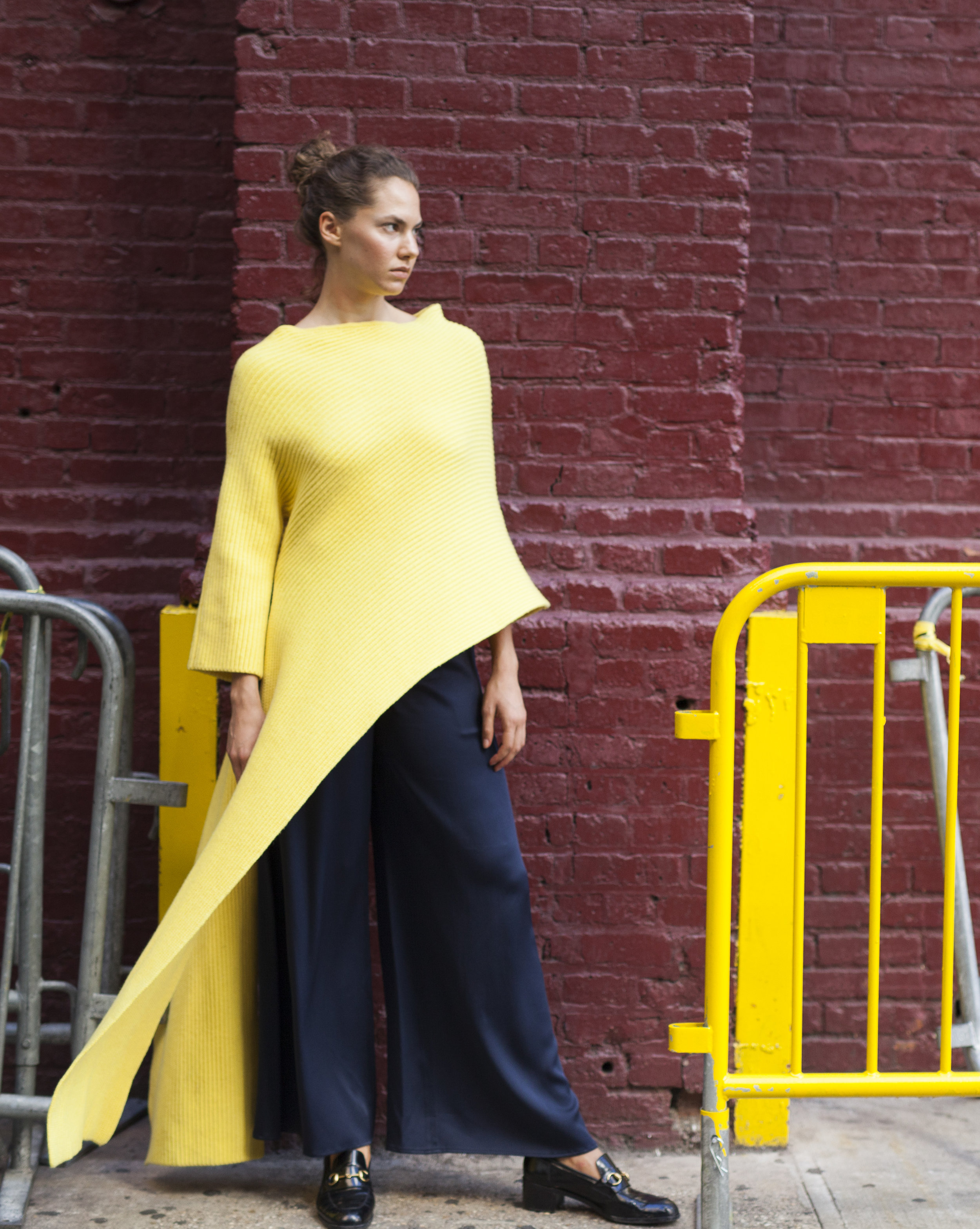
Photo by Megan J Merkley. Styled by Giulia Juliet Belkin. Sweater and trousers by Ji Oh.
What does it mean to you today having a grandmother like Audrey?
The world. I can say I am proud and honored. I am fortunate.**
Do you feel that you carry her spirit with you today?
Yes.
What is next for Emma Ferrer?
More discovery!**
Any valuable advice you'd give for girls your age?
The sooner you learn that you are beautiful just as you are, the closer you are to being the best possible you. You are enough, and if you accept that, you will shine brighter than any of the models, actresses, or icons in the ads. Believe me. We are all deeply, deeply insecure. Even the most beautiful women you know of feel they aren’t good enough. Believe me, I’ve seen it with my own eyes. Beauty is about being true to your deepest self. There is only one of you. People are drawn to this truth. Be generous with yourself and be generous with others. Little acts of service will make you happier. Meditate. Don’t do drugs. Create things. Let the world know who you are!**

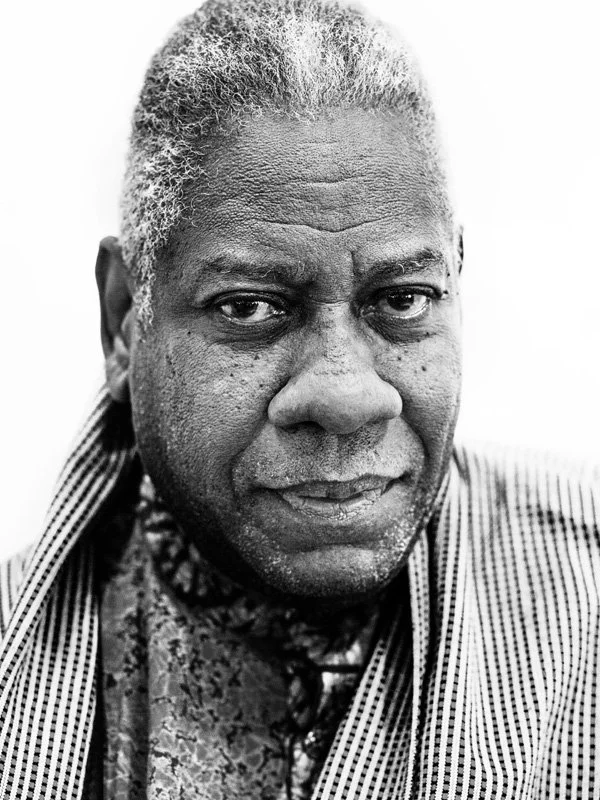
THE TALK WITH ANDRE LEON TALLEY
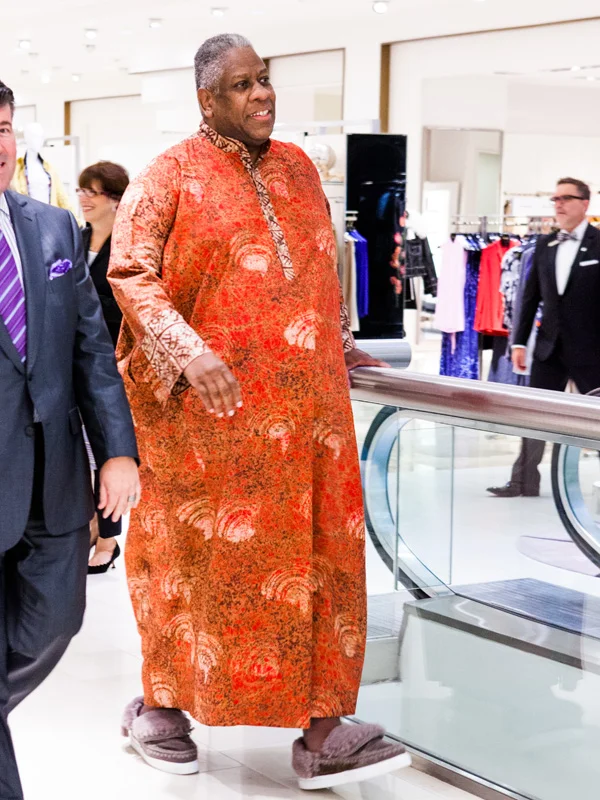
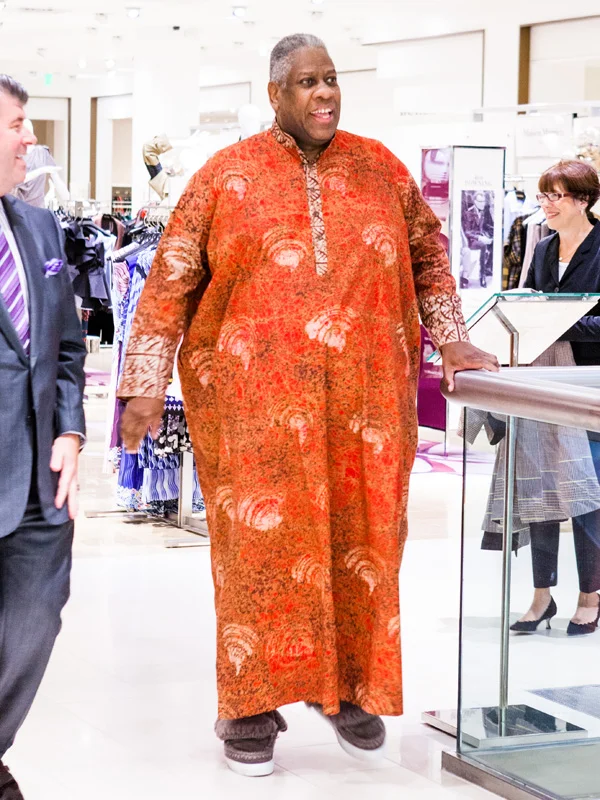
He apprenticed with Diane Vreeland, gone clubbing with Karl Lagerfeld, and seen Anna Wintour in the dressing room. We sat down with Andre Leon Talley at Neiman Marcus in San Francisco for a little fashion chat with Joliegazette.
Photos by Amaris Granado for Gazette du Bon Ton
Interview by Giulia Juliet Belkin
André Leon Talley, a fashion landmark, whose judgment sought by top designers arrived to Neiman Marcus San Francisco for fashion chat and was welcomed with grand applause. Andre is a contributing editor of Vogue, Author of Valentino: At the Emperor's Table and a host of Vogue's Podcast. He's been in fashion for more than 25 years. Talley’s voice, with its Pavarotti-like range and unique timbre was passionate as we talked about women who inspired him, his work with Anna Wintour, his opinion on Fashion and Technology and more.
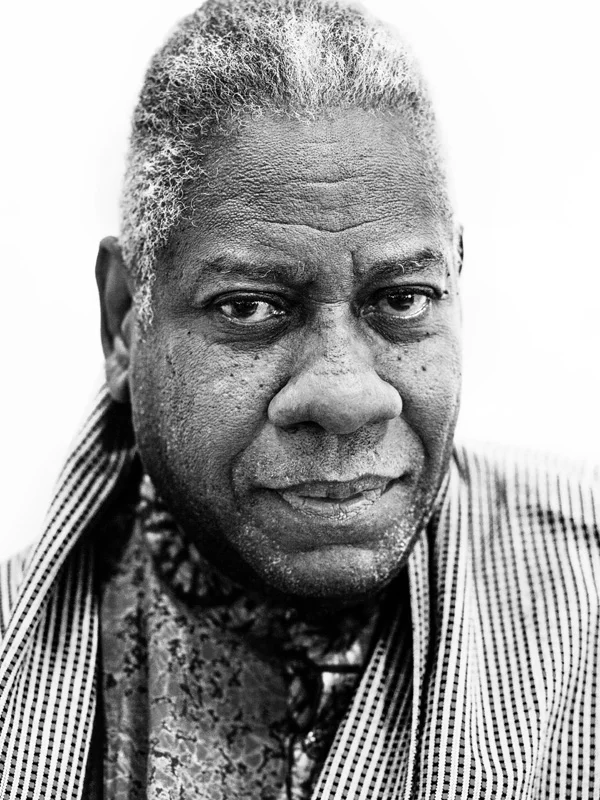
Photo by Amaris Granado for Joliegazette
Giulia: I always, always wanted to ask you about you capes? What is the story, the history behind them?
Andre Leon Talley: I started wearing them in college in undergraduate school. I went to vintage store and I bought one and made it my signature. I always wanted to dress in dramatic way and one of the great inspirations in my life is Lady Ottoline Morell. She was very tall, aristocrat, who knew all the great literary writers and artists and she was very dramatic. She inspired me greatly. Lady Ottoline Morell to me is James Brown.
Giulia: You volunteered for Diane Vreeland and you worked for Anna Wintour. Describe your experience working with both of these powerfull women.
Andre Leon Talley: Well I've learned from two great masters Diane Vreeland and June Fairchild who died recently last year. Those were masters. I've learned to look at the clothes from inside out. Diane Vreeland is a great teacher and mentor and June Fairchild taught me how to write about clothes, how to analyze and review clothes in collections. And what would make a great review of the collection is not just describing look number five, a red coat with gold buttons. The look number five would be a red coat inspired by designer's trip to Russia or having seen some great English movie. You have to always bring in the narrative and the emotional response of something of a garmet, as well as give it a context. Those two women taught me the greatest things I know about fashion. About a skill of being in fashion and having a great base to public. The romanticism with clothes I really learned from Diane Vreeland. My grandmother , Bennie Davis, was a maid, a domestic maid for fifty years. She didn't have a lot of money, but we were not poor. She saved her money and she bought beautiful clothes of great quality and great shoes and she kept them all her life. She had the black suit she bought in 1940s and she was wearing it until the day she died. It was a very beautiful suit, copied off of The Dutchess of Windsor suit
My grandmother and Mrs. Vreeland had similar ways of appreciating luxury because they both believed in the importance of its most essential underpinning: polish.
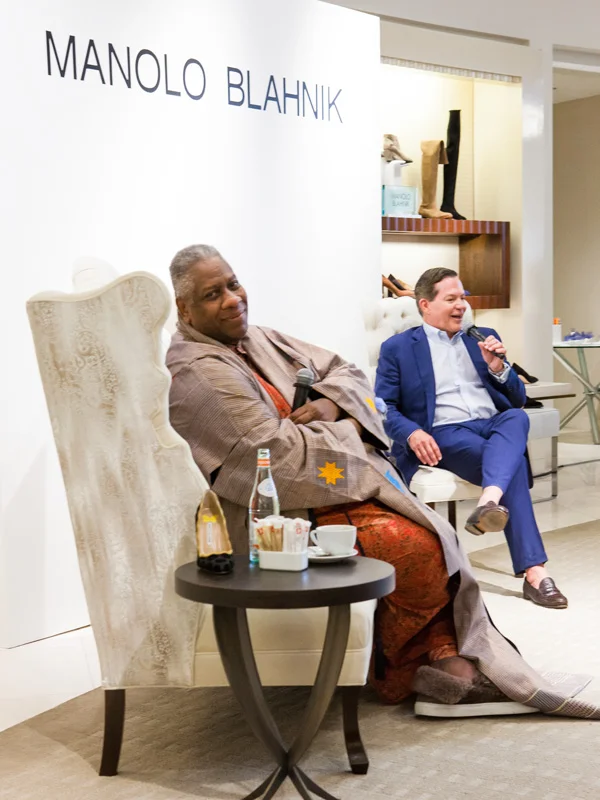
Photo by Amaris Granado for Joliegazette.
Giulia: I've read that your grandmother had great hair
Andre Leon Talley: Yes, she had beautiful grey hair.
Giulia: Did you leave Vogue? **
Andre Leon Talley: I didn't leave Vogue. I am still at Vogue and I am a host of Vogue's podcast. I am considered very much a member of the Vogue family. Grace Coddington almost left Vogue, but she still works at Vogue. Anna Wintour is a very good friend, Tonne Goodman is a very good friend, Sally Singer, all Vogue people are very much a big part of my life today. Once a week I am at Vogue doing Vogue podcast, so tune in.
Giulia: I will definitely tune in to listen. Who is your dream guest?
Andre Leon Talley: Rihanna.
Giulia: How does Vogue go by choosing who it will put on the cover?
Andre Leon Talley: We acknowledge achievements and talents. Vogue embraces and acknowledges the best! Vogue is at the top of their game. Recently they featured Oscar winner Lupita N'yonog, followed by Kendall Jenner. The cover choices story always exemplify the best of the cultural moment. Vogue acknowledges excelence!
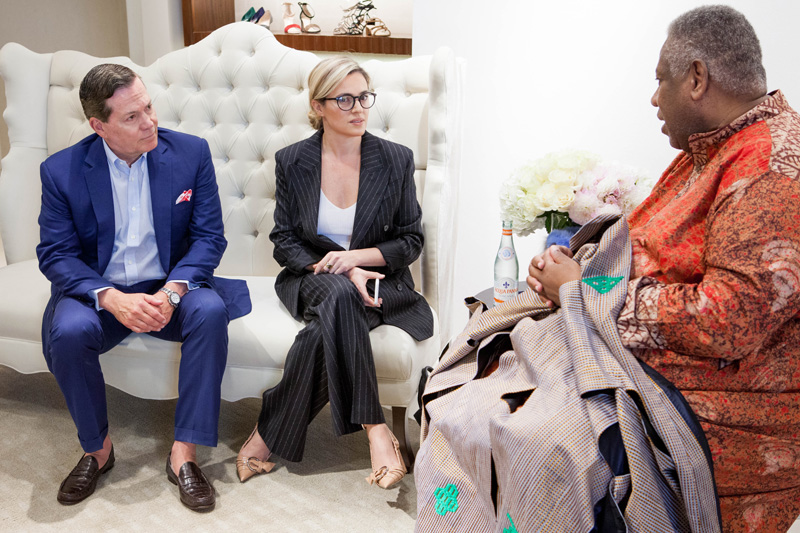
Photo by Amaris Granado for Joliegazette
Giulia: What did you think of Rihanna's latest collection in Paris?
Andre Leon Talley: Amazing! At the gym! I loved it. Rihanna is a Force! I loved her photograph in Crash. In the golden age of cultural icons Marlene Dietrich would be Rihanna today and Rihanna would be Marlene Dietrich.
Giulia: What do you think of fashion and technology? And how fashion is changing due to technology?
Andre Leon Talley: I love it. I work with Will. I. Am. He has an extraordinary product. He is developing a wearable technology jacket for Gucci which will have a smartsleeve. Digital world is important for this age, for young people
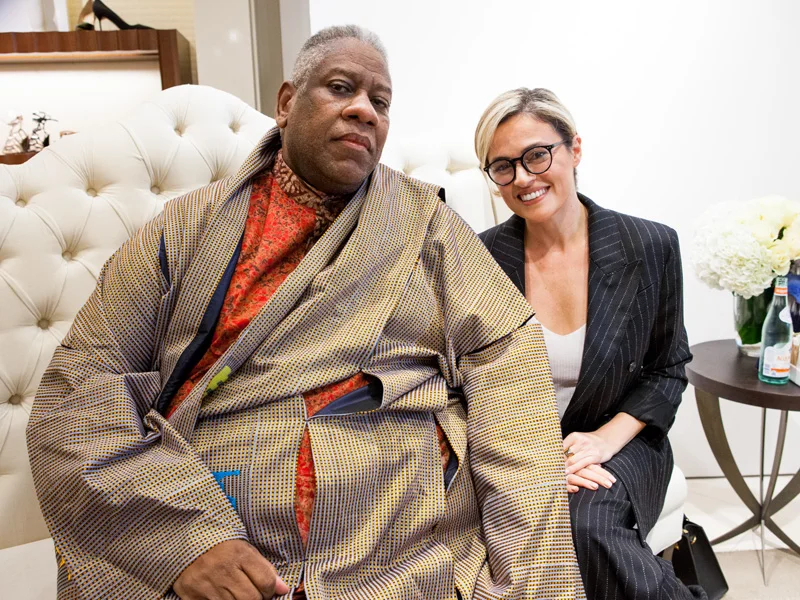
Photo by Amaris Granado for Joliegazette
Giulia: Tell us your opinion on Fashion Shows today.
Andre Leon Talley: Very extraordinarily important for getting the presentation of designer's point of you. For Fashion it's extremely important.
Giulia: Do you think fashion shows are less about fashion today and more about self promotion ?
Andre Leon Talley: No, I think it's still is about fashion.**
Giulia: What about Fashion bloggers?
Andre Leon Talley:I don't follow bloggers. I have no comment on that.
Giulia: And your thoughts on San Francisco?
Andre Leon Talley:San Francisco is the most elegant city in America, after Boston. The enthuthiasm of the people we received in Neiman Marcus today was very, very warm and unique. Thank you!



THE TALK WITH CAMREN BICONDOVA
"Tupac once said that he wanted to be a “real model” rather than a “role model” because people see this figure in a role model instead of a human being who makes mistakes and goes through life."
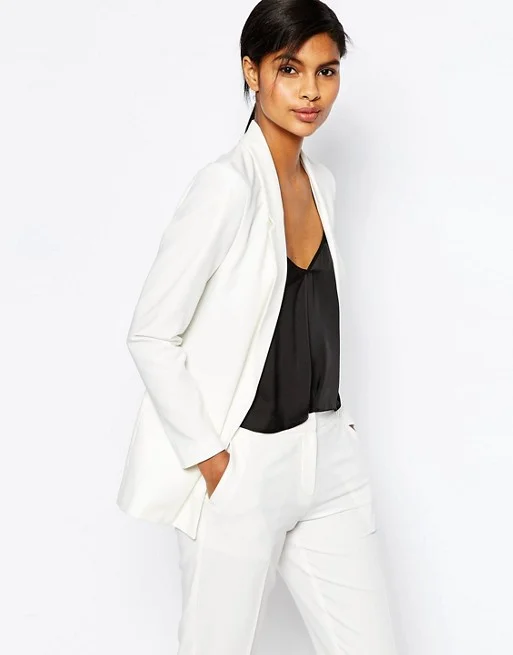
When we met Camren Bicondova in New York, she's all business, arriving in a long-sleeved white suit and black sandals. Underneath that professional look, is a fresh-faced, flamboyant young star with bright future. Bicondova is best known for her role as young Selina Kyle / Catwoman on the Fox television series Gotham. We scheduled to meet around 2pm. She is on a tight schedule for Gotham Mad city Season 3 press. Once Camren gets moving , she is in action. She shares about her busy schedule, her love for dance, her role in Gotham and fashion.
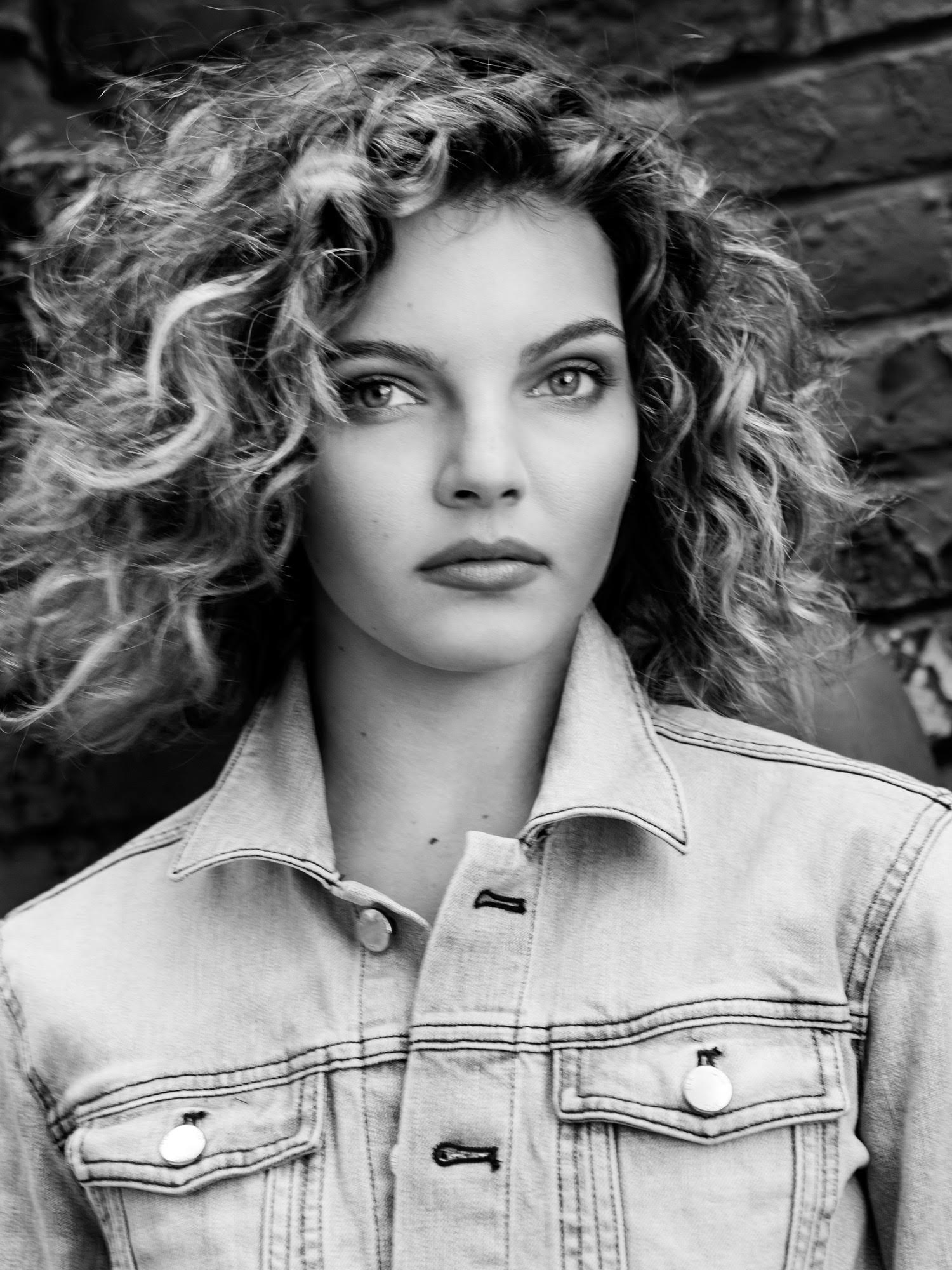
Photo by Amaris Granado for Gazette du Bon Ton
Joliegazette: What were you like as a child?
Camren: As a child, I was very shy and timid. Music and dance really brought me out of my shell because with dance, I could express how I was feeling without having to say anything, which was perfect for me.
Joliegazette: Do you remember what sparked your interest in dance?
Camren: My mom and her friend took me to watch the show Movin’ Out when I was 6 or 7. It was all Billy Joel music and it was choreographed by Twyla Tharp and there was no singing or dialogue that came from the cast—they were just dancing. The fact that I could understand what was going on and how the characters were feeling without them saying anything, fascinated me.
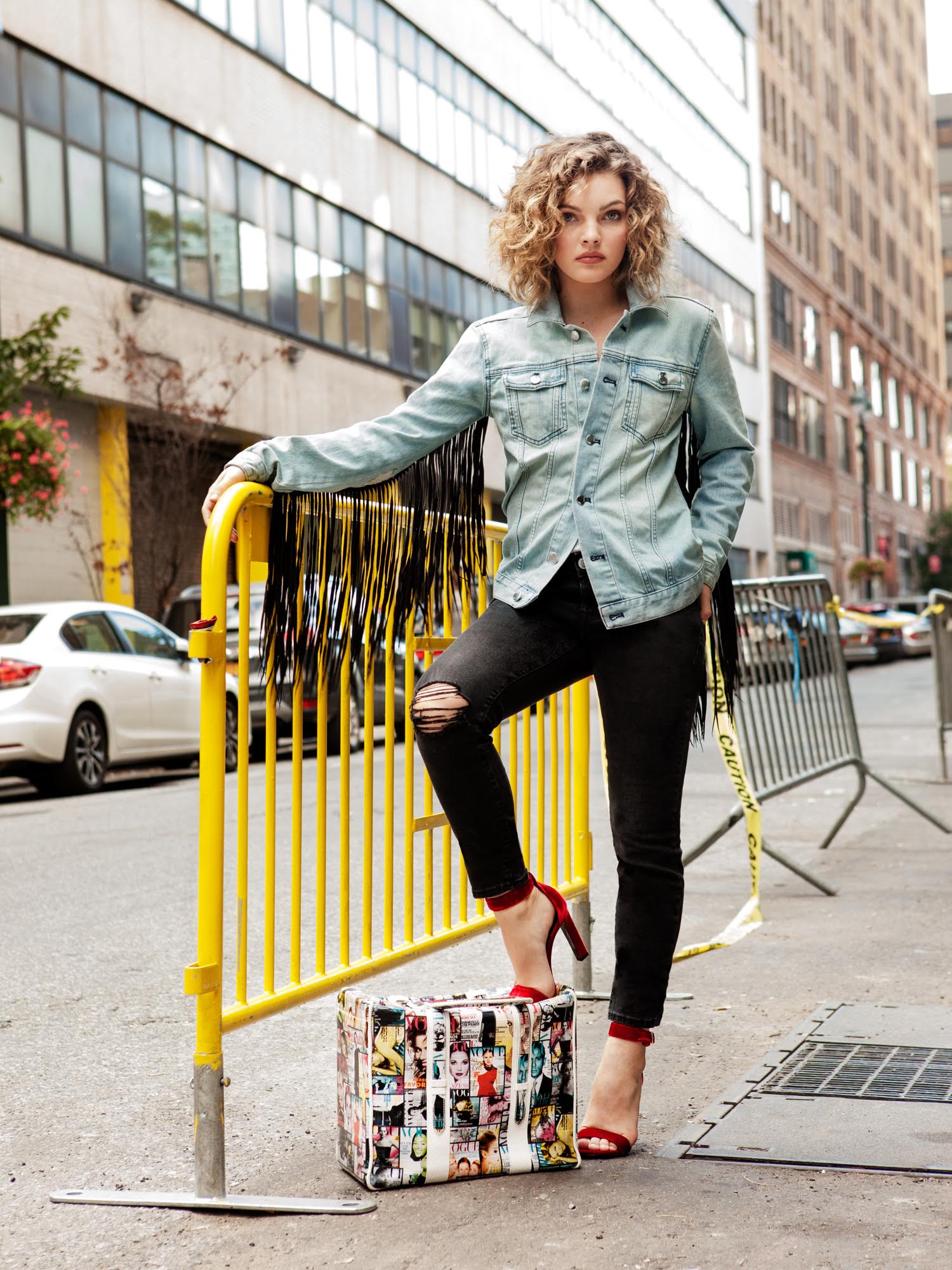
Photo by Amaris Granado Styled by @julietbelkin Bag by Ag by Anoesjska
Joliegazette: What do you like most about dancing?
Camren: The fact that you can speak your mind and express your feelings without saying a single word. I’ve always been more of an introvert and until I started acting, I wasn’t one to speak my mind. Dance is a very therapeutic outlet, like acting is. So, to me, acting and dancing are very similar in that aspect.
Joliegazette: At what point did you transition from dancer to an actress?
Camren: I started training in acting when I was 12. I needed a change, honestly. I had always wanted to try acting, so I did. I didn’t expect to like it as much as I do now, though. I’m definitely continuing with acting for my career.
Joliegazette: You becoming the first ever actress to portray the younger version of “Catwoman”, the role of Selina Kyle on Fox's Gotham. Can you talk about the time you auditioned for the role?
Camren: I think in total, the process was two weeks? Or maybe it just felt like that. I went in about 5 times, the fifth being the final audition, and I had a feeling that this was it. I mean, I had been training and auditioning for two years straight before I even auditioned for Selina! This role is truly a special one for me.
Joliegazette: How did you go about deciding how to play Selina Kyle in ‘Gotham’?
Camren: The breakdown described a 14 year old girl who was a defensive orphan and street-thief. So, I just used that as a guideline!

Photo by Amaris Granado Styled by @andrewgelwicks
Joliegazette: What kind of roles do you want to do in the future?
Camren: My dream role is definitely a boy. Any kind of boy, but definitely a boy. In an action or drama. I love doing comedy as well, but my dream role would be a boy in an action or drama.
Joliegazette: Any favorite directors you'd like to work with?
Camren: I’ve always admired the cinematography and artistry in Martin Scorsese’s films, and I love the simplicity behind Angelina Jolie’s work. So, as far as directors I’d like to work with in the future? Those two people, for sure. Eventually, though, I think it would be cool to direct my own film. I’ve always enjoyed being behind the camera as much as being in front of it.
Joliegazette: Who is your role model?
Camren: Tupac once said that he wanted to be a “real model” rather than a “role model” because people see this figure in a role model instead of a human being who makes mistakes and goes through life. So, I’d say that two of my many real models are my parents. They’ve shown me what a kind, independent, and strong person is supposed to be.
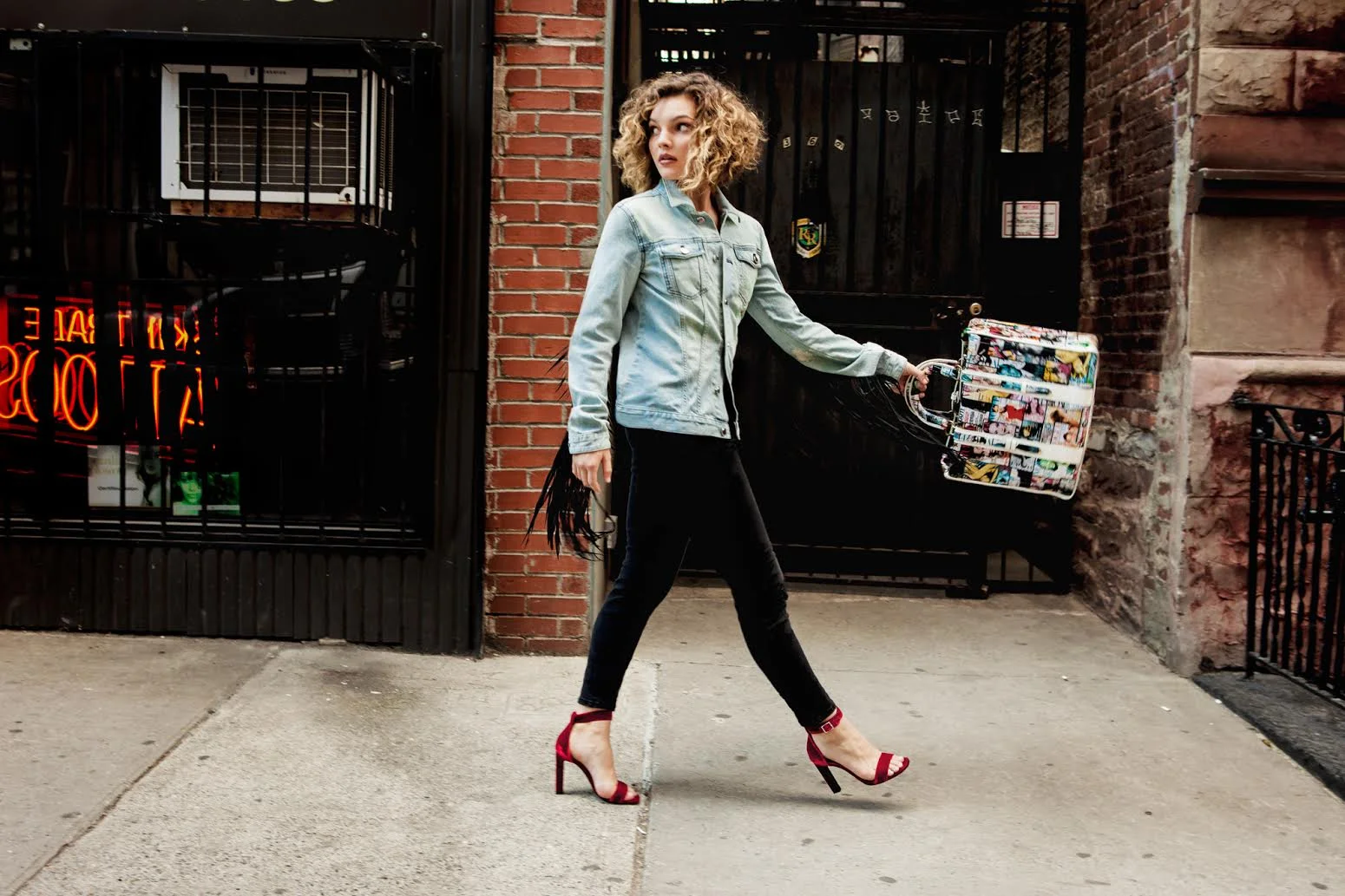
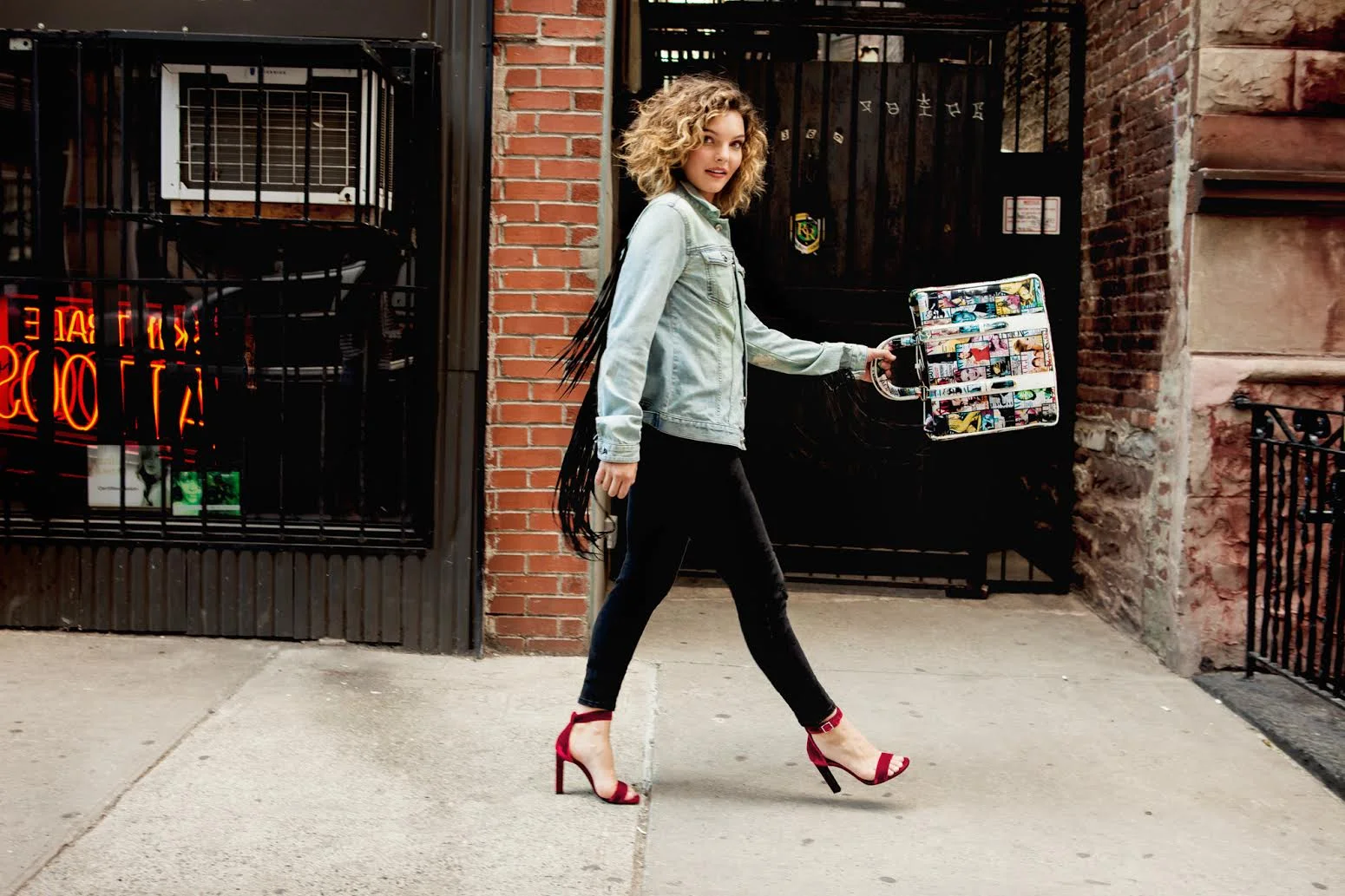
Photo by Amaris Granado for Gazette du Bon Ton.
Styled by Giula Belkin
Jacket: Intermix
Shoes: YSL
Bag by Ag by Anoesjska.
Joliegazette: How do you feel about fashion and style today?
Camren: I love how fashion goes in cycles, personally. I love how the 70s are back in style, and a little bit of the 80s, a little bit of the 90s… I’m a personal fan of anything 90s, so I’m particularly happy that, that era’s fashion is back in style.
Joliegazette: Describe your personal style.
Camren: I describe my style as "funky conservative,” because I love the clean and simple lines in a classic look, but I also love patterns and colors.
Joliegazette: Who are some of your favorite fashion designers today?
Camren: It’s hard for me to choose just one designer because I love seeing the different perspectives and aspects of the art form.
Joliegazette: What is next for you?
Camren: As of right now, I’m just focusing on graduating high school and continuing with Gotham!


Camren earned a Saturn Award nomination for "Best Performance by a Younger Actor in a Television Series" for Season 1. In September 2015, she was listed in Variety's annual Youth Impact Report, as an artist who "represents the next wave of Hollywood savvy and talent".
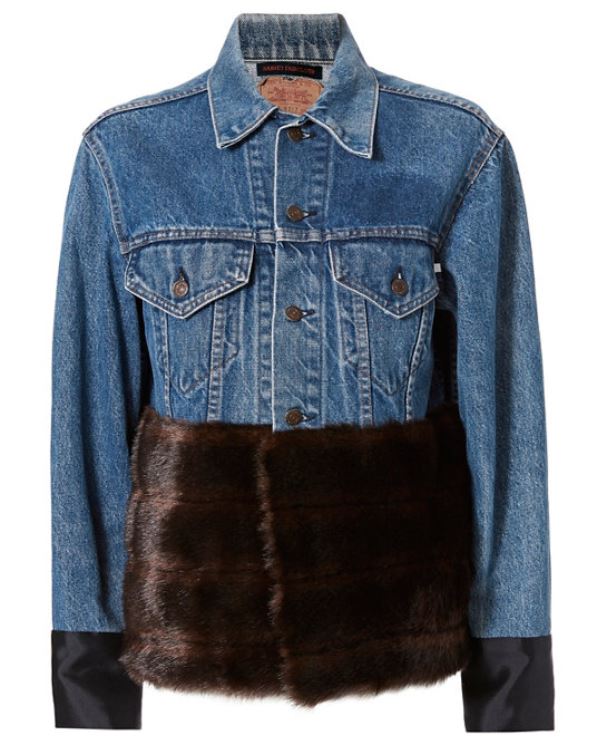
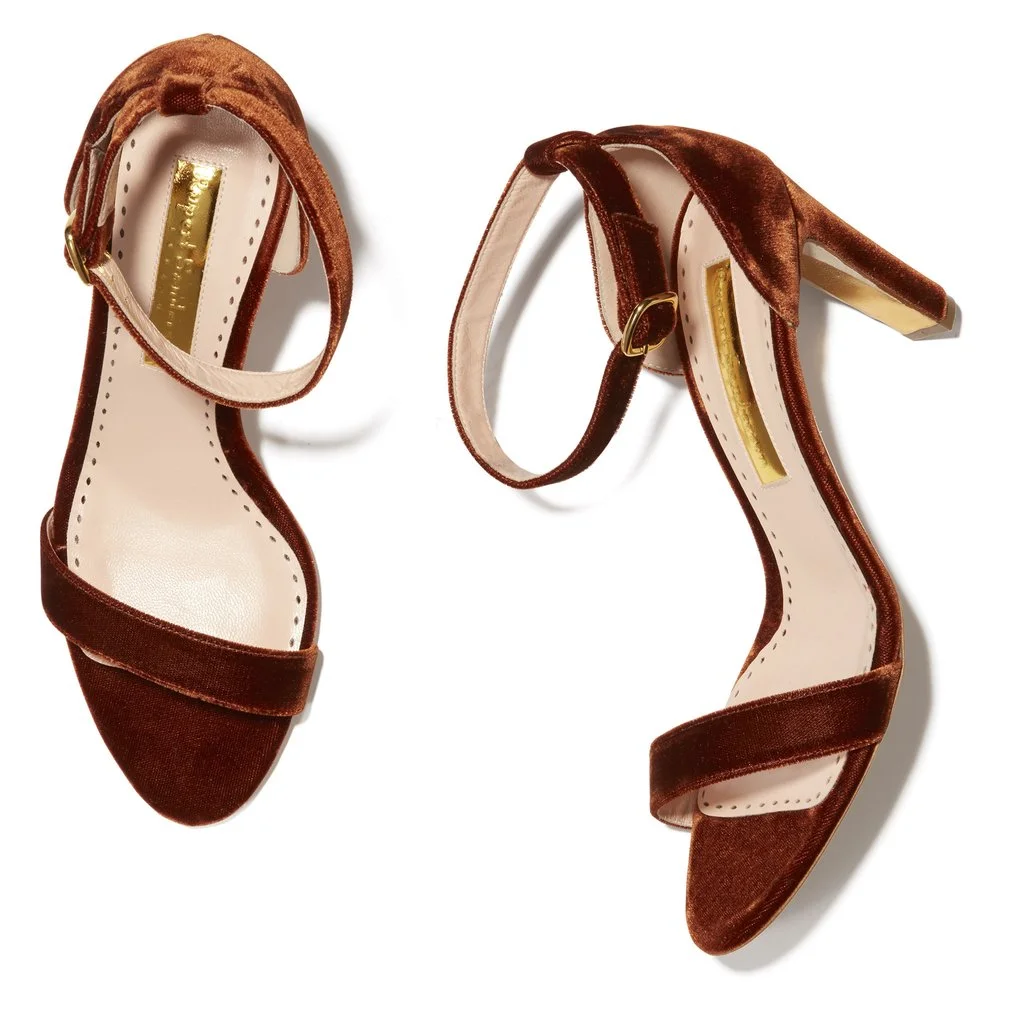
SHOP OUR PICKS

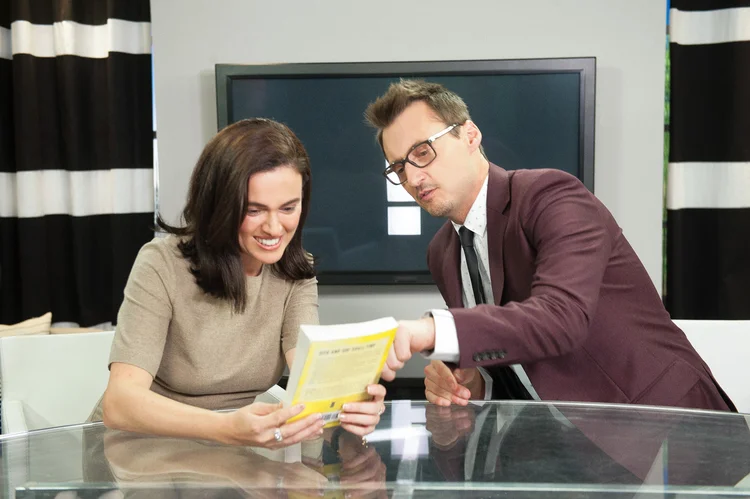
The Talk with E! News Senior Correspondent Ken Baker
It’s possible that you recognize his face but can’t put a name to it. He is that guy with a perfect hair, eager smile and always dapper suit. Though he is probably best known as the host of news segment "E! News, E! Online", Ken Baker is a successful author of several books. His critically-acclaimed "Man Made: A Memoir of My Body" (Tarcher Putnam, 2001) told the story of his battle with a brain tumor. A movie adaptation is currently in development with Ineffable Pictures and Eclectic Pictures in which Kevin Pollak will make his narrative directorial debut. The book recounts Baker’s experience of going through puberty for the first time at age 30 after having a pituitary tumor removed. His latest work "Finding Forever" is a story about a celebrity blogger, Brooklyn Brant, dying to have her big break.

Photo by Lauri Levenfeld
I recently sat down with E!'s Chief News Correspondent, Ken Baker to talk about his work on E!, his personal style and his latest book.
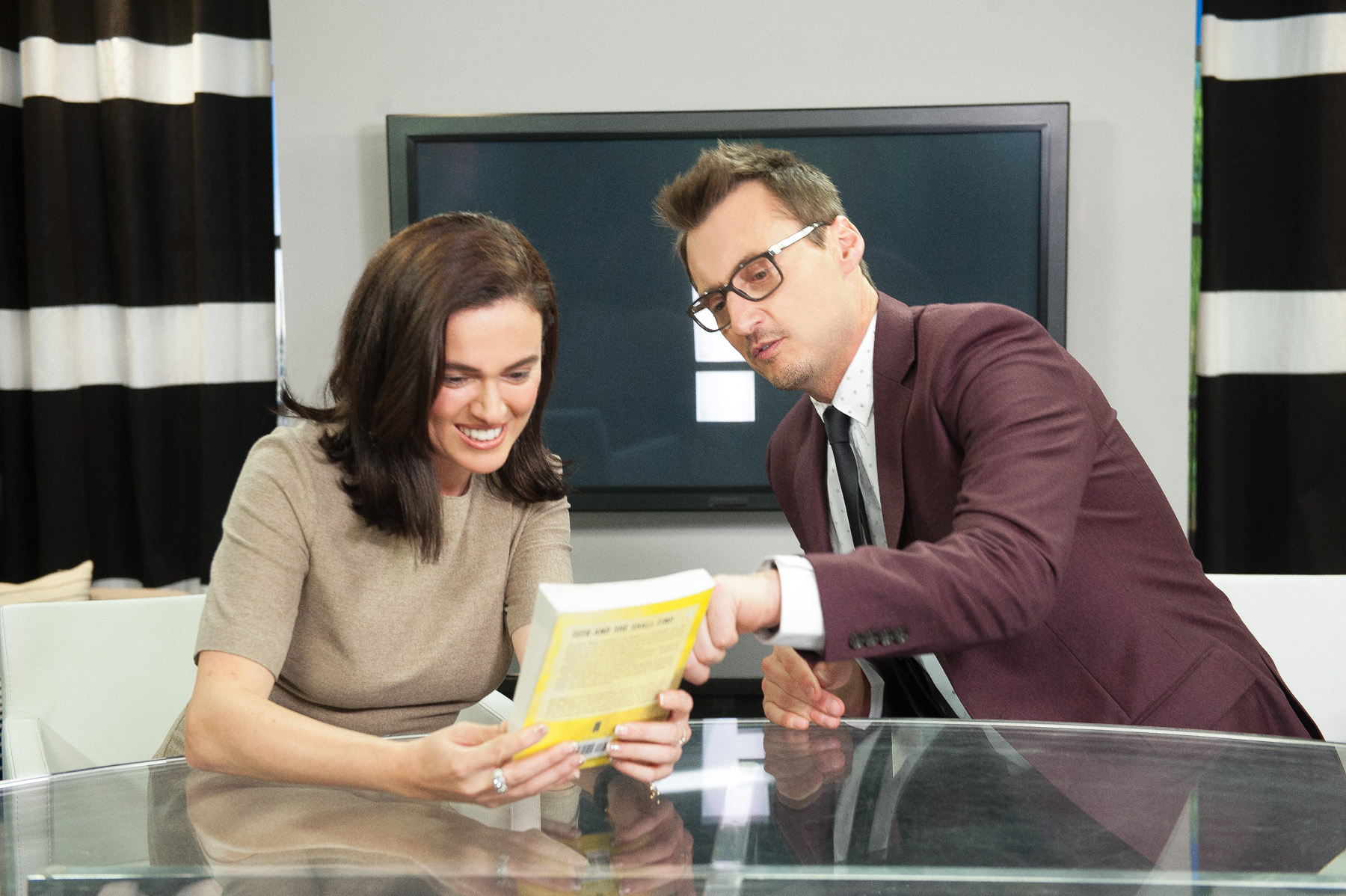
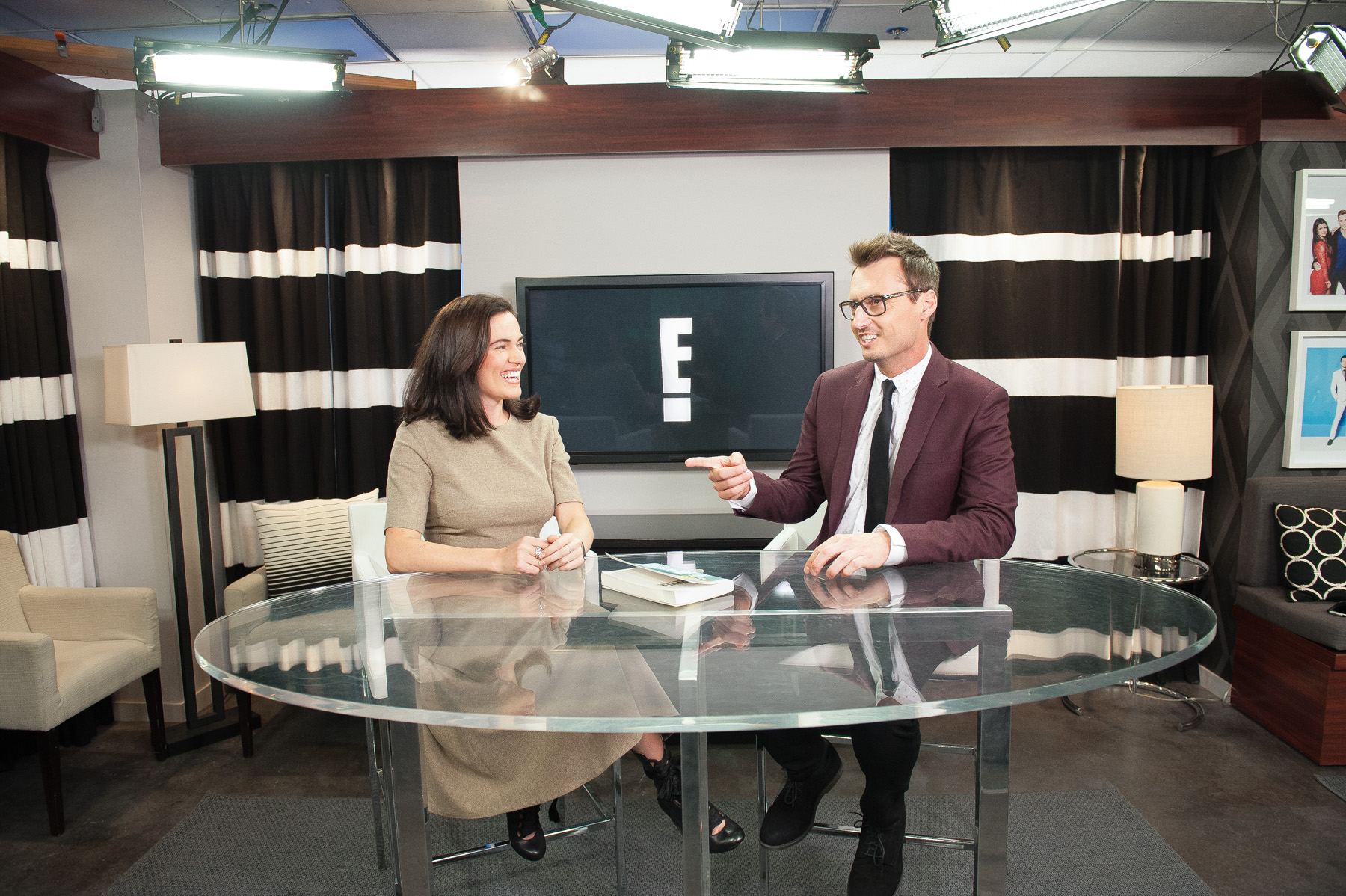
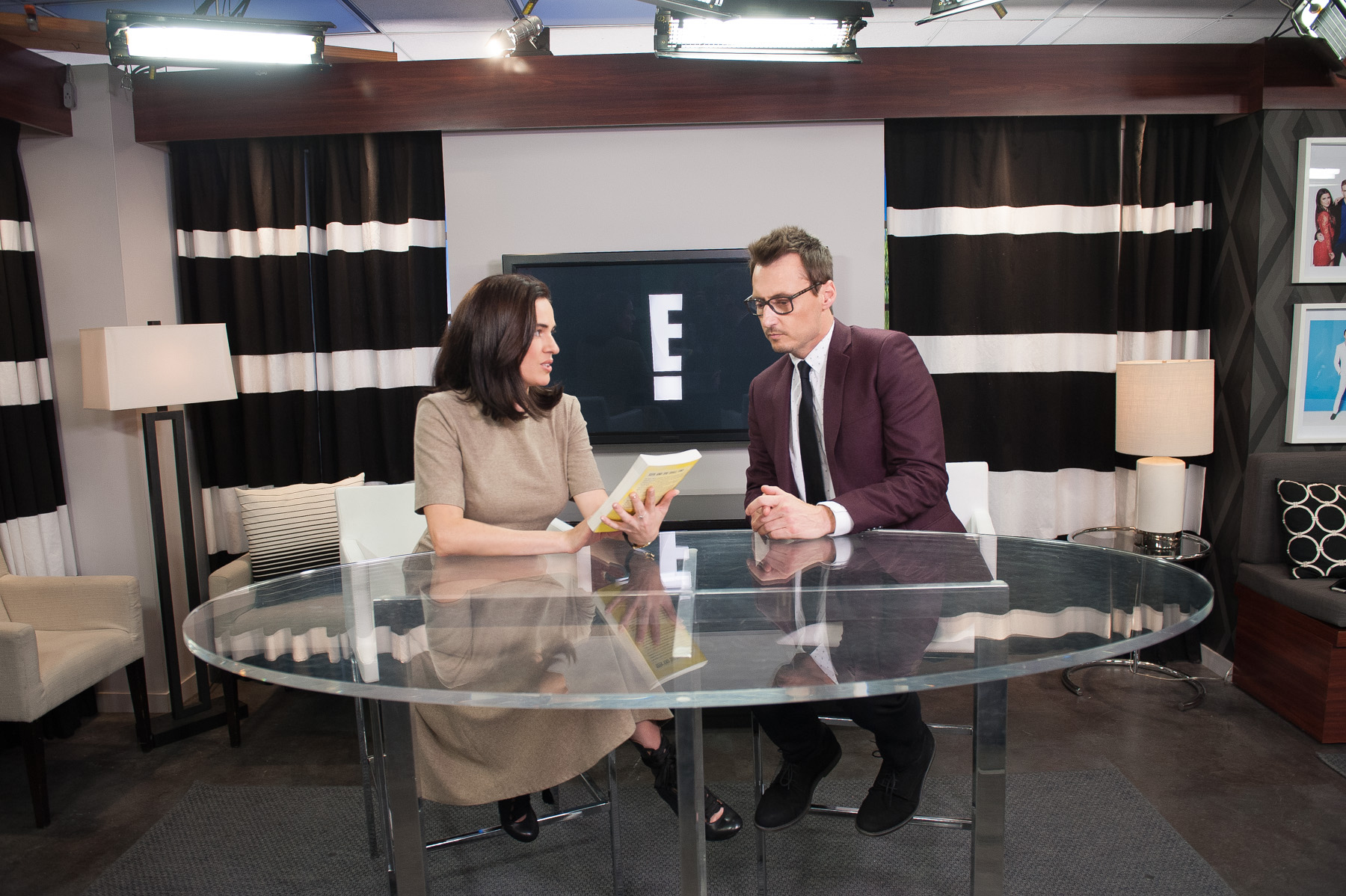
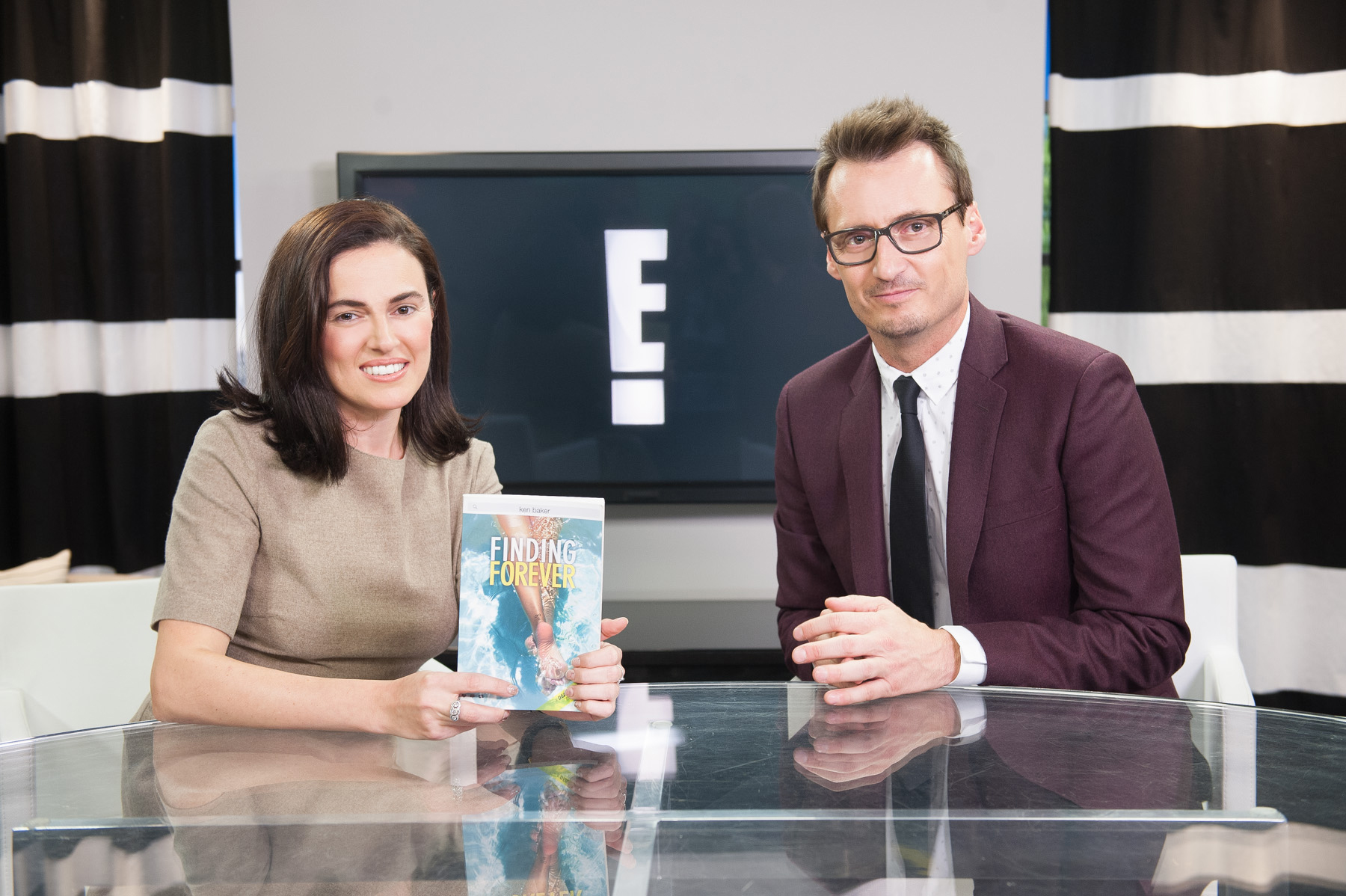
Photos by Lauri Levenfeld
J: You report breaking news, conduct celebrity interviews, host live red carpet events. Did you always know you wanted to be a journalist ?
KB: Not consciously. When I was 11, I began keeping a journal. It was pretty basic stuff at first, mostly about what happened at my hockey games that week, or some silly things like what I did on a snow day from school (I grew up in a small town outside of Buffalo, New York, so there were a lot of snow days!). Slowly, more serious topics entered my journal, such as things I was angry or frustrated about. My parents’ divorce and how that made me sad for my little brother is one memorable entry. So, I guess, by strict definition I was functioning as a journalist back then. But I just didn’t know that was what I was doing. When I entered college, I still had no real clue about what I wanted to do with my professional life. So I majored in geology. I was fascinated by the mystery of what lies below the surface of the Earth, the many layers and unseen and unexplored rocks. So I majored in geology. But by my junior year I realized that I loved writing and I loved reading the newspaper and the mysteries of life on the top earthly layers of crust were more interesting to me. I soon became fascinated with the idea of becoming a reporter. It was too late to change my major, plus Colgate University didn’t even have a journalism major, so I just did an internship at a local newspaper, The Syracuse New Times. And that’s how I got my start. I instantly fell in love with the profession and besides a stint playing pro hockey, it’s all I’ve ever really done with my career.

Photo by Lauri levenfeld
J: You began your career as a news assistant for ABC News. What made you move into reporting Celebrity news? Was it your goal from the beginning or concatenation of circumstances?
KB: My original goal was to be a feature writer for a major metropolitan newspaper. But while working at a medium size paper in Virginia after graduating from Columbia Journalism school, I found job openings to be few and far between. One day, a friend of mine who worked at People magazine named Jennifer Mendelshon tipped me off that the L.A. bureau was hiring new correspondents. I sent them my resume, got an interview and two weeks later drove out to L.A. I had zero experience covering celebrity and entertainment.
So it was all basically on-the-job training. It has turned out pretty well, but I am grateful for everyone along the way who allowed me to make and learn from mistakes.
J: What do you most enjoy about your job on E! News?
KB: The people – from the producers to the crew to the correspondents and hosts – are all top flight human beings. But also I enjoy how every day presents a new adventure. I wake up and have pretty much no idea what stories we will be covering that day. That keeps it fun and interesting.
J: A lot of celebrity news comes from social media these days. What is your view on that? Does that affect your job in any way? Positive / Negative?
KB: When Twitter really began to take off in like 2009, I remember thinking, ‘Oh, crap, celebrities won’t need us anymore.’ But social media has made it far easier to get information on celebs. They provide it for us! We used to have work a lot harder to find out where a big star was vacationing. Now, we just look on Instagram. It’s been the best thing that ever happened to celebrity media.
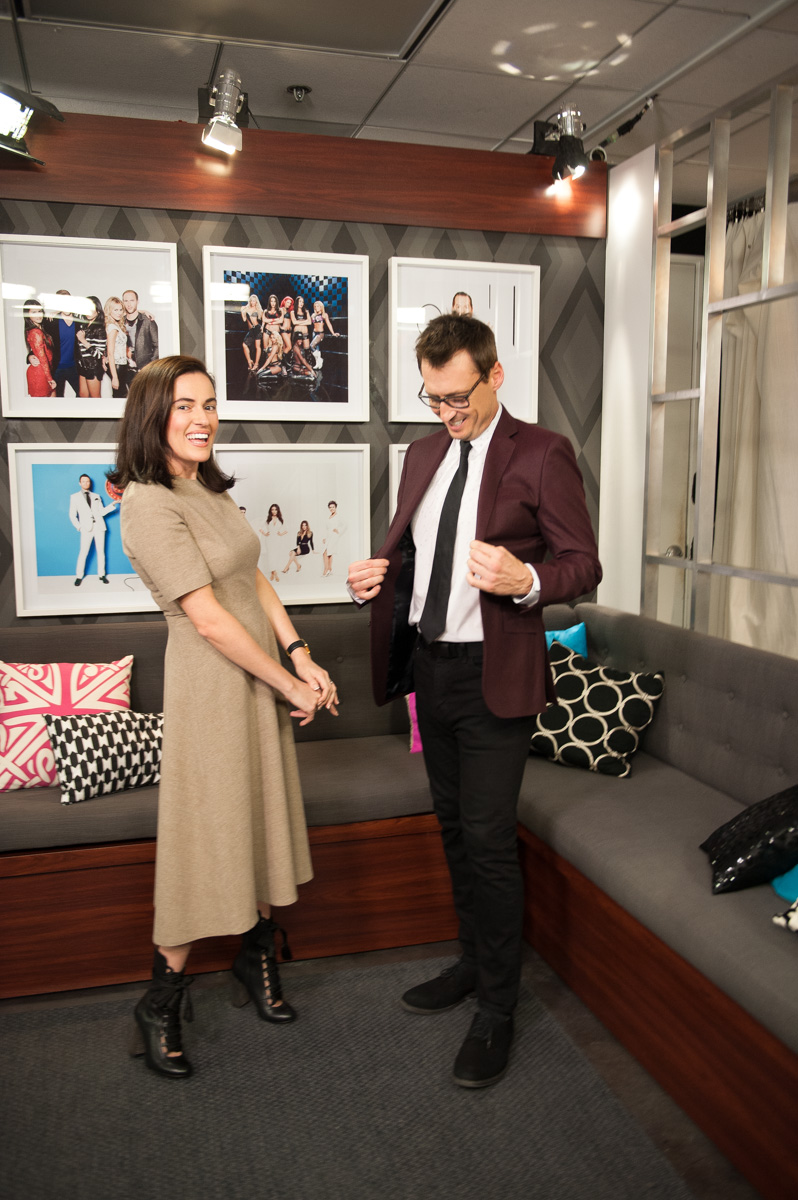
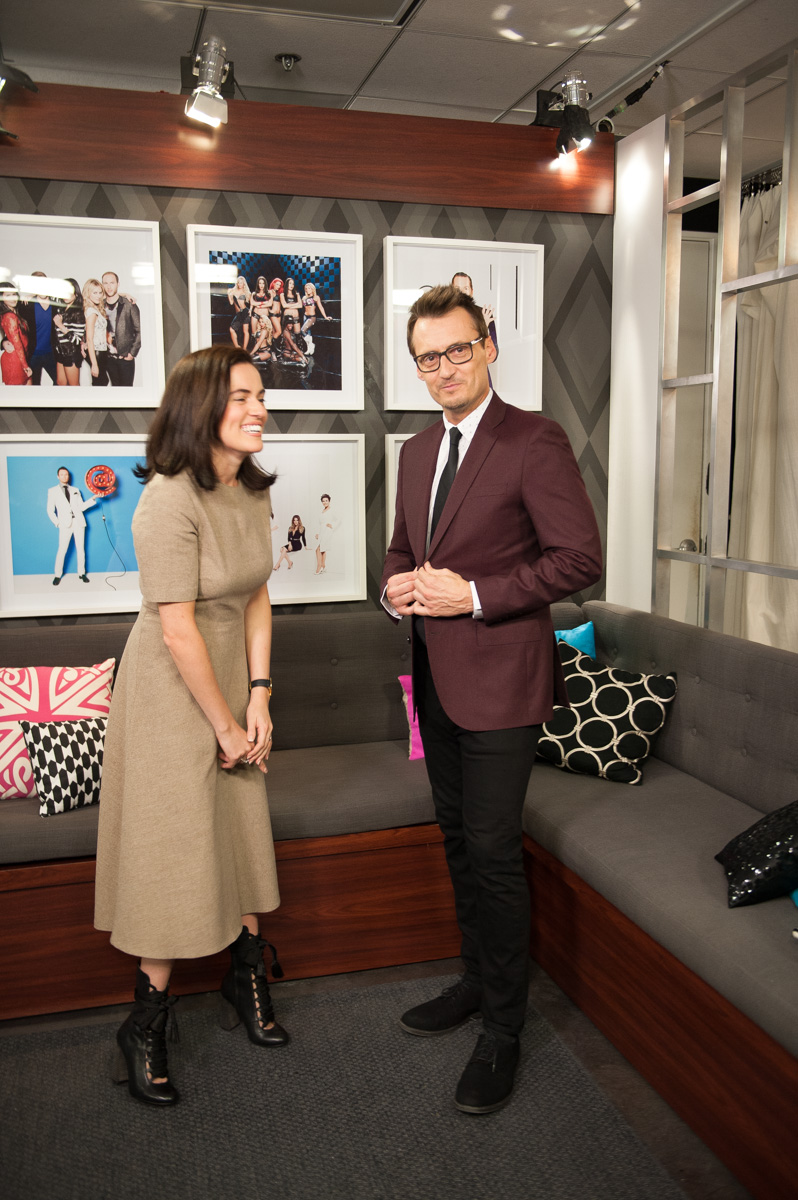
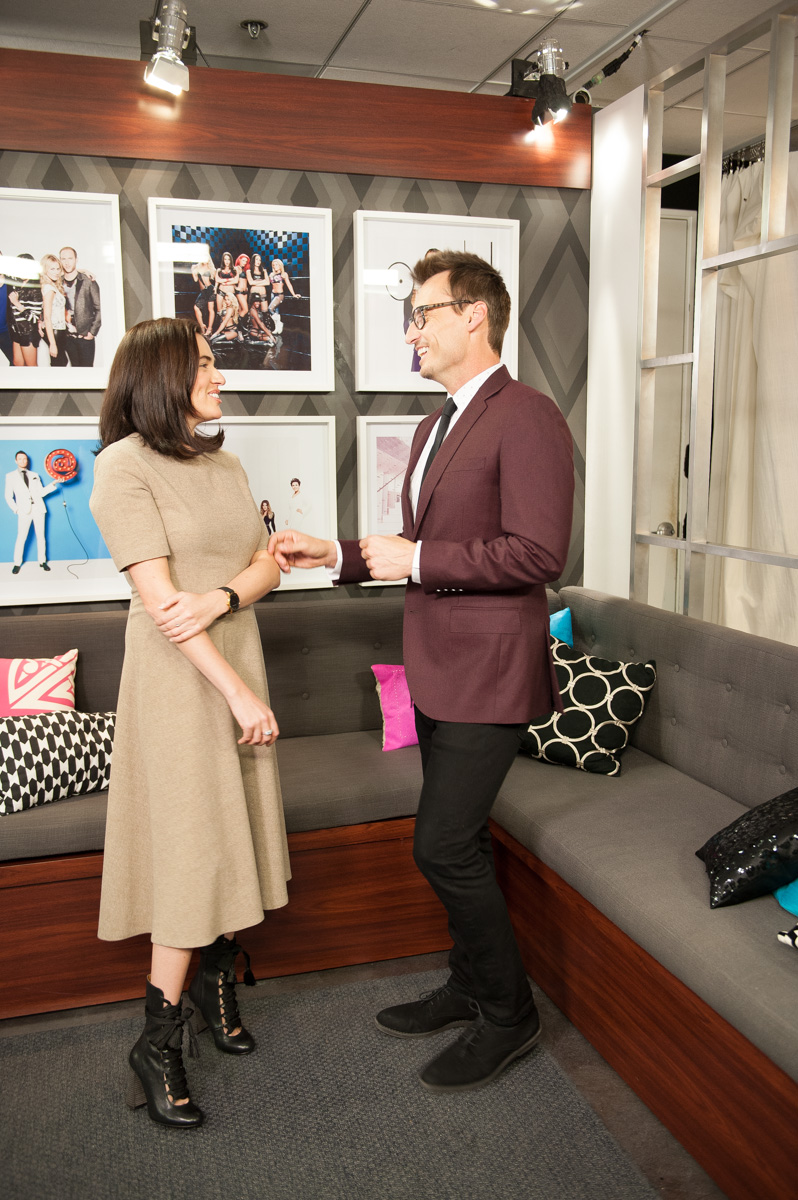
Photos by Lauri Levenfeld
J: What is your best blooper moment during the taping ?
KB: Well, not one comes to mind specifically. But a recent example is the day after Bruce Jenner became Caitlyn Jenner I could not for the life of me consistently call Caitlyn a “she”… I kept slipping up. Luckily, I got over that.
J: Who is your most favorite celebrity moment?
KB: There are so many. I mean, I am in my twentieth year covering celebrity and entertainment so it would be hard to choose. I do love covering weddings. I went to Italy with Giuliana Rancic and covered Tom Cruise’s wedding to Katie Holmes in Rome, and that was a blast. Years later, I went on a solo trip to cover George Clooney’s wedding in Venice, Italy. Those were memorable and great assignments. I am truly blessed to have the job I do
J: You are obviously quiet stylish. What are some mistakes that you think men make when it comes to fashion?
KB: My kids would laugh at your premise, mostly because they see me at home, where you might find me in my favorite golf shirt and sweats with a beat-up pair of sneakers that need to be thrown out or donated. But I try to keep it sharp for on-camera. Honestly, I get lot of help from my stylist, Adriana Gallarzo. The biggest fashion faux pas men tend to make is that they try too hard. My advise is to keep it simple. If you look good in a simple button-down shirt and a tie with jeans, wear it. You don’t have to wear some snazzy, trendy shirt with your chest hanging out because you saw it in GQ. The same goes in fashion as it does in life: Be yourself. And, as a rule, don’t wear “dad” jeans. They’re not flattering.
J: Do you have a favorite item of fashion you own?
KB: I am currently obsessed with these boots in my wardrobe closet that feel and look like sneakers. I would wear them every day if my stylist allowed me. But she won’t. In fact, she is starting to hide them from me, I think.
J: Besides your journalism career you've written nine books. What inspired you to write books?
KB: Daily journalism has the rewards of being fast-paced and constantly new, but the drawback of being on the superficial side and so fleeting. Writing books allows me to get into topics in more depth. It scratches a different kind of itch. It also allows me to reflect and examine life in a way that I think can make readers appreciate life more.
JB: Do you have a special time to write? How is your day structured?
KB: I pretty much cannot write Monday through Friday because I am so swamped with E! News and my responsibilities to my kids and, of course, to myself to remain a healthy and balanced human being. Most of my writing occurs on the weekends, and definitely in the morning. I will write a little after work during the week if I have the mental power, but it is mostly a weekend job.
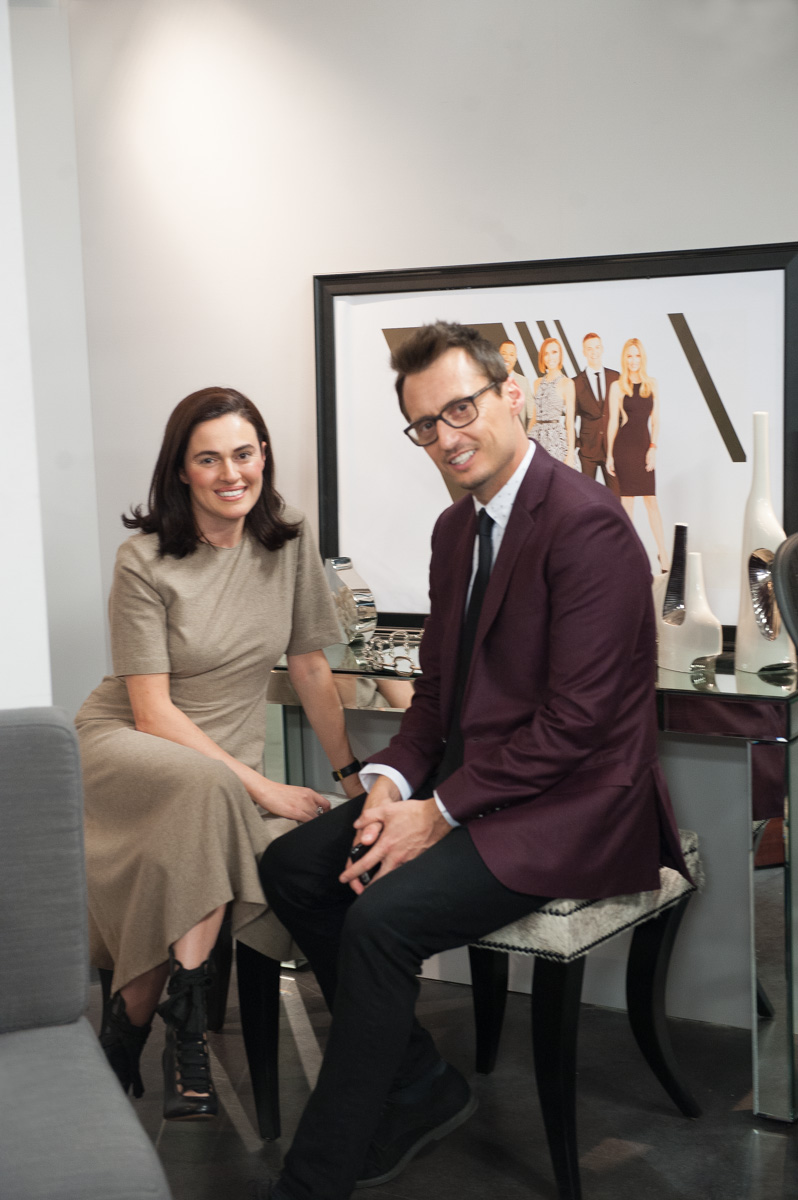
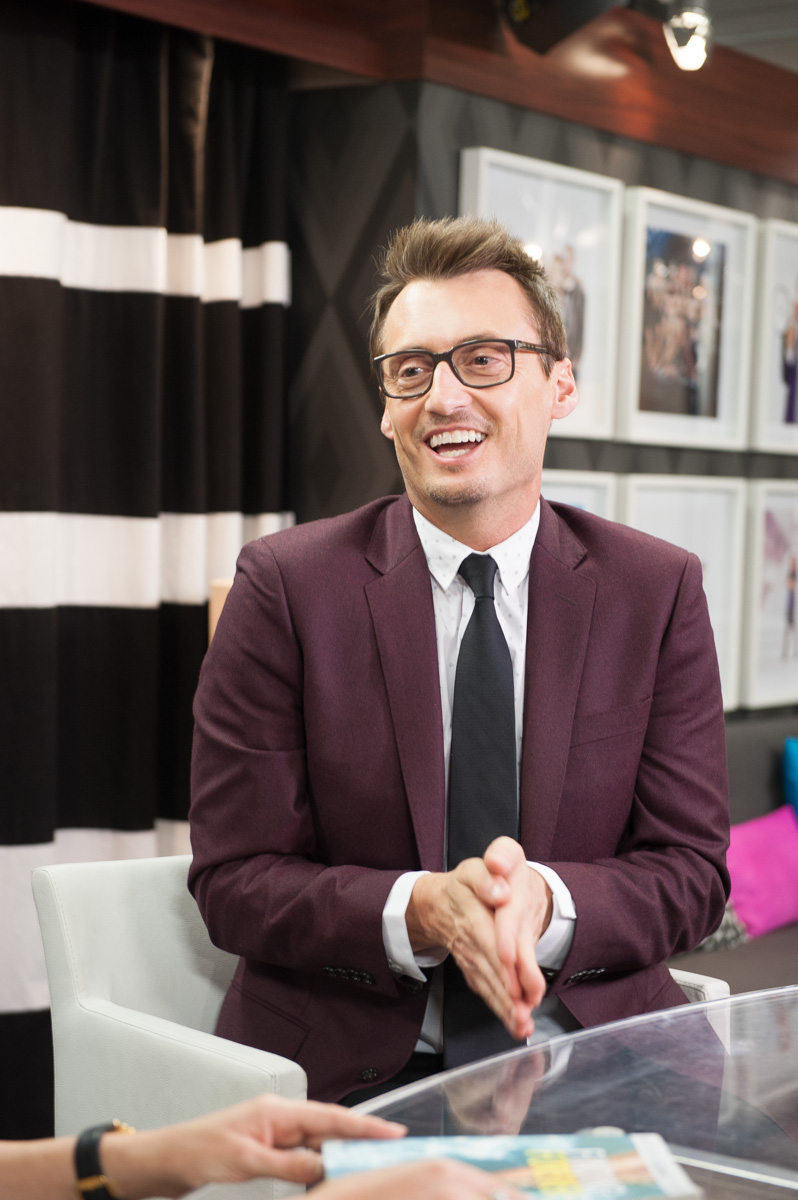
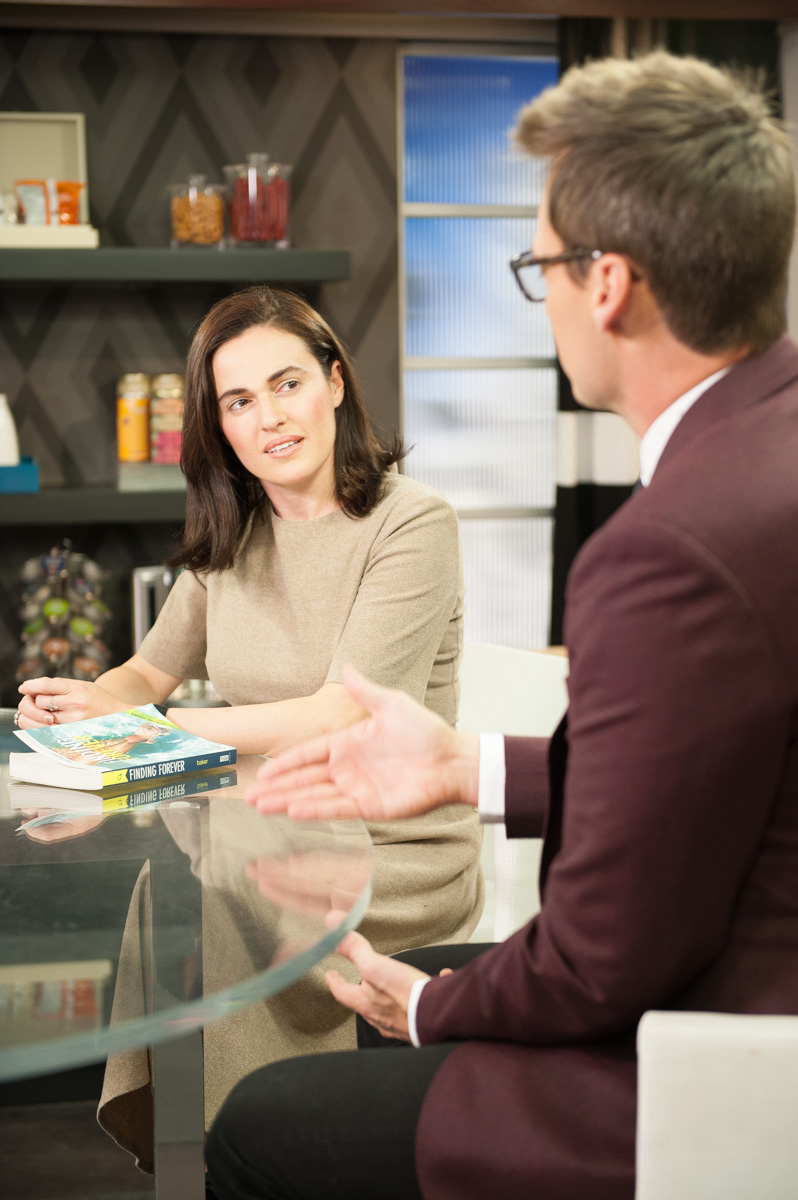
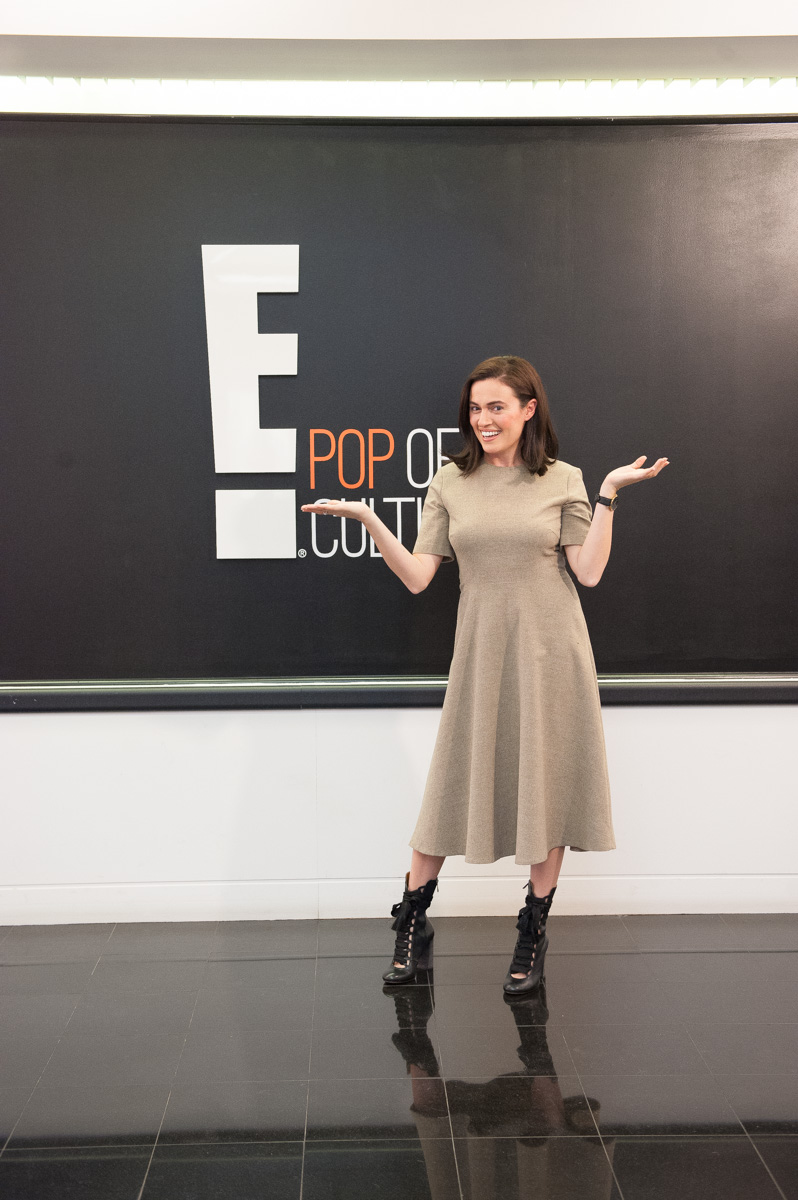
Photos by Lauri Levenfeld
JB: Do you ever get writer's Block?
KB: Not usually. But some days are better than others. I did hit a wall, however, earlier this summer. My brain kind of shut down. I had been very busy working at E! News and by the time the weekend came around (my prime time for writing books), I didn’t have any gas left in the tank. So I needed a vacation. I took off for two weeksback East and visited family and didn’t look at my computer once. I came back refreshed and wrote a lot over the next month. Generally, I don’t believe in writer’s block. Imagine if brain surgeon’s had surgeon’s block? Or bus drivers? Or teachers? They don’t. They have a job and they do it the best they can, thank God. Writers need to be as committed as anyone else and not make excuses. Naturally, I am not Hemingway every time I write, but I can always put something on the page.
JB: For your own reading do you prefer e-books or traditional paper/hard cover books?
KB: I am still very much a reader of traditional paper books, but it is on my to-do list to take over my kids’ Kindle Fire and go all-in on ebooks. To be honest, I have probably read more audiobooks in the last six months than other kind. In fact, I am looking forward to finishing the writing of my current book project so that I can read more.

Photo by Lauri Levenfeld
JB: Your latest book, "Finding Forever" is a first from the Deadline Diaries series. What was an inspiration behind it ?
KB: I have been writing novels for the last five years focused on the Young Adult audience. For a while now, I wanted to write a series with a character at the center who is a journalist. So I created Brooklyn Brant. And she is Everything. I love her and what she stands for. I hope she inspires readers, because she inspires me.
JB: Every writers dream is to bring their book to life. The movie "The Late Bloomer" is being filmed based on your 2001 memoir "Man Made: A Memoir of My Body" with Kevin Pollak directing the film, share your feelings about it?
KB: It is very gratifying and it is still sinking in that is happening. Definitely is a pinch-me-I’m-dreaming experience. The movie adaptation has been in development for about thirteen years. At one point a few years ago, I had stopped believing it would ever get made. And now that it has been shot and is being edited, I am like, ‘Okay, I guess this is really happening!’
JB: When should we expect the movie to be out ?
KB: Well, like I said, we need to let Kevin get a cut of the film in the can and then perhaps get it into some film festivals next year. It is independently produced, so we have many different paths to take and there is no set calendar. But I would expect it could be out any time from late next year to 2017. It is very funny and touching, the perfect tone. And the cast is stunningly talented.
JB: What is Ken Baker working on at the minute?
KB: I am frantically trying to meet my Nov. 1 deadline to deliver a first draft of the second book in the Deadline Diaries series. I am also fiddling with an idea for a nonfiction idea that is Hollywood related. And, oh, yeah, I have to deliver the news every day on E! So, yeah my plate is pretty full.
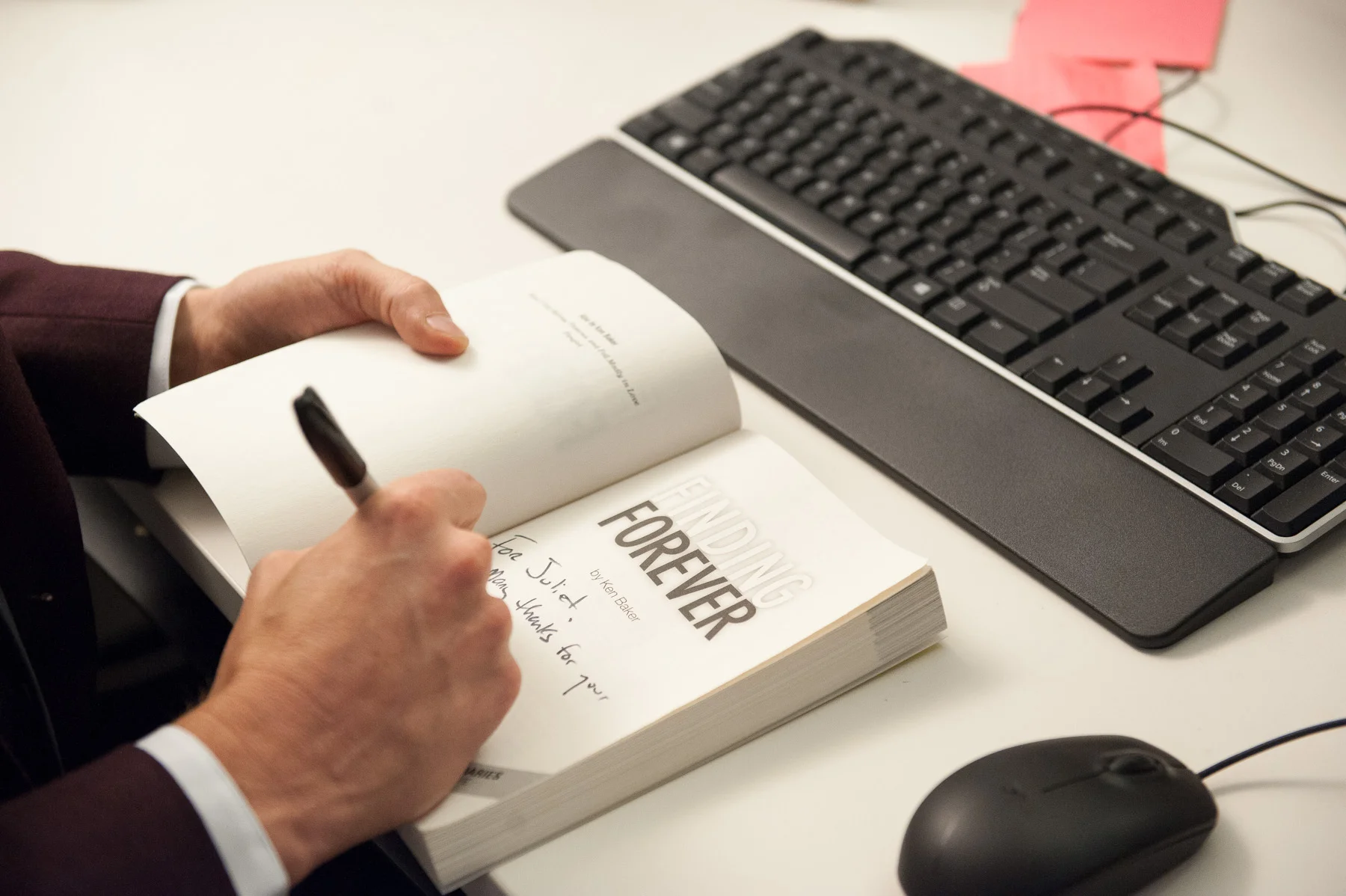
Photo by Lauri Levenfeld
Sponsored.
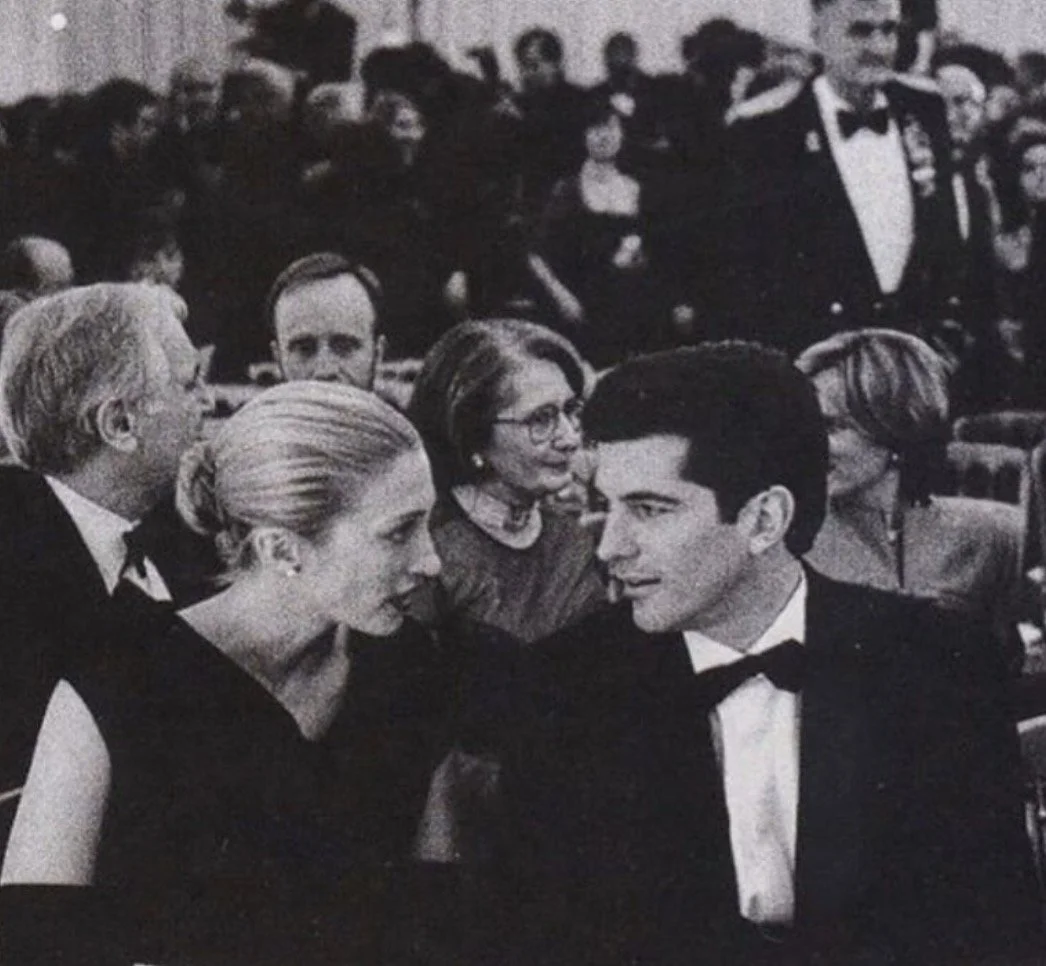
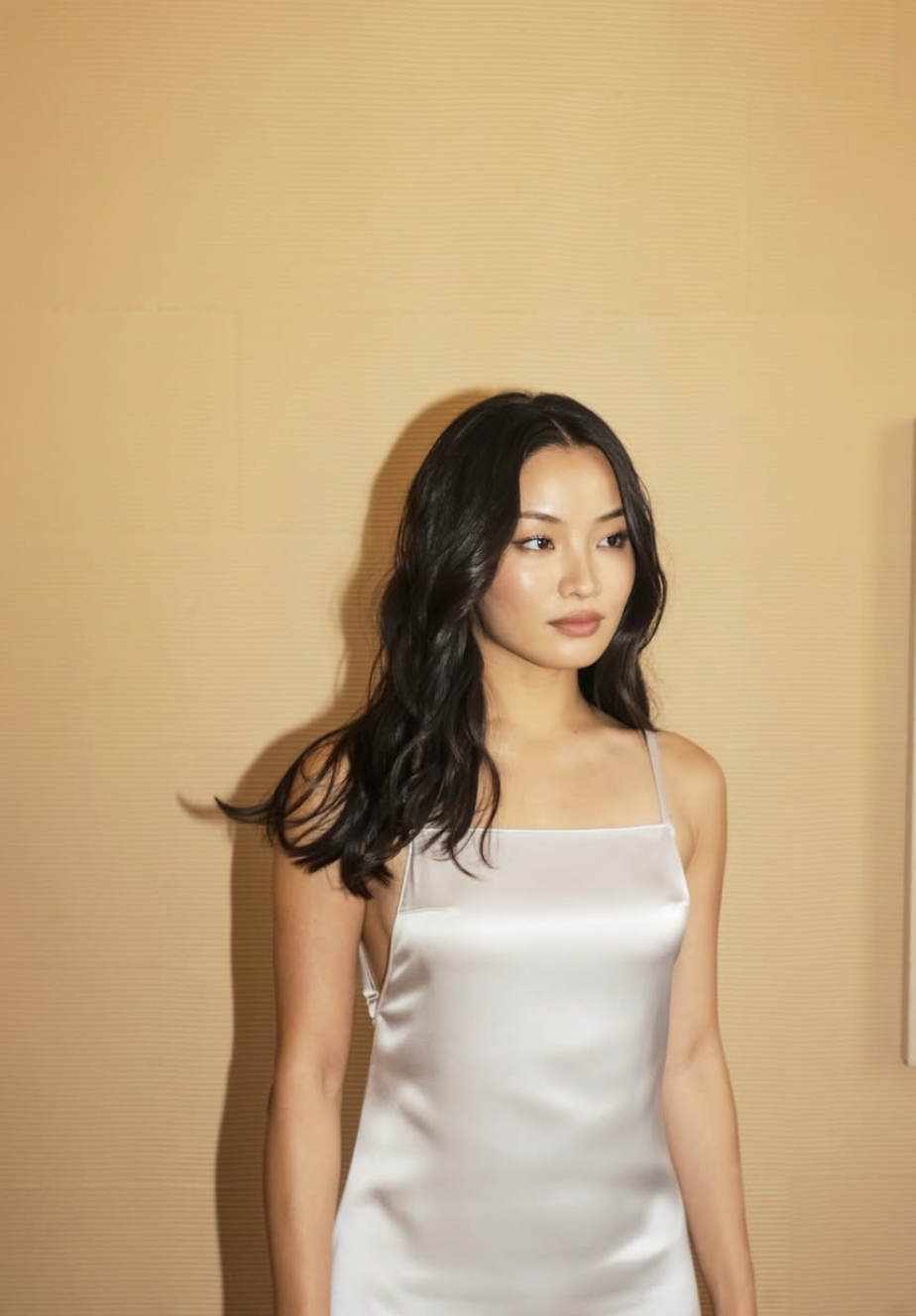

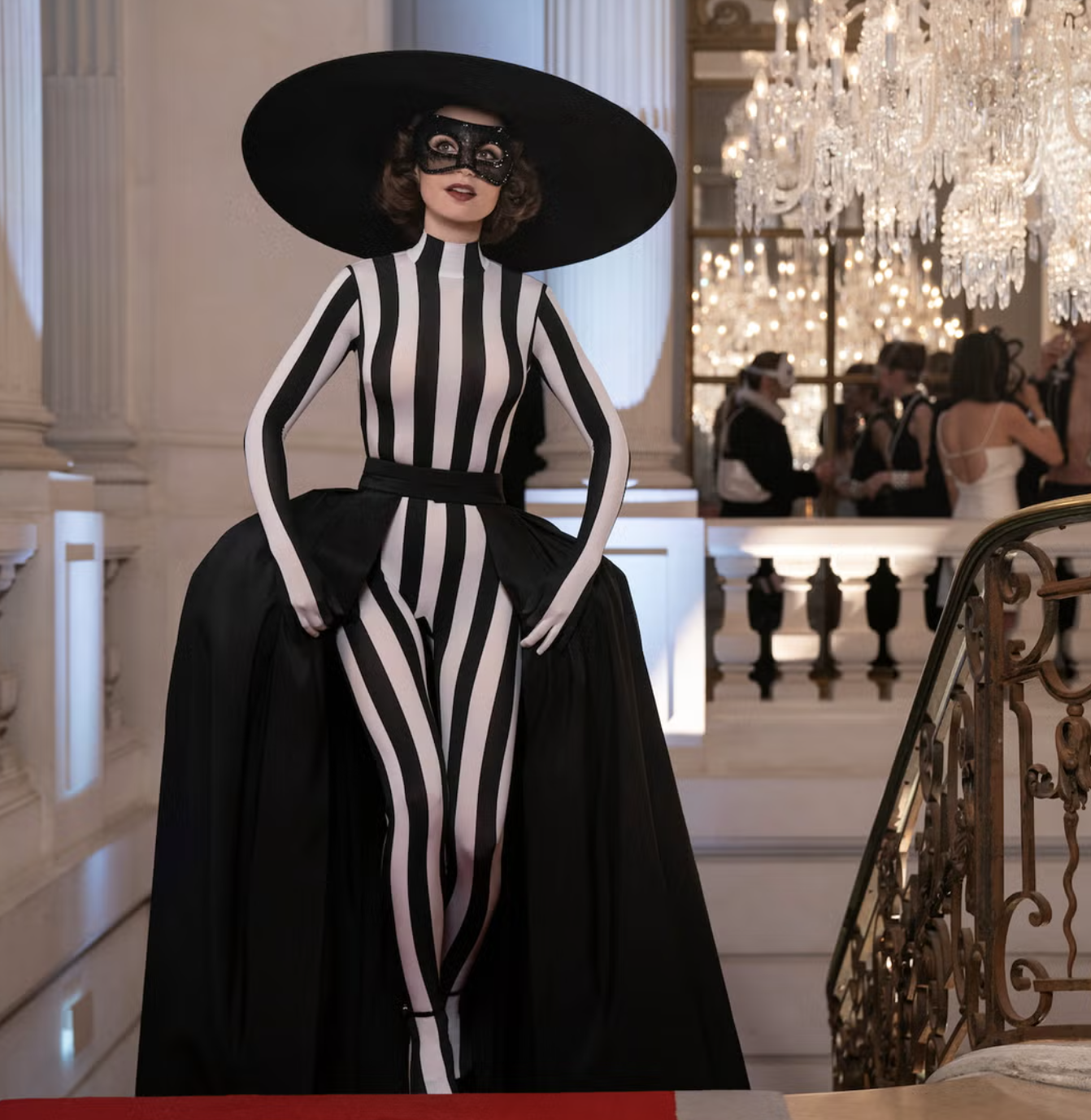

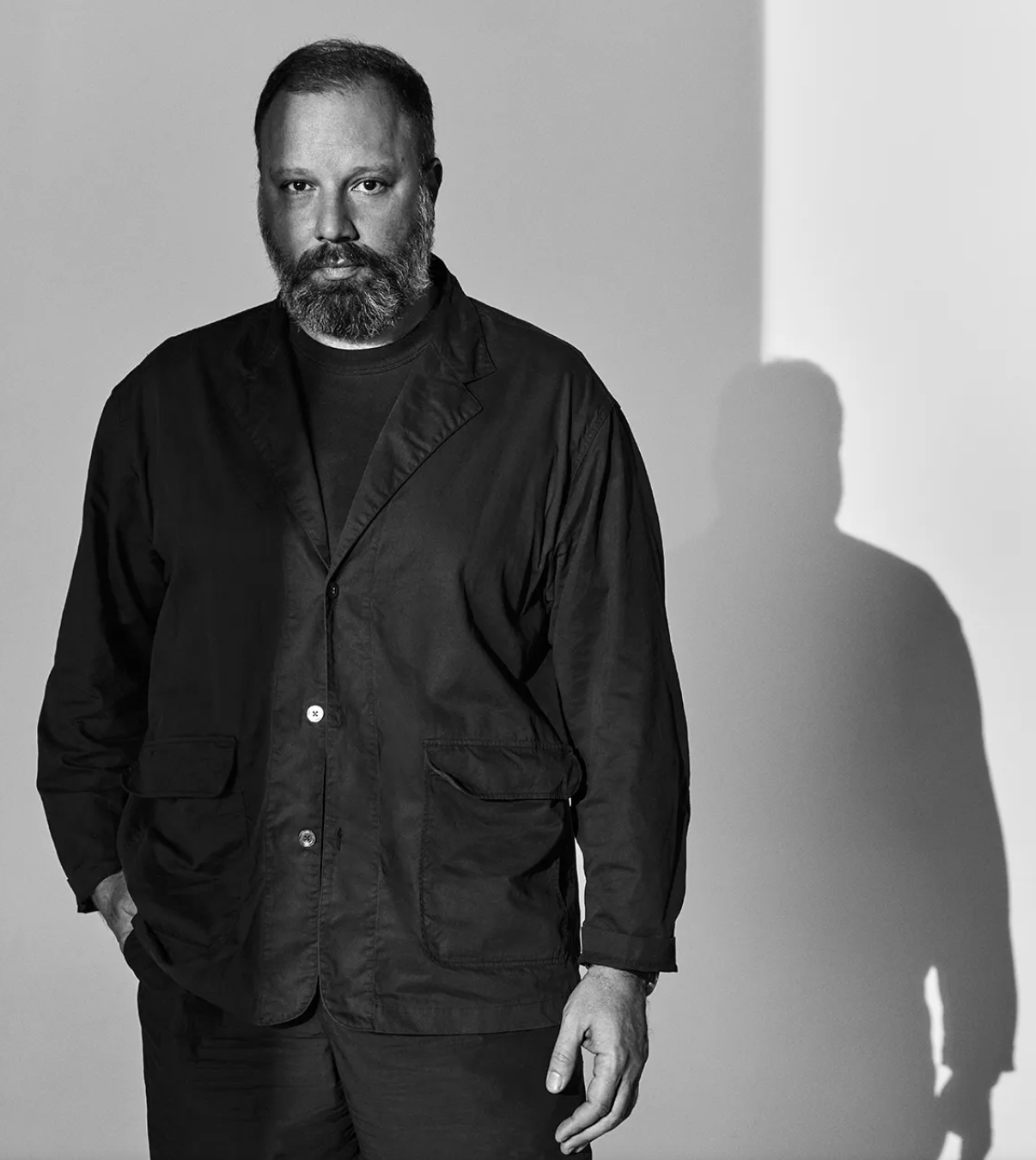
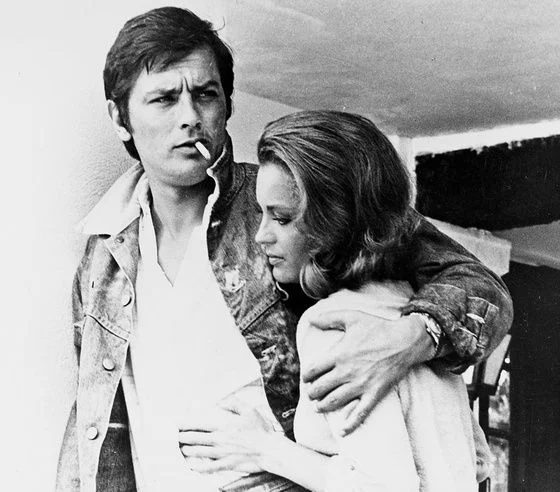





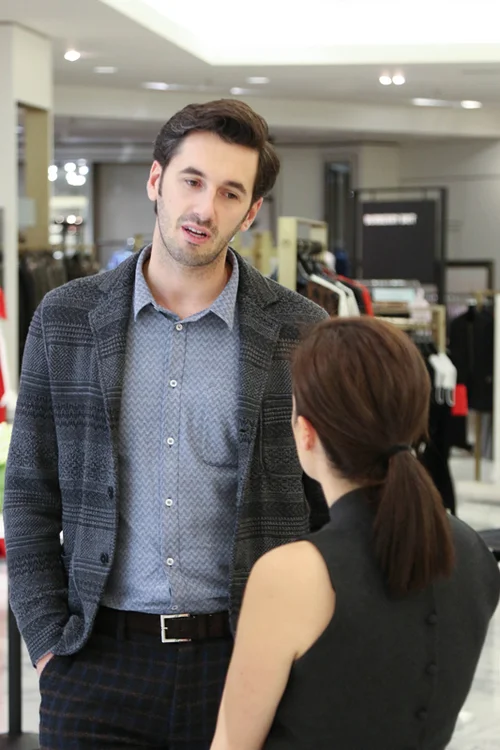
The Talk with Ottavio Missoni Jr. of Missoni
We can work with all the colors on the palette. We have a team that works hard on researching of the fabric and color. We are also a 60 years old brand, so we have to innovate, but not forget where we came from. We are a third generation company, family owned, and every single generation from the beginning contributes some ideas.
Interview by Giulia Juliet Belkin
In 1950s, Italian fashion house Missoni launched ready -to-wear collection.
In 1970s it reached the peak of its popularity. Its signature zig-zag pattern is the most recognizable in the industry of fashion. On May 9th, 2013 Ottavio "Tai" Missoni, the patriarch of an Italian fashion house died at the age of 92 but Missoni spirit goes on with support from Missoni family. The brand's U.S. sales director , grandson/namesake of Ottavio Missoni returned to Nordstrom at Standford shopping center to present Resort 2016 collection. I had the opportunity to sit down and talk with charming Ottavio Missoni before his meet and greet with customers, about Resort 2016 and more.

If you had to use one word to describe Missoni Resort 2016 what would it be?
I would say it's a day tripper collection. By day tripper I mean it is for dynamic women who loves traveling on her day off, women who likes to go to countryside for the day or visit a museum.
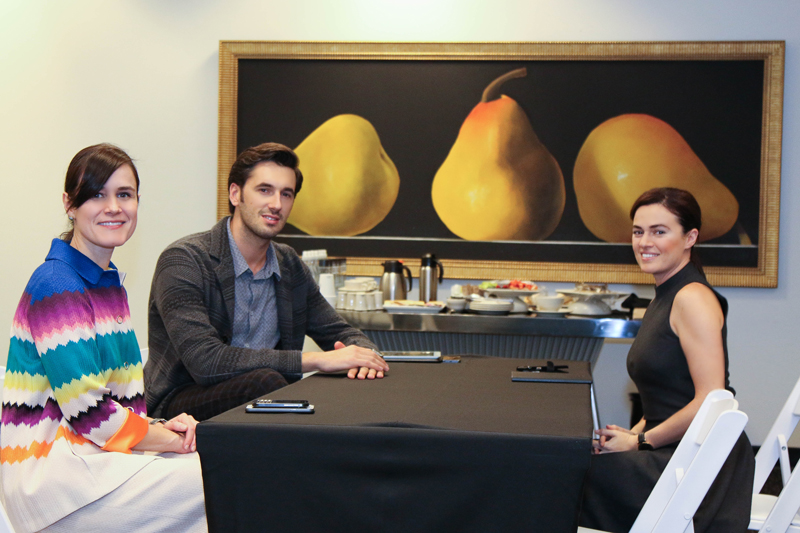
We are in love with the colors that are used in Resort 2016. What was an inspiration behind it?
One of the main inspirations for this collection is an a·vant-garde painter Sonia Delaunay, a Ukrainian-born French artist who is known for use of strong colors and geometric shapes. She was one of the first painters who designed a clothing collection. Her work with fabrics and clothing design has left a legacy. She is best known for the use of color, which Sonia described as "the skin of the world".

While pointing at Missoni beach cover up, Ottavio mentioned how many clients often wear cover up as a dress for the evening on the yacht. Well, ladies, it's a no-no for Angela Missoni.
Missoni signature zig-zag patterns have become one of the most recognizable in the industry. How does the brand balance the need to keep the label modern while respecting its heritage?
First I have to say we are lucky in this way because we are famous for the use of color. It really helps us, because we can work with all the color palette. We have a team that works a lot on a research of the fabric and color. At the same time it's hard, because we are 60 years old brand, so we have to innovate, but not forget where we came from. In this way what is helping us is that we are a third generation company, family owned, and every single generation from the beginning contributes some ideas.
Missoni Dress inspired by Sonia Delaunay artwork.
You did it very well in the Resort 2016.
What we do is timeless. People say that many clothes from the past can be easily worn today.
What is the most important lesson you've learned from your grandfather Ottavio Missoni?
First I would say that I love to think of him as a great man, I really admire him for what he did. He used to tell us some funny things that I keep alive inside of me to this day. He never took himself too seriously, always kidding to other people. When in public, he was always laughing and never took himself seriously. But this man knew everything. He may have seemed not interested, but he was. So I think me and my brothers and nephews, all of us learned that from him. He used to tell us that we had to be the best in anything that we wanted to do in life. No matter what. He said, "If you want to do something, you have to give your best. Otherwise don't do it".
Who is Missoni mission girl?
I don't think we ever had a muse. We have been dressing models, actresses, recently Michelle Obama wore our dress. I'd like to think our own muses are the ones in our family. My grandmother, my cousins, who are all beautiful ladies. I think there is no better muse, brand ambassador than those from the family.
What is next for Missoni?
Next month we are coming out with new perfume. Last time we released perfume was ten years ago. Because Missoni is a lifestyle it is important for the brand to have one. We will start Missoni perfume in Europe and then plan to launch everywhere else in the world.
So, Missoni perfume? I got to look out for that one.
Yes, then in terms of market we are planning to expand the brand to Asia and Eastern countries. We are not strong there, but we are aiming to move in that direction.
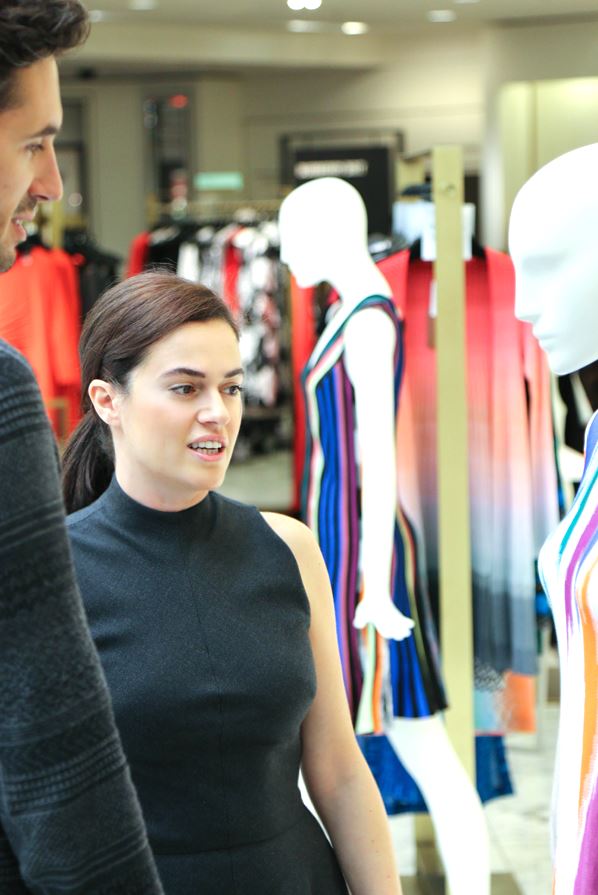
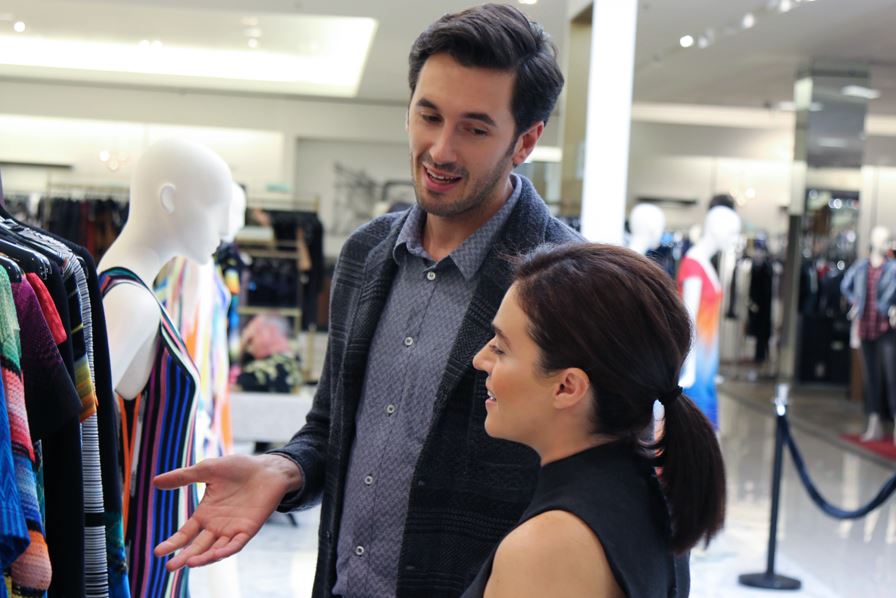
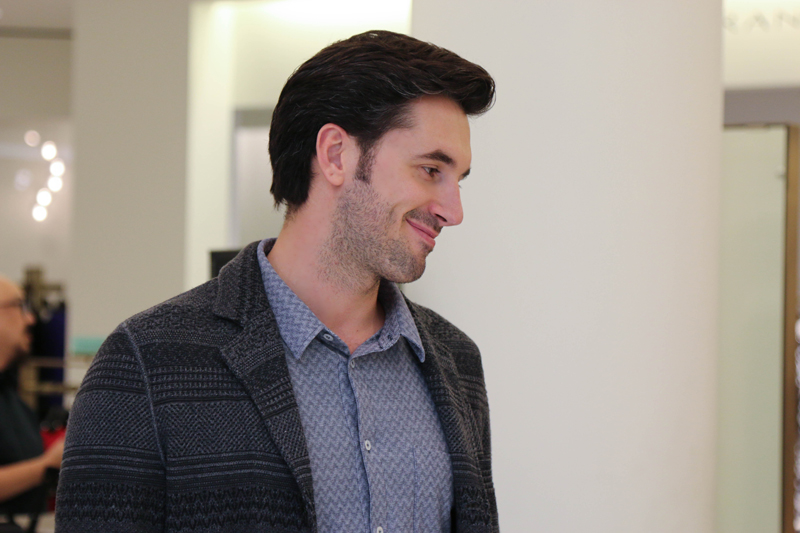


The Talk with legendary photographer Annie Leibovitz

Photo Drew Altizer
San Francisco Museum of Modern Arts Conservatory Vision Award celebrates the extraordinary achievements of global leaders - creators, innovators and change-makers and this week it honored legendary photographer Annie Leibovitz with the inaugural Contemporary Vision Award at the Historic Regency Ballroom in San Francisco. The evening chaired by Modern Art Council member Courtney C. Dallaire.
Annie Leibovitz is known for her trademark technique using bold primary colors and surprising poses. She photographed some of the most iconic figures in music, film, art and politics. John Lennon, Queen Elizabeth, Demi Moore, George Bush and Michael Jackson. She is also known for her many controversial shoots such as 15 year old Miley Cyrus nude on the cover of Vanity Fair 2008.
In 1970, while a student at the San Francisco Art Institute, Annie Leibovitz began her career as a photojournalist for Rolling Stone. Her first major assignment was shooting a cover story on John Lennon just hours before Lennon was murdered outside of the Dakota building in New York City. In 1973 Leibovitz became the magazine’s chief photographer.
Despite working on a large scale and known for being demanding, she remains a very down-to-earth and we are extremely fortunate to have had the opportunity to ask Annie a few questions.

Rolling Stone cover featuring John Lennon and Yoko Ono, 1981 by Annie Leibovitz
How do you get the person in front of the camera and onto the film in just the way you want it?
There is homework to be done. You learn about the subject, you find out what they do, you find out as much as you can about them and it's always good to go in with an idea or a plan that you know you are going to do. Always leave space for spontaneity in case something else happens. For the covers of Rolling Stones I had to make appointments with people, think about what it is I will do. I love photography and I admire people who do things well, I like to like people, I like to come at the portrait with an idea of what the person does rather than they are celebrity.
How do you feel about your very last photo you took of John Lennon and Yoko Ono kissing?
It's actually an excellent example of how circumstances change a picture. Suddenly, that photograph has a story. You're looking at it and thinking it's their last kiss, or they're saying goodbye. You can make up all sorts of things about it. I think it's amazing when there's a lot of levels to a photograph."

Annie Leibovitz and Juliet Belkin at the Regency Ballroom in San Francisco.
In your 10 year Rolling Stone career, which celebrity was the most difficult to work with?
It's usually not about the person. It could be a bad weather or a bad hair day. But in terms of entertainment people who have been in show business for a long time are usually most difficult to work with, people like Michael Jackson, Sammy Davis Junior.
The evening continued with an on-stage conversation between Annie Leibovitz and Nion McEvoy. SFMOMA director Neal Benezra honored the artist with SFMOMA Conservatory Vision Award.
“We are thrilled to be honoring Annie Leibovitz, an artist who launched her outstanding career right here in our city, at the San Francisco Art Institute,” said Neal.
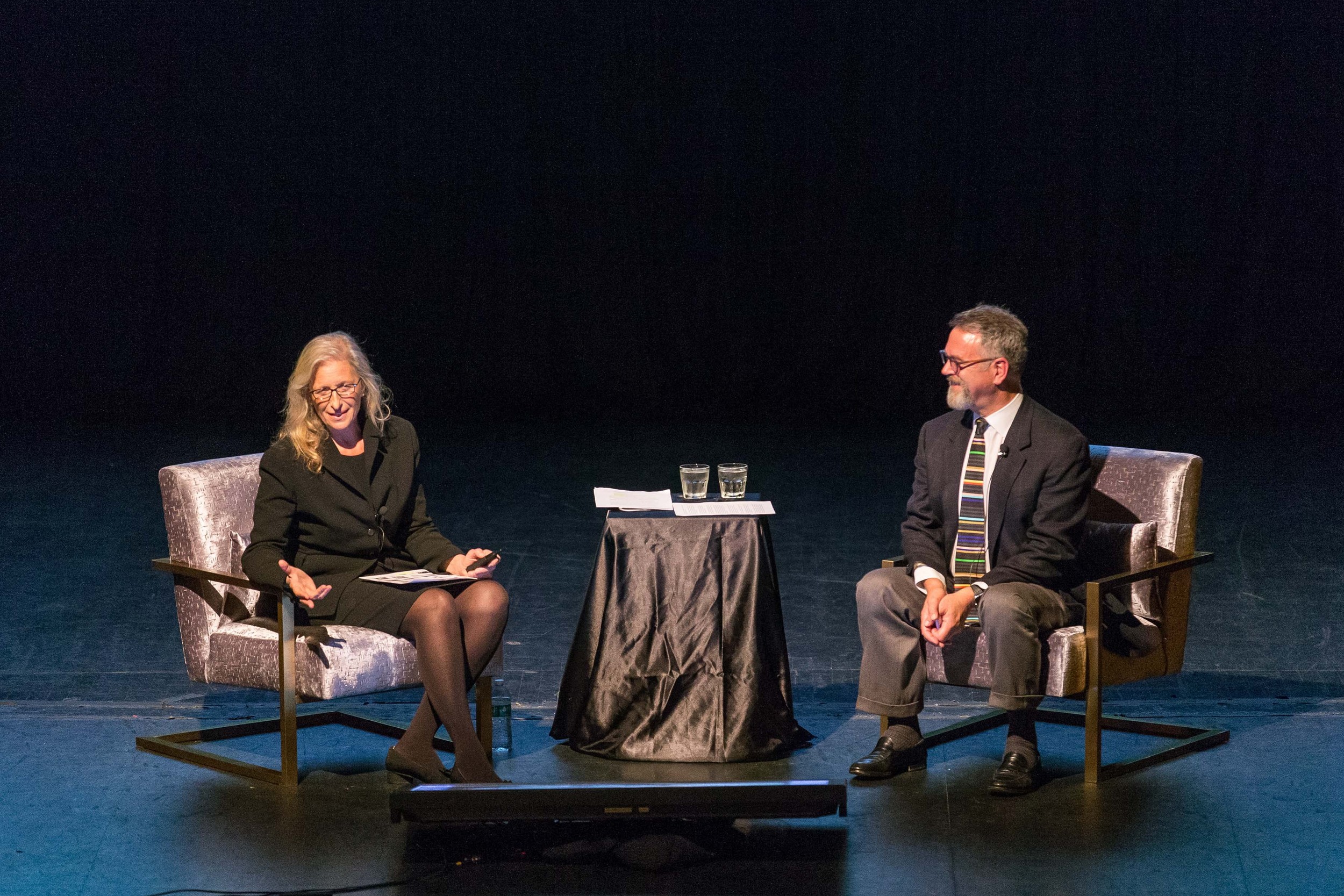
Annie Leibovitz on stage with Nion McEvoy. Photo by Drew Altizer.
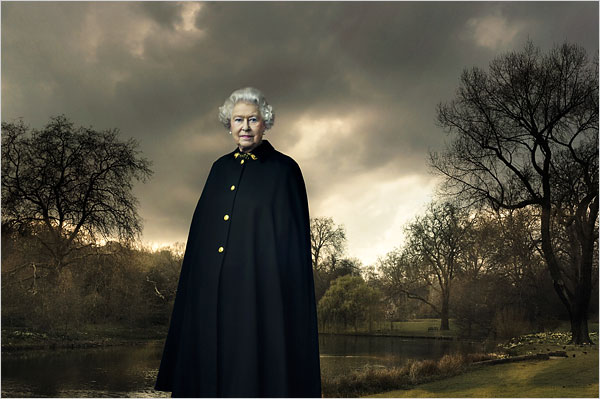
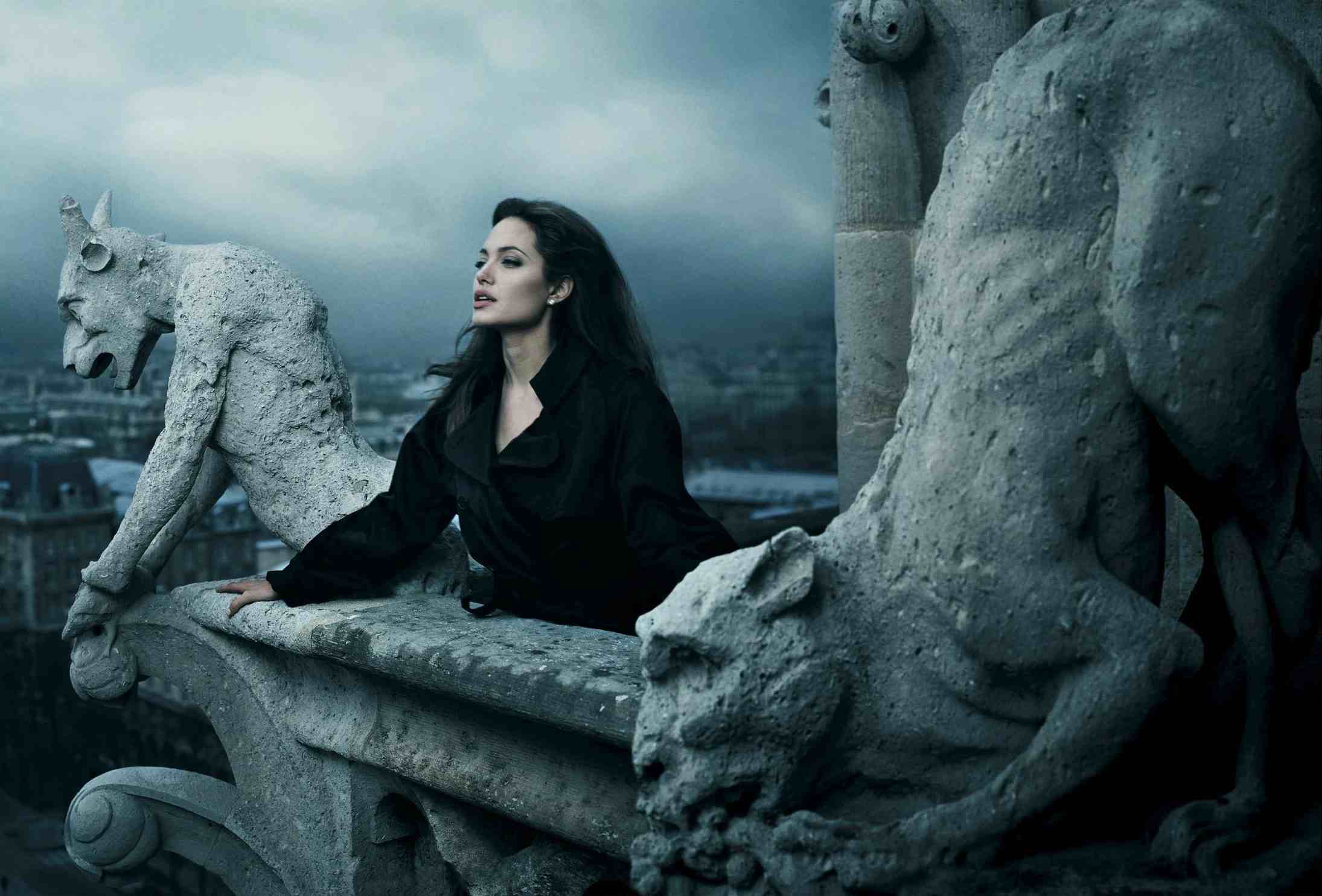
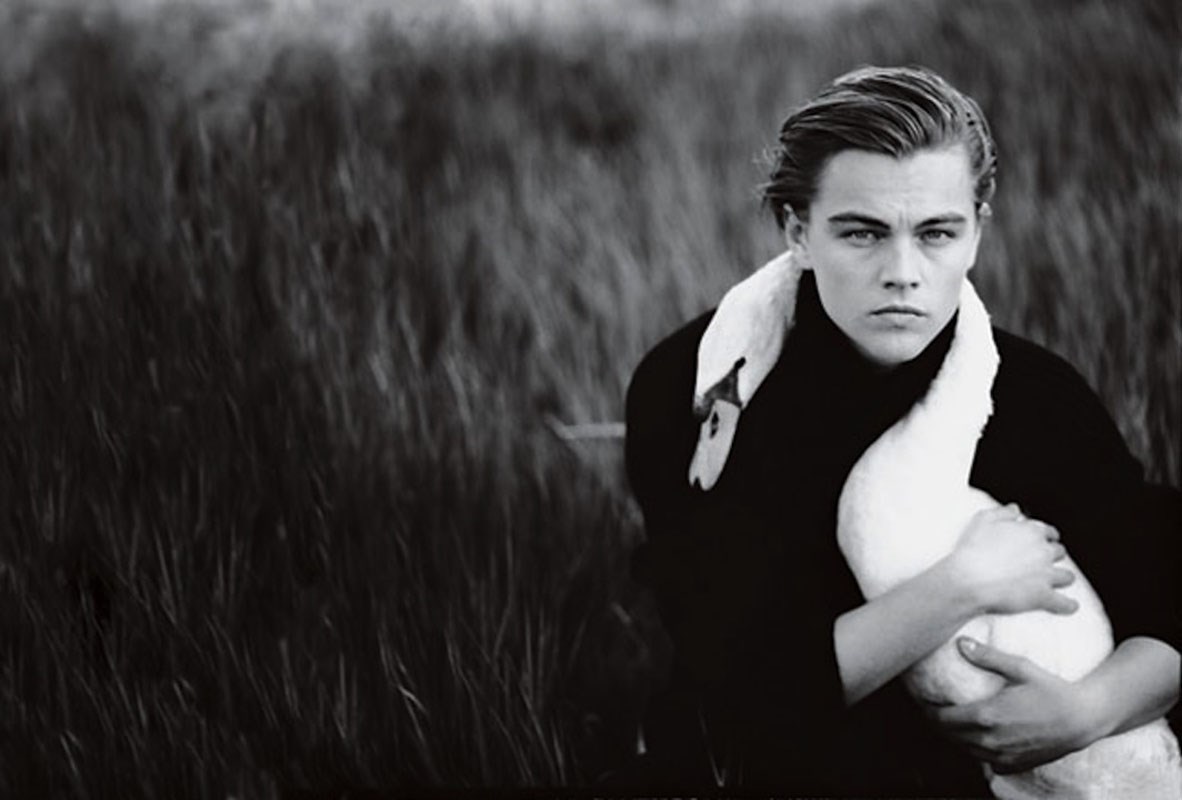
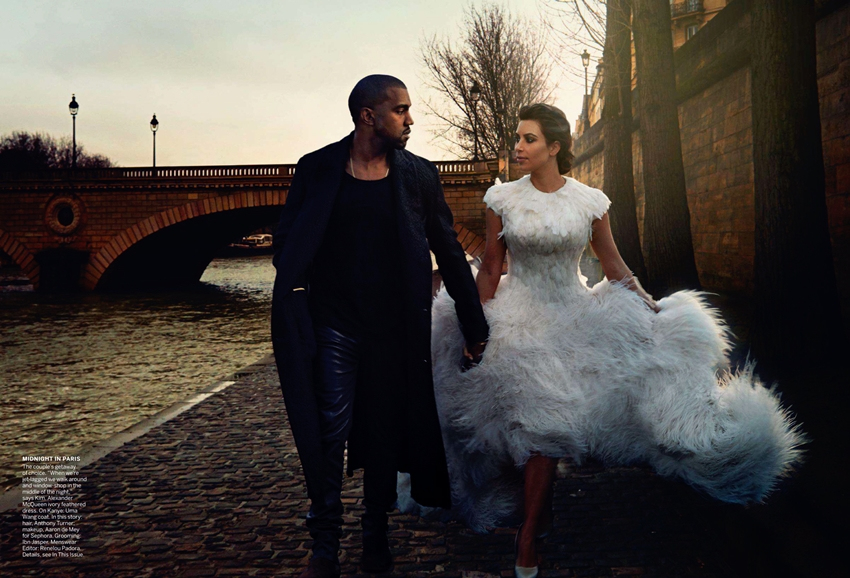

JOLIEGAZETTE team would like to thank SFMOMA for making us part of the evening honoring legendary Annie Leibovitz. Saturday, May 14, 2016 is the official opening date for the thoroughly transformed SFMOMA which will be 20,000 square feet larger than the Museum of Modern Art in New York. We are waiting in anticipation to experience museum expansion and the benefit it will serve to Bay Area community.
by Juliet Belkin