How France Became the Fashion Capital of the World
.

Who can refuse the fact France is the fashion capital of the world?
Since 1800’s – the times when ordinary Englishman-in-Paris Charles Frederick Worth created his ‘Haute Couture’ concept and started dictating what was fashionable – it’s become obvious that any designer who wants to be successful has to live and work in Paris.
Indeed, the most influential designers like Coco Chanel, Christian Dior, Yves Saint Laurent, Pierre Cardin, Hubert de Givenchy, Louis Vuitton, who revolutionized the way people dressed and shaped the fashion industry of our days, majorly come from France. The situation hasn’t changed dramatically since last two centuries: Paris is still home to the headquarters of Rochas, Chanel, Balenciaga, Hermès and Lanvin, Yves Saint Laurent, Dior, Chloe, Jean-Paul Gaultier, Céline and lots of other companies.
Besides everything listed above, there are lots of other reasons to consider France as the real fashion capital of the world:
Paris Fashion Week: Paris traditionally is the final city to host yearly fashion week marathon (after Milan, London, and New York). It’s Paris who dictates what the world will be wearing during the upcoming season.
Stylish People: Besides best world’s designers, France also is a motherland for some of the most stylish people on the planet like Jeanne Moreau, Brigitte Bardot, Juliette Binoche, Catherine Deneuve.
Golden Triangle: Paris is also famous for its shopping district – the area between the Avenue Marceau, Champs-Elysees, and Avenue Montaigne – stuffed with top world’s design houses.
Fashion Inventions: The most significant fashion inventions of all time also come from France. For example, bikini appeared thanks to French automobile engineer Louis Réard and fashion designer Jacques Heim, and the timeless little black dress was invented in Paris by Coco Chanel.
Fashion Trade Union: The Fédération de la Haute Couture et de la Mode, created in 1973, is also situated in Paris – the undeniable fashion capital of the world.
First Fashion Publication: Yes, the first fashion magazine Le Mercure Galant was also represented in France in 1672. Soon, Louis XIV demanded that the magazine was published strictly once a month – thus the style and fashion tendencies were spread throughout the country and, consequently, the whole world.
How Was France Known?
However, it’s unfair to say that the French sense of style was first noticed in the 1850’s when the first clothing brand was established and the term ‘couturier’ was created.
So how was France known as the world’s fashion influencer?
The Early Manifestations
If history is any guide, it all kicked off as early as the 17th century thanks to Louis XIV, the Sun King, who always wanted to be at the center of all that was beautiful in the world. He started the trend for outrageous wigs of curled hair and was wearing fantastic luxury clothes, he ordered the glorious construction of his palace in Versailles and was first to establish the Etiquette rules.
He actually was fashion and a great role model not only for the French but also for people all over the world. Yes, the Versailles’ fashion became the European standard later on.
Thanks to the Sun King, Paris’ top position in the world fashion chart was not lost even during the hard times of the French revolution.
Fashion Boom at the Turn of the Centuries
The transition from the 19th to the 20th century was the period of the French fashion industry explosion. Women got rid of their old-fashioned corsets, heavy petticoats, and opted for light flowing bias-cut dresses. Numerous key fashion houses were founded during this time, and Coco Chanel started her own fashion game.
Parisian New Look
In 1947, when the war ended and the world was still recovering from its disastrous consequences, Paris surprised the planet with another fashion breakthrough – it was Christian Dior who represented his elegant and elaborate New Look: a full skirt, a cinched in waist, and a majestic bust. Should we mention that France became the world’s fashion center stage once again?
Fashion Goes to the Masses
Despite the popularity and world recognition of French fashion, it still was too exquisite so that it wasn’t accessible to many people. Yves Saint Laurent solved this problem in 1966 by creating his ‘ready to wear’ tuxedo suits for women, which were a great success.
What Is the Fashion Capital of the World?
Yes, Milan, London, and New York do have lots of influence on the modern world of fashion, but can they boast such incredible fashion history, personalities, and invention as Paris can? Almost all French brands are timeless – so isn’t it a sign of true pure style?
No doubt, despite a growing competition between well-established fashion centers and newbies like Berlin, Barcelona, or Singapore, the Fashion still is a deep-rooted aspect of France’s culture. So, it is deservedly the only fashion capital of the world.

Amanda Thompson is an editor of https://breezytrends.com/. She is insanely passionate about beauty and health and explores the effects of positive thinking. Amanda loves helping, creating and learning and calls to enrich the others through motivation and implementation.

















Rules of a good tone in the beginning of the XX century
Why the young ladies were forbidden yellow dresses and taught not to blush
One hundred years ago people decorated their lives with great ceremonies and conventions. Some rules of politeness and manners now surprise or even seem cruel to us. Others wants these rules to return. Fortunately, in our time, everyone can decide for themselves whether to be old-fashioned and how much.

The young lady was allowed to be silent and smile
It was hard for unmarried girls - they were surrounded by most restrictions. They were forbidden to laugh publicly, cry, sneeze, yawn, and eat something that should be chewed or makes their mouths open wide (ice cream was acceptable - it was eaten with a tiny dessert spoon).
Girls were strictly forbidden to wear yellow dresses - yellow clothes meant for sex workers. The most decent and the most girlish color was blue (remember the discussion of dresses of girls in Gogol's "Inspector"?)
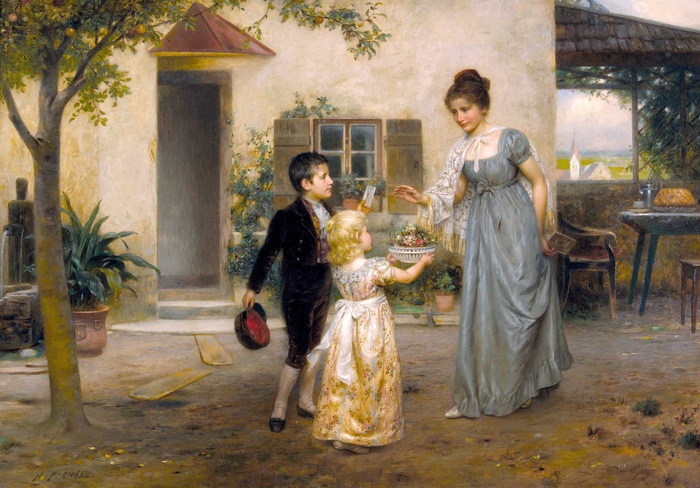
In addition, the girl could not even be one on one with a man for two minutes alone. If she went into an empty room where a stranger went in, this women would looked potentially fallen. Questions like "Who is that stranger?" was not allowed, it was Ok only for an adult lady.
Both women and girls were forbidden not only to look at the street for a long time, but also to work with the work (embroidery, sewing, knitting) at the window that opens even to the quietest street because someone can pass along it. It was allowed to glance into the window and walk away. That is why in the old novels the girls are constantly running to the window, waiting for the guest, and not sitting next to it.

Girls and women were forbidden to visit toilets in restaurants and theaters (they were designed for male only) and to go to the toilet when visiting guests, no matter how long they stayed.
On the street, a girl and a woman could not eat, drink, wear gloves, tie a hat, or even finish their toilet in any way. Sitting down, it was impossible to lean against or lean against a bench, an armchair, a sofa - until the appearance of bustle, in which the lady could often sit only sideways. No matter how boring it was to sit, you could not move your fingers or correct your clothes.
The girl had to be able to easily blush, the technique was even taught. And, on the contrary, she should not blush when she heard the ambiguity, not to show that she understood it. In addition, the ambiguity of the girl had to be able to recognize, not to accidentally not answer them with a smile. So the girls knew much more obscene things than they showed.
Watch your speech and feet
Both men and women in the conversation with the opposite sex were forbidden to discuss things that are hard to understand. You could not make the other feel narrow minded and you could not bore each other. When in mixed companies it was recommended not to talk about the relationship between a man and a woman, politics or illnesses.
Ladies couldn't cross legs, stretch your crossed legs or push your legs way under the chair .

If a woman walked alone, the man would bow. If with someone else, you'd wait for her permission. Picture of Edmund Blair Leighton.
The man also knew how to be patient
If the man accompanied the lady to the theater and during the interval she did not want to leave the lodges, he was only allowed to leave for a few minutes. During this time you could only have time to say hello to a friend.
If the husband did not want to visit friends or relatives, then the wife did not have the right to visit even a close friend. But if the couple already had children of the older adolescence, the wife was obliged to take them to receptions, evenings and to visit.
Bachelors and widowers were not allowed to pay visit to an unmarried acquaintance. Husband could do it but only without his wife. The exception was made for the widowed fathers of adult daughters - to them, on the contrary, friends were only with wives.
Pretty shocking for a modern man would be the rules of greeting. Nowadays, a man is accustomed to freely choose the form of greetings and farewells and decide independently whether it is appropriate for him to greet the lady. Previously, the man always greeted first, but on the street or in another public place - only if the lady showed him that she did not mind admitting their acquaintance (looking directly at him, for example). In addition, the man always bowed, shaking hands with the lady, kissing her or even allowing herself to kiss the cheek was allowed only if the lady herself offered it with a gesture or word during his bow. The same applied to farewells.
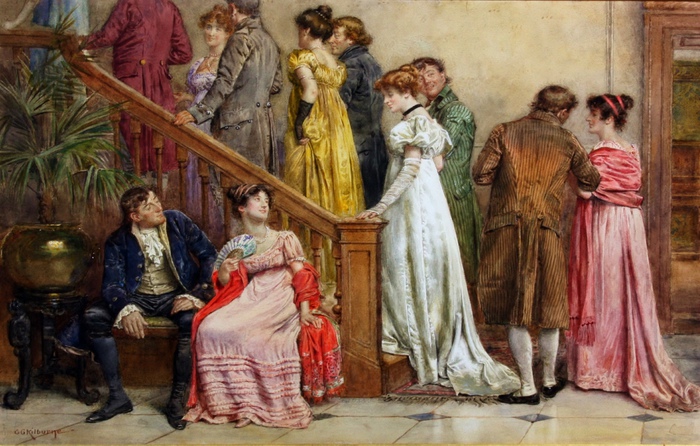
Acquainted man and woman never greeted each other when seeing each other on the street in the evening or at dusk. Men avoided a strong handshake, not only with ladies, but with other men (although each hand was squeezed more palpably than with girls or women). A firm handshake was considered appropriate only to secure a vowel or an unspoken contract.
One great rule was that the girls were advised to wake up urgently if they saw an obscene dream. Go figure.










Romanoff Dynasty by creator of "Mad Men" revealed
The History of the Russian Dynasty
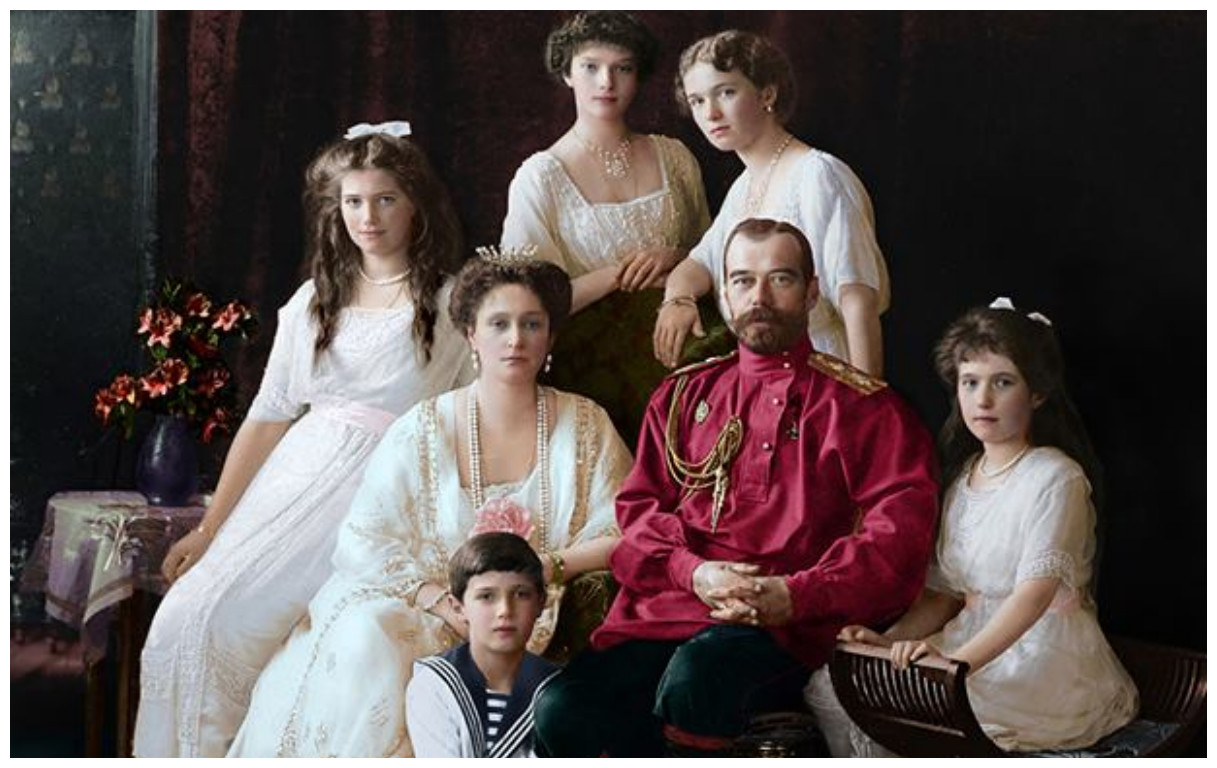
Mad Men creator Matthew Weiner reveals his next project: The Romanoffs, an anthology series centered around people who believe themselves to be the modern-day descendants of the Romanov family.
"Every single episode—and there will be eight—has a different cast, a different story and a different location," Weiner told The Hollywood Reporter. "The thing that holds them together is that all of the stories involve people who believe themselves to be descendants of the Romanov [family]."

The Romanov dynasty had ruled Russia for more than 300 years before the Bolshevik Revolution of 1917 that saw the tsar abdicate and the royal family executed along with other Romanovs.

The remains of Nicholas, Alexandra and their other children Olga, Tatyana and Anastasia were discovered in the Sverdlovsk region in 1991 and were reburied amid great ceremony in the St. Peter and Paul Cathedral in St. Petersburg in 1998.
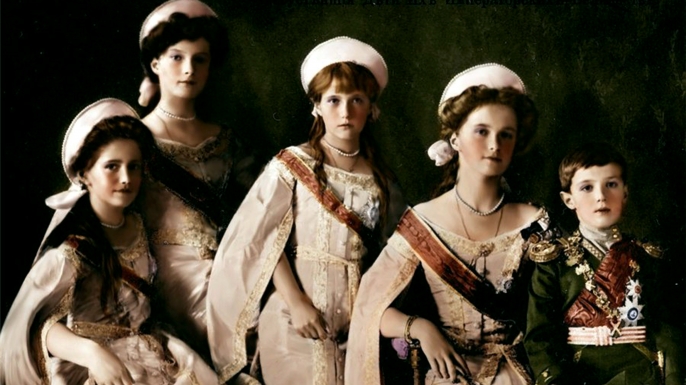
The remains of Alexei, who was 13 when he died, and Maria, 19, were discovered in the Sverdlovsk region in 2007, and their remains are currently being kept in the country's state archive Weiner hopes that the show will debut on Amazon in the Spring of 2018.


"It is time for me to move on”