ANDY WARHOL: THE 1950s
FROM A TO B AND BACK AGAIN
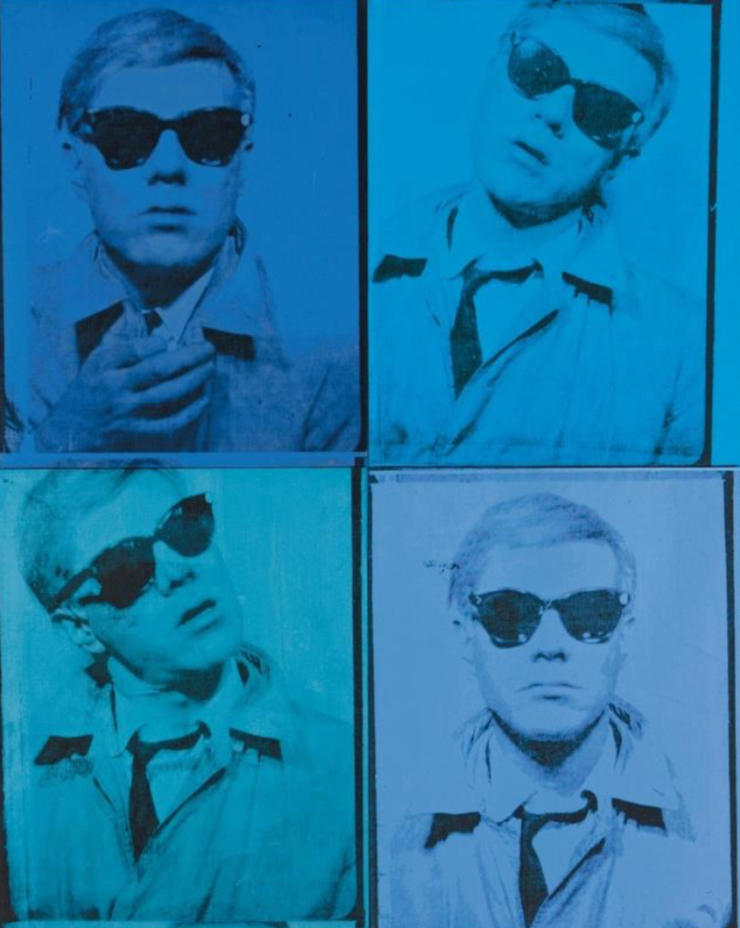
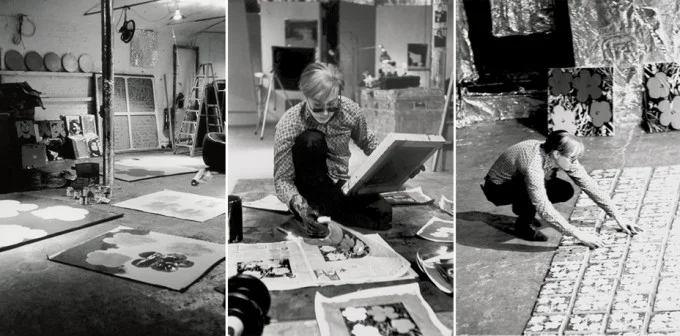
The San Francisco Museum of Modern Art (SFMOMA) opens the exclusive West Coast presentation of the critically acclaimed exhibition, Andy Warhol—From A to B and Back Again on Saturday, May 19. The exhibition will run through September 2, 2019. Spanning the artist’s 40-year career and featuring more than 300 works on three different floors of the museum, the exhibition includes paintings, drawings, graphics, photographs, films, television shows as well as a personal time capsule of ephemera. The retrospective features examples of the artist’s most iconic pieces in addition to lesser-known abstract paintings from later in his career. Uncannily relevant in today’s image-driven world, Andy Warhol—From A to B and Back Again provides new insight into Andy Warhol himself by examining the complexities of this enigmatic artist more than 30 years after his death in 1987. The show’s title is taken from Warhol’s 1975 book, The Philosophy of Andy Warhol (From A to B and Back Again), a memoir featuring the artist’s musings on fame, love, beauty, class, money and other key themes that frequently appear in his work.

“He’s a complicated figure and a complicated artist,” said Gary Garrels, Elise S. Haas Senior Curator of Painting and Sculpture at SFMOMA. “His inner emotions, his psychic self were not his subject matter. Warhol is constantly labeled a Pop artist, but all that happened within three or four years and then he moved on and the work goes quite dark and explores questions of gender and sexual identity, fame, subcultures. At the time of his death, the consensus was that Warhol was no longer relevant. But the last major retrospective in 1989 was a wake-up call: this is an artist we have to reckon with.”
THE EXHIBITION
Andy Warhol—From A to B and Back Again is presented on three floors of SFMOMA: two, four and five.
On the museum’s second floor, two galleries of works on paper offer a detailed look at Warhol’s earliest drawings from the 1940s and hand-drawn commercial illustrations created for advertising in the 1950s. These early drawings lay the groundwork for many of the techniques and approaches he would use throughout his career. This portion of the exhibition includes delicate, gilded collages and sketches of shoes for the I. Miller Shoe Company, and illustrations for publications such as Glamour Magazine and The New York Times, as well as personal, little known drawings, often with homoerotic subjects.
On fourth-floor of SFMOMA special exhibition galleries, the exhibition takes visitors chronologically through the arc of Warhol’s career and his production in painting, drawing, photography, film and installation. The first half of the exhibition opens with his best known work from the creatively active period of 1960–68, with his earliest paintings such as Dick Tracy (1961) and Superman (1961), followed by the groundbreaking, iconic Pop Art paintings, Green Coca-Cola Bottles (1962), 192 One Dollar Bills (1962) and the sculpture, Brillo Boxes (1969, version of 1964 original). The exhibition then highlights Warhol’s depictions of celebrities, including Elvis, Elizabeth Taylor and Jacqueline Kennedy. In a dedicated black box gallery adjacent to the early Pop Art work, samples of Warhol’s films and videos are on view including his series of Screen Tests featuring Ethel Scull, Edie Sedgwick and Billy Name (1964–65).

Subjects take a darker turn in Warhol’s Death and Disaster paintings (1963–64) memorializing car crashes, the electric chair and a benign yet sinister can of tuna fish contaminated with botulism. An eye-popping gallery filled with 16 colorful Flower paintings (1964) will be installed on top of Warhol’s Cow Wallpaper (1966) for a bold immersive experience. Visitors will have a chance to experience Silver Clouds, Warhol’s sculptural installation of shiny Mylar balloons created in 1966, the point at which he declared himself to be done with painting.

Warhol’s work of the 1970s and 1980s focuses on post-Pop artwork, which Garrels observes are “very unknown to most people.” In these galleries Warhol shifts his focus with a massive portrait of Chairman Mao (1972), followed by a gallery featuring photographs and paintings of trans women and drag queens from the 1970s, which provide a look into Warhol’s fascination with the elusiveness and complexity of gender and identity. A separate suite of photographic self-portraits of Warhol in drag provides a different view into the artist’s carefully cultivated persona. A large single gallery is dedicated to Warhol’s grand experiments with abstract painting, featuring a gold Shadow painting (1978) and two large-scale Rorschach paintings (1984). Warhol’s influence on the young artists of the East Village in the 1980s is highlighted through collaborative works created with Jean-Michel Basquiat and Keith Haring. Also on display is an unpacked personal time capsule, one of 610 created over the course of the artist’s life.
A gallery in the museum’s fifth floor Pop, Minimal and Figurative Art presentation feature a 1970s “facebook” of wall-to-wall grids of large-scale silk-screened portraits representing a “who’s who” of celebrities, cultural icons, gallerists, athletes and business leaders from the late 1960s to the mid- 1980s. This gallery features over 40 portraits such as Halston (1975), Dominique de Menil (1969), Liza Minnelli (1978), Pelé (1977), Leo Castelli (1975), Nan Kempner (1973), Gianni Versace (1979–80), Robert Mapplethorpe (1983 ) and Dolly Parton (1985), as well as the artist’s mother, Julia Warhola (1974). For the subject, a Warhol portrait provided social validation and an immediate status symbol; for Warhol these commissions were a consistent revenue stream that supported his studio and desire to explore other more personal ventures. Warhol’s television shows and videos are on display in the adjacent city gallery on this floor.
May 19 through September 2, 2019: Open Sunday–Tuesday and Friday 10 a.m.–5 p.m., Thursday and Saturday 10 a.m.–9 p.m. Closed Wednesday. sfmoma.org/groups









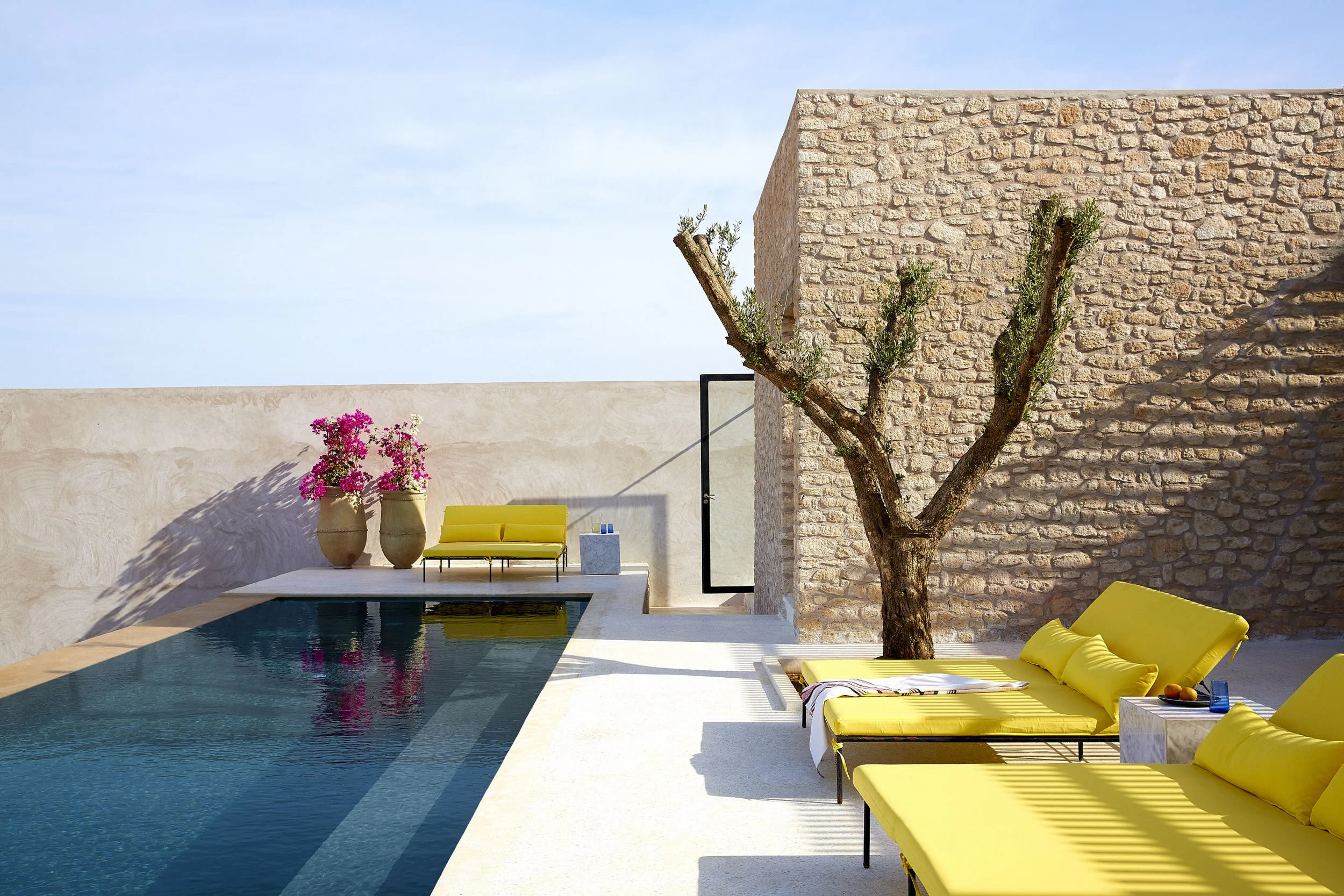
Jasper Conran buys Yves Saint Laurent's Villa Mabrouka in Tangier
Yves Saint Laurent’s home in the last decades of his life
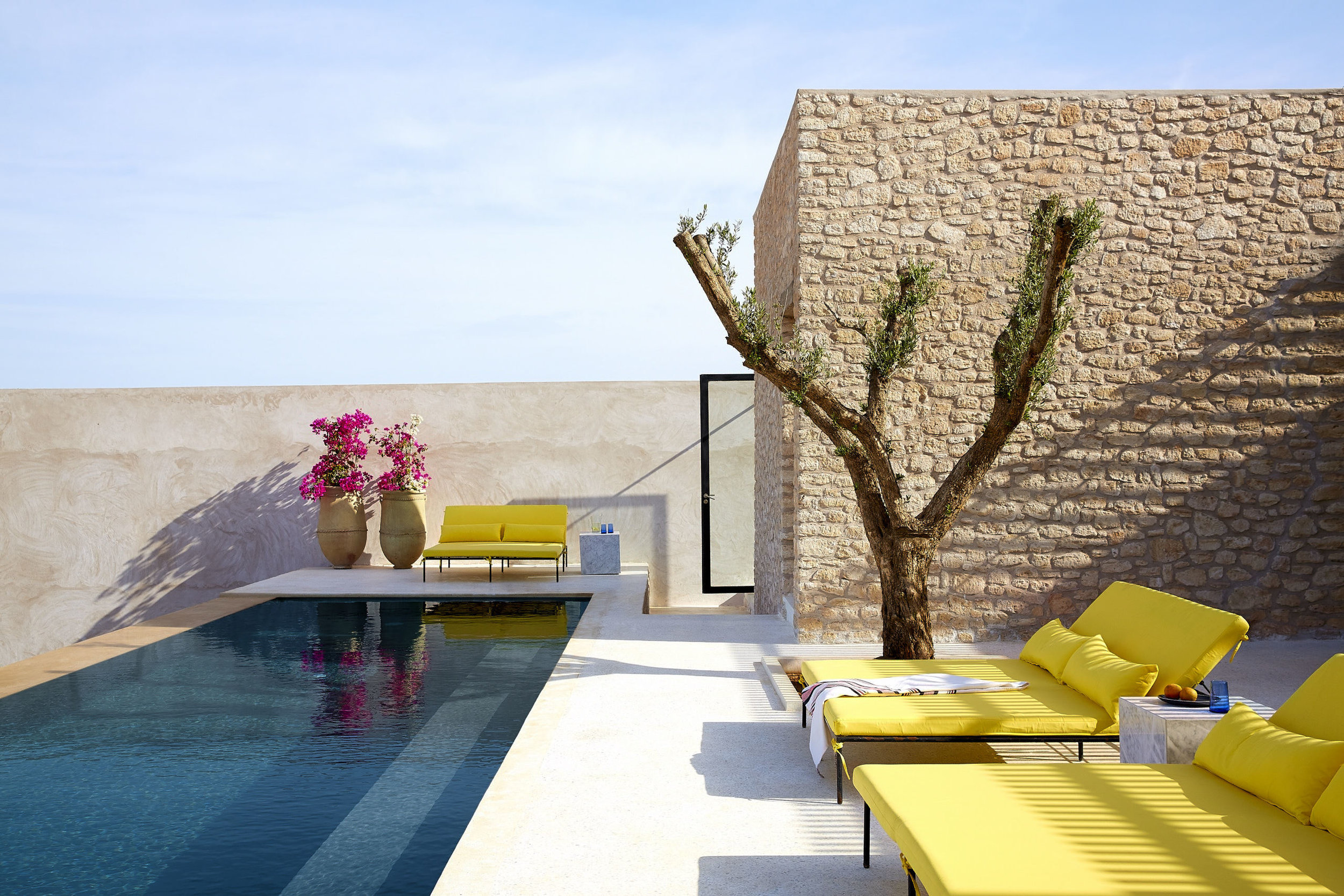
Villa Mabrouka, Tangier © Sotheby's
The British fashion and interiors designer Jasper Conran is set to purchase Villa Mabrouka in Tangier from the Fondation Jardin Majorelle in Marrakech, Morocco for an undisclosed price. The foundation which was founded by Yves Saint Laurent and Pierre Bergé.

Villa Mabrouka, Tangier © Sotheby's
Bergé's instructions prior to his death in September 2017 were that all proceeds from the property's sale will go towards the not-for-profit Fondation Jardin Marjorelle. The sale's announcement was made by Bergé's heir, AD100 landscape designer Madison Cox, who wed Bergé shortly before his death and is president of Fondation Jardin Majorelle and the Fondation Pierre Bergé-Yves Saint Laurent in Paris.





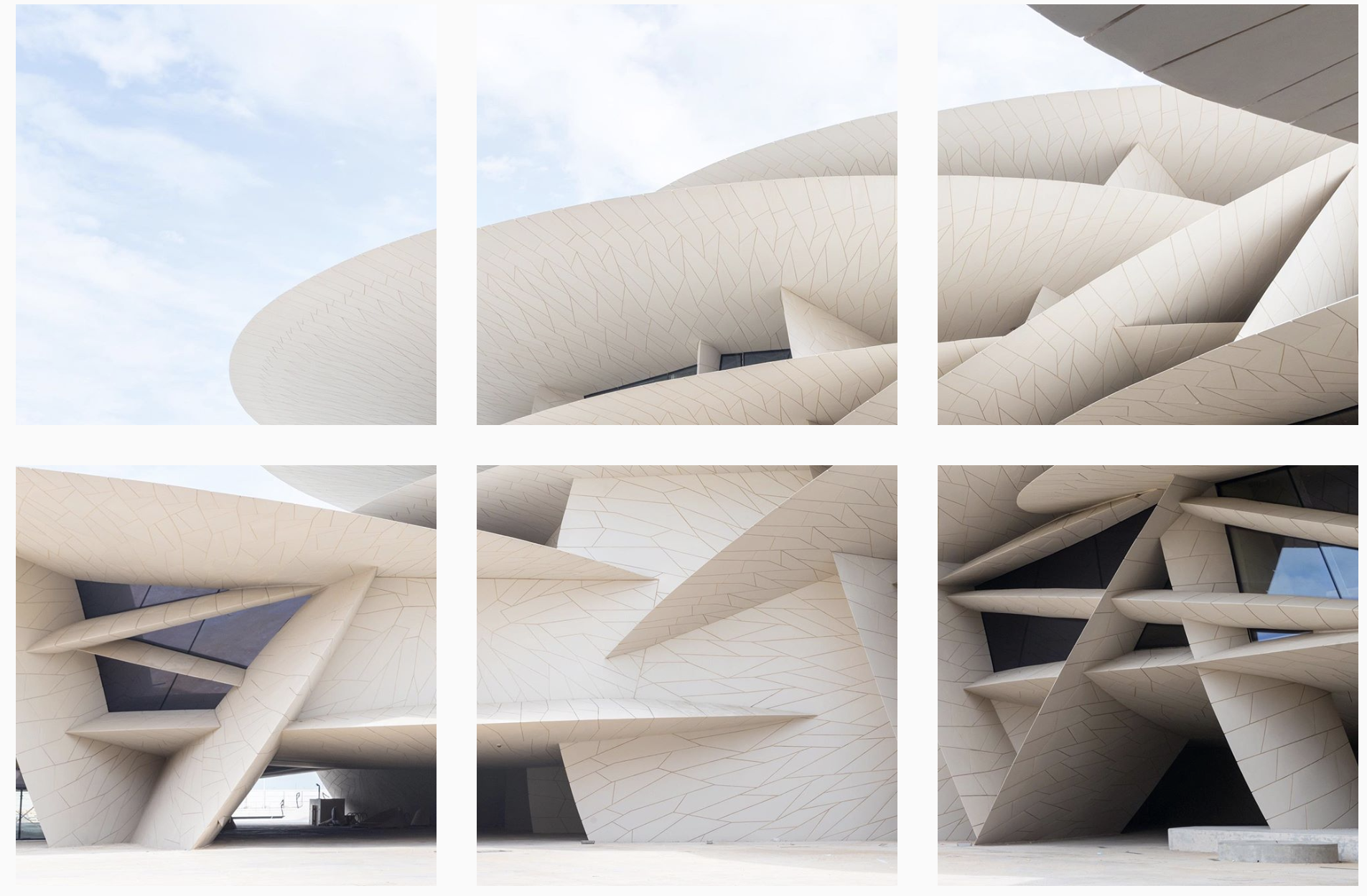
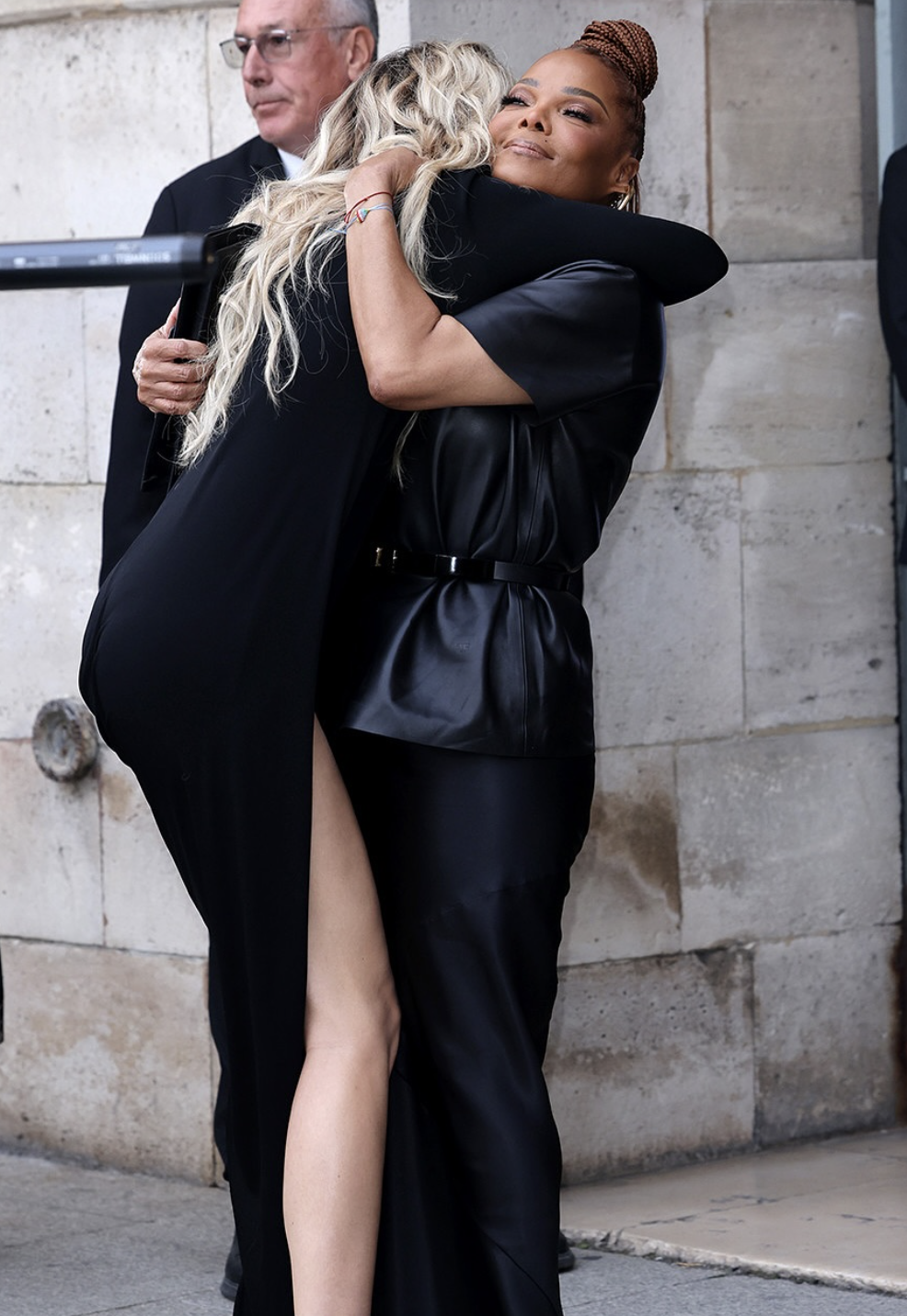
A New Museum Emerges From The Sand. A New Voice For Qatar and Its People.
Celebrities and large fashion crowd gets together for the opening of The National Museum of Qatar.
Celebrities gather for The National Museum of Qatar opening in Doha, Qatar. Among many are Johnny Depp, Zac Posen, Olivier Rousteing, Naomi Campbell, Natalia Vodiyanova, Victoria Beckham and more.
Museum was designed by Jean Nouvel, the Pritzker Prize-winning French architect. The multifaceted structure resembling a giant desert rose sits across from the bustling Doha Corniche, the main waterfront promenade in the Qatari capital.
The futuristic, sand-coloured structure, located near Doha's airport highway, is likely to be among the first buildings visitors will spot when arriving in the city.
Desert Rose
The museum is designed as a free-form space, in a way that does not include doors, and is meant to offer visitors a fluid experience as they move through time, space and themes. The building is a symbol of Qatar's culture and tradition.



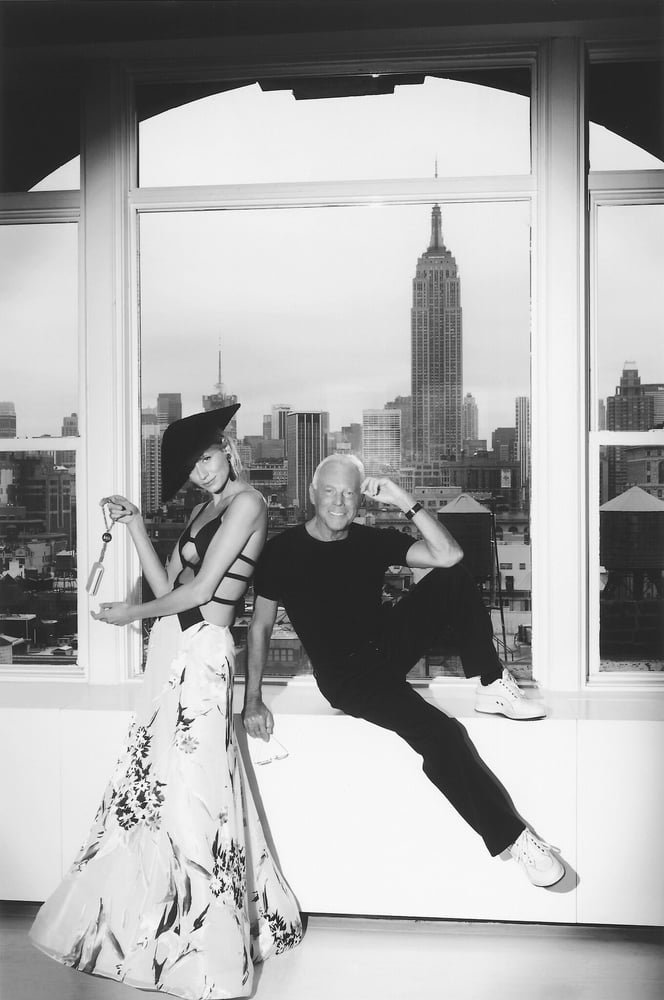



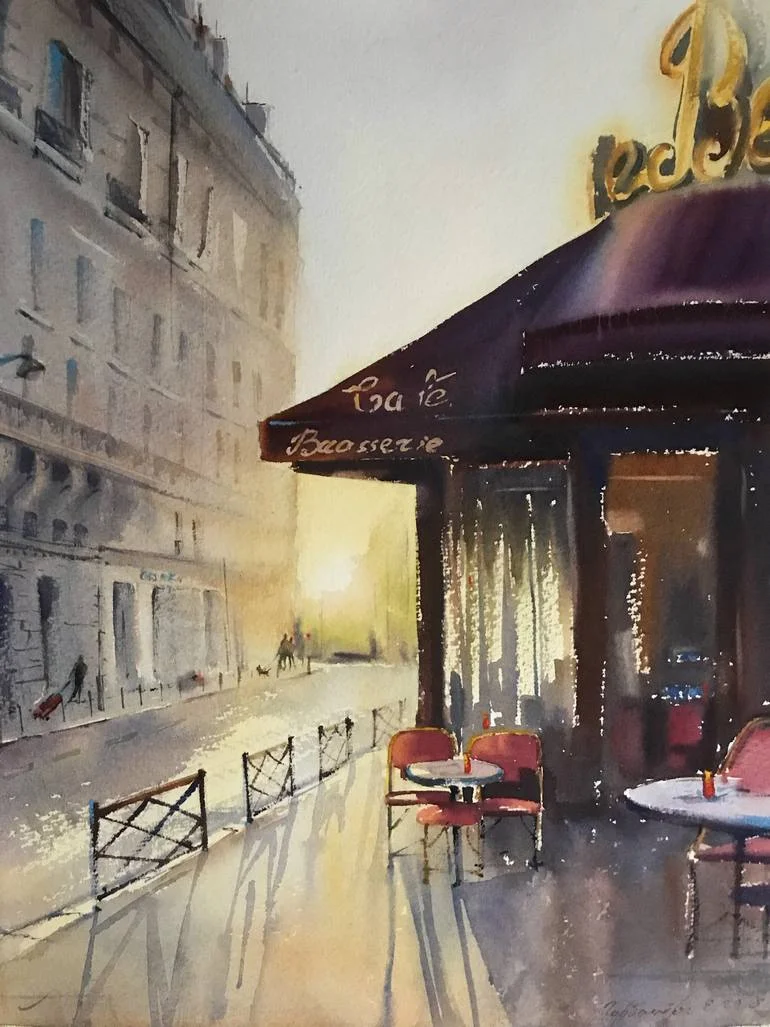
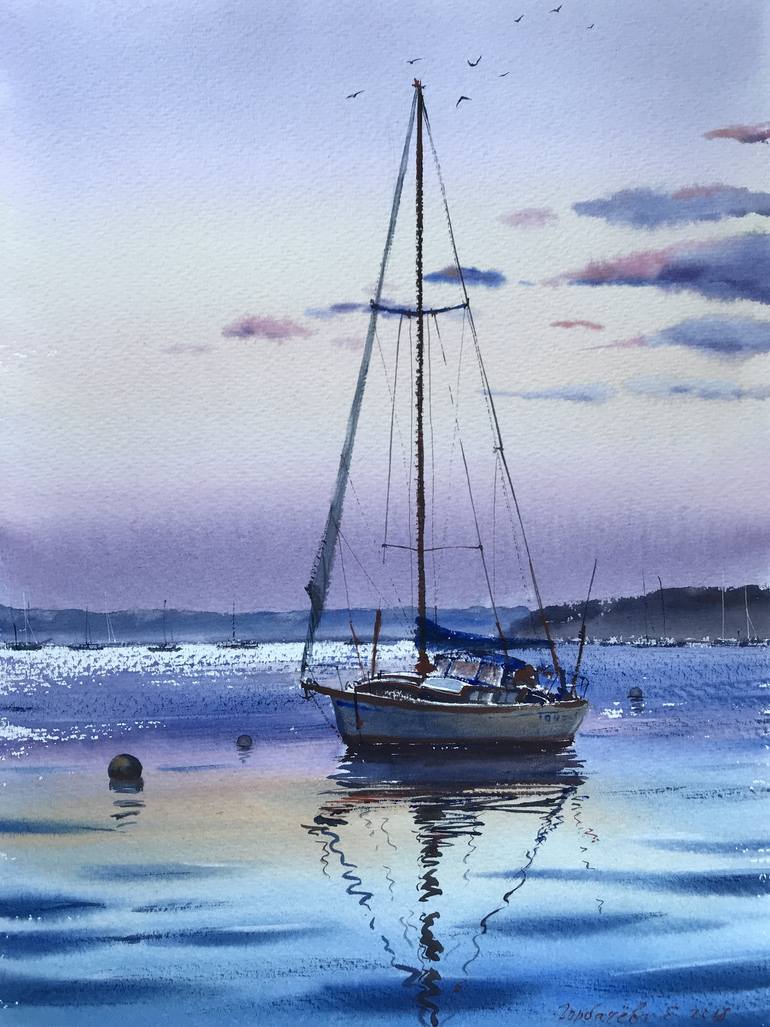
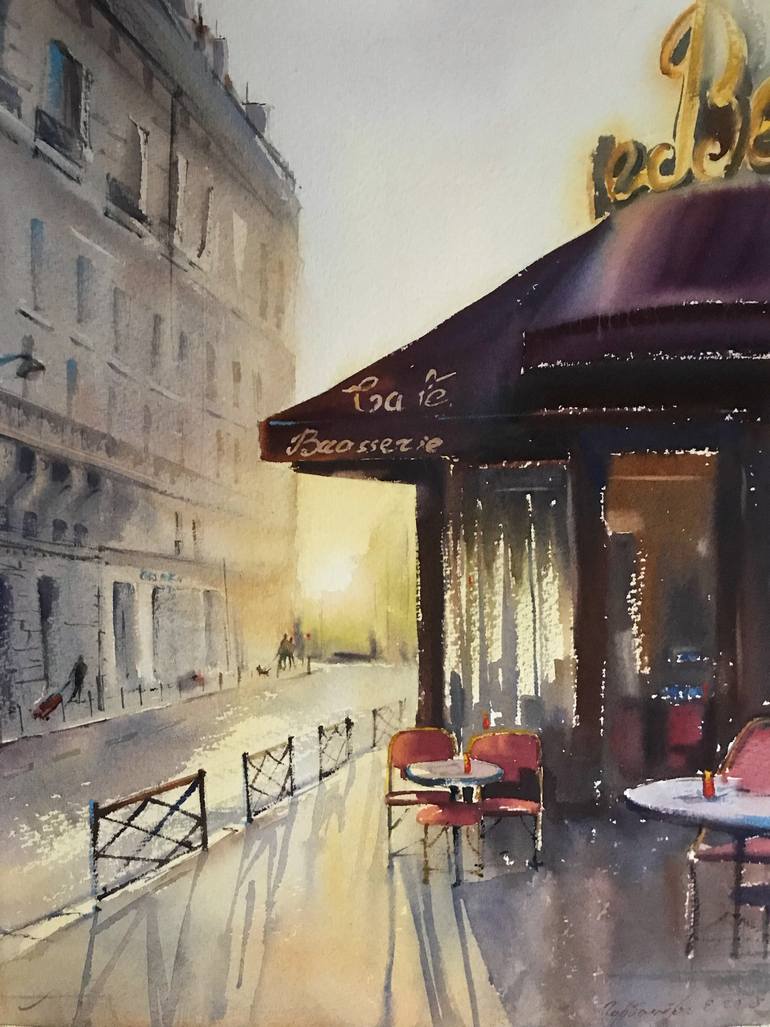
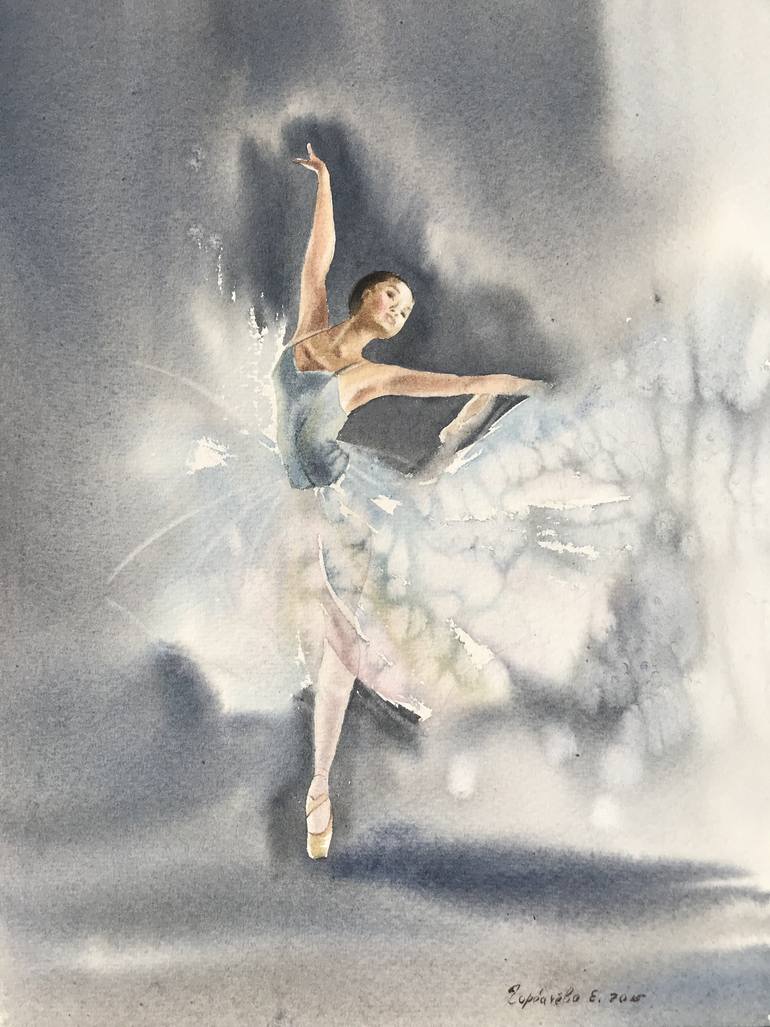
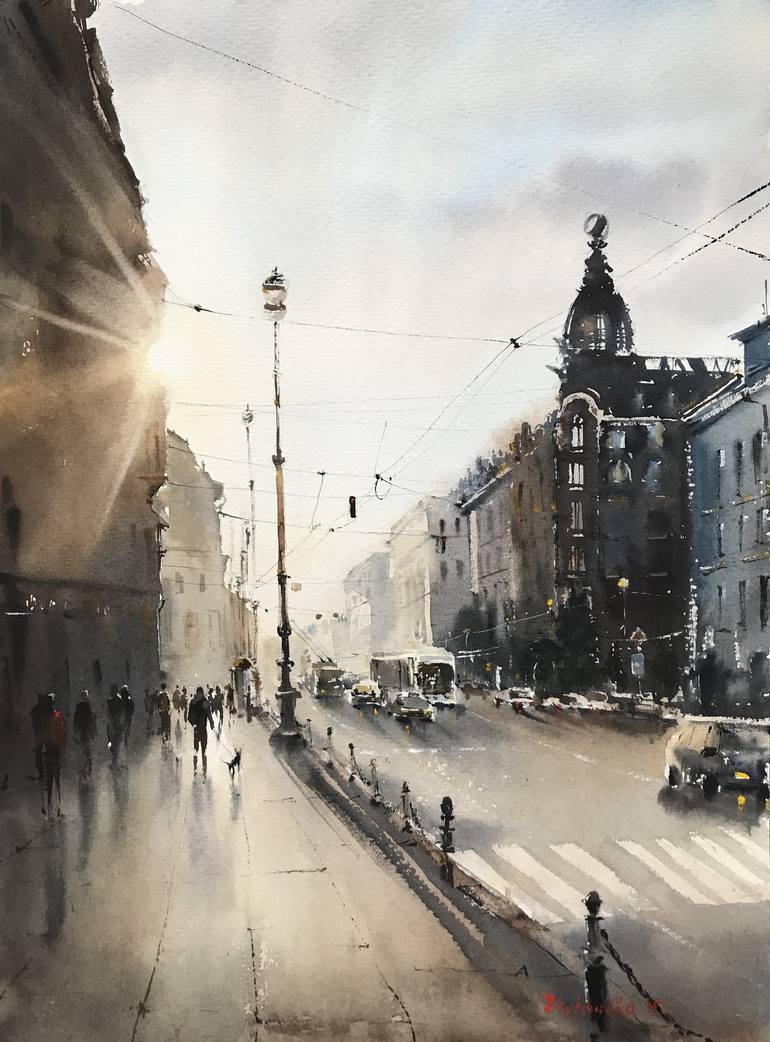
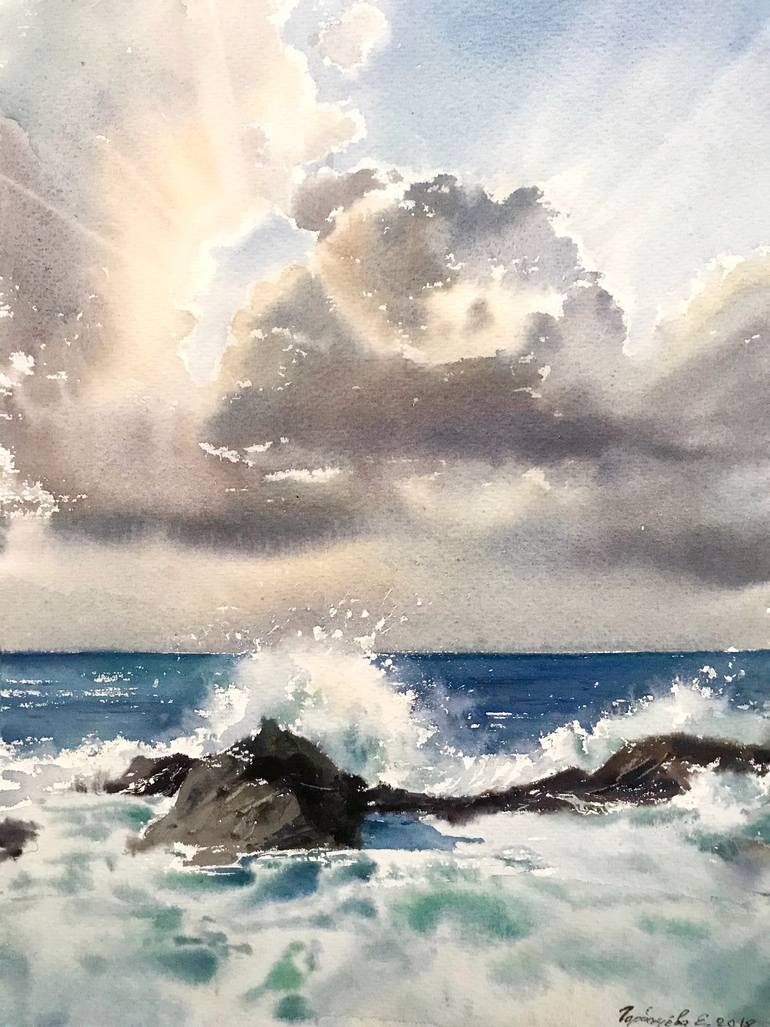
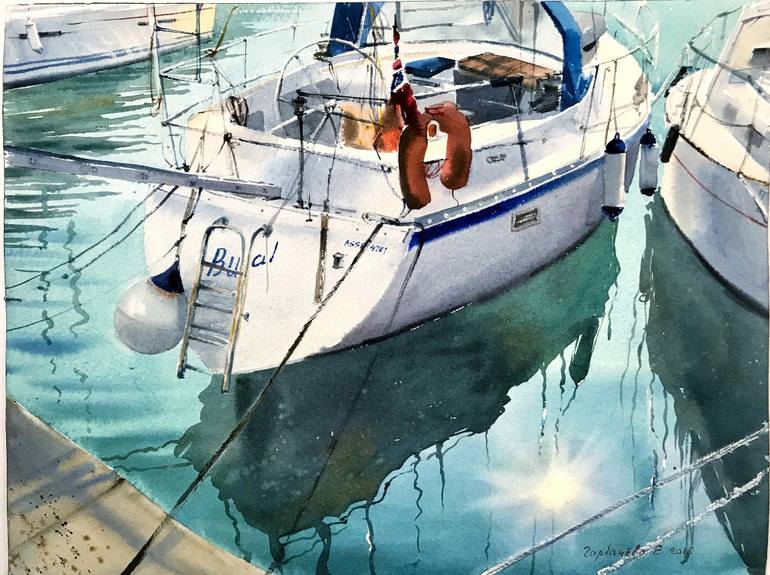
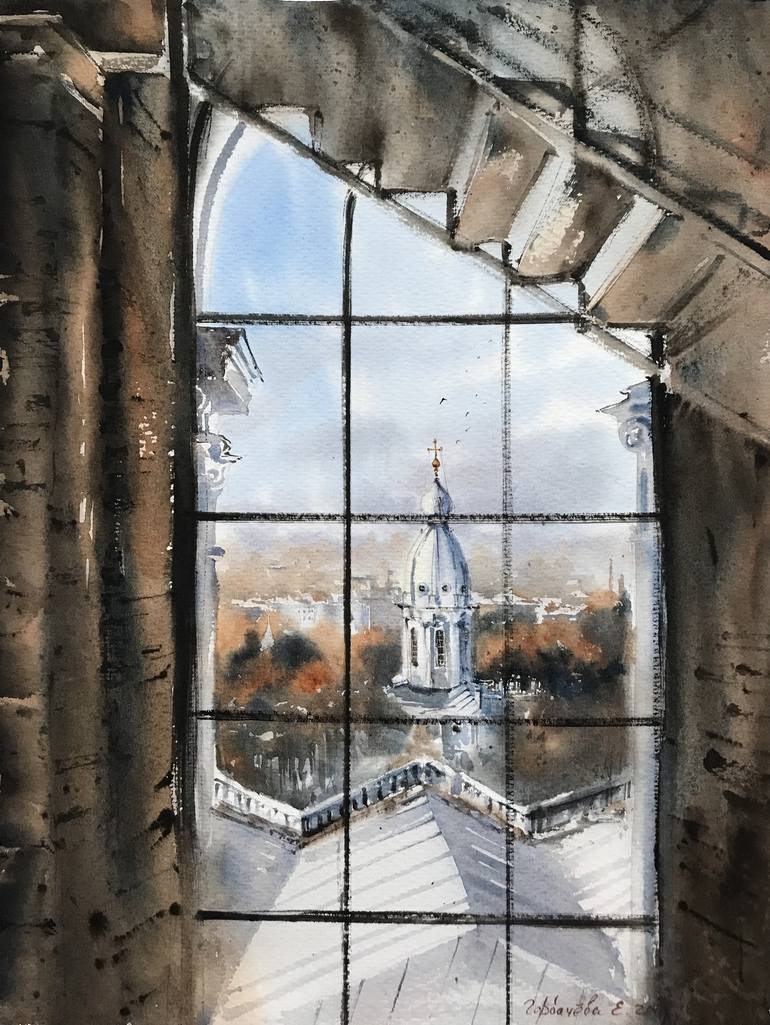
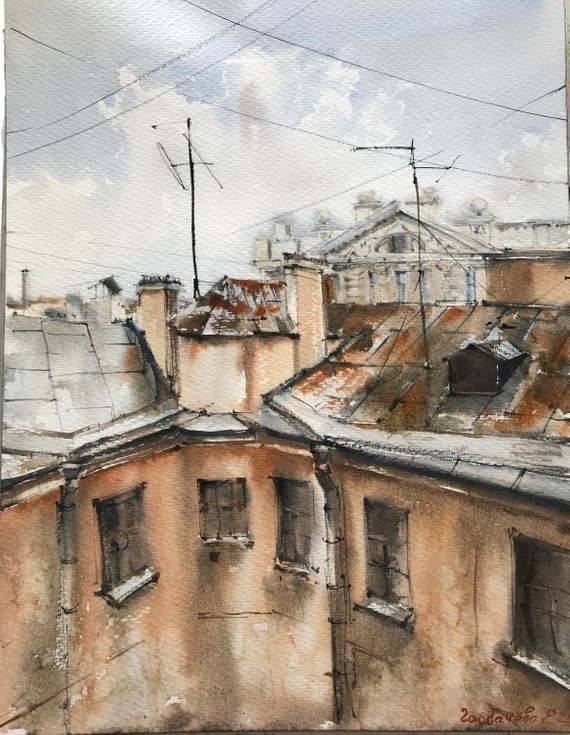
Watercolor paintings by Eugenia Gorbacheva
.
“I am a watercolor artist and fashion designer. For 10 years I created fashionable clothes, but now I have decided to shine myself entirely in the writing of watercolor paintings. I am inspired by creativity my family and the world around me.”
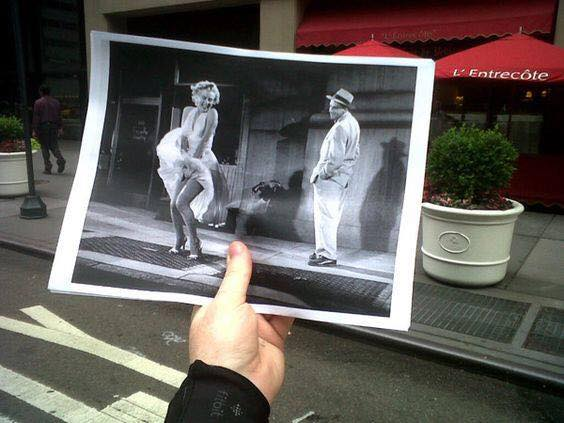
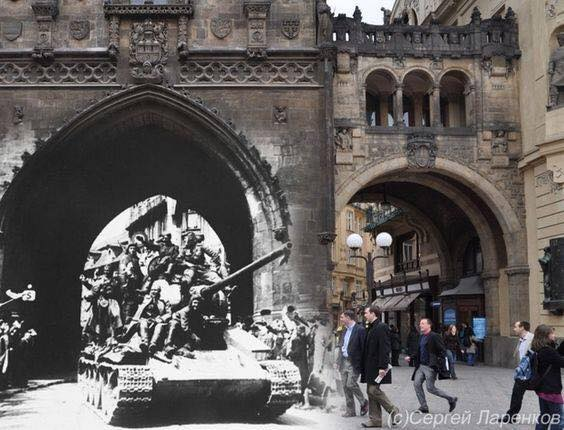
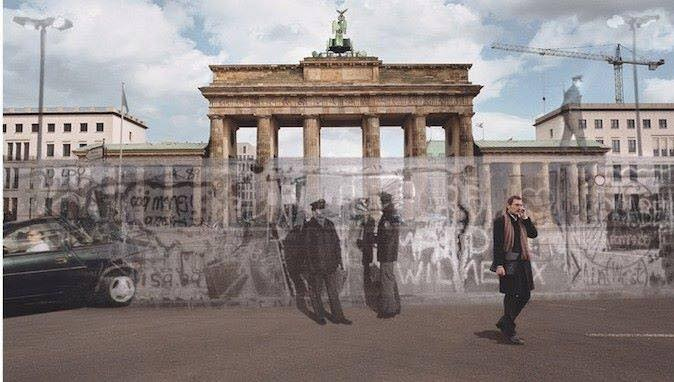
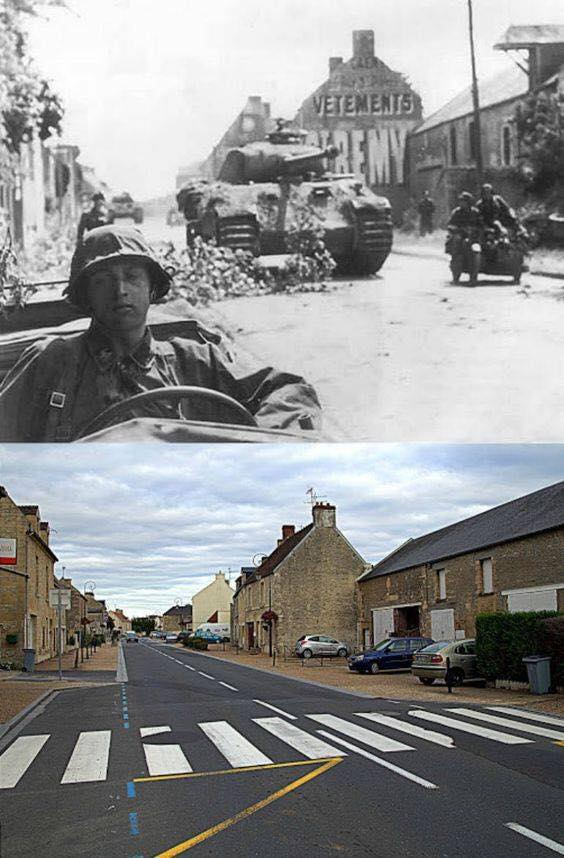
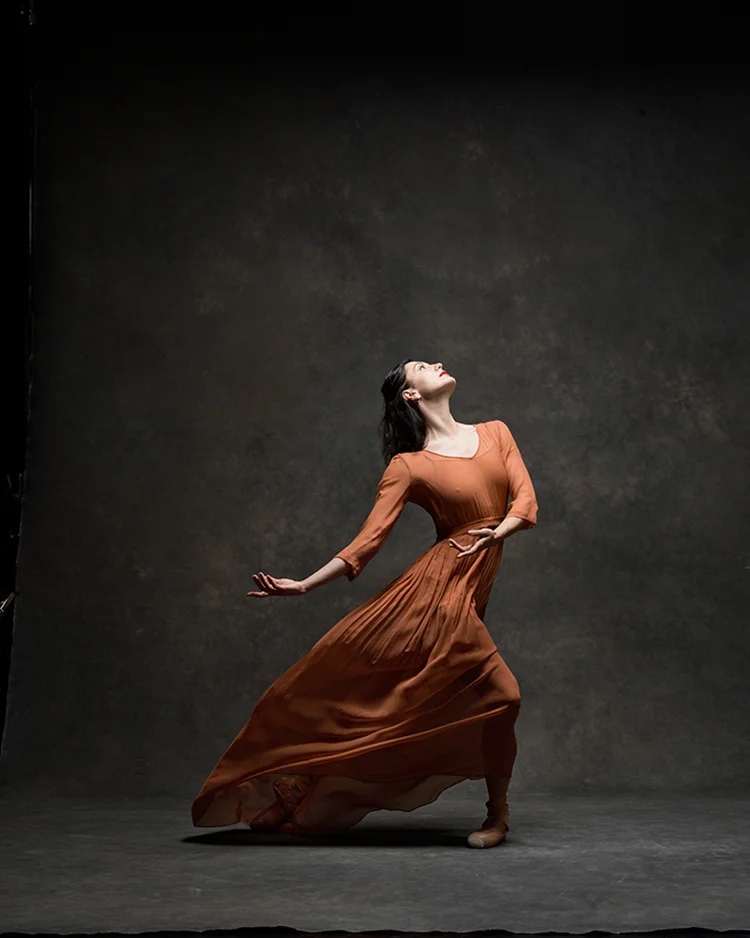
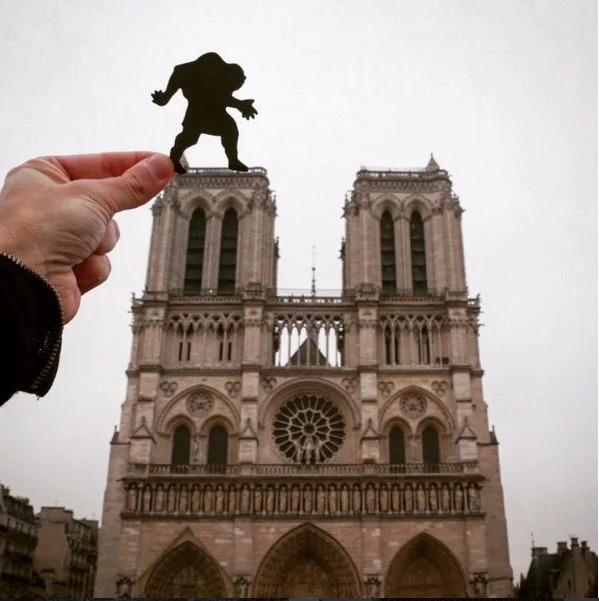
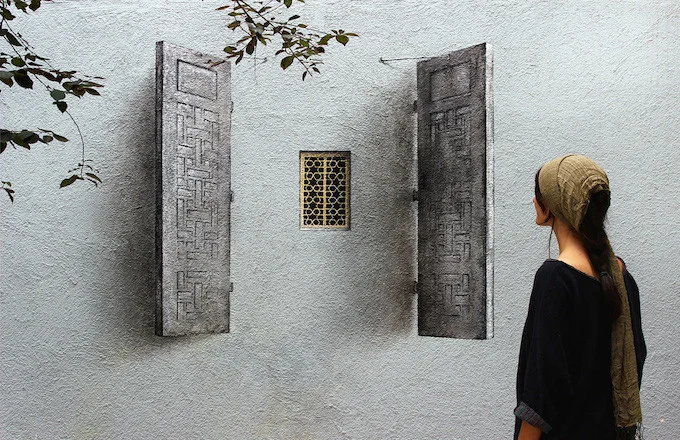
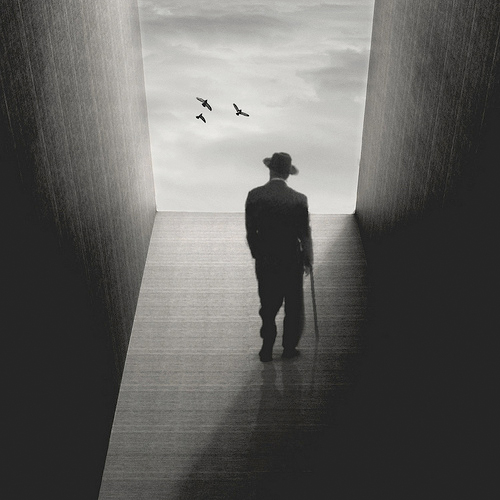
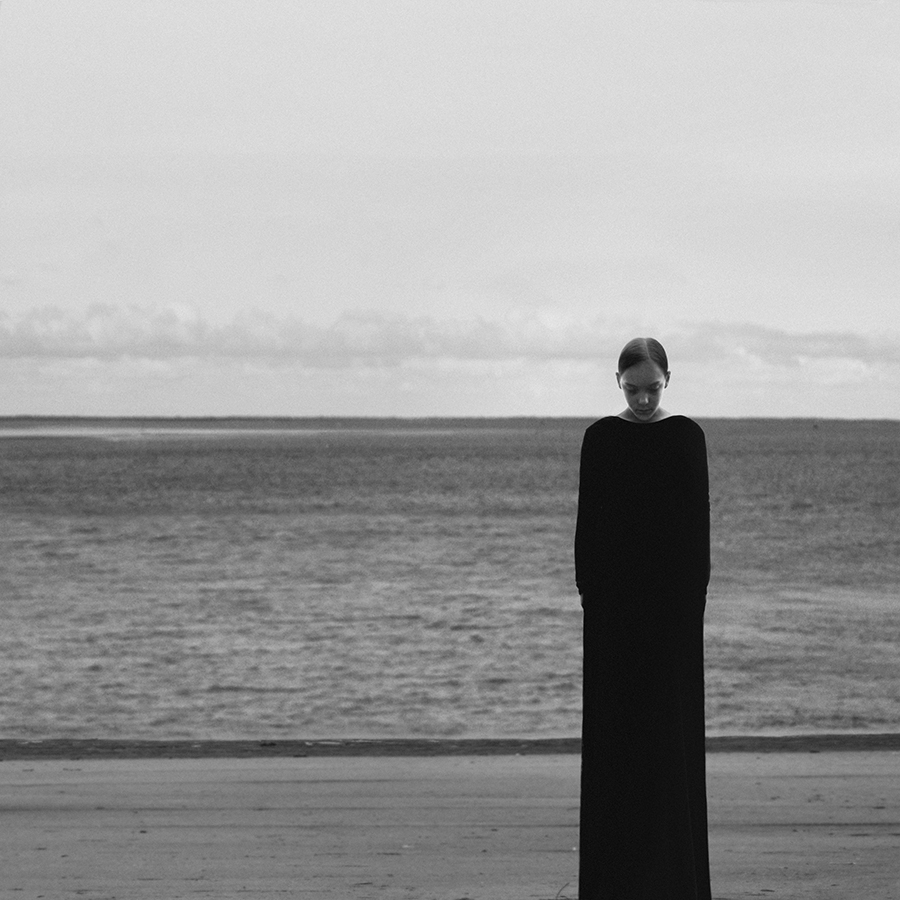
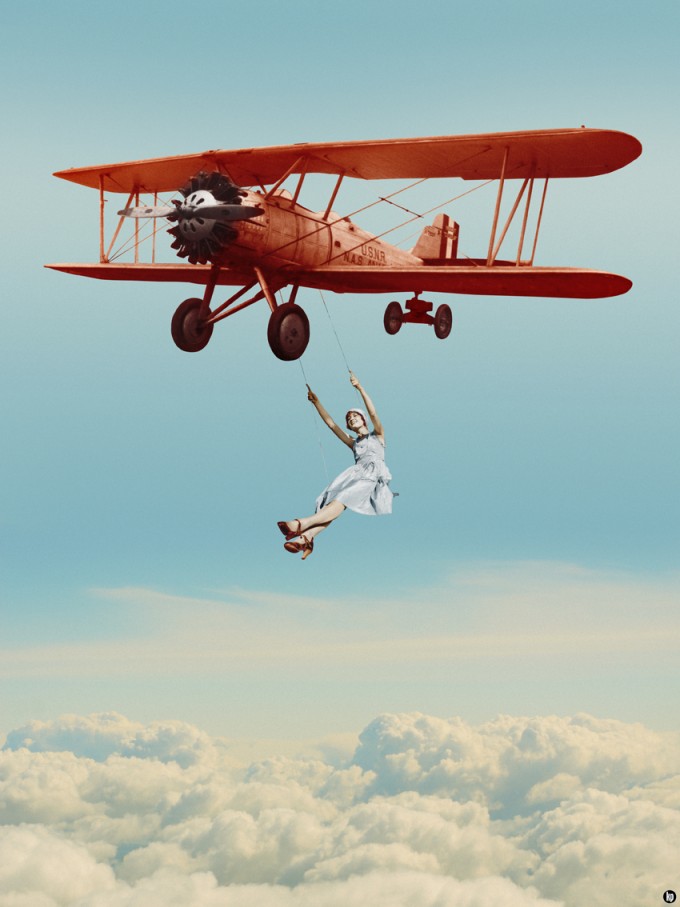
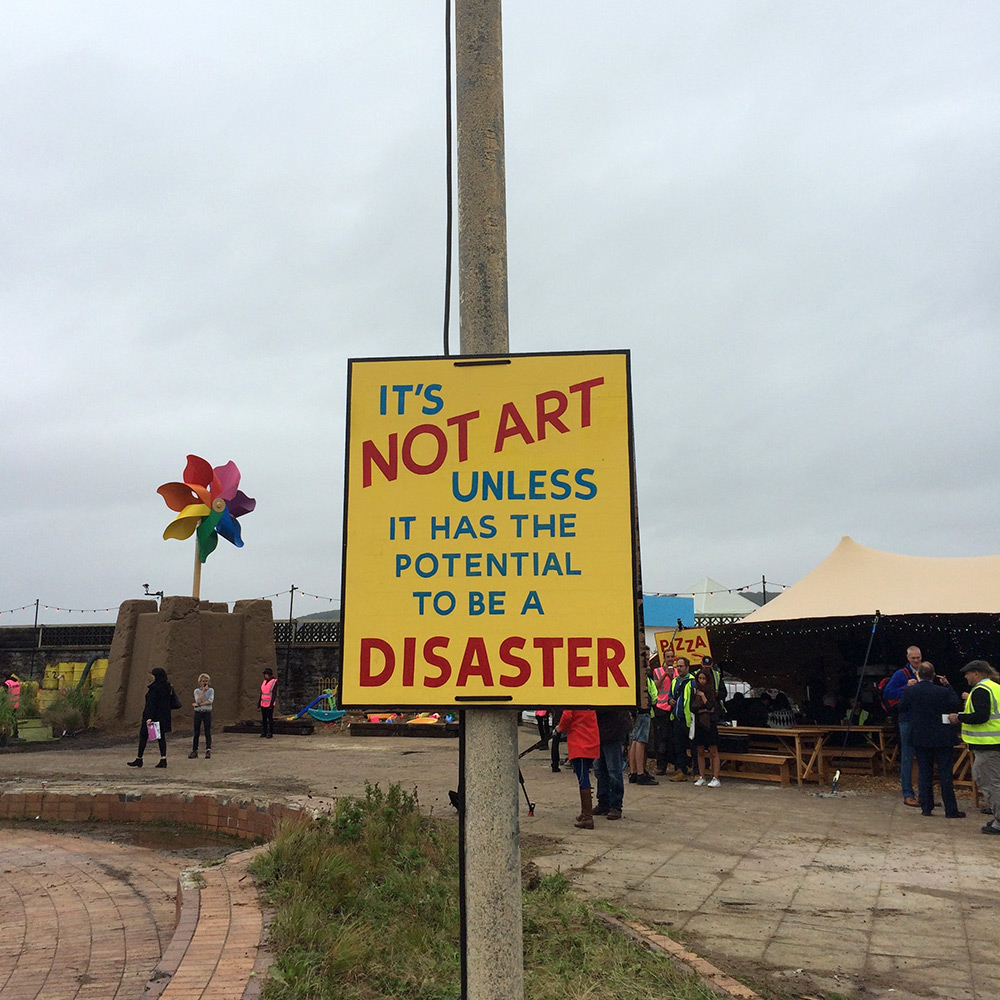
"Know Where You Stand" by Seth Tara
Self-taught American artist Seth Tara created a series for The History Channel called "Know Where You Stand" for The History Channel. He is a winner of Luerzer’s Archive’s 200 Best Photographers Worldwide and winner of numerous international awards including a Cannes Lion for his brand campaign for The History Channel, “Know Where You Stand,” which has been translated into 30 languages and published in 130 countries.

He was born into a lineage of artists and artisans, including bronze and Macramé sculptors, golden-age cartoonists, interior designers, vacuum repairmen, celebrity stylists (and a tailor to the Czar of Russia). Nearly all of his pictures are direct prints from original film negatives with no digital alteration and taken largely hand-held. His pictures hang in collections around the world
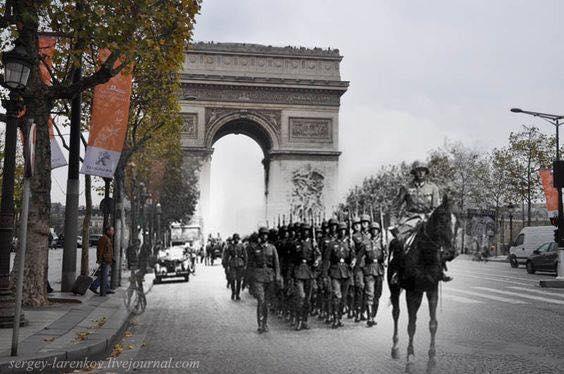
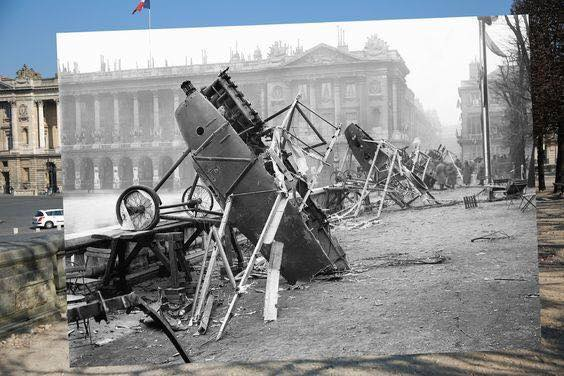
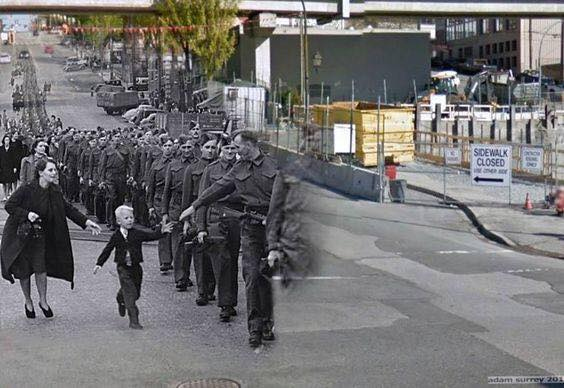
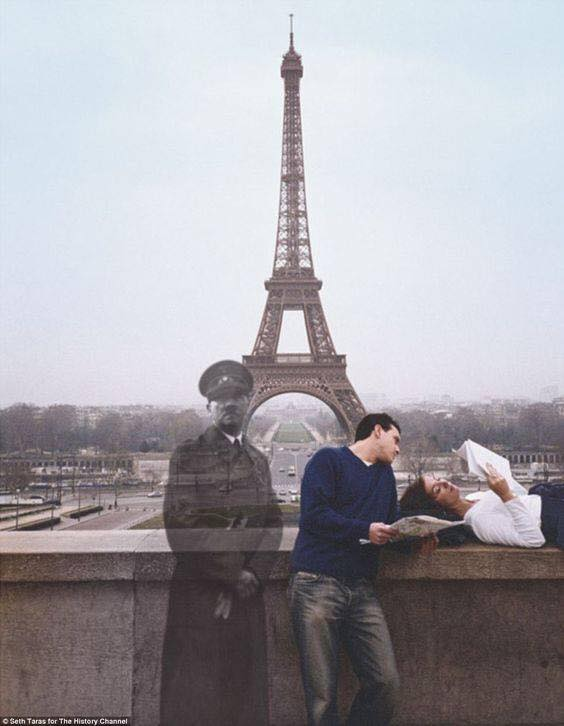
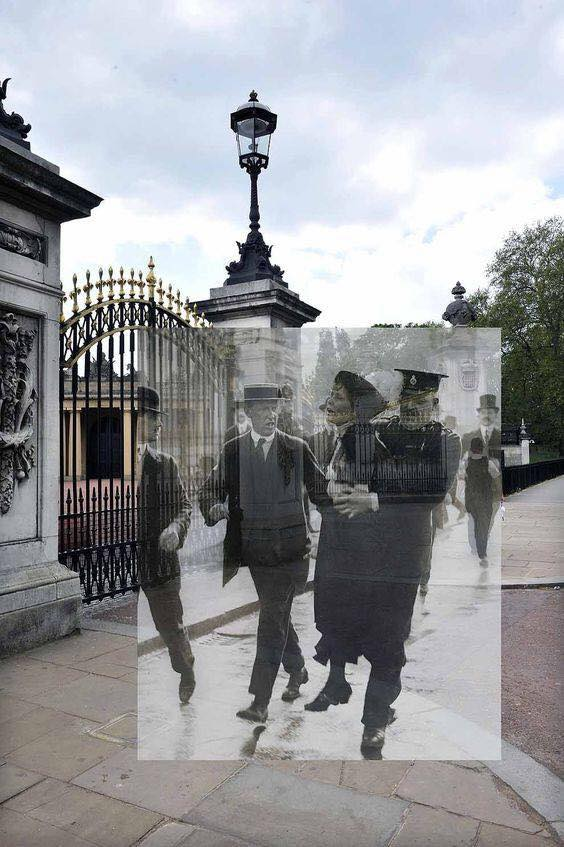
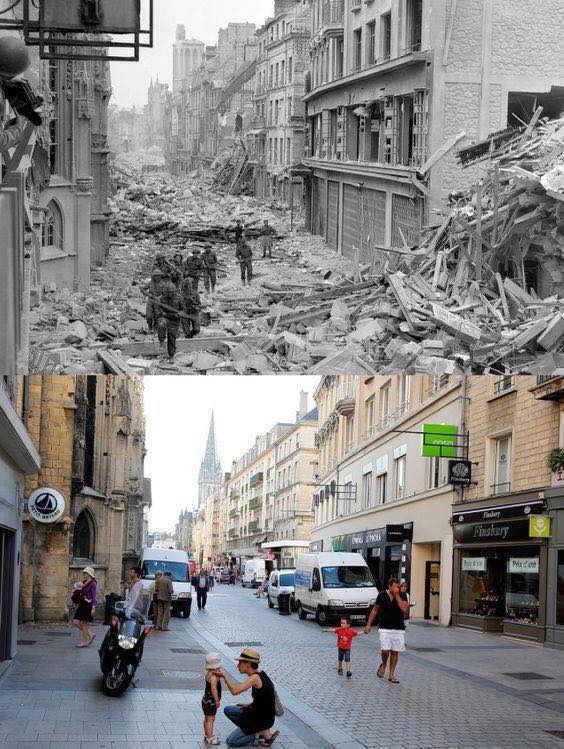
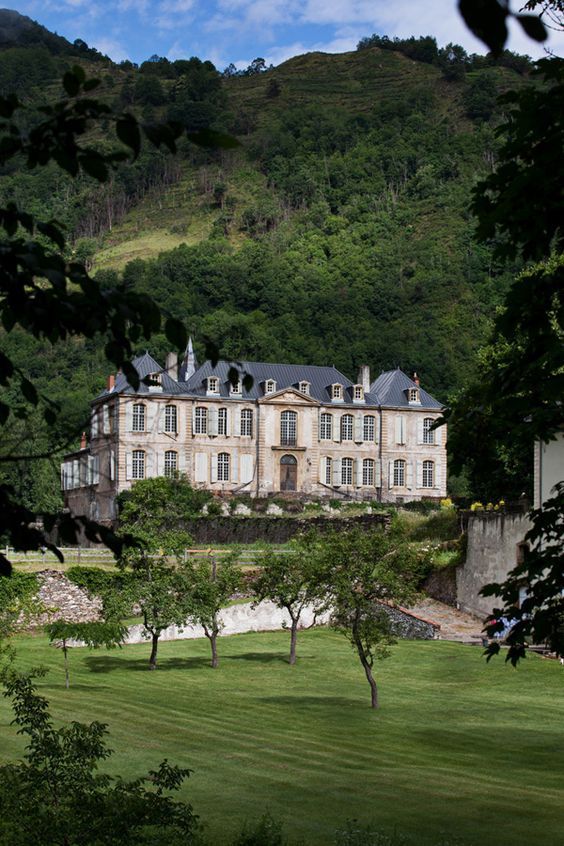
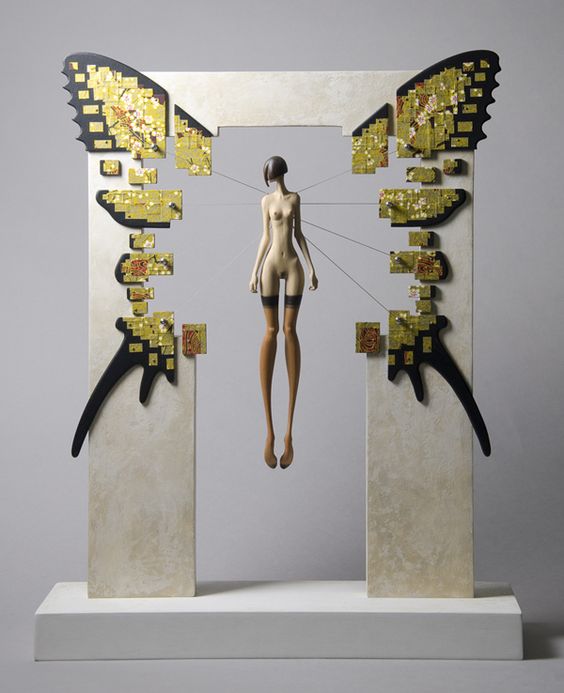
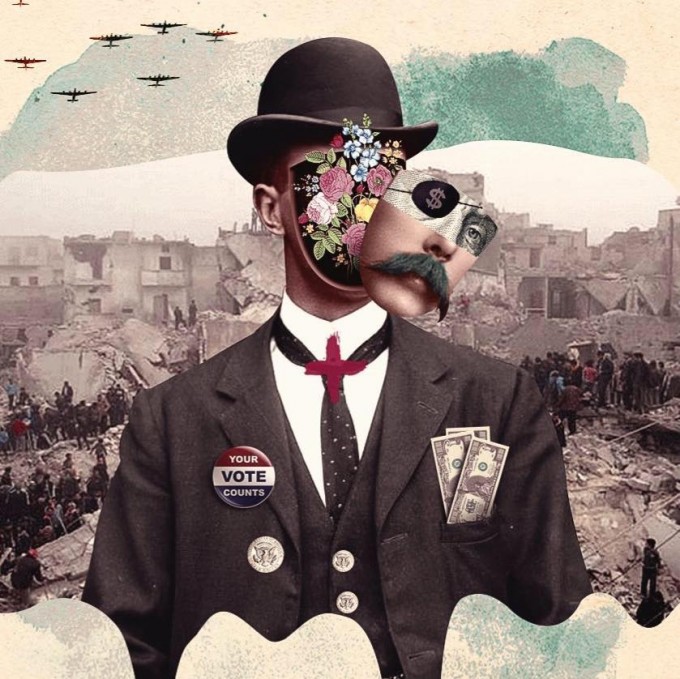
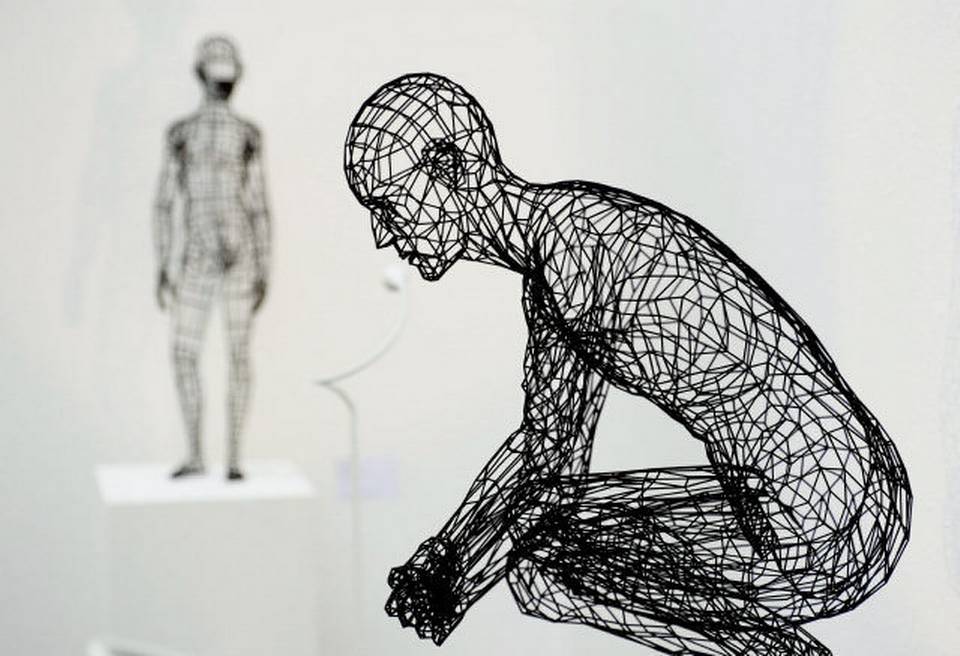
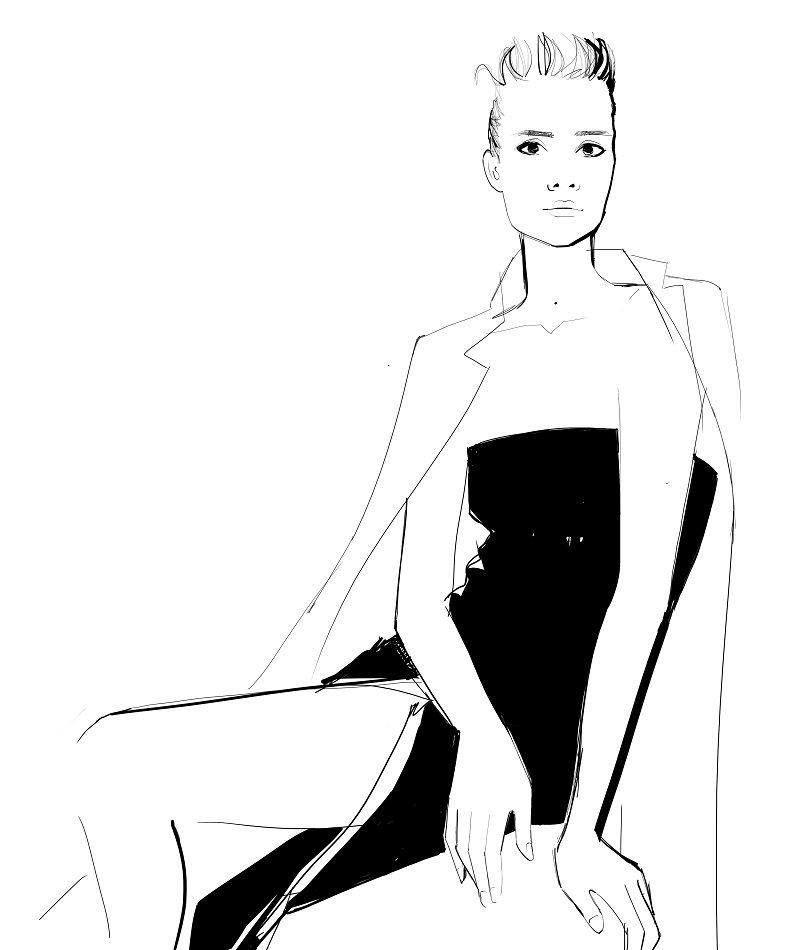

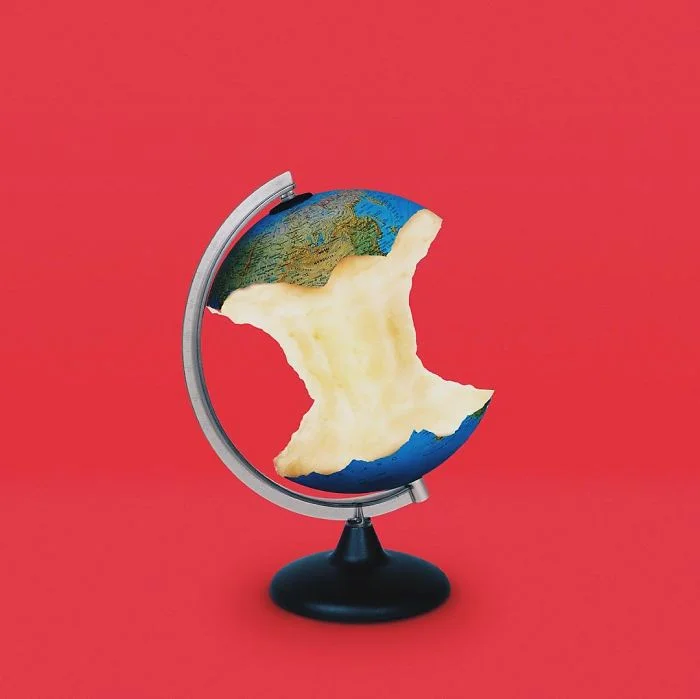

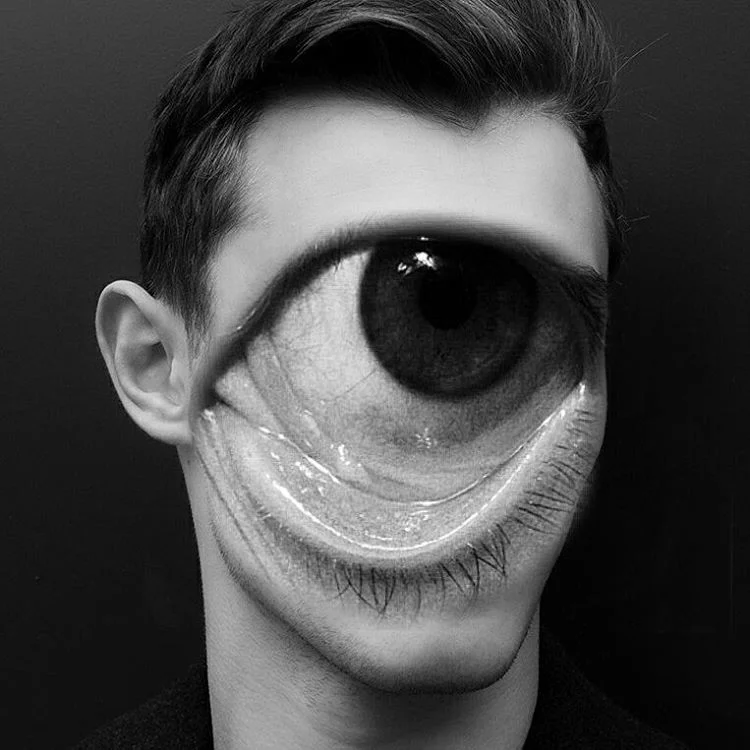
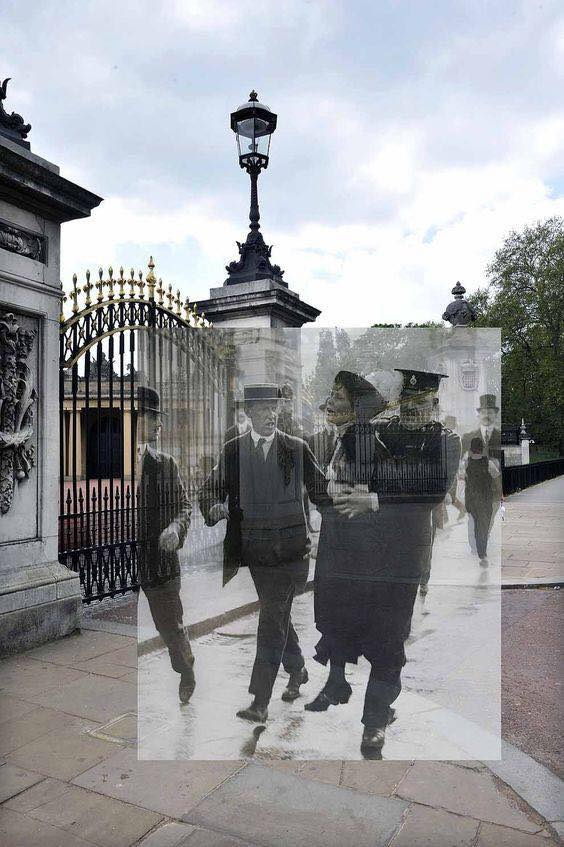
Clever Photo-manipulation by Naro Pinosa
a visionary of few words
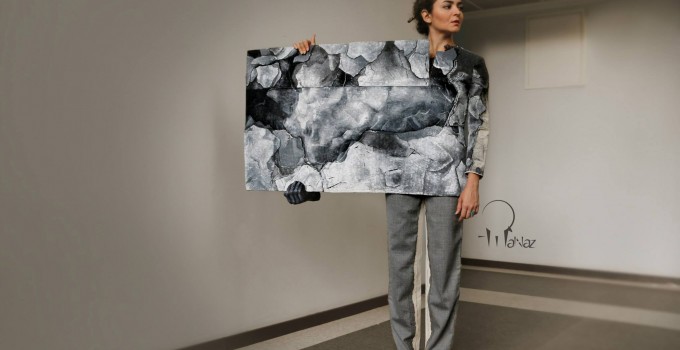
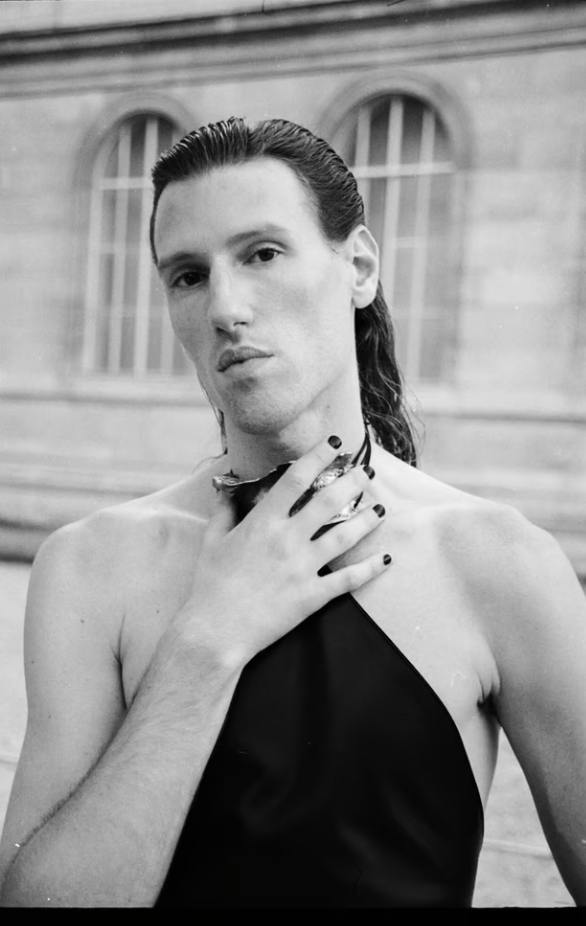
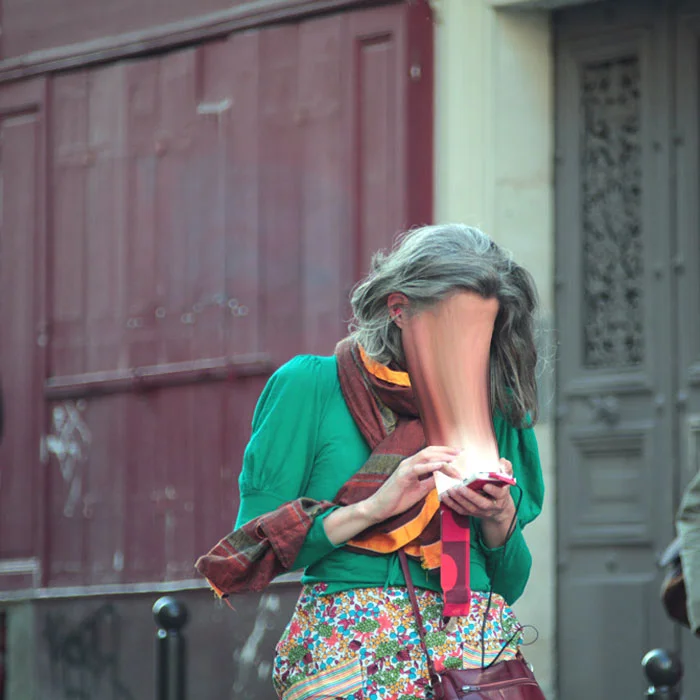
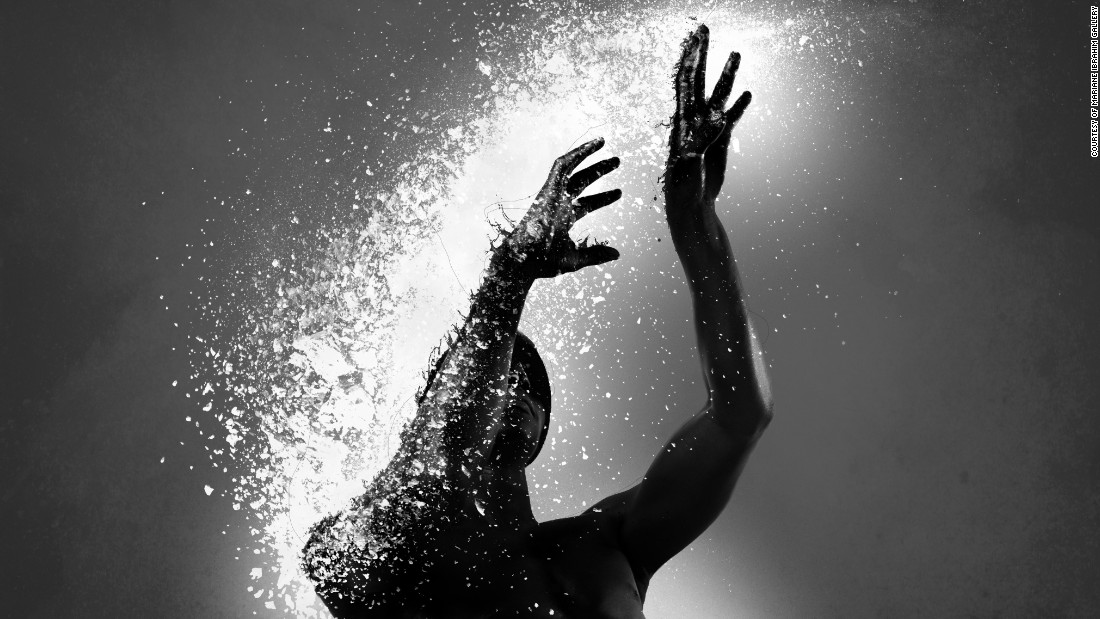
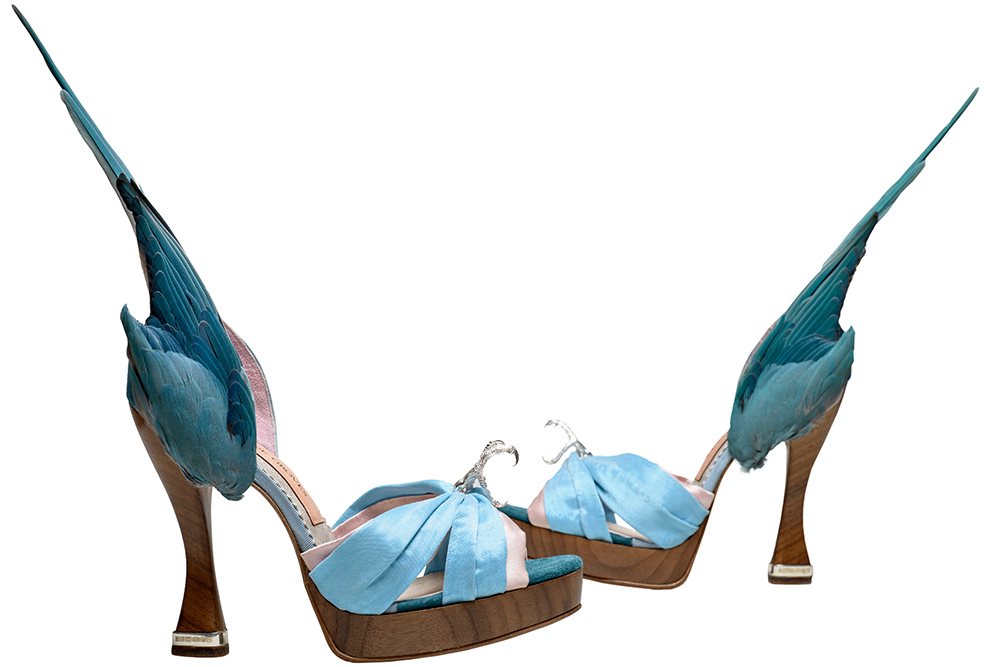
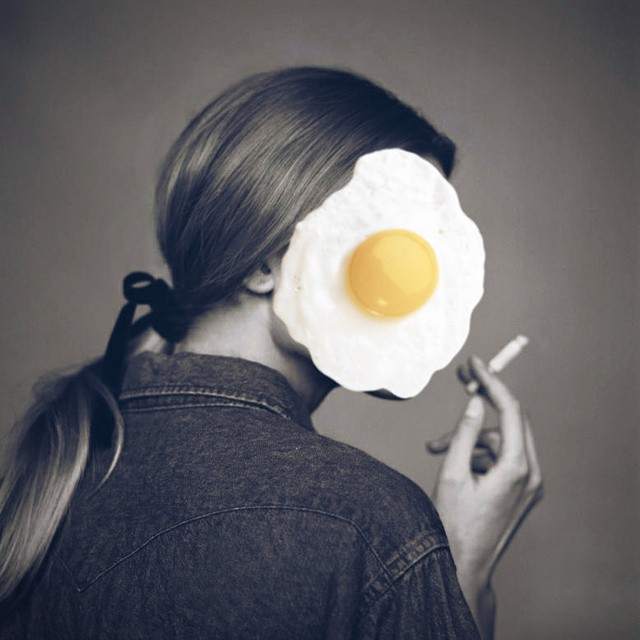
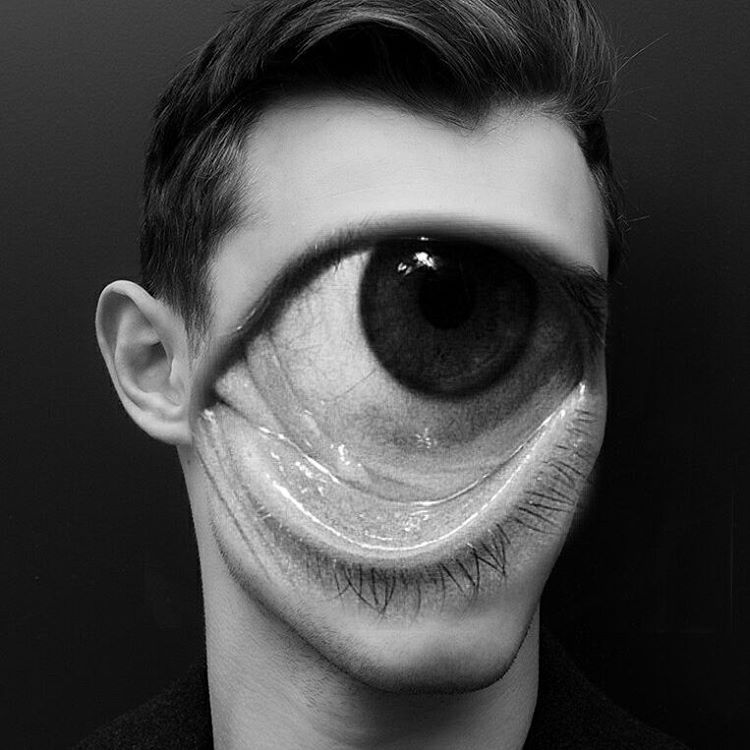
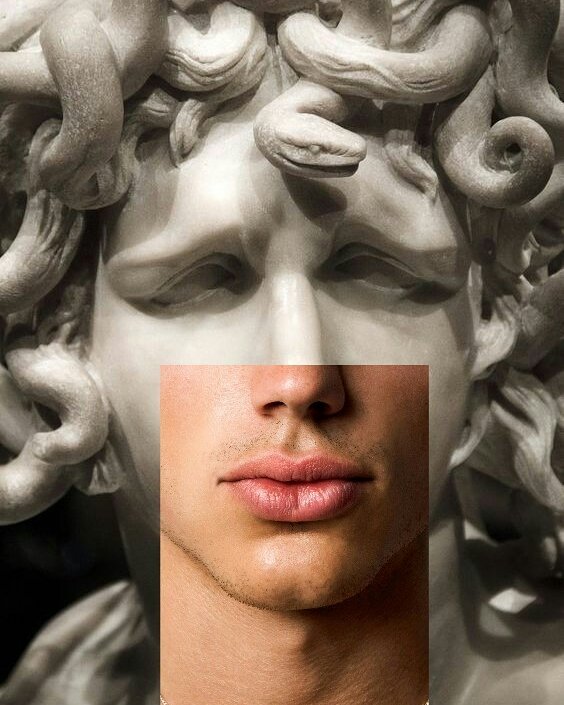
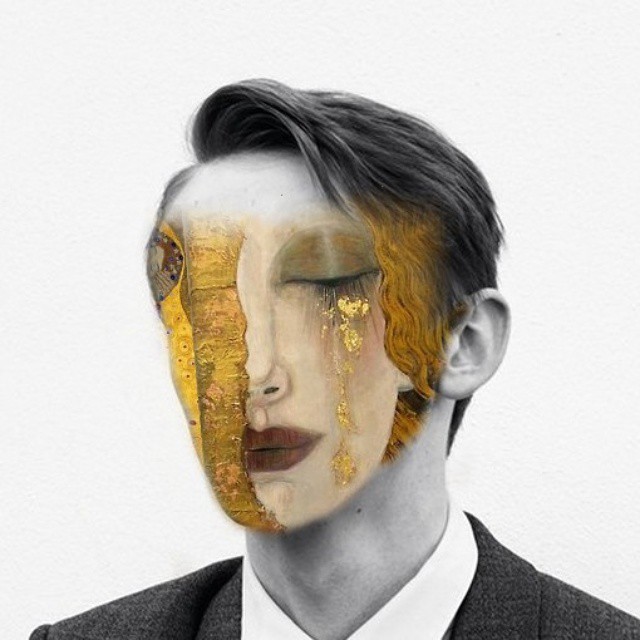
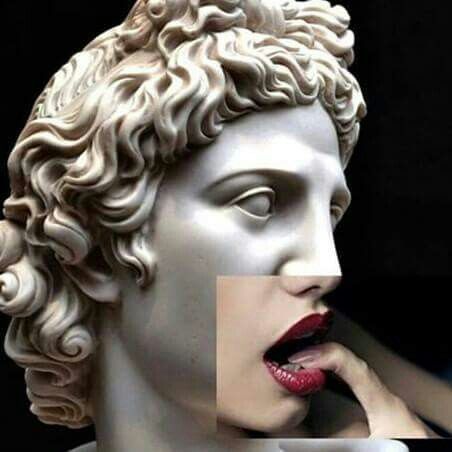
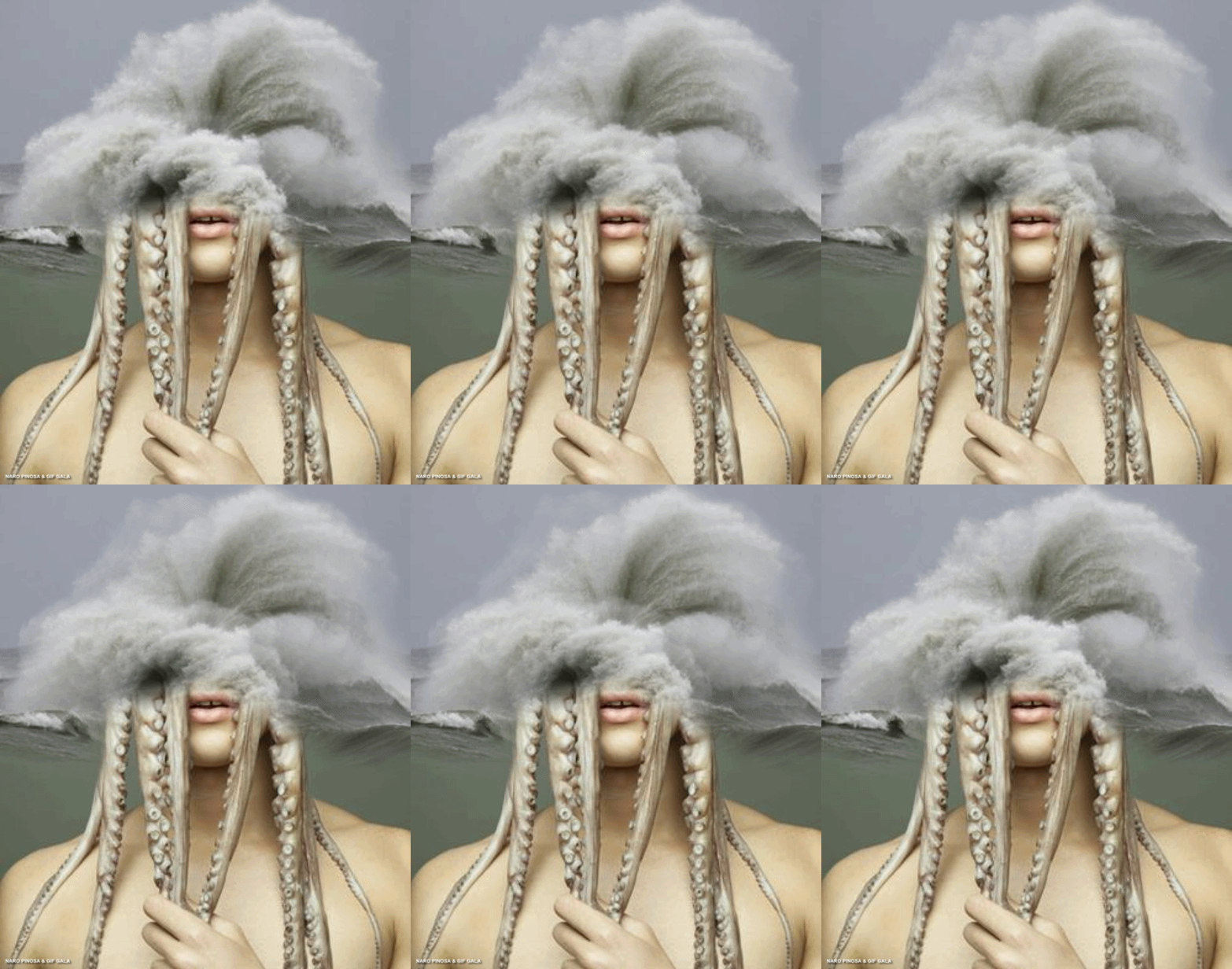
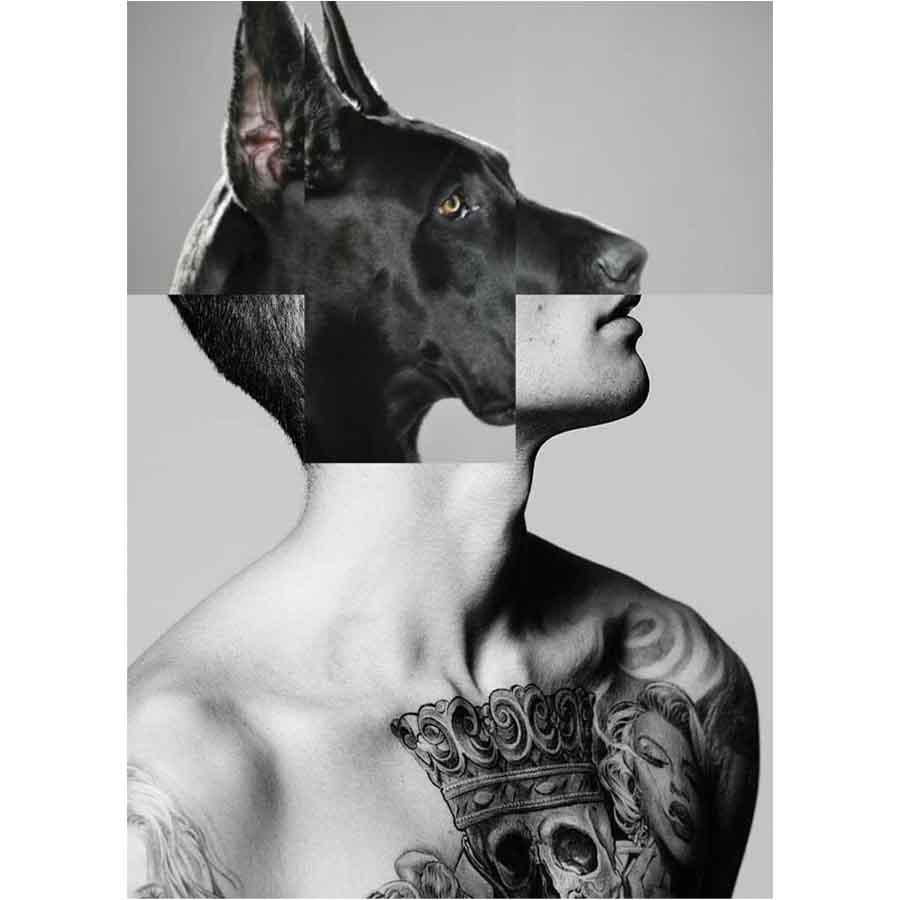
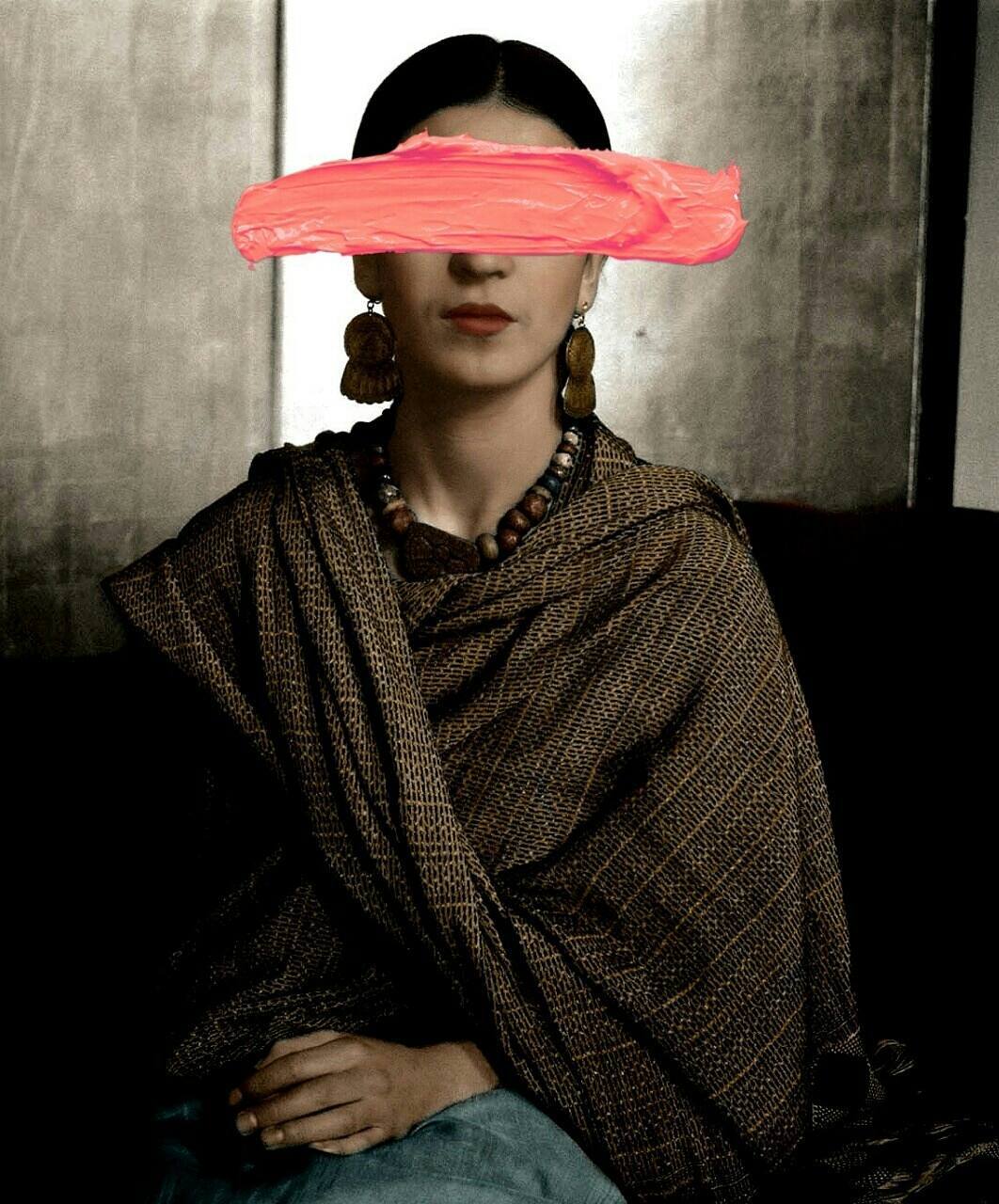
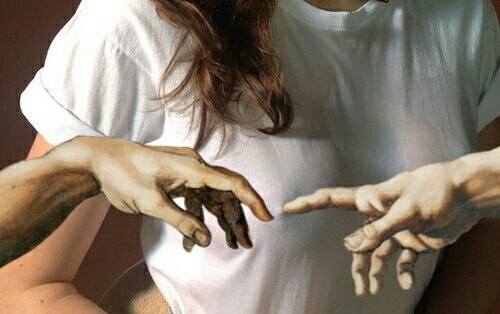
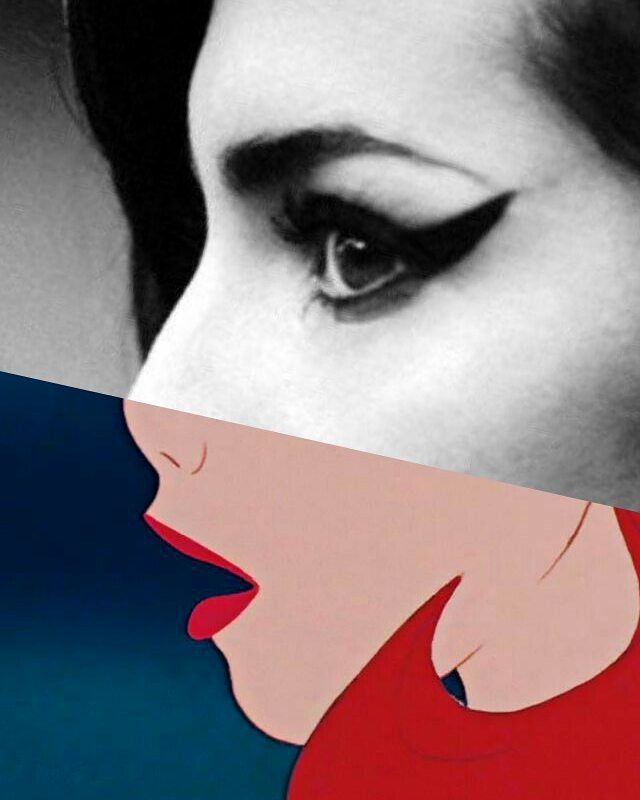
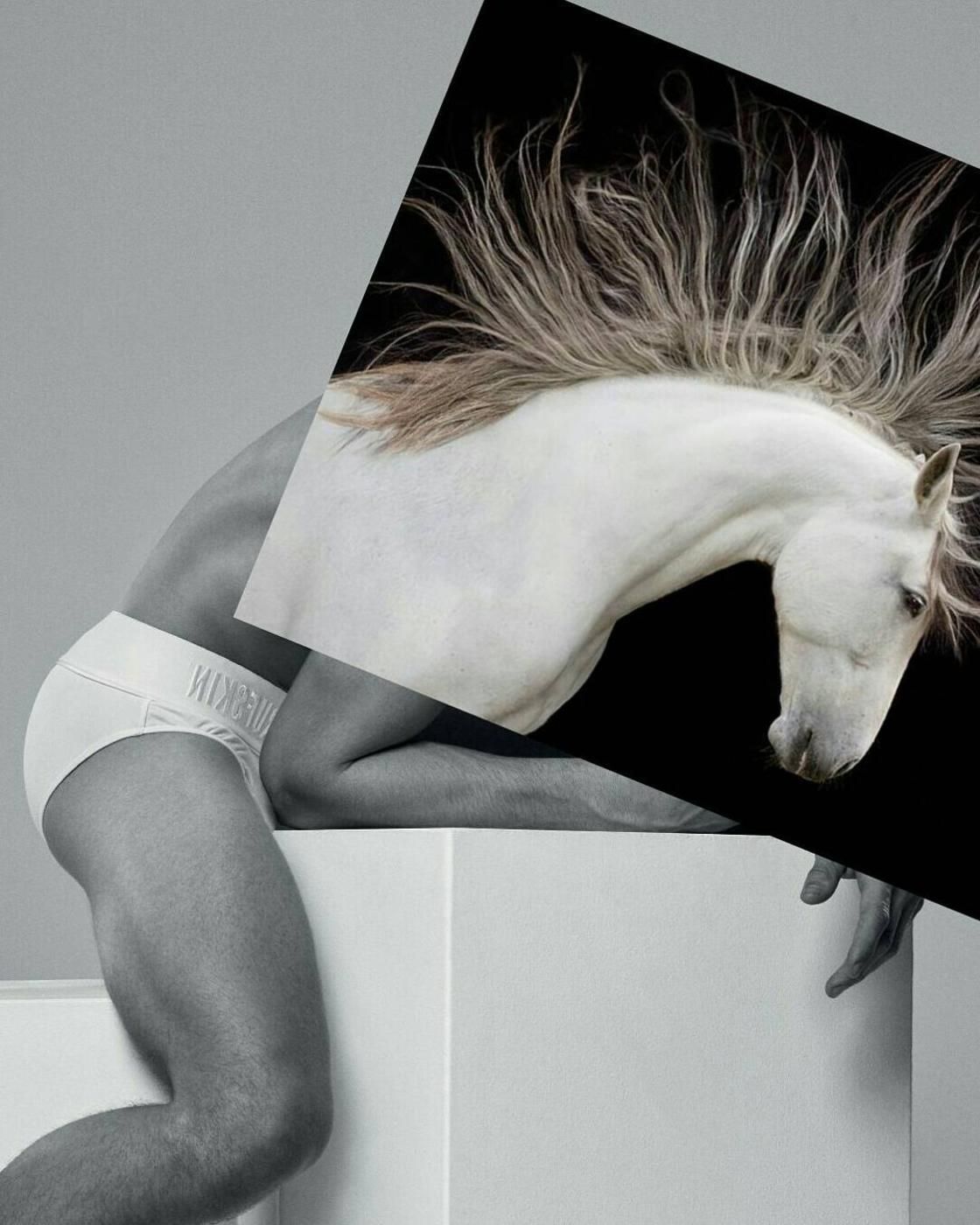
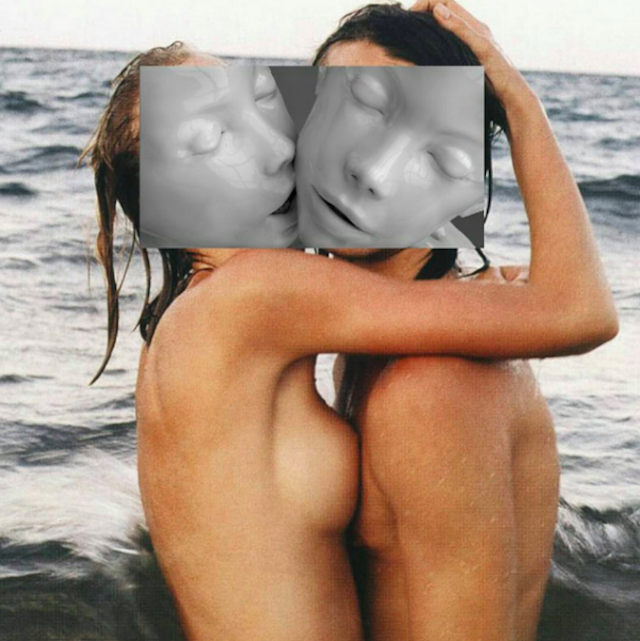
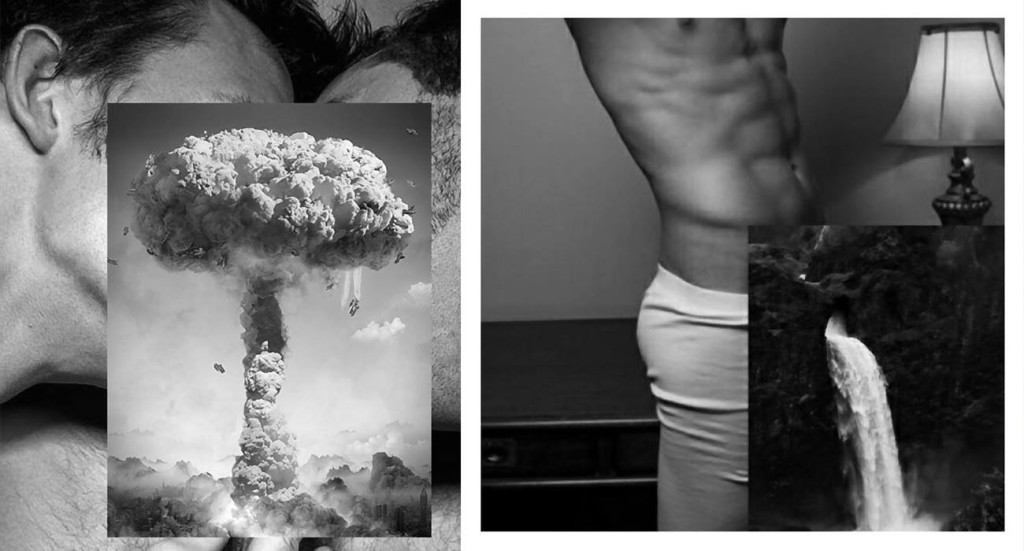
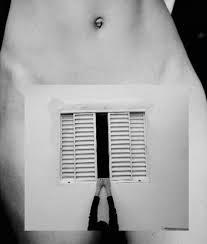
Based in Spain, digital artist Naro Pinosa creates photo manipulated collages, which he mainly shares on his Instagram. Whether it be Greek sculptures or classical paintings, he takes this imagery and layers them on the photographs in an absurd manner. By combining the old and the new with a sense of humor, the collages question the viewer’s perception and explore themes of sexuality and nostalgia.
















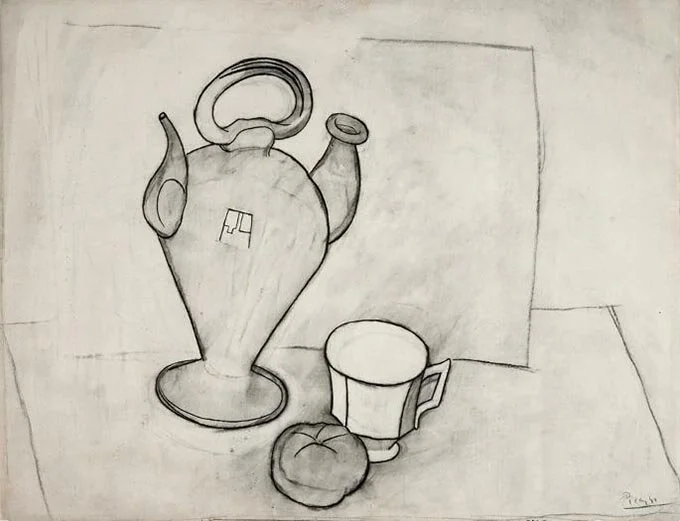
The Picasso Painting His Wife Left Him Is Fake
Artsy Marital Turmoil
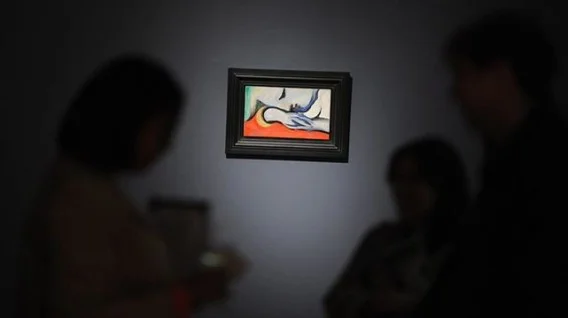
Divorce can be a nasty thing especially if you are a Wall Street billionaires. Here is a story of Bill & Sue Gross whom Forbes reports has a net worth of $2.5 billion. When couple decided to split there was one thing they did had to decide who will keep and that was Picasso's famous Le Repos painting.
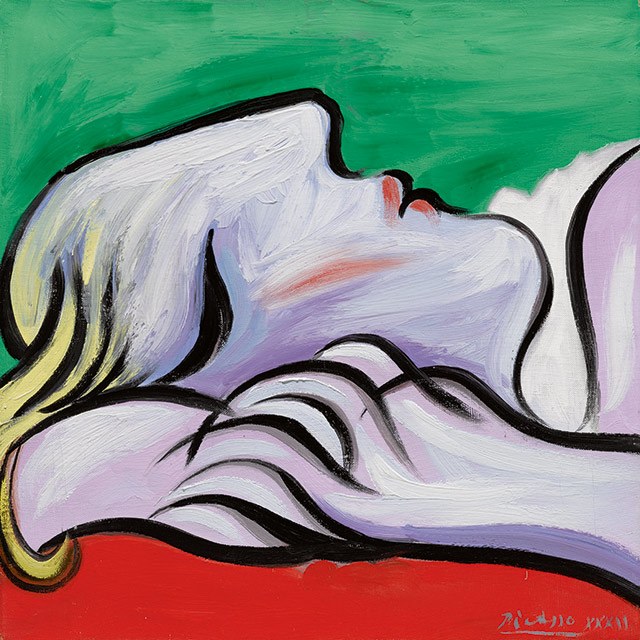
Pablo Picasso, Le Repos, 1932, a highlight of Sotheby's Impressionist & Modern Art evening sale. Courtesy of Sotheby's
The painting was created in 1932 and features Marie-Thérèse Walter, a 17-year-old French model whom Picasso began a relationship with when he was 45 and still living with his first wife, Olga Khokhlova, and their five-year-old son. Picasso's affair with Walter started in 1930. In 1935, when Khokhlova found out about the relationship, Walter was living in an apartment near the family. In 1936, Walter had a daughter with Picasso, whom she brought along when she moved into a 17th-century château in Normandy.
Sue & Bill Gross flipped the coin and Sue won. But Sue didn't even need to win the bet, because Sue already taken and sold the painting before and replaced it with a fake. Picasso's Le Repos painting features thick black lines outlining the profile and hands of Walter, whose skin is a mix of violets and white, against a green and red backdrop. It was easy to Sue to copy. Bill found out about this when he told Sue he will arrange to transfer the painting from house to another and Sue answered, "It wasn't necessary".
Back in 2015, Bill told an investor that his wife, aka "the artist in the family," "likes to paint replicas of some of the famous pieces, using an overhead projector to copy the outlines and then just sort of fill in the spaces."
The paining made it's way to Sotheby's and will be put up for an auction.




The Surreal life of Salvador Dali
“I don't do drugs. I am drugs.”
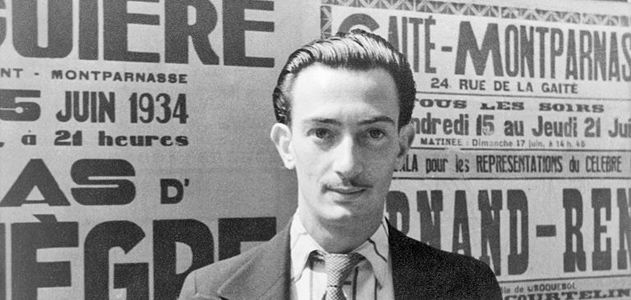
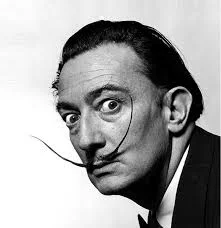
Salvador Domingo Felipe Jacinto Dalí i Domènech, Marquis of Dalí de Púbol or simply Salvador Dali, a prominent Spanish surrealist born in Figueres, Catalonia, Spain evoked his dreams and hallucinations in unforgettable images. His provocations and flamboyant personality made him an art star. His spent his entire life shocking the world all while promoting himself.

Sacred Heart by Salvador Dali
Early in his career he exhibited a drawing, titled Sacred Heart, that featured the words “Sometimes I Spit with Pleasure on the Portrait of My Mother.”
Everything he did turned into money, including the famous twitching of his waxed mustache.
It was Salvador Dali's mother who encouraged his creativity. Quitting family business after marriage, Felipa Domènech Ferres amused her young son with molding wax figurines out of colored candles.
In his 1942 autobiography, The Secret Life of Salvador Dalí artist shared that at the age of six he wanted to be a cook, and at the age of seven, he wanted to be a Napoleon. He was afraid of grasshoppers and children often found it amusing throwing grasshoppers at Salvador to observe his terror.
He lost his mother when he was only 16. "This was the greatest blow I had experienced in my life,” he wrote in his autobiography. “I worshiped her. . . . I swore to myself that I would snatch my mother from death and destiny with the swords of light that some day would savagely gleam around my glorious name!”
Yet, he created Sacred Heart painting where he outlined the sketch of Jesus Christ and wrote “Sometimes I Spit with Pleasure on the Portrait of My Mother". Although he meant nothing towards his mother in this work, it upset his father and he threw him out of the house.
Dali was acquainted with Freud and his sexual ideas based on dreams and delusions and he attempted to capture these dreams in paint.

According to his own accounts artist Salvador Dali was not a fan of sexual congress. He once said “I tried sex once with a woman and it was (his wife) Gala. It was overrated. I tried sex once with a man and that man was the famous juggler Frederico Garcia Lorca. It was very painful.”
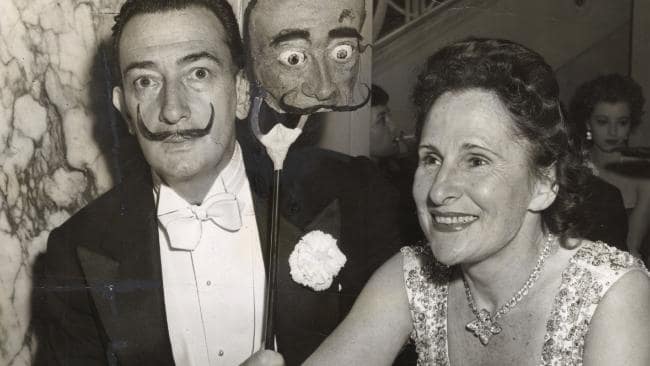
Dali met his future wife when he was 25. She was the wife of French poet Paul Éluard at the time. Russian-born Helena Diakanoff Devulina, better known as Gala was ten years older than Dali. She left her husband for Salvador Dali and their affair continued until 1934, when the pair married. He was attached to her. “Without Gala,” he once claimed, “Divine Dalí would be insane.”
They had an open relationship in which Gala was free to have affairs, including with her former husband, Eluard, while Dali is said to have enjoyed watching her have sex with other men, or showing other men images of her naked.
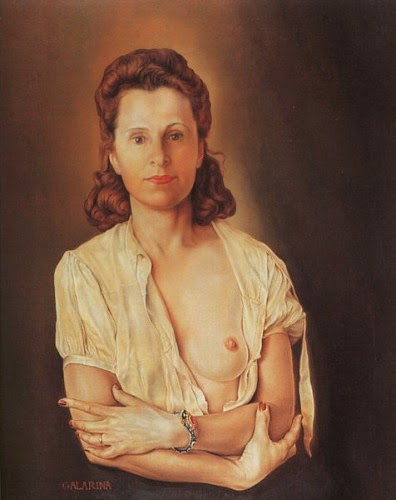
But she was his muse and during their first 10 years together Dali matured rapidly as an artist. Some of his best works featured images of Gala.
Dali's perverted behavior resulted in his father banishing him from all of family homes. He called Dali “a perverted son on whom you cannot depend for anything”.
In 1968 Dali bought Gala a castle in Girona, where she lived alone, the artist could only visit by asking for permission. Gala died in 1982 and Dali moved into her castle. He died in 1989.
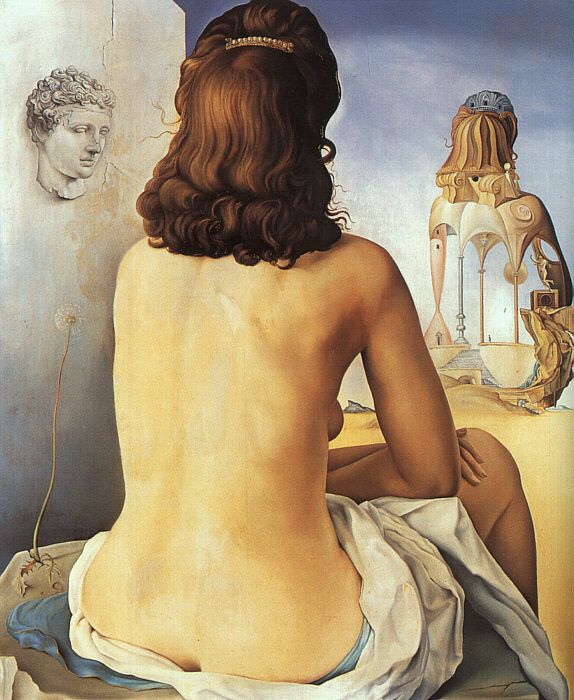
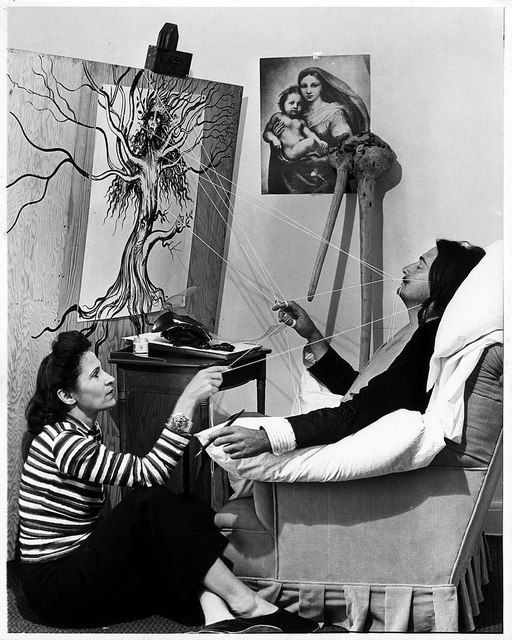
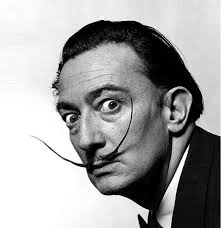
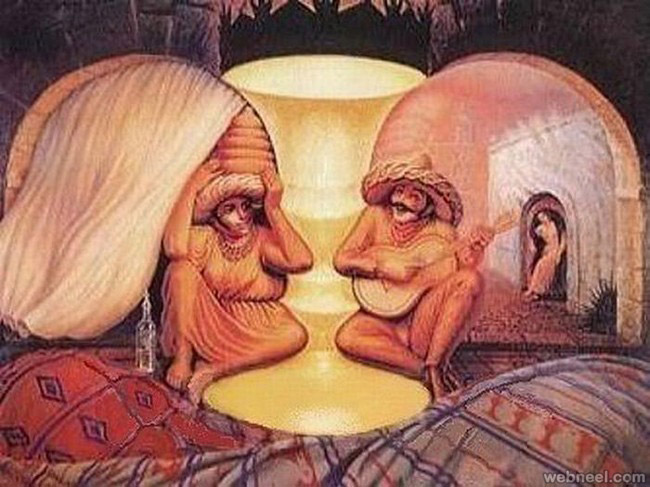
“Compared to contemporary painters, I am the most big genius of modern time.”







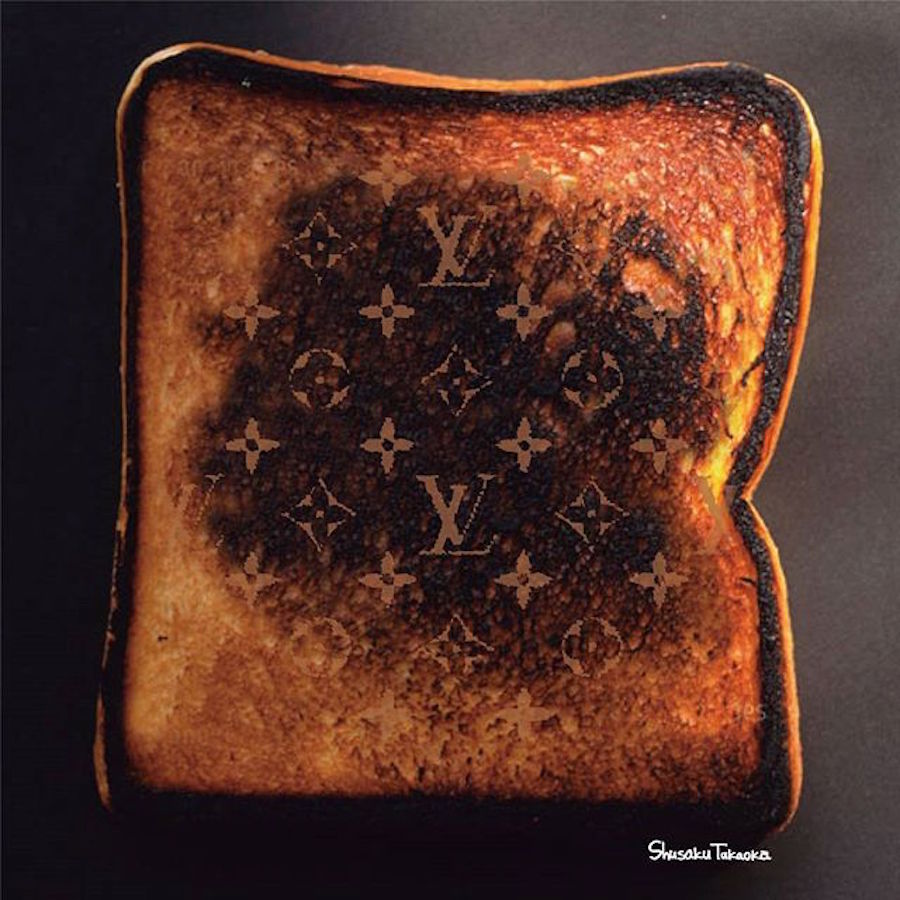
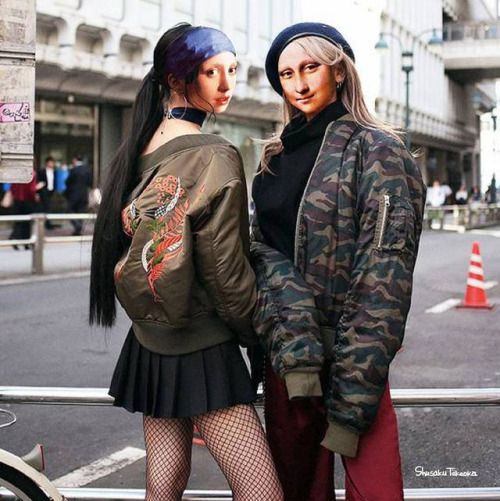
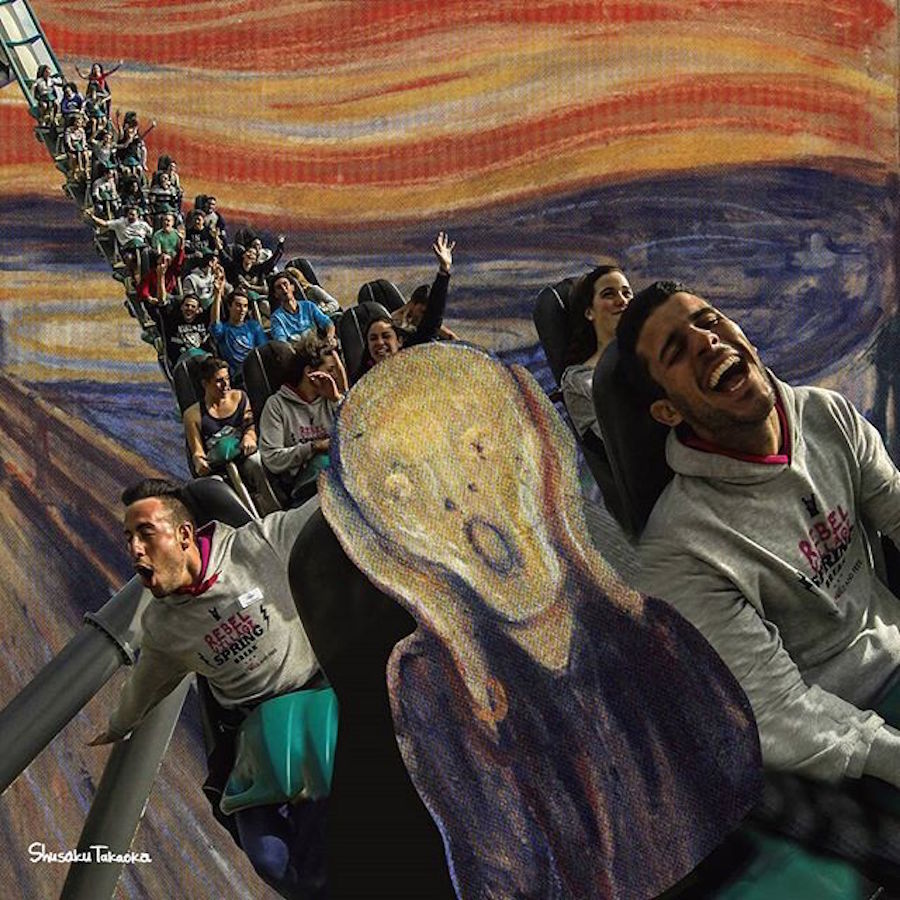
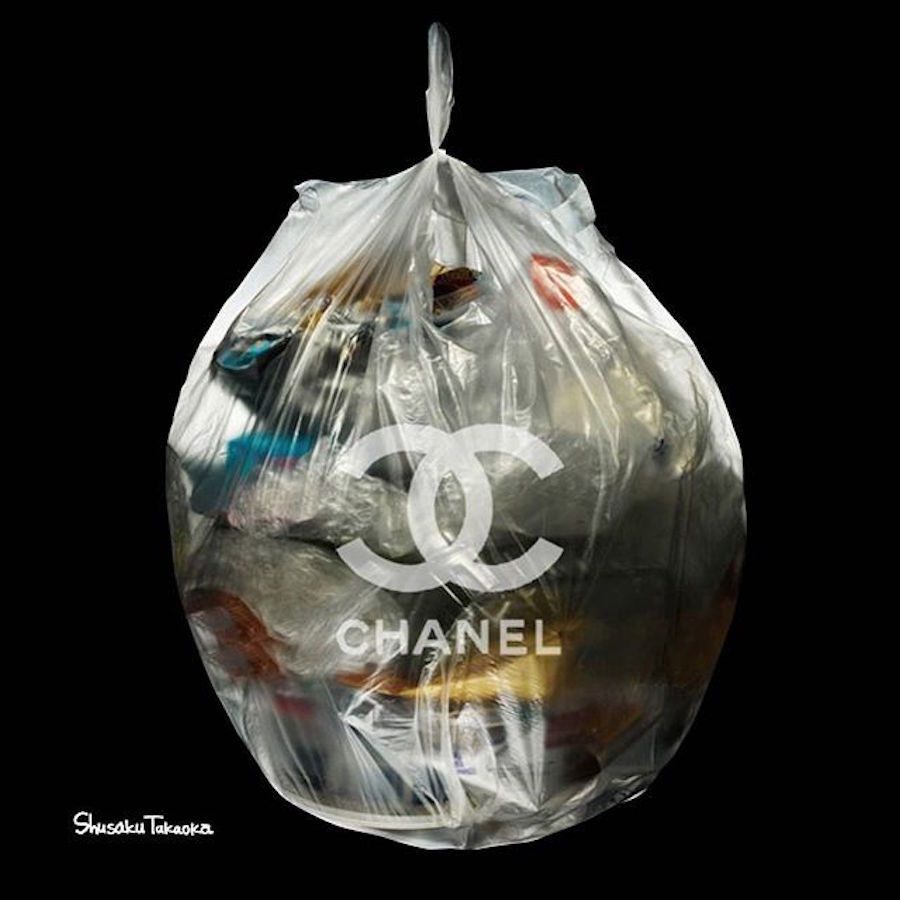
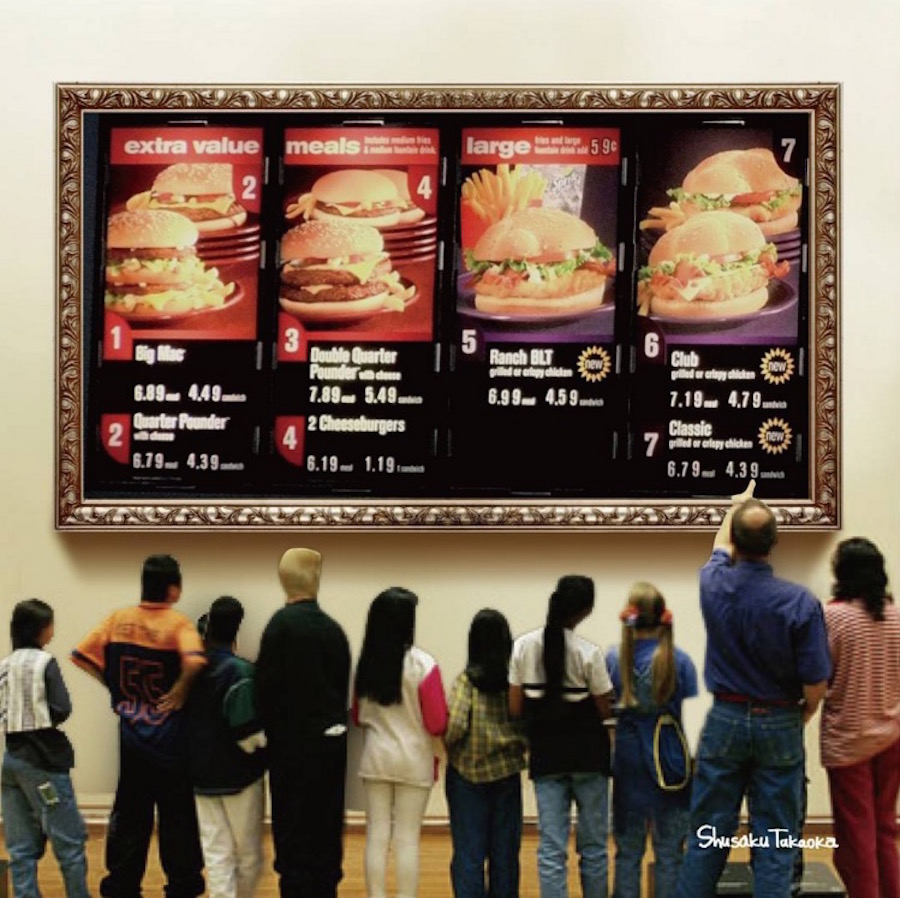
Japanese graphic designer Shusaku Takaoka's pure wit
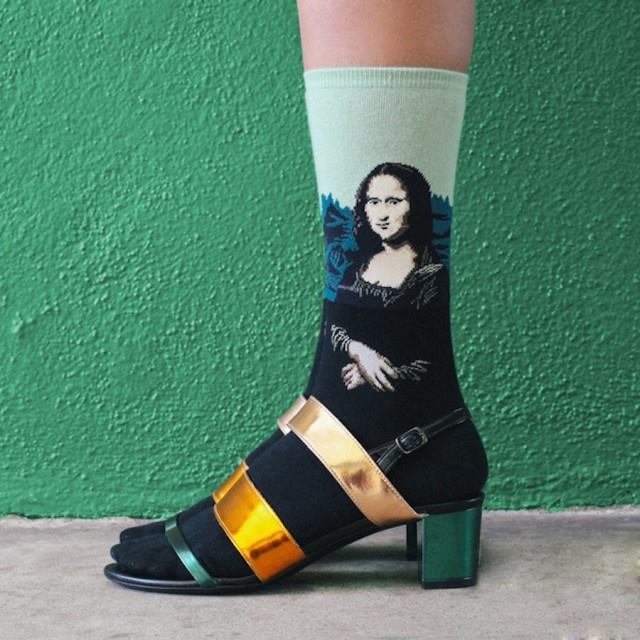
What if the Mona Lisa got tired of her old silk robes and decided to trade them in for a trendy jumpsuit?
Shusaku Takaoka is a Japanese graphic designer author of these witty and surprising illustrations. The artist is inspired by our modern society to juxtapose visuals who form a funny set and sometimes denouncing aspects of an ultra-consumer and over-connected world. Graphic and original fabrications to discover.





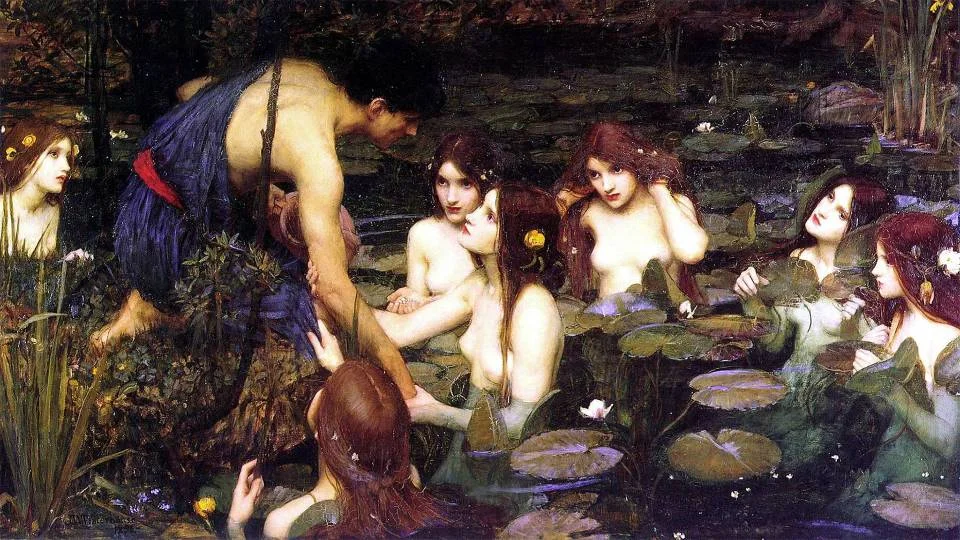
"Hylas and the Nymphs" Art removed from museum to "prompt conversation"
Should museums even enter political grounds at all?
Prompted by the #MeToo, Clare Gannaway, the Manchester Gallery of Art's Curator of Contemporary Art temporarily removes "Hylas and the Nymphs," the 1896 painting by J.W. Waterhouse, from public view to 'prompt conversation' about the Museum's collection of Victorian nudes. Gannaway posted a placard in place of the missing painting and invited museum guests to write their reactions on Post-It notes.

The 1896 painting depicts the myth of Hylas, the adored companion of Heracles (better known by his Roman name, Hercules) , who disappeared after he was dragged into a spring by nymphs.

In place of the pre-Raphaelite painting, the wall now has a printed sign asking gallery visitors to start a “conversation about how we display art and interpret artworks in Manchester’s public collection.”
Gannaway says the part of the museum which houses Victorian nudes "presents the female body as either a ‘passive decorative form’ or a ‘femme fatale’. Let’s challenge this Victorian fantasy!" She wants to re-contextualize the collection of Victorian nudes. "For me personally," she said, "there is a sense of embarrassment that we haven’t dealt with it sooner."
Is Gannaway not understanding the art correctly?
The nymphs are not 'passive decorative form", instead they are a strong form who appear to win over someone like Hercules by taking him into their realm.
Should museums even be involved into political topics? Gannaway may translate the painting the way she wants, but she must let the public have access to a work of art that was made nearly a century before she was born and has been beloved by the public since that time.

Sigalit Landau: SALT YEAR'S
The magic of salt
Landau invites us to embark on a journey facilitated by the unique feature of one natural resource, salt. Drawing inspiration from the topographical, historical, biblical, cultural, political and environmental realms of the Dead Sea, she turns to the natural process of salt crystallization, exclusive to the Dead Sea, for her unique artistic techne. Baptizing profane objects in its waters, Landau relies on the Dead Sea to breathe life into inanimate objects, which emerge from their submertion as if belonging to a different time system, a different logic, or another planet yet their transformation unveils the divine and the eternal in nature.
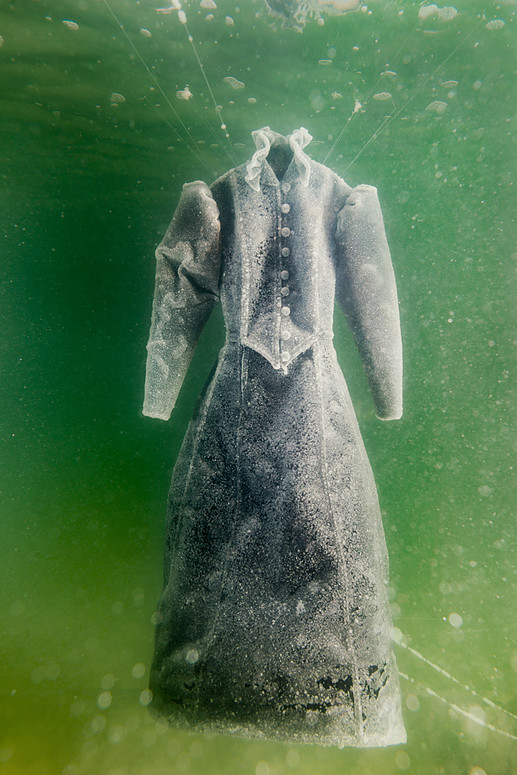
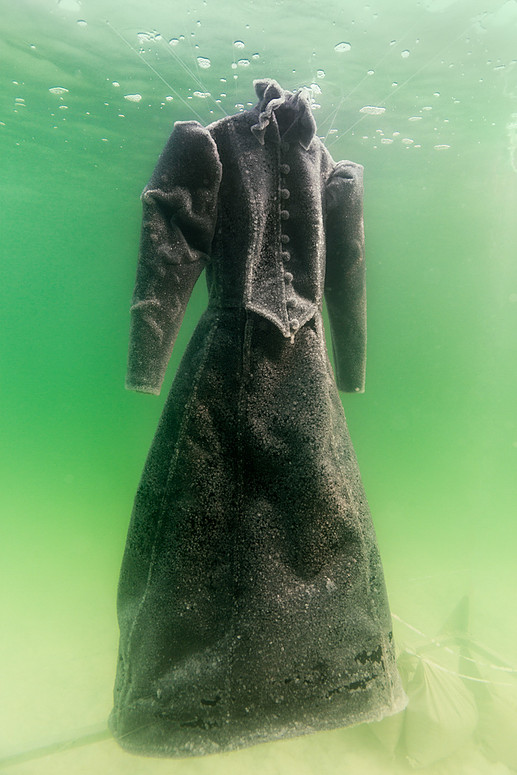
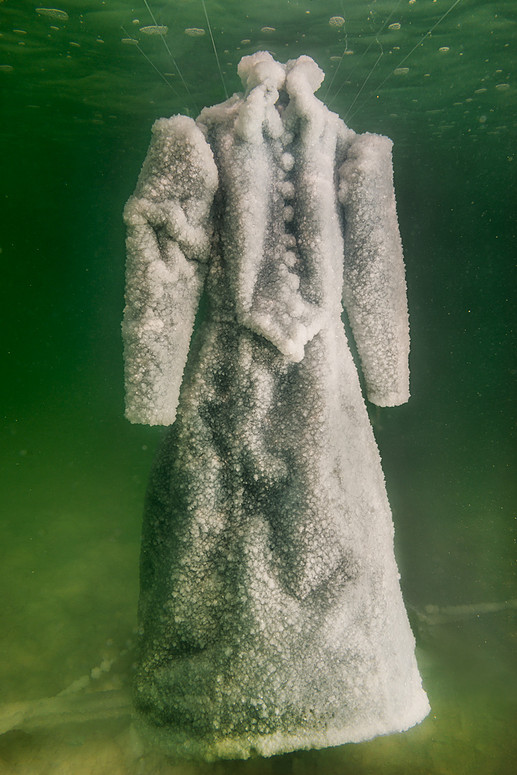

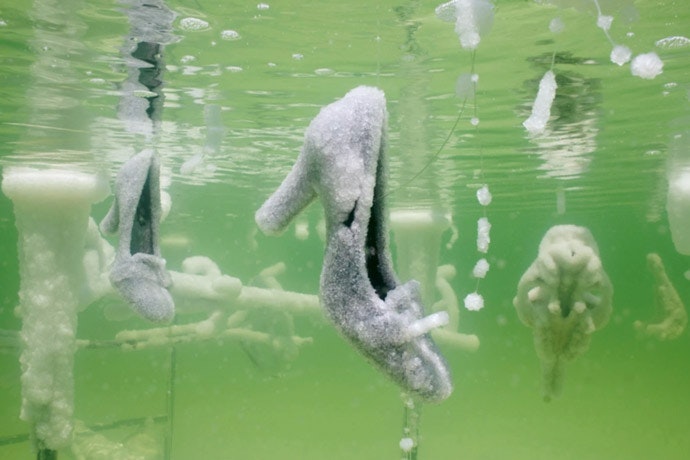

Marking Landau's 15-year oeuvre and fascination with the Dead Sea, ‘Sigalit Landau SALT YEARS’ sheds new light on the fundamental leitmotiv that underlies her multifaceted artistic creation. Offering insights to the artist's visions, this volume explores Landau's career reflecting the breadth of her oeuvre, including exclusive works of art created specifically for this book, behind the scenes photos, personal working notes and perceptive essays. It is an invitation to take part in the transformative power of art and Landau's transformation of the Dead Sea into a laboratory and medium for new experiments, ideas and heart/ground breaking understandings, revealing the death bearing to life sustaining alchemy of salt.
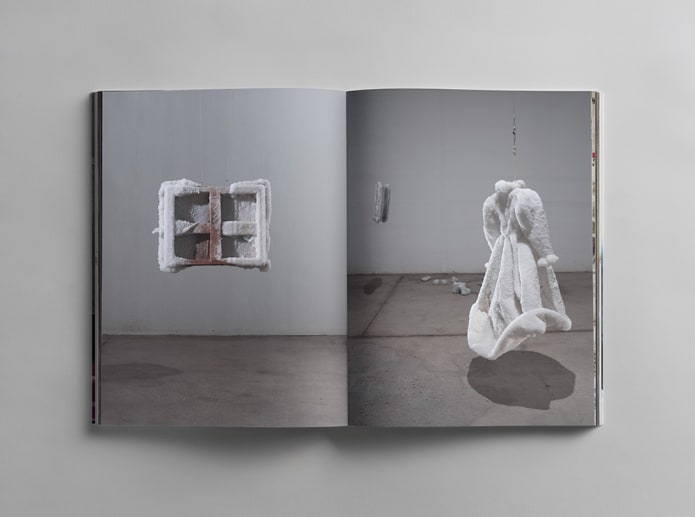
THE BOOK
Landau invites us to embark on a journey facilitated by the unique feature of one natural resource, salt. Drawing inspiration from the topographical, historical, biblical, cultural, political and environmental realms of the Dead Sea, she turns to the natural process of salt crystallization, exclusive to the Dead Sea, for her unique artistic techne. Baptizing profane objects in its waters, Landau relies on the Dead Sea to breathe life into inanimate objects, which emerge from their submersion as if belonging to a different time system, a different logic, or another planet yet their transformation unveils the divine and the eternal in nature.
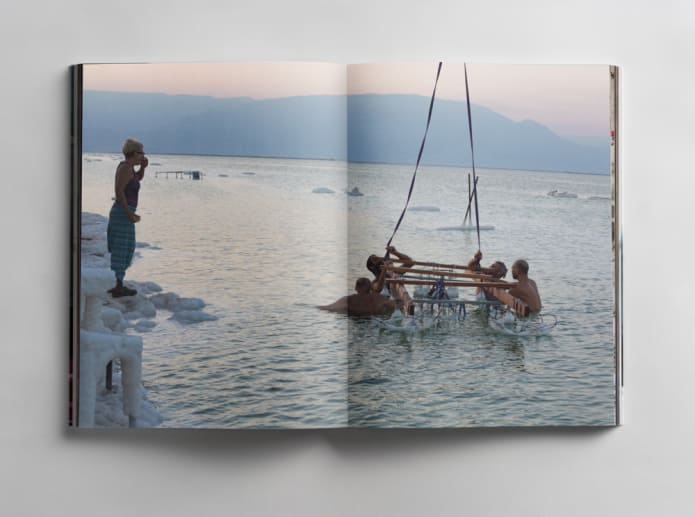
Marking Landau's 15-year oeuvre and fascination with the Dead Sea, ‘Sigalit Landau: SALT YEARS’ sheds new light on the fundamental leitmotiv that underlies her multifaceted artistic creation. Offering insights to the artist's visions, this volume explores Landau's career reflecting the breadth of her oeuvre, including exclusive works of art created specifically for this book, behind the scenes photos, personal working notes and perceptive essays. It is an invitation to take part in the transformative power of art and Landau's transformation of the Dead Sea into a laboratory and medium for new experiments, ideas and heart/ground breaking understandings, revealing the death bearing to life sustaining alchemy of salt.
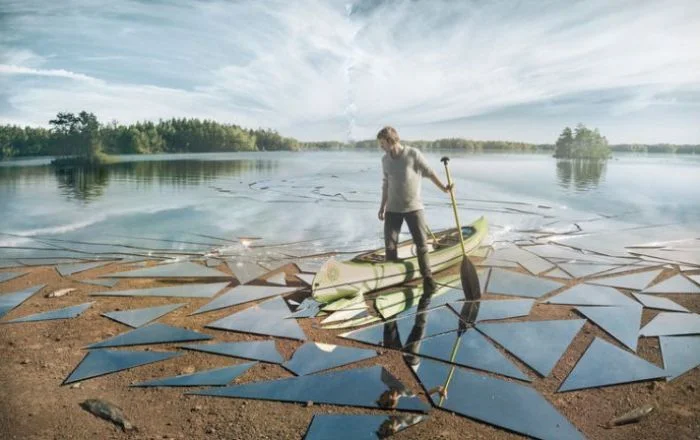
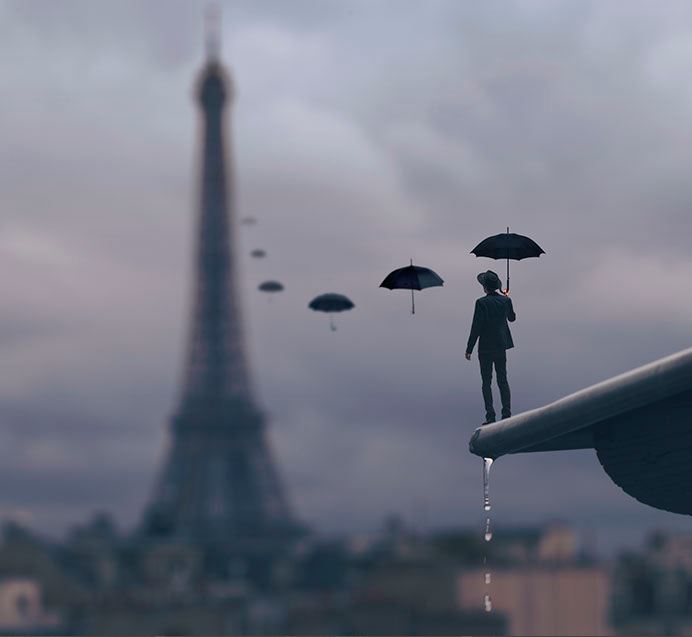
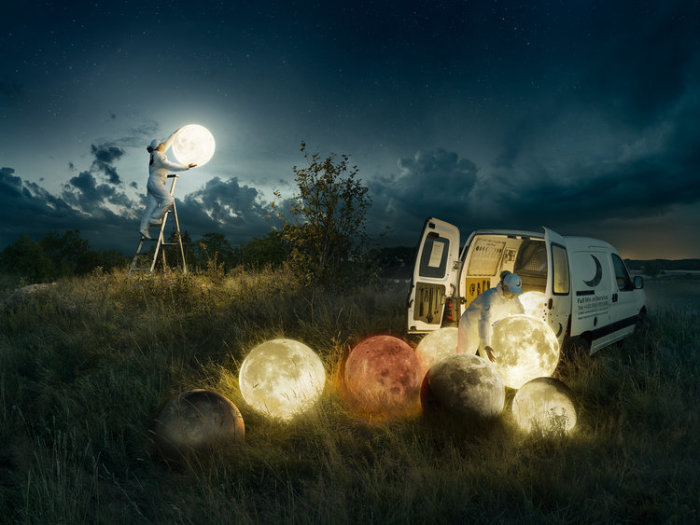
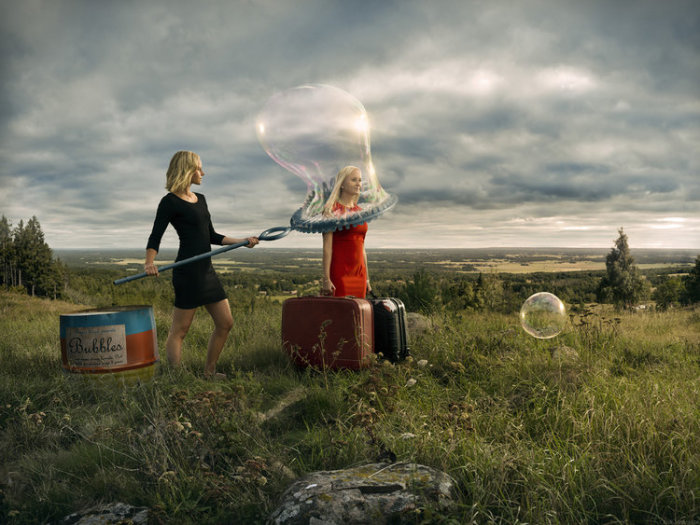
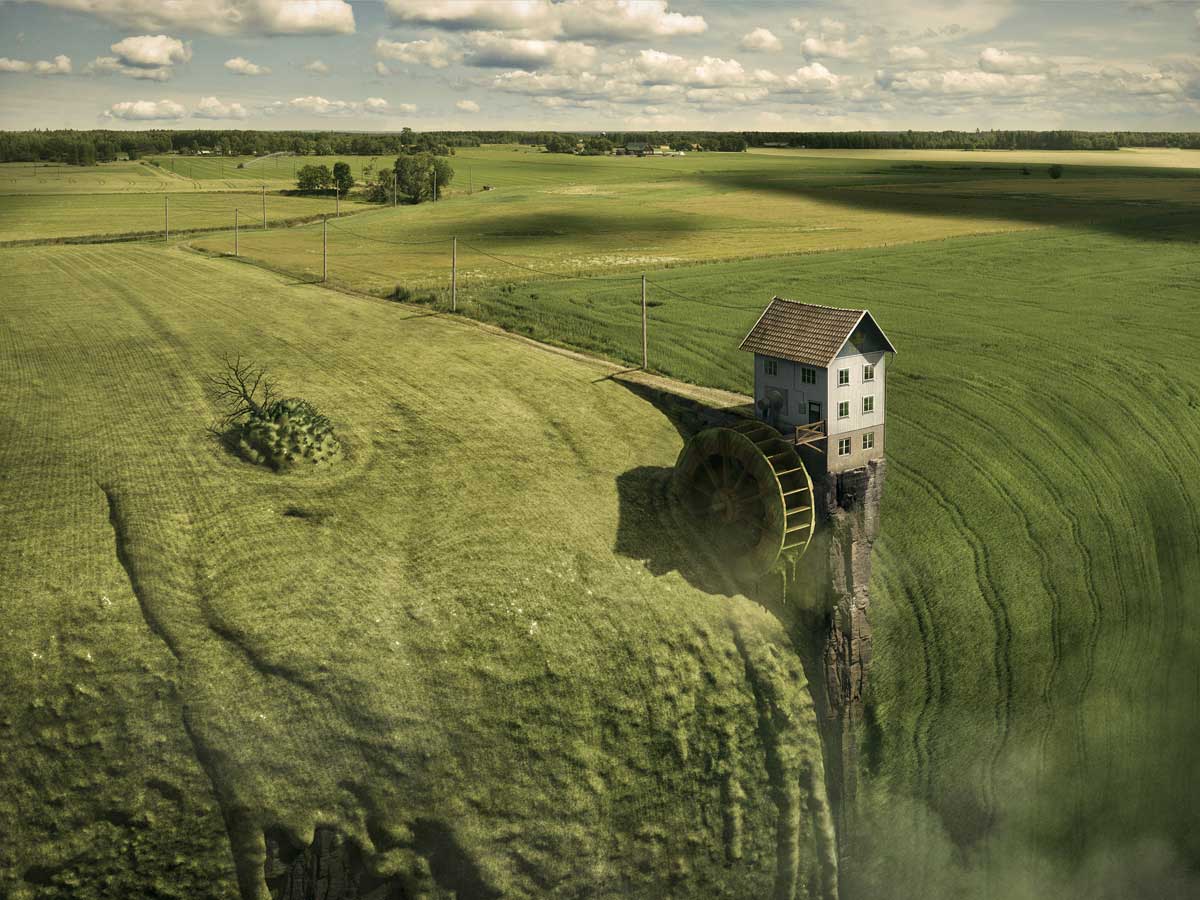
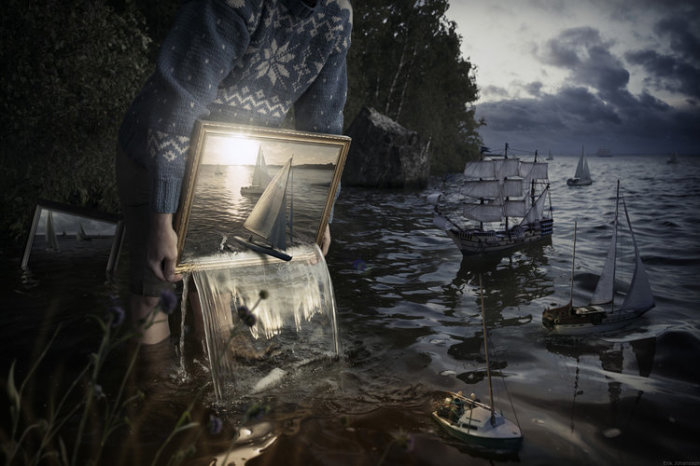
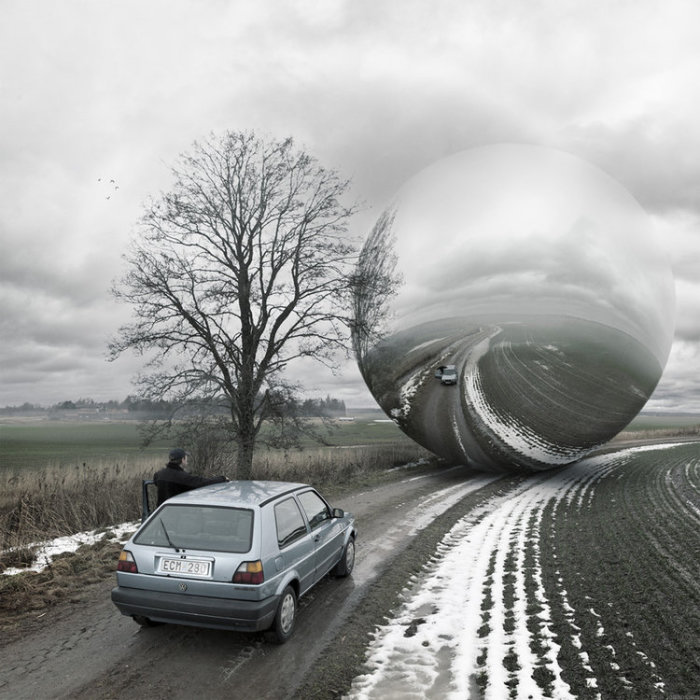
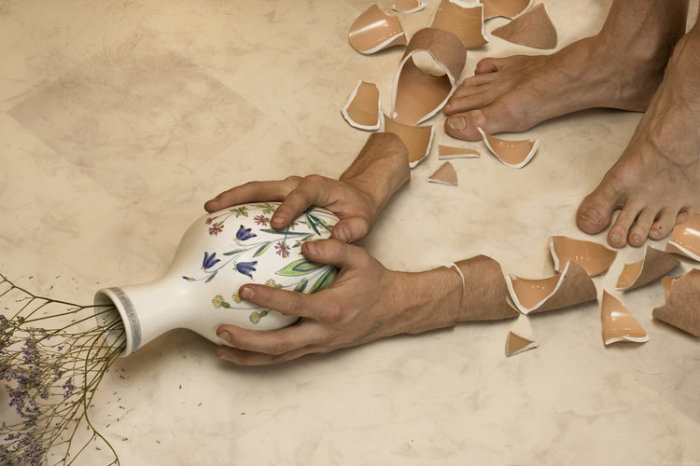
Surrealistic images by Erik Johannson
When photoshop is simply necessary
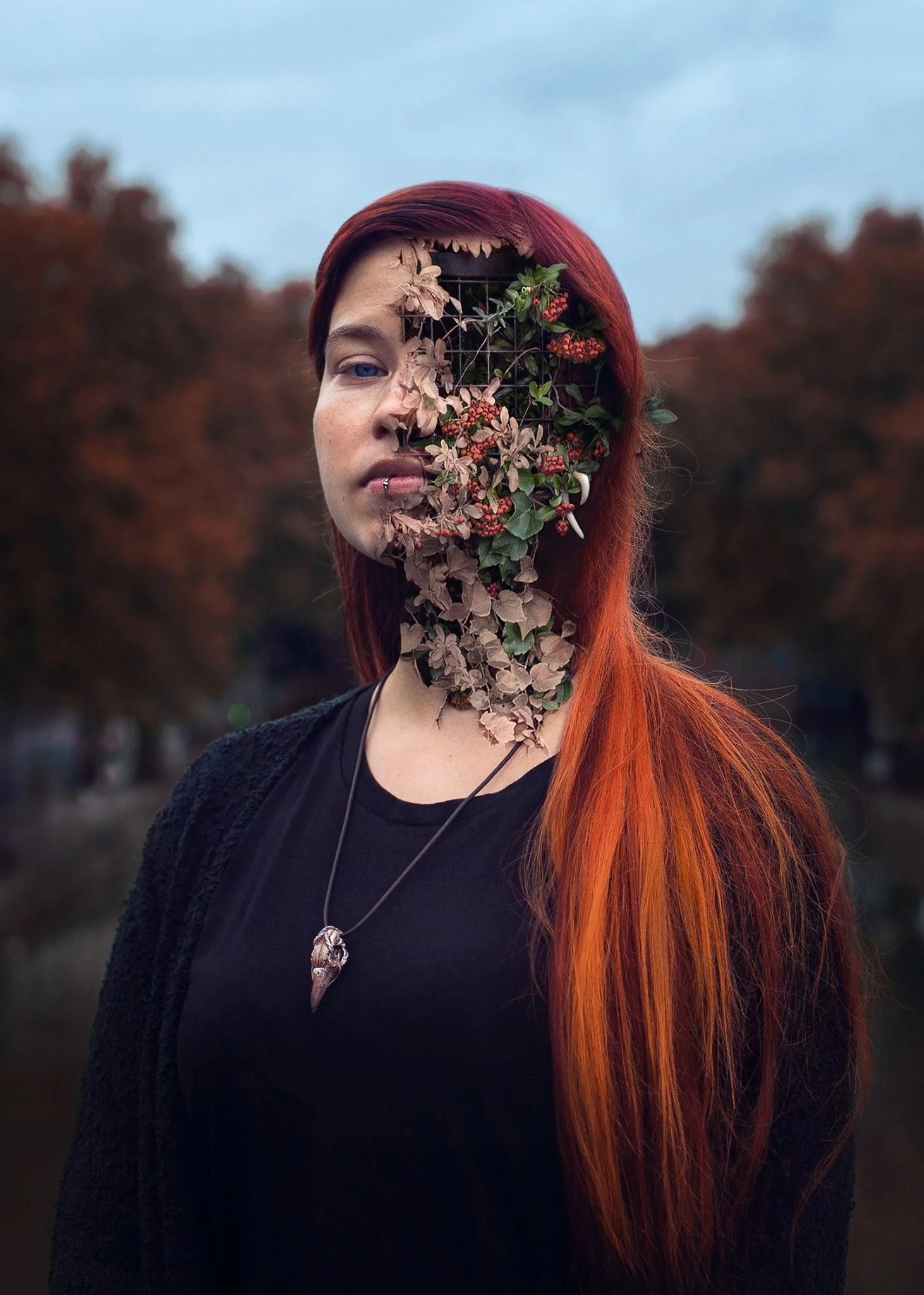
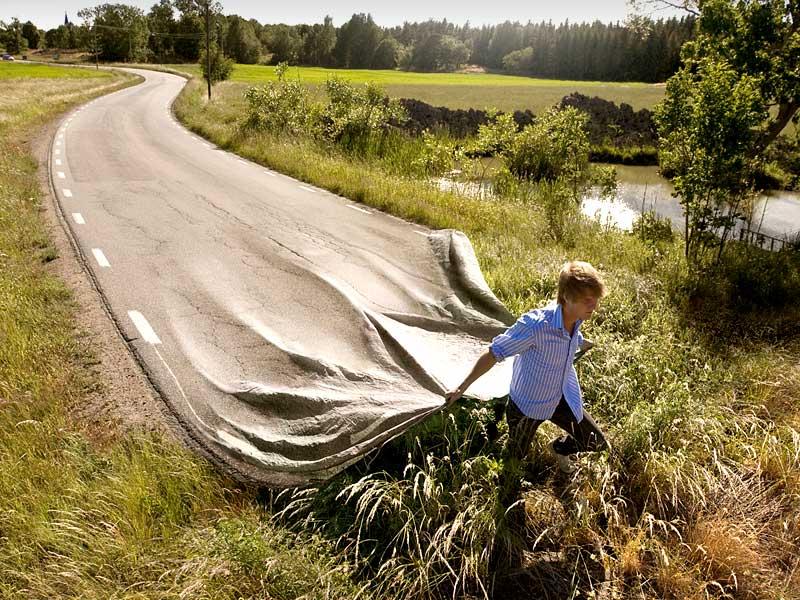
Everyone is used to the idea that Photoshop is bad, and graphic editors are associated with a wide variety of blunders and frank deception. But in the case of Eric Johansson's work, things are different. He uses photoshop to create surrealistic images, for each of which he spends from one to two days to several months: choosing a place for shooting, photographing and digital processing. As a result, these are realistic surreal masterpieces.
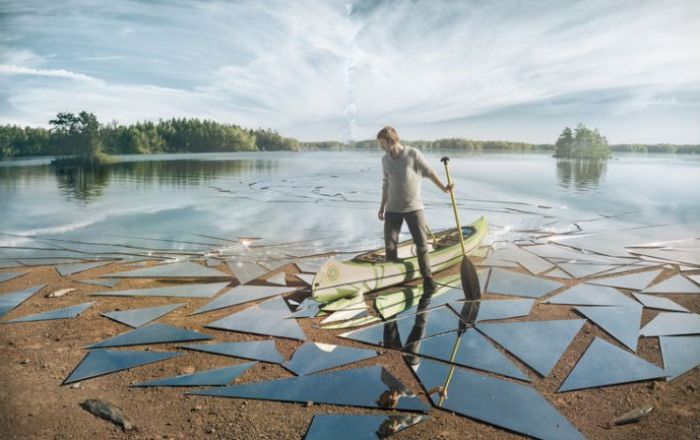
According to Johansson, he does not capture the elusive moments, but fixes the ideas. Thanks to this, he manages to realize the ideas born of an unrestrained fantasy. Drawing inspiration from everyday life, he creates multi-layered photo art, bringing them to the most realistic and integral state. Thus, each image becomes a full-fledged picture with a far-off pointless plot. Some compare his work with hallucinations, others - with puzzles, and still others do not fully understand what is so special about him. In any case everyone can find something interesting and unusual for himself.
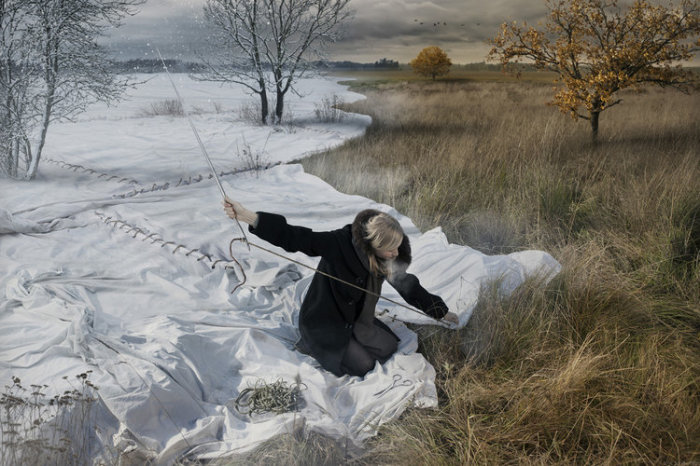
And it is not necessary to try to find the truth every time, trying to get to the bottom of it, it's enough just to give free rein to your own imagination, which will instantly put everything in its place ...

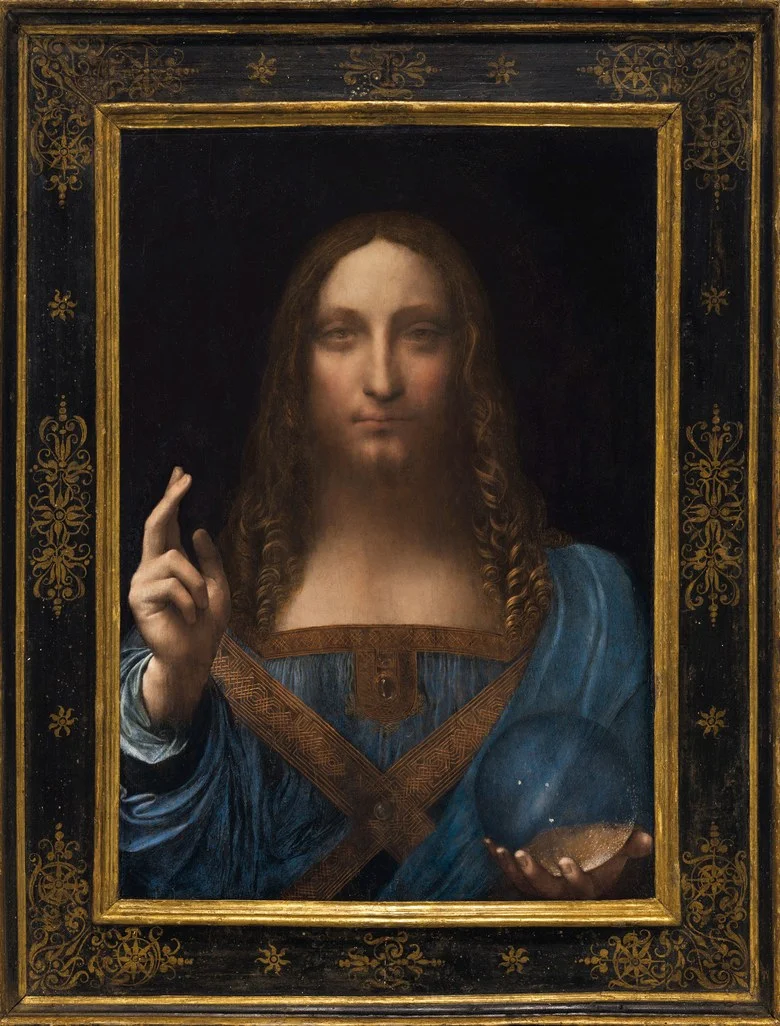
RARE LEONARDO DA VINCI PAINTING SOLD FOR $450 MILLION DOLLARS
Just so you understand the importance of this event in the art world, the last time a Da Vinci was discovered was 1909.
The biggest discovery of the 21st century! Just so you understand the importance of this event in the art world, the last time a Da Vinci was discovered was 1909.
Leonardo da Vinci's Salvator Mundi (“Savior of the World”) , a 500 year old painting of Jesus Christ previously buried under layers of paint, just sold at Christie's auction for $450 million dollars. It ones belonged to King Charles I of England in the 1500s. Since then it had been painted over and was sold at Sotheby’s for £45 in 1958 ( We don't want to be that person right now) . It is the most expensive piece of artwork ever sold. The work is believed to be the last work of Da Vinci. Immediately following today’s press conference, the painting will tour the globe, appearing in Hong Kong, San Francisco, and London, and then will return to New York, where it will be put up for auction.

Leonardo Da Vinci, Salvator Mundi, c. 1500Photo: Courtesy of Christie’s
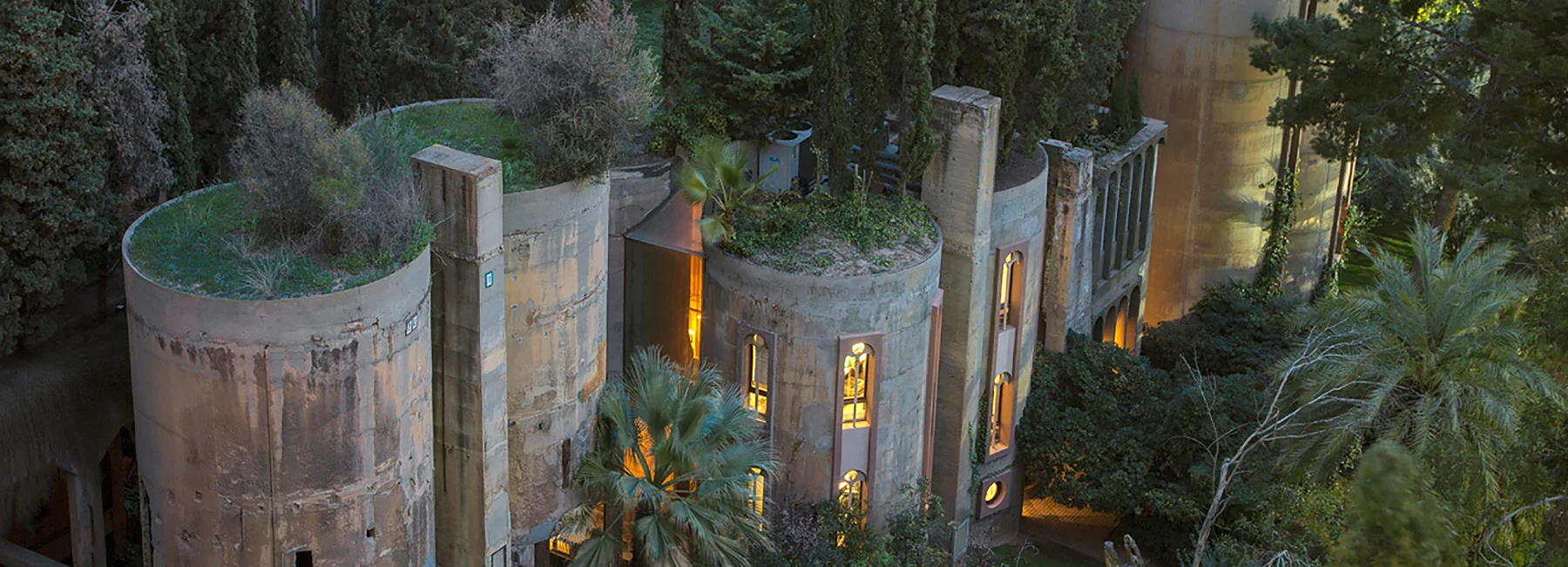
Architect Turns Old Cement Factory Into His Home
And it will take your breathe away
In 1973, Spanish architect Ricardo Bofill purchased a WWI-era cement factory near Barcelona.
He immediately saw potential in the building, and began renovating it into his home.

He stumbled upon a dilapidated cement factory in 1973 and soon after La fabrica was born. 45 years later, just outside of Barcelona, the structure has been transformed into a spectacular home.
Ricardo Bofill and his team decided to lace the exterior of the property with vegetation, and decorate the interior into the modern living work space. It is still in work progress today .
The industrial chimneys that once filled the air with smoke, now overflow with green. A great example of saving our planet and beautiful transformation from the artist and creative thinker.


AN OPEN LETTER TO DEPRESSED
"There is an artist within you that screams to come out"
We used to be happy, we used to be understood, the world was a safe place to live, there was less harm. And although humanity today is confident, assertive, we are miserable, lonely and depressed. Is today's reality unkind to our well- being? Let's talk about it.
We have no privacy today. Our mind is preoccupied with money, fame and image and it isolated us from each other. Social media and its matrix sucked us into the worthless, hopeless state of mind. The law of the jungle took over. Every man for himself, anything goes, survival of the strongest. It becomes tougher to deal with every day.

You are unhappy, angry, destroyed because you are alone. You admit you are depressed, but you hesitate to seek help.Why? Because society will not accept it. Because they will label you as mentally ill. Are you with me so far?
Then depression and anxiety take over. Like a hay fever, it flares up. If before you could somehow cope with it and move on, today you choose to disrupt lives.
The agony of being unheard, misunderstood, ignored takes over. You choose to cause pain to society, you aim for the most precious, you aim for the lives of their loved ones. Why? Because you want all of THEM to understand the pain YOU had to cope with alone, for so long.
I know how you feel. I felt that way once. I felt alone, miserable, misunderstood. My mind screamed vengeance! Who dared to let them judge me? Who dared to label me as incompetent? I was angry at first, then I fell into depression. But I chose to act and I chose to do it without seeking retribution. It is precisely when my creative side raised above me. Never have I thought that depression could awaken the creativity within me and gear my attention away from hate. Never have I thought of the power of its healing force for the body and the mind.
What if I tell you that depression and anxiety are symptoms of creative side?
What if I tell you that you are feeling this way because there is an artist within you that screams to come out?
Hear me out. It's been proven that creative process helps release brain chemicals that fight depression. You see my friend, the two are interconnected. When at the time of misery gazillion thought go through your mind and the anger tightens your throat and burns your chest, make a conscious choice to sit with the feeling. Don't choose violence and pain. Instead echo your struggles through creative process. Paint, illustrate, write, express it with dance, song, a poem!
Turn the most bizarre associations into the most productively creative ideas!
Don't fill that sense of emptiness with false friends, material things, medication or drugs. IMAGINE AND CREATE it will give you a sense of purpose. Believe in yourself, believe in your creative vision and give your vision a voice. Troubled thoughts they fade with time and you become more resilient and better equipped for the future, bright and healthy future that lies ahead.
Written by Juliet Belkin
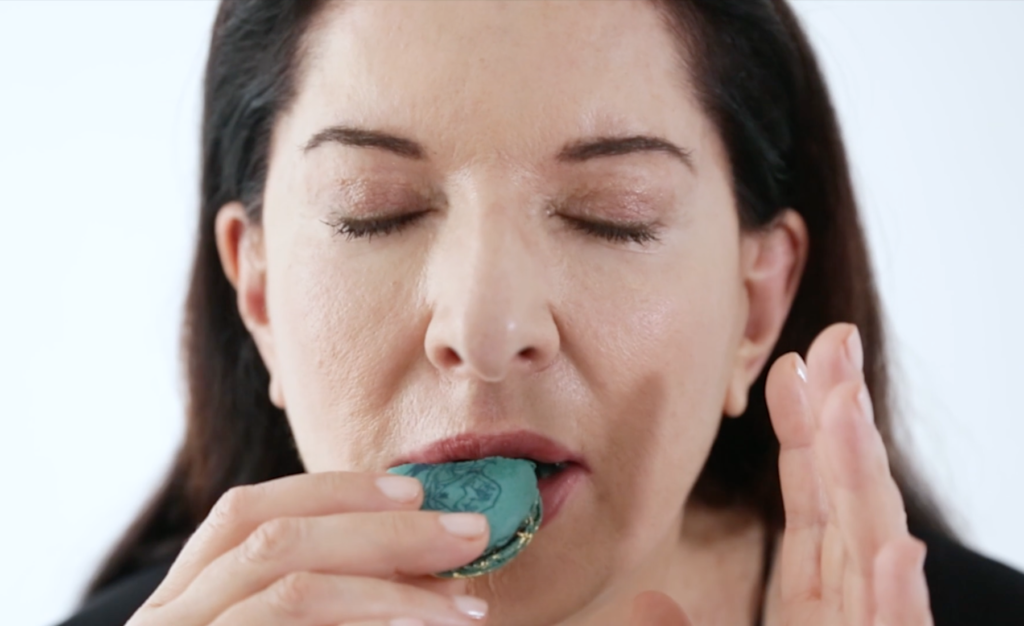
MARINA ABRAMOVIC COOKIE THAT TASTES LIKE HER
Abramović wants her audience to really taste her, or "eat her." Marinaron anyone?
A macaron (/ˌmɑːkəˈrɒn/ mah-kə-ROHN; French pronunciation: [makaʁɔ̃]) is a sweet meringue-based confection made with egg white, icing sugar, granulated sugar, almond powder and food coloring now come with a taste of Marina Abramovic.

Artist Marina Abramović knows how to get people talking about her. Yes, her latest collaboration is with Macaron. You will now be able to taste Marina Abramovic flavored cookies. According to ArtNet, the project is in conjunction with luxury dessert brand Kreëmart and Abramović wants her audience to really taste her, or "eat her." Here is a proof video
"My grandmother, early morning, making coffee," Abramović said. "The smell of coffee was everywhere in the house. Then I remember the smells of fresh basil, thyme, cardamom seeds, and exotic smells from the trips I took later on and remember exploring volcanoes and waterfalls and remember this feeling in the early morning when I see the line of the sea just meet the ocean, and ocean meet the sky. All of this, in this macaron of me."

"My work is most of the time immaterial because performance art is immaterial, it is conceptual and limited by time," she continued in a statement. "Kreëmart's work in the medium of sugar is completely immaterial too, because you consume it, you eat it, and it's gone. What is left behind is the memory of what you eat."

Marinarons are to be sold at Harrods in London and plan to release in New York, LA, Miami and Tokyo. ArtNet says that "much like the artist herself, [the macarons] aren't for everybody."
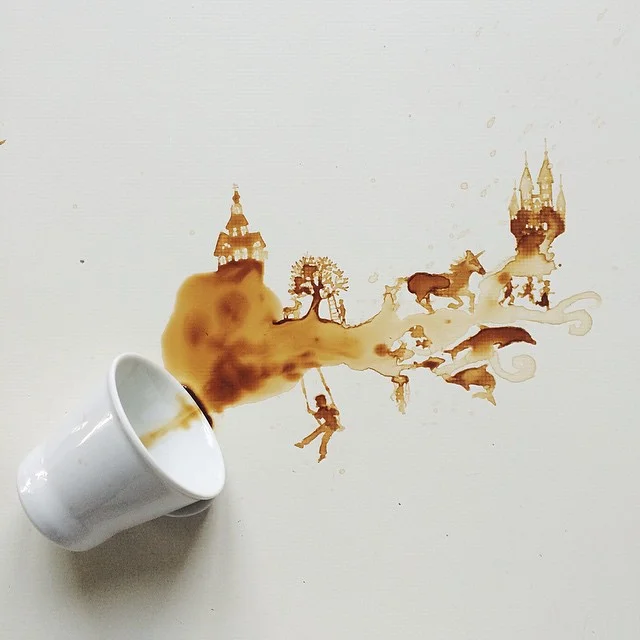
TRADING INK FOR COFFEE
ART BY GIULIA BERNARDELLI
Giulia Bernardelli takes spilt coffee and turns it into art. The 27-year-old Italian artist received a bachelor’s degree from the Academic of Fine Arts of Bologna, and presently works with children at a museum. Bernardelli’s work is always spontaneous. The Italian artist produces intricate paintings that look as though they've been created by spills or drippings from a spoon. Portraits, animals, and sprawling seas appear so effortlessly crafted that they look like they were just happened. She doesn't plan her work in advance and instead trusts her instincts. For more of Giulia Bernardelli's work visit @bernulia





















Must-see installations and exhibitions at the Venice Art Biennale 2017
The Venice Art Biennale is the world's biggest and oldest art festival.
History
On April 19, 1893 the Venetian City Council passed a resolution to set up an biennial exhibition of Italian Art ("Esposizione biennale artistica nazionale") to celebrate the silver anniversary of King Umberto I and Margherita of Savoy. A year later, the council decreed "to adopt a 'by invitation' system; to reserve a section of the Exhibition for foreign artists too; to admit works by uninvited Italian artists, as selected by a jury." The first Biennale, "I Esposizione Internazionale d'Arte della Città di Venezia (1st International Art Exhibition of the City of Venice)" opened on April 30, 1895 by the Italian King and Queen, Umberto I and Margherita di Savoia. The first exhibition was seen by 224,000 visitors. In 1910 the first internationally well-known artists were displayed- a room dedicated to Gustav Klimt, a one-man show for Renoir, a retrospective of Courbet. A work by Picasso was removed from the Spanish salon in the central Palazzo because it was feared that its novelty might shock the public. By 1914 seven pavilions had been established: Belgium (1907), Hungary (1909), Germany (1909), Great Britain (1909), France (1912), and Russia (1914).
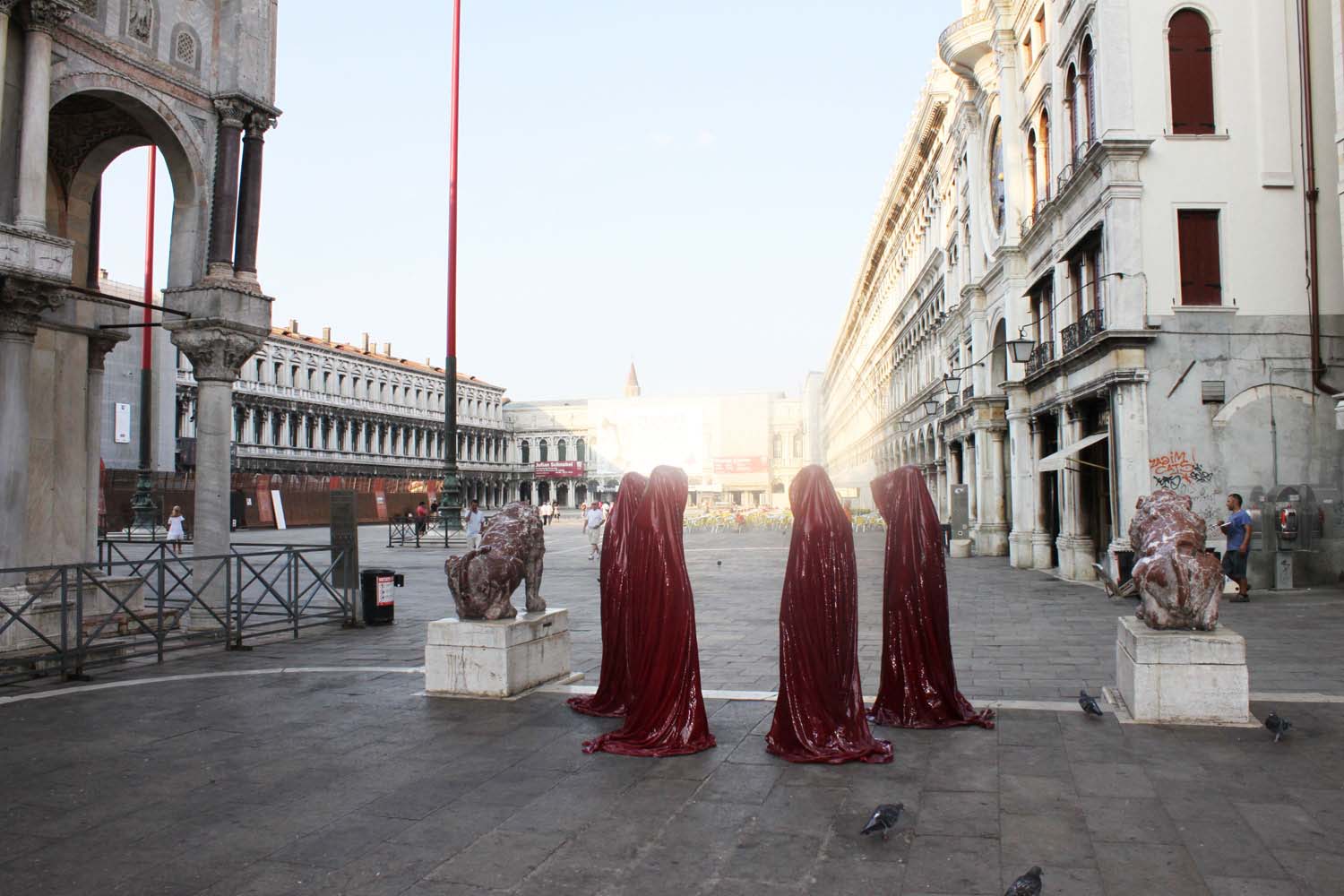
57th Venice Art Biennale
57th edition of the Venice Art Biennale opened to the public with managing editor Olivia Mull carefully selected best design-led exhibitions, spatial installations and pavilion takeovers. Artists, curators, architects, designers, musicians and refugees have all collaborated on works for this year's show. They range from architectural installations to spatial performances, covering topics embracing all aspects of life and society.
Here is what not to miss:


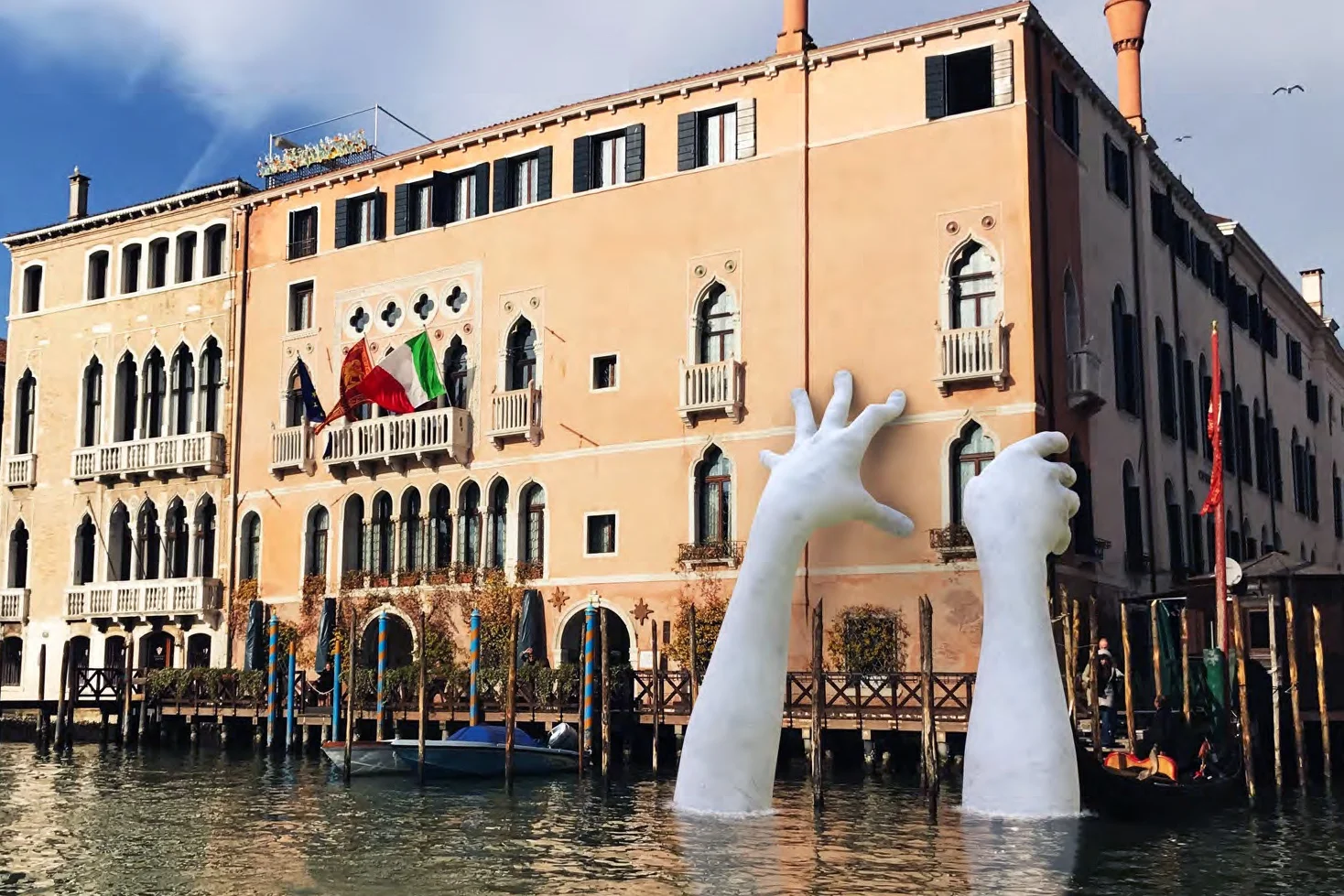
Venice is Sinking
Italian artist Lorenzo Quinn calls attention to this threat with his arresting, larger-than-life sculpture in the sinking city. Support features two 5,000-pound hands bursting out of the Grand Canal and grasping the walls of the historic Ca' Sagredo Hotel.

Photograph by Maria Nitulescu, courtesy of the artist and the Georgian Pavilion
Living Dog Among Dead Lions by Vahjiko Chachkhiani Georgian Pavilion, Arsenale
A for of a small abandoned wooden hut, found in the Georgian countryside and reassembled by artist Vajiko Chachkhiani on-site. Furniture, pictures, lights and other household items are the only occupants of the cabin.
Chachkhiani has simulated a never-ending rainstorm inside the hut by puncturing the ceiling with hundreds of holes and installing an irrigation system above. Water puddles on the floor and furniture, and trickles through cracks in the wood. Visitors can watch the interior decay and rot over the course of the biennale, while the exterior of the house will remain untouched.

Photograph by Ruth Clark, courtesy of the artist, the British Council and Hauser & Wirth
Folly by Phyllida Barlow British Pavilion, Giardini
Clustered around the entrance of the neo-classical British Pavilian stand huge sculptures constructed from cardboard, paint, foam, plywood and concrete, metal stands. Created by 73-year-old British sculptor Phyllida Barlow, resembling architectural details or giant toys.

Photograph by Nadine Fraczkowski, courtesy of the artist and the German Pavilion
Faust by Anne Imhof German Pavilion, Giardini
Faust has been awarded this year's prestigious Golden Lion prize. It was described by the jury as "a powerful and disturbing installation that poses urgent questions about our time". Artist Anne Imhof has transformed the Nazi-era German Pavilion into a hostile stage set for her Faust exhibition. The Doberman dogs stand guard at the the front entrance. Raised glass floor inside, spans the white space and glass pedestals jut out from the walls. Groups of young performers dressed entirely in black sportswear occupy the space. They move emotionlessly amongst visitors to harsh metallic music – crawling under the glass floor, dragging their feet and bizarrely embracing.

Photograph by Prudence Cuming Associates, courtesy of Damien Hirst and Science Ltd. All rights reserved, DACS/SIAE 2017
Treasures from the Wreck of the Unbelievable by Damien Hirst Palazzo Grassi and Punta della Dogana
Rumored to be one of the most expensive exhibitions ever put by a contemporary artist and much-discussed exhibition is "all about what you want to believe.", comes from British artist Damien Hirst's Treasures. 16-metre barnacle-encrusted decapitated demon in the Palazzo's courtyard – were supposedly lost in a legendary shipwreck 2,000 years ago and rescued from the sea by the Turner Prize-winning artist.