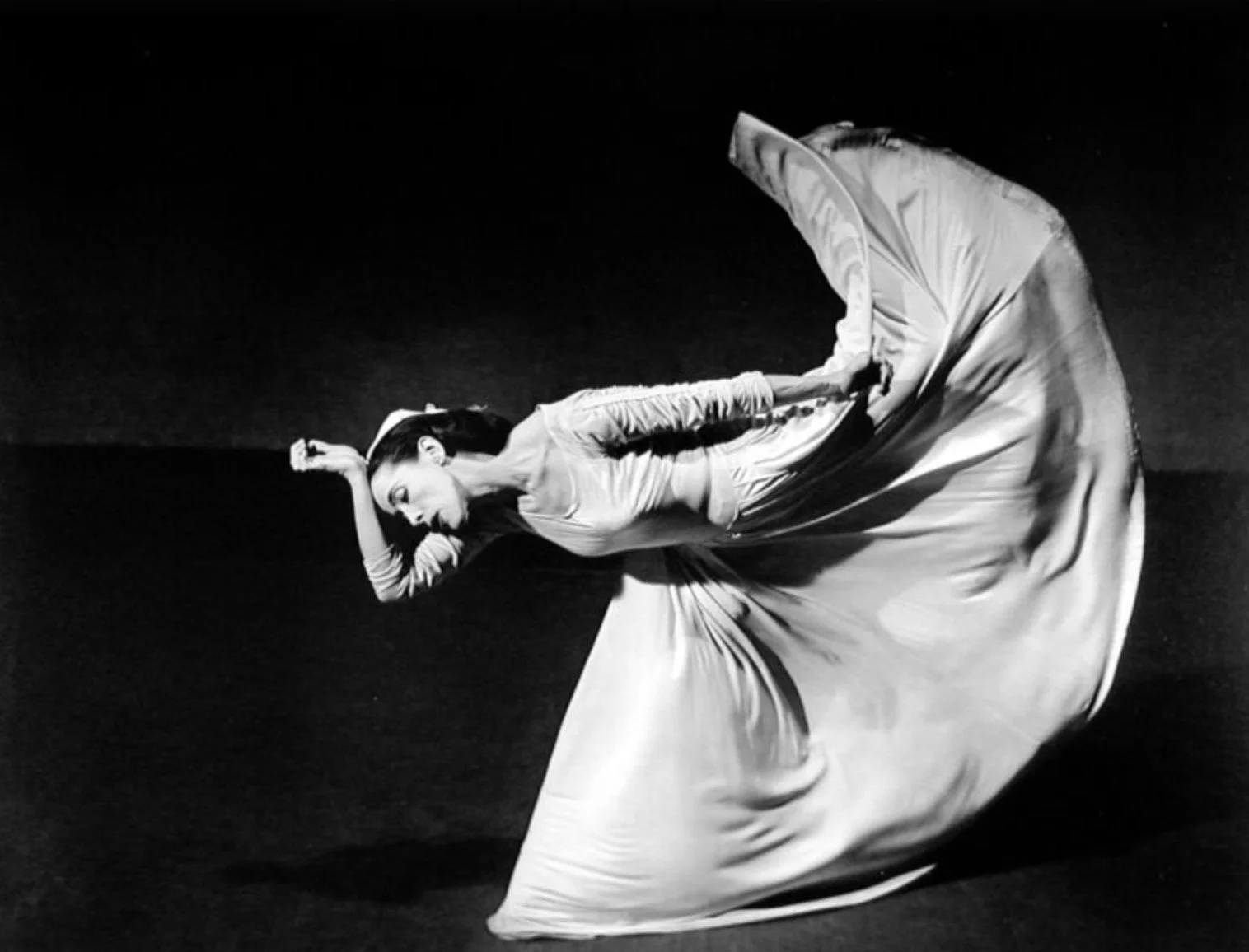
Feel the Beat: Dance in Photographs
Feel the Beat: Dance in Photographs (May 16, 2026–Jan 31, 2027)
SF MOMA
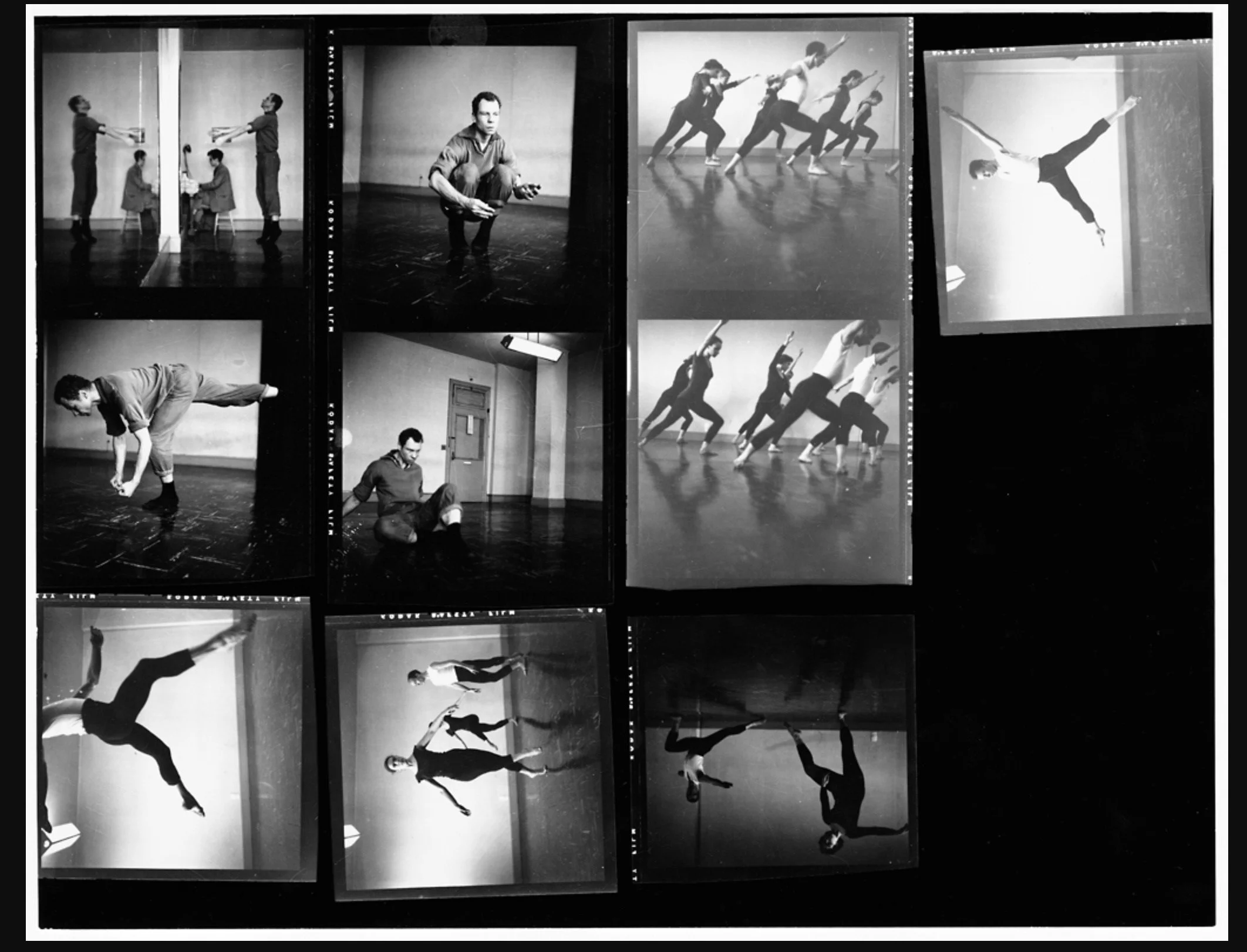
**Feel the Beat: Dance in Photographs (May 16, 2026–Jan 31, 2027) **
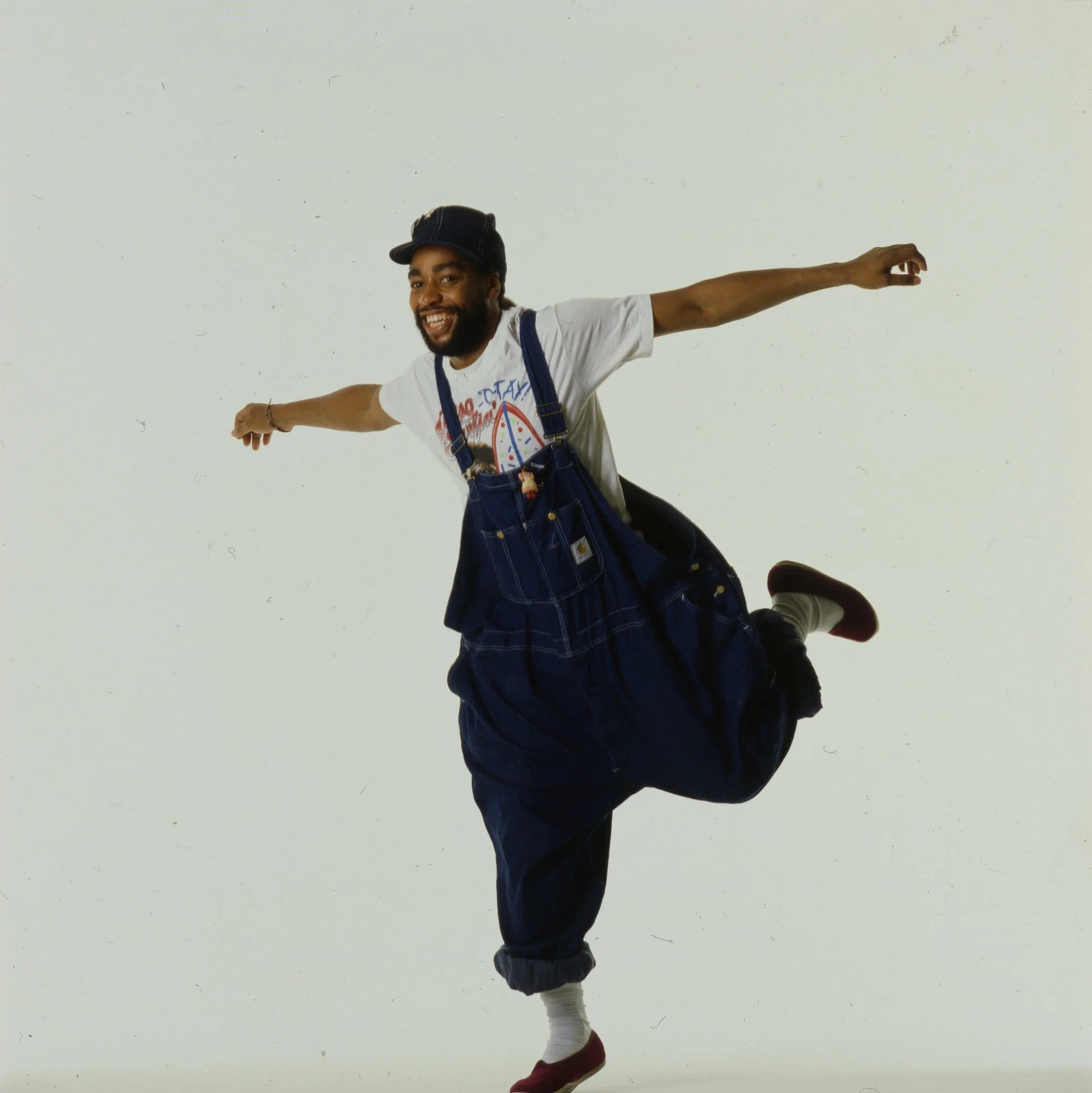
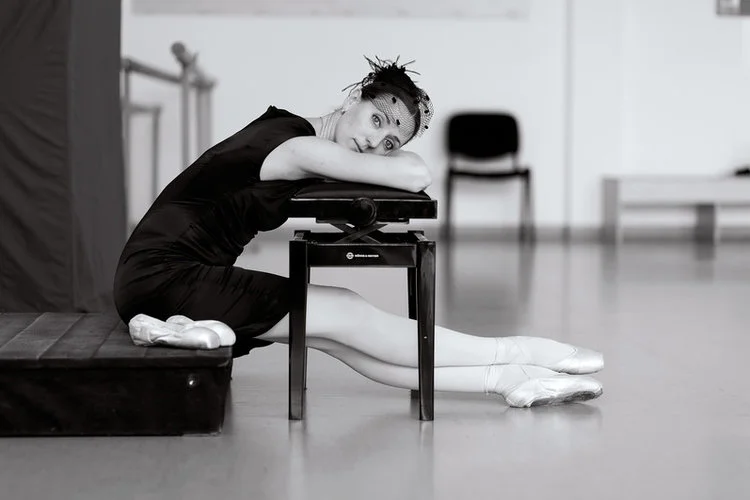
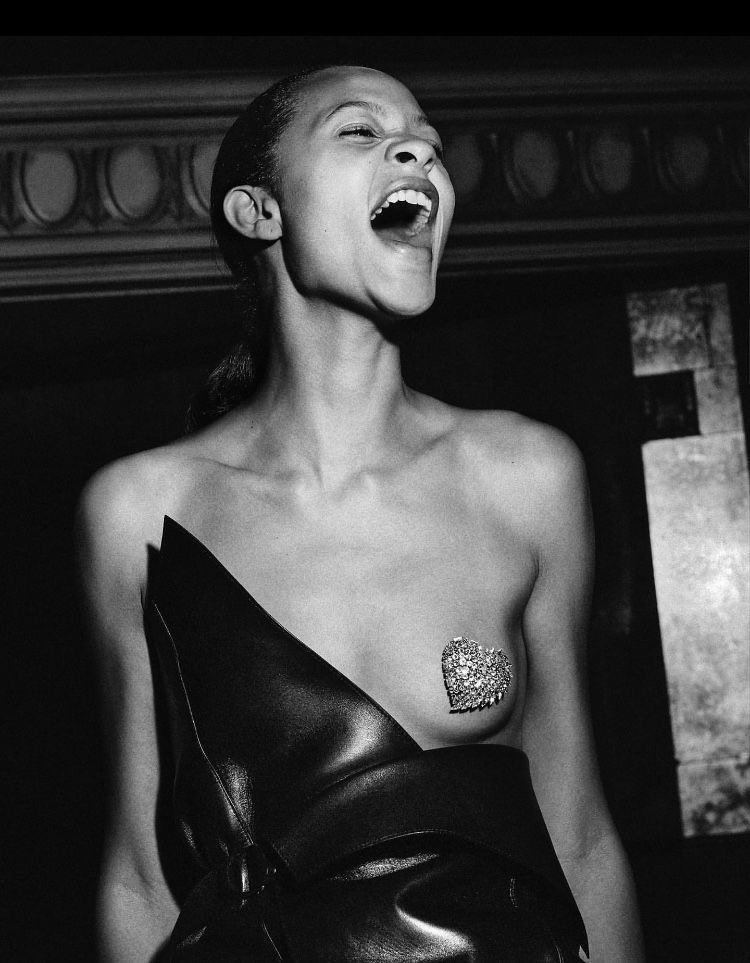
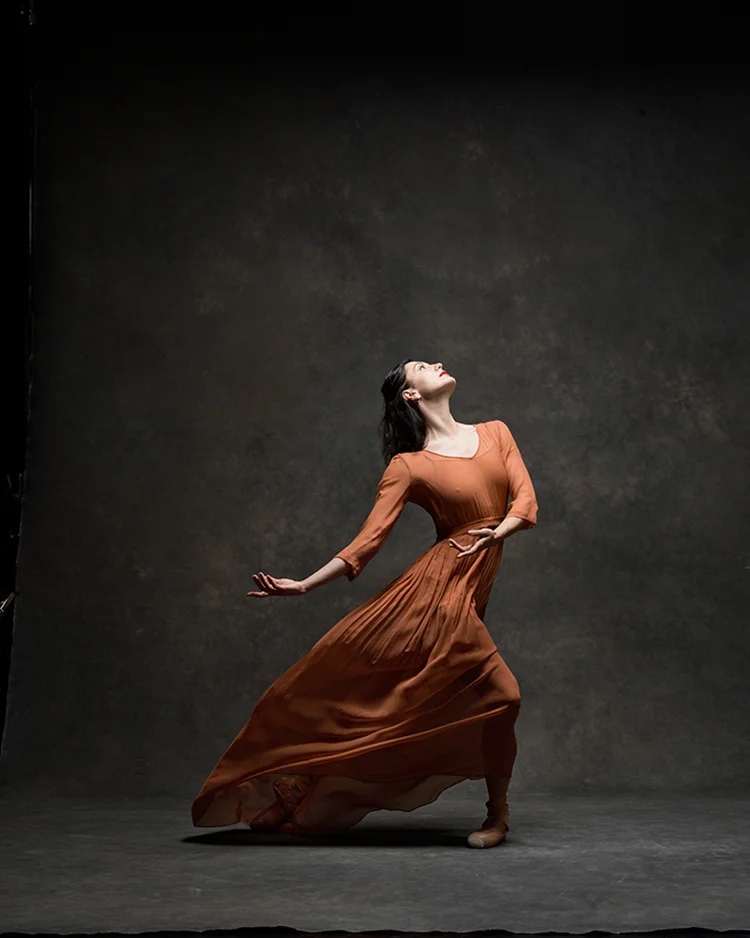
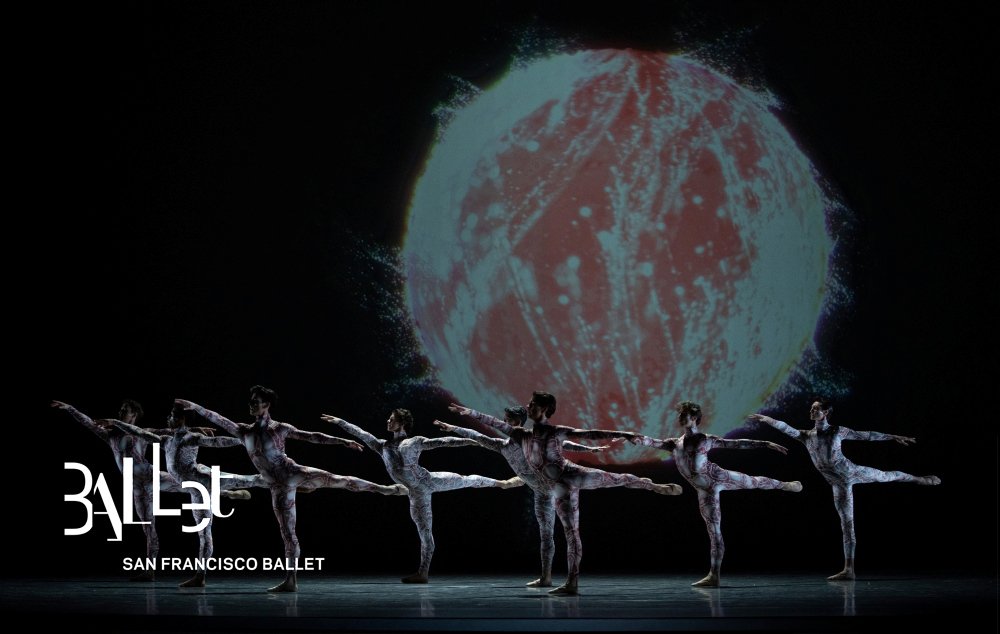
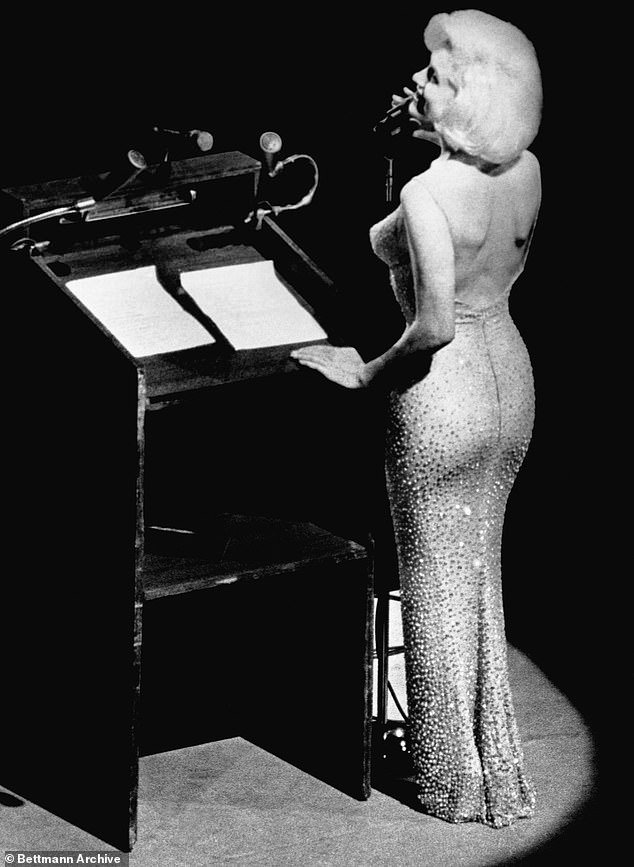
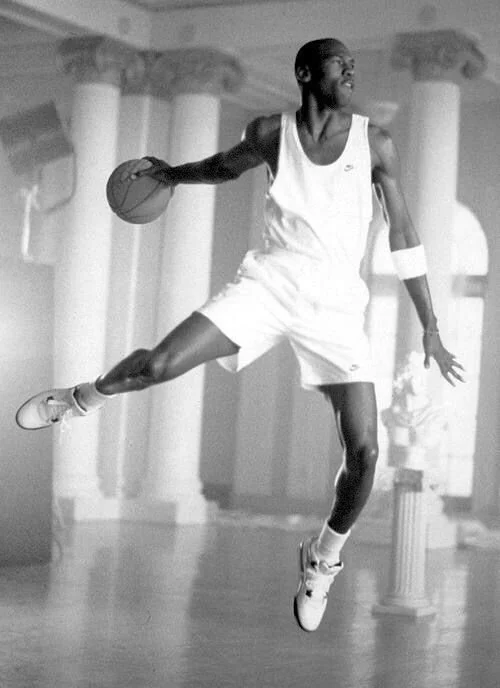
A major new exhibition opening May 16, 2026, Feeling the Beat: Dance in Photographs brings together iconic and unexpected images that trace dance’s evolution as both a visual art and cultural barometer. Spanning early motion studies to contemporary street, club, and runway moments, the show maps how photographers have captured movement, rhythm, and the bodies that define style.
Why it’s worth a visit
Visual storytelling through motion: The exhibition foregrounds photography’s unique ability to freeze, imply, and reinvent movement. Visitors will see work that isolates a single, decisive moment alongside sequences that reconstruct dance as narrative—useful for anyone who cares about how fashion and gesture register in a single frame.
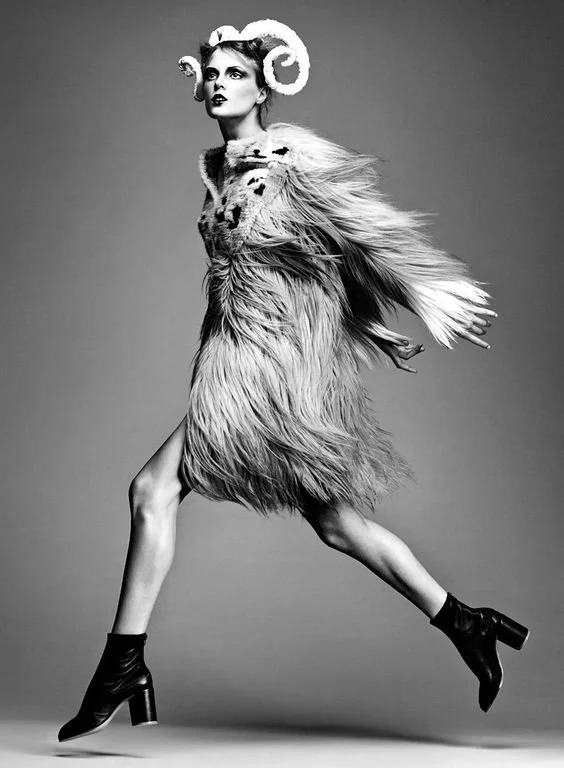
Cross-disciplinary appeal: This is where art, fashion, music, and performance collide. Costumes, hair, and makeup aren’t background details here; they’re central to the way dancers perform identity. The show offers repeated visual parallels between haute couture editorial shots and street dance documentation, highlighting how style migrates between arenas.
Historical sweep with contemporary edge: Expect early 20th-century studio experiments, mid-century modernism, post-war concert photography, and recent images from club and social media culture. The exhibition places archival prints next to contemporary digital works, inviting reflection on how technology and platform shape the photographic look of dance.
Technical and creative insights: Displays often include sequencing studies, contact sheets, and behind-the-scenes notes that demonstrate photographers’ processes—how lens choice, shutter speed, lighting, and staging alter the perception of motion. For designers, photographers, and creatives, those technical details are both instructive and inspiring.
Immersive moments: Curators have designed gallery spaces that echo the atmospheres photographed—dimmed lighting for nocturnal club scenes, open airy rooms for classical and modern dance—amplifying the sensory experience. Audio installations and selected motion projections complement the still images, creating a layered, kinetic environment.
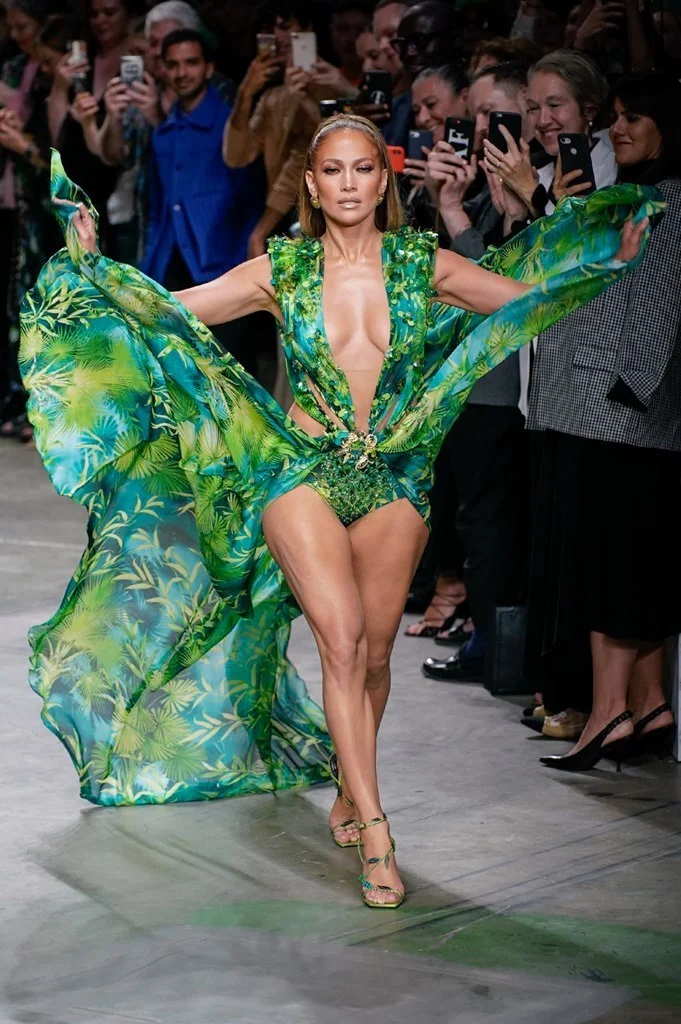
Fashion and trend context: Dance has repeatedly driven silhouette and movement in fashion—bias cuts inspired by ballet, streetwear born from hip‑hop, and runway choreography that borrows from voguing and krumping. The exhibition makes those links explicit, offering runway-facing visitors a concise visual primer on dance’s influence on garment shape and presentation.
Photography you’ll want to study and share: Strong graphic compositions, iconic poses, and wearable moments populate the galleries—ideal for inspiration boards, editorial reference, and social media storytelling (the museum’s photography policy encourages respectful, non-flash image-making).
Practical notes
Dates: May 16, 2026–Jan 31, 2027.
Plan a longer visit: Between prints, contextual materials, and multimedia sections, allocate at least 90–120 minutes.
Programming: Look for associated talks, performance evenings, and workshops that bring photographers and choreographers into conversation.
Takeaway: Whether you’re a stylist, art director, photographer, or just someone who loves movement and style, Feel the Beat presents dance as a visual language—dynamic, influential, and constantly remixing fashion and culture.
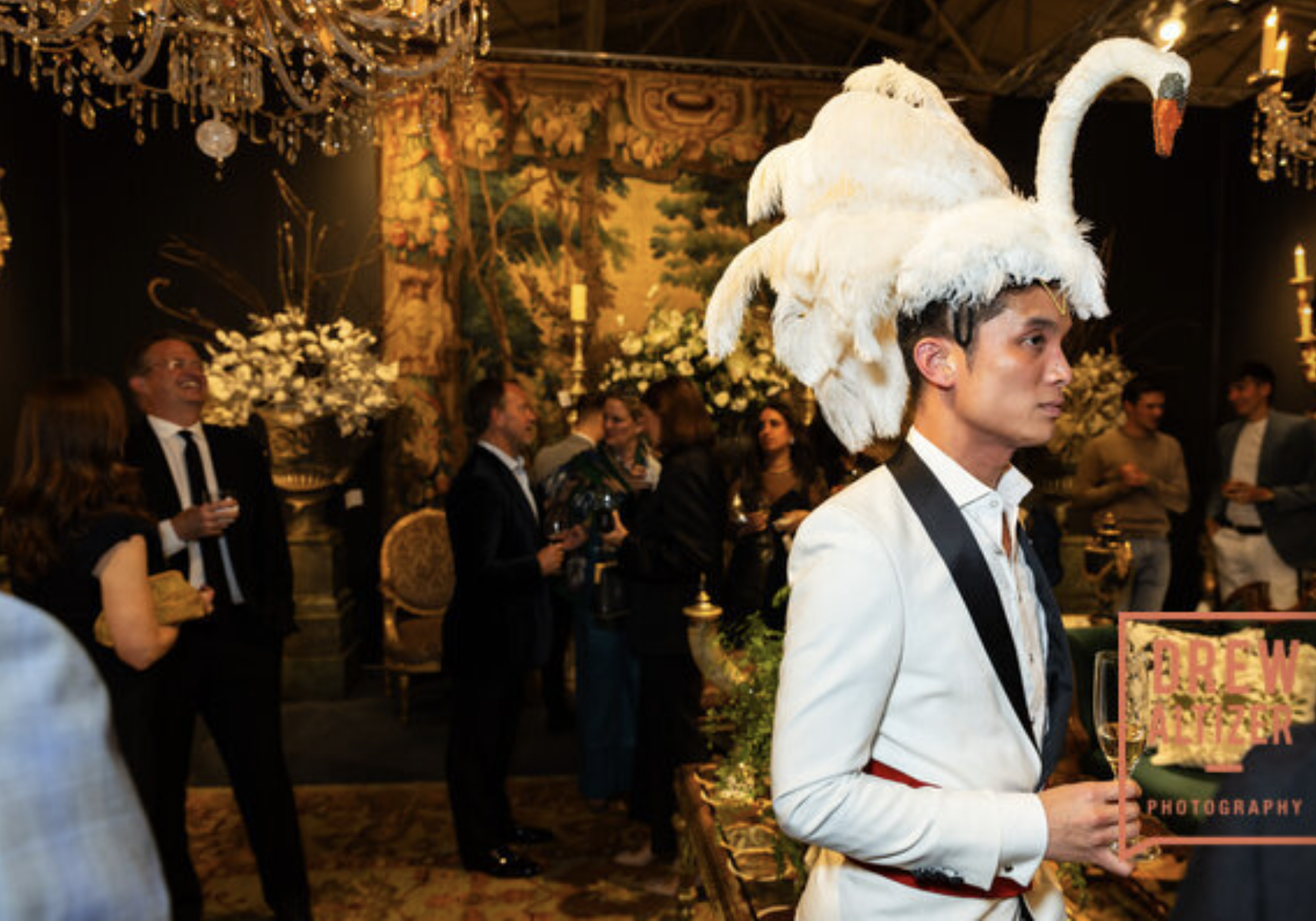
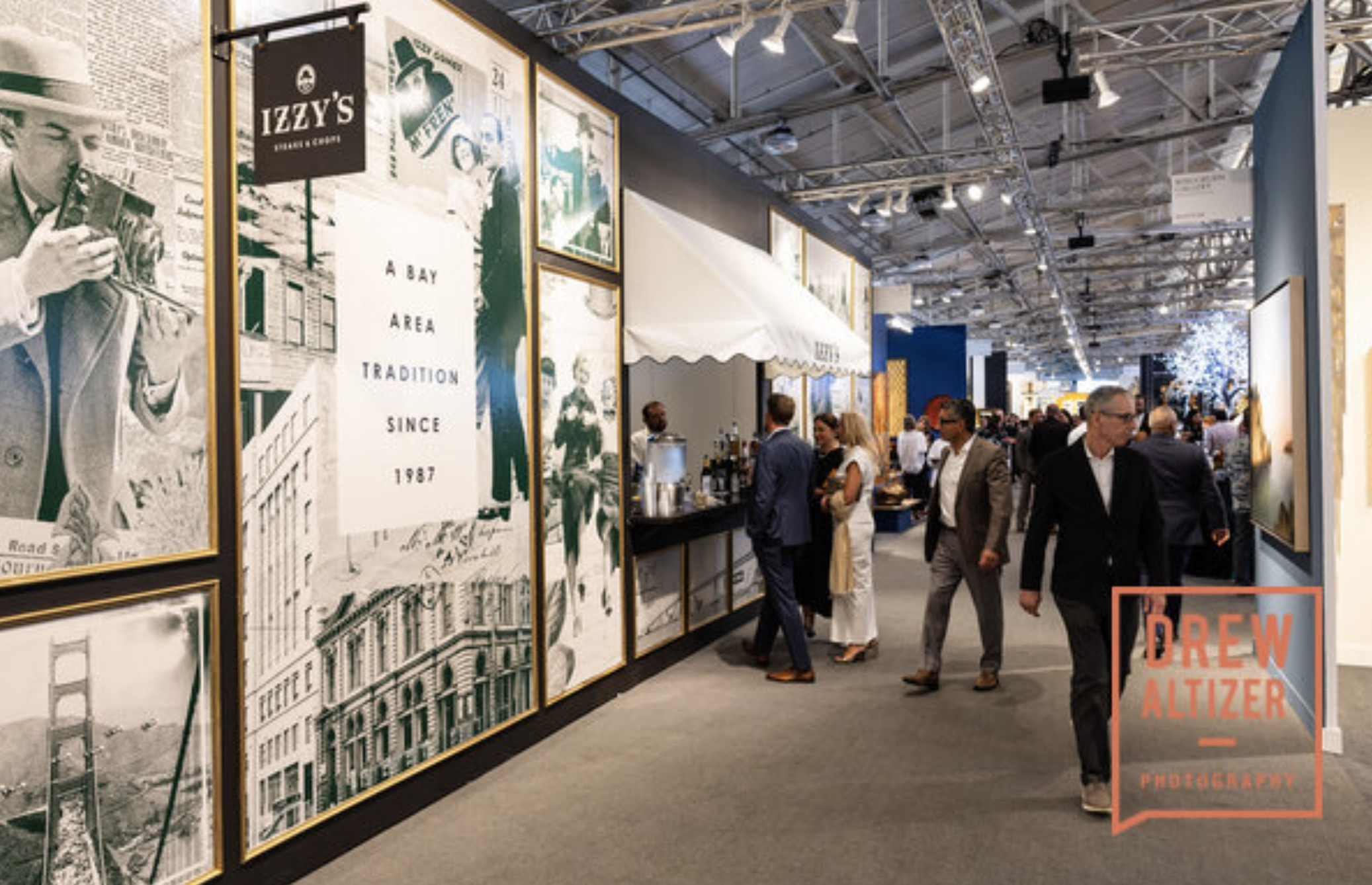
San Francisco Fall Show 2024 - Black & White Soirée

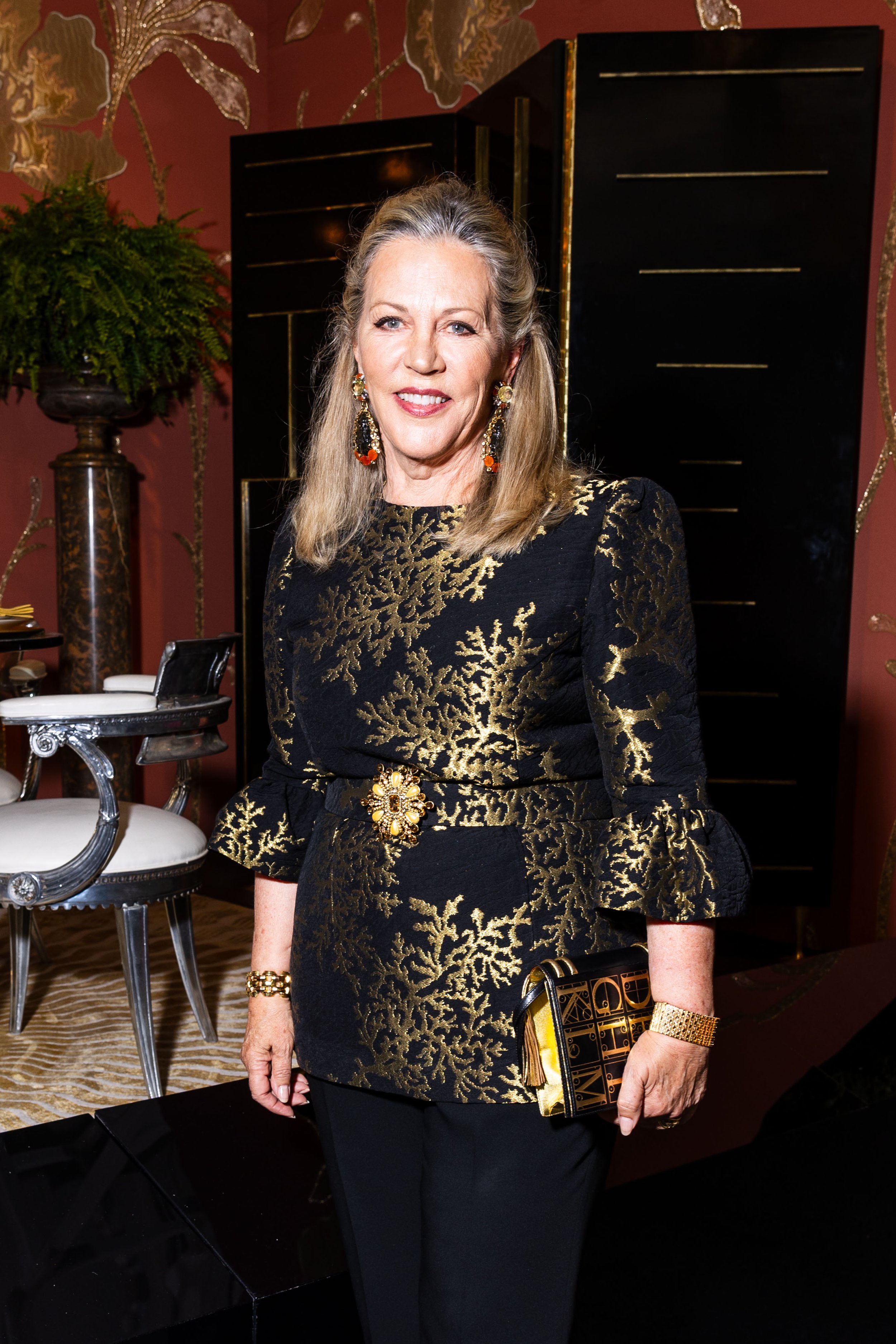
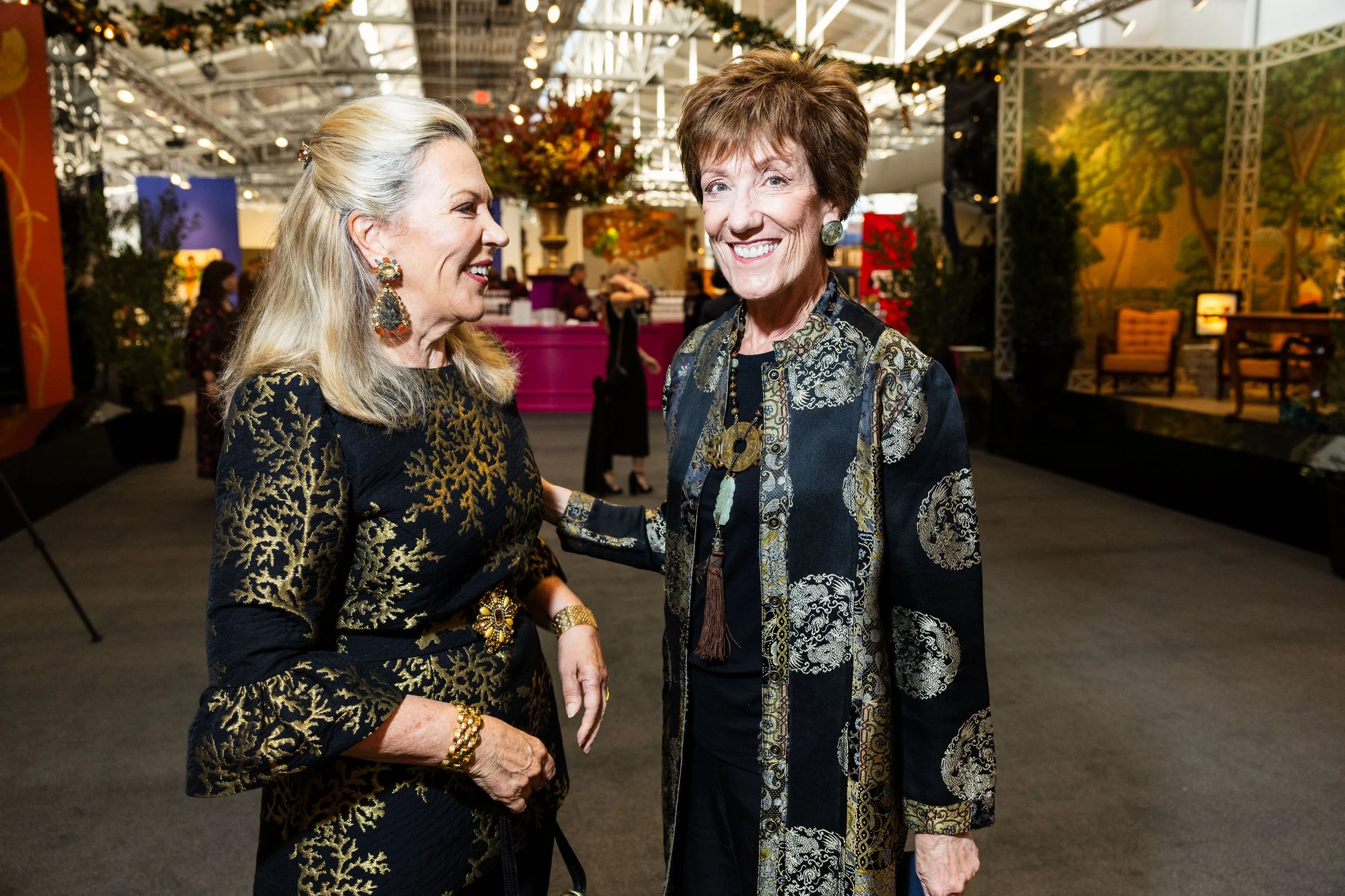
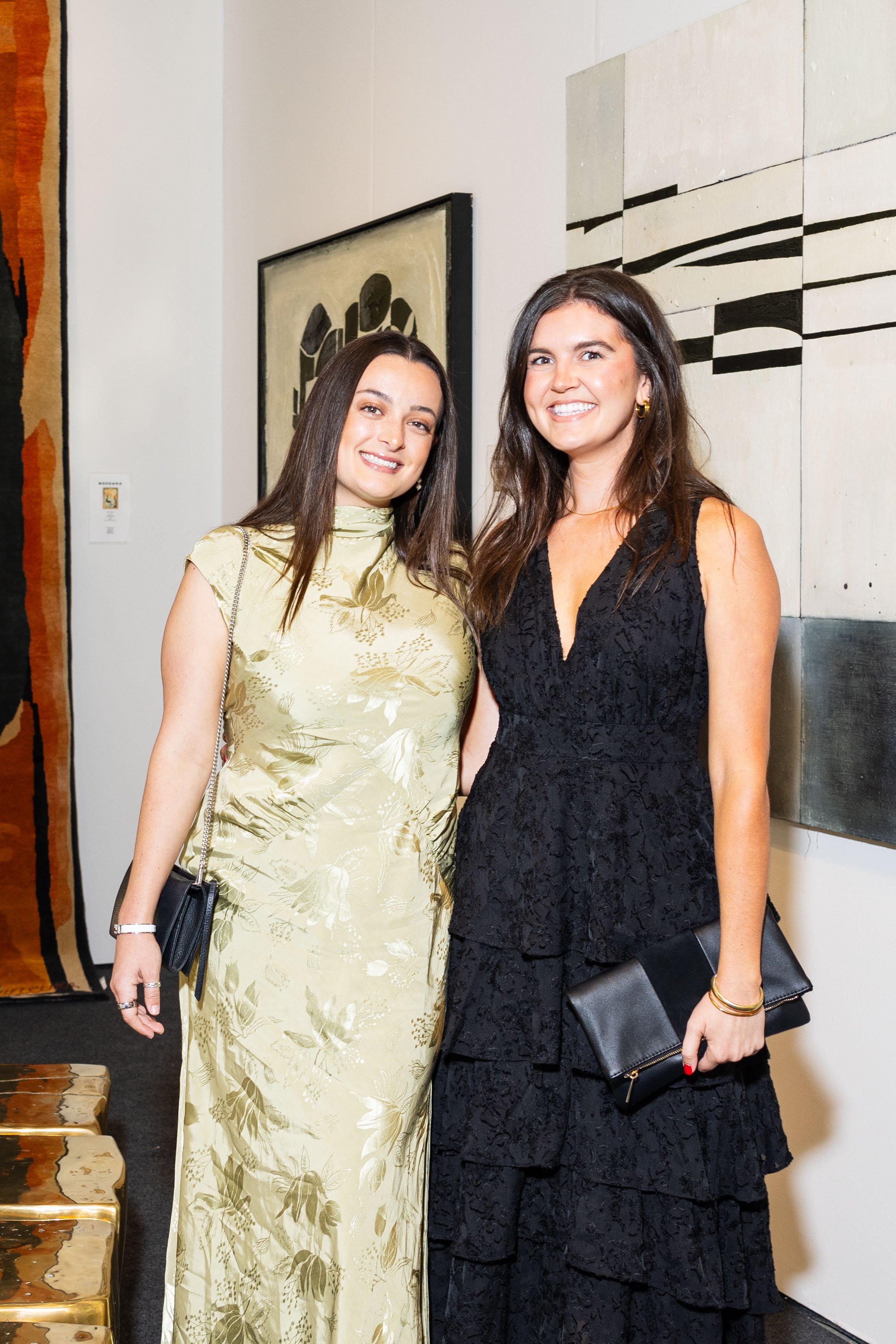
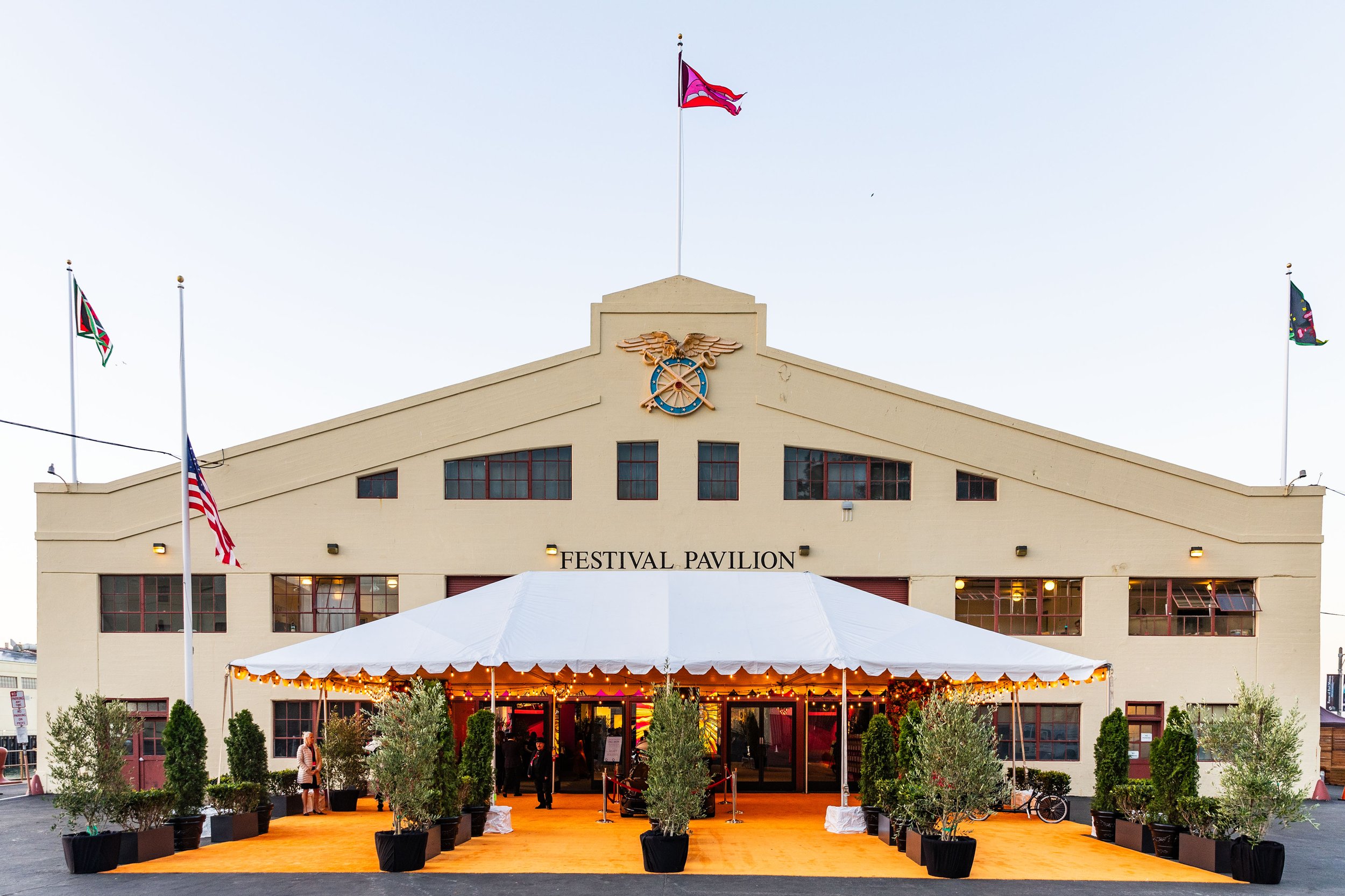
This year on October 16, the San Francisco Fall Show once again hosted the highly anticipated fine and decorative arts event and celebrated its 42nd anniversary. Fort Mason Center for Arts & Culture Festival Pavilion in San Francisco united an array of fine and decorative art dealers and this year, the program's event revolved around the theme "Black and White", celebrating the contrast, elegance and enduring allure of this classic pairing. Show Chair Suzanne Tucker joined by honorary co-chairs Aerin Lauder and Wes Gordon, along with gala chairs including Vanessa Getty, Alexis and Trevor Traina, Dede Wilsey and other guests As the longest-running art, antiques, and design fair on the West Coast, the San Francisco Fall Show is celebrated worldwide and cherished within the San Francisco Bay Area's vibrant art and design scene.
Show dates October 16 - 19, 2024 Tickets
Photography by Drew Altizer














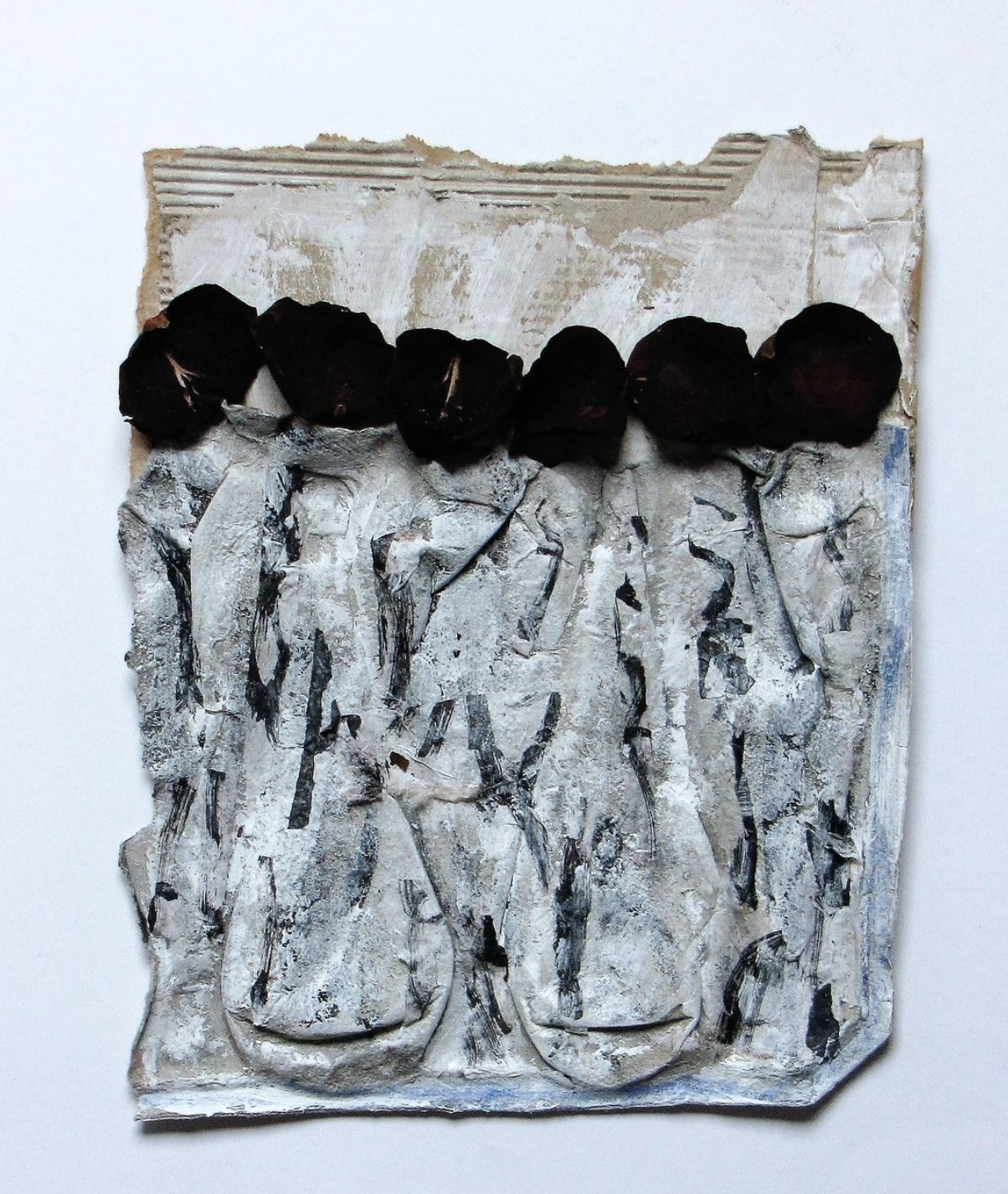
Assemblage art by Josephine Verbist
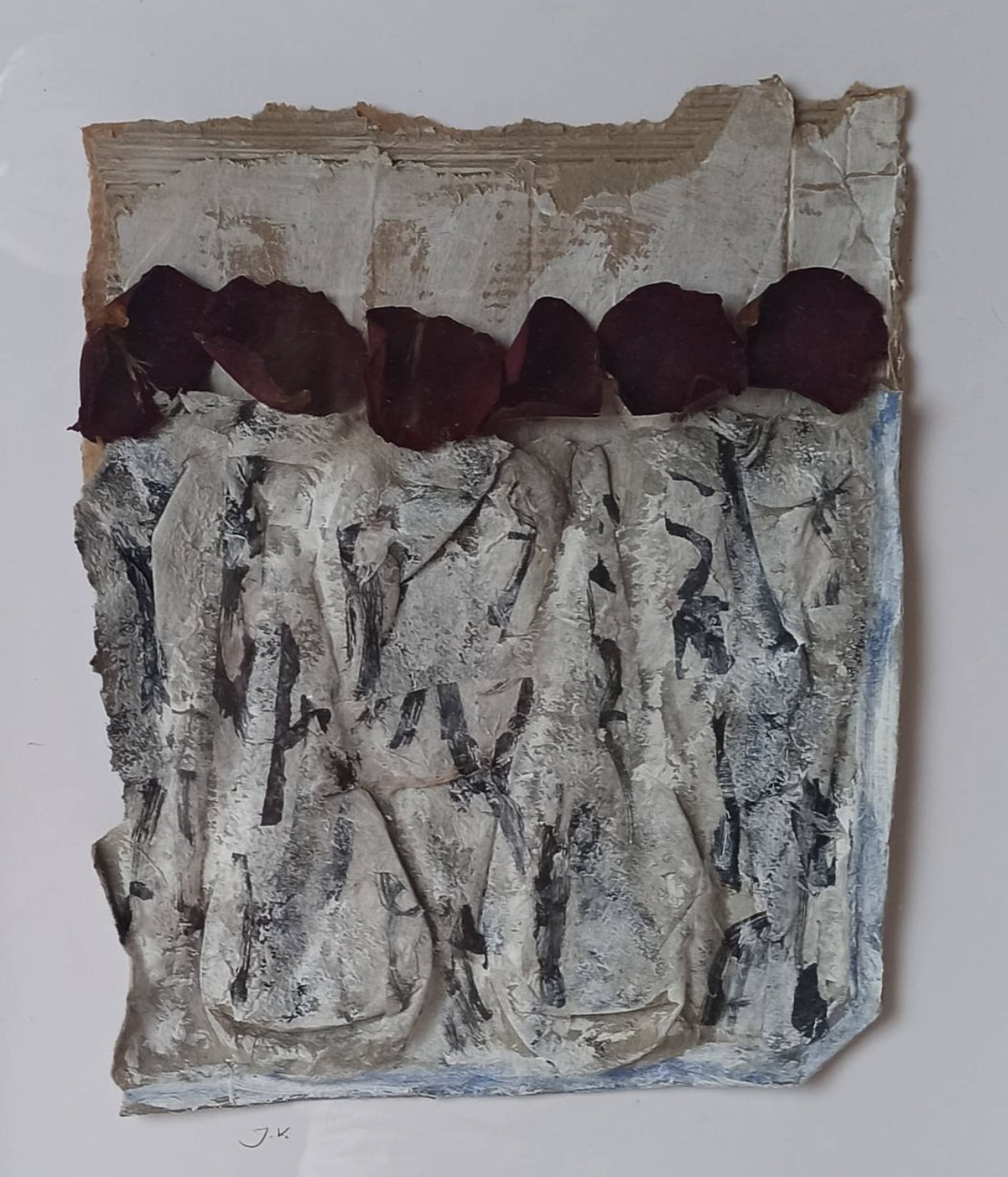
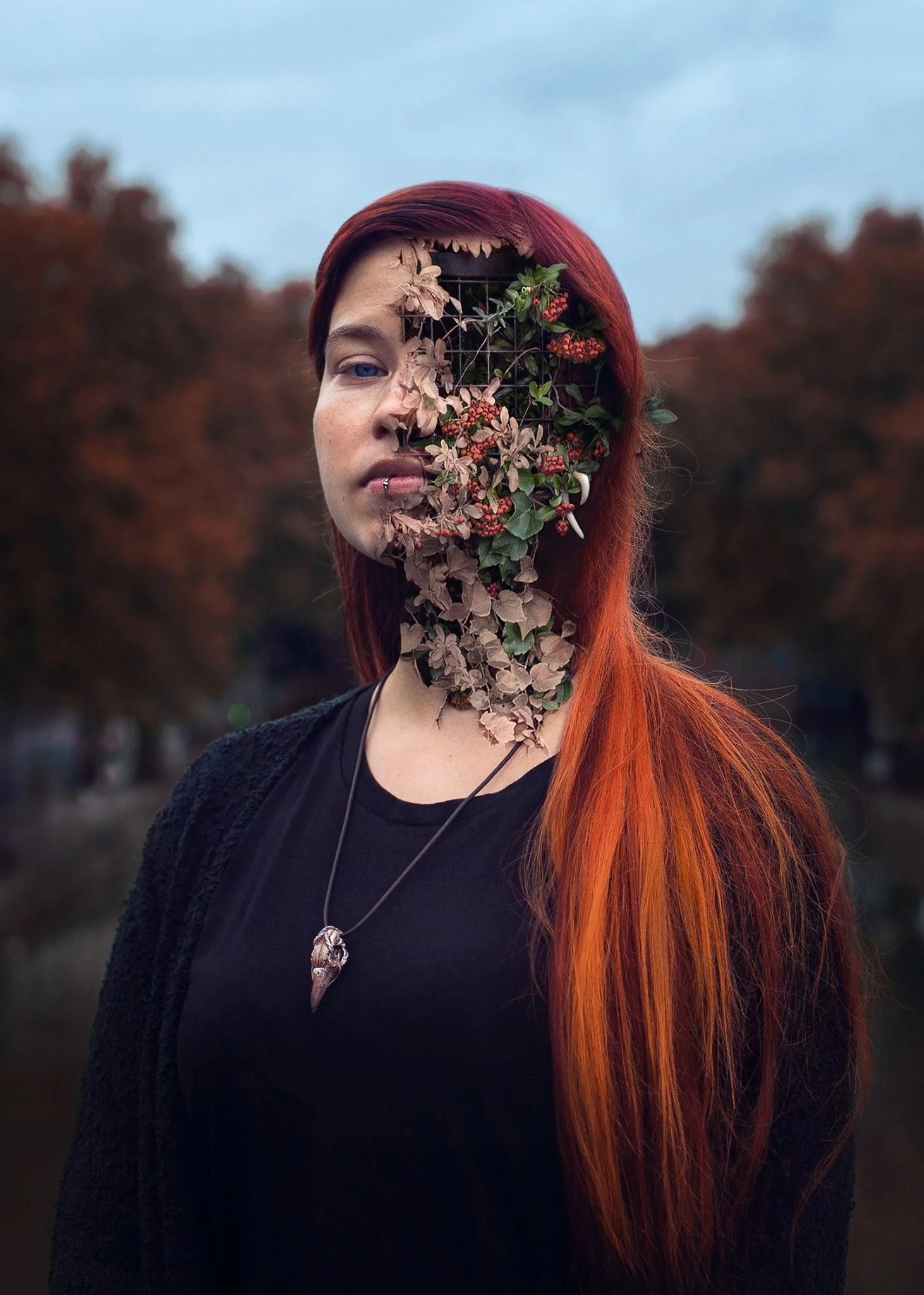
Assemblage art is often noted for its ability to convey deeper meanings through the juxtaposition of everyday objects, inviting viewers to contemplate themes such as time, memory, impermanence, or environmental concerns. Our latest featured artist is the talented Dutch painter, Josephien Verbis
Assemblage art is often noted for its ability to convey deeper meanings through the juxtaposition of everyday objects, inviting viewers to contemplate themes such as time, memory, impermanence, or environmental concerns. Our latest featured artist is the talented Dutch painter, Josephien Verbis who is based in Leiden. Her artwork is an example of assemblage art, a form of visual art that involves creating three-dimensional compositions using a variety of found objects and materials. These elements are arranged thoughtfully to evoke a sense of nostalgia or decay, as they suggest natural and man-made materials that have aged or been discarded.
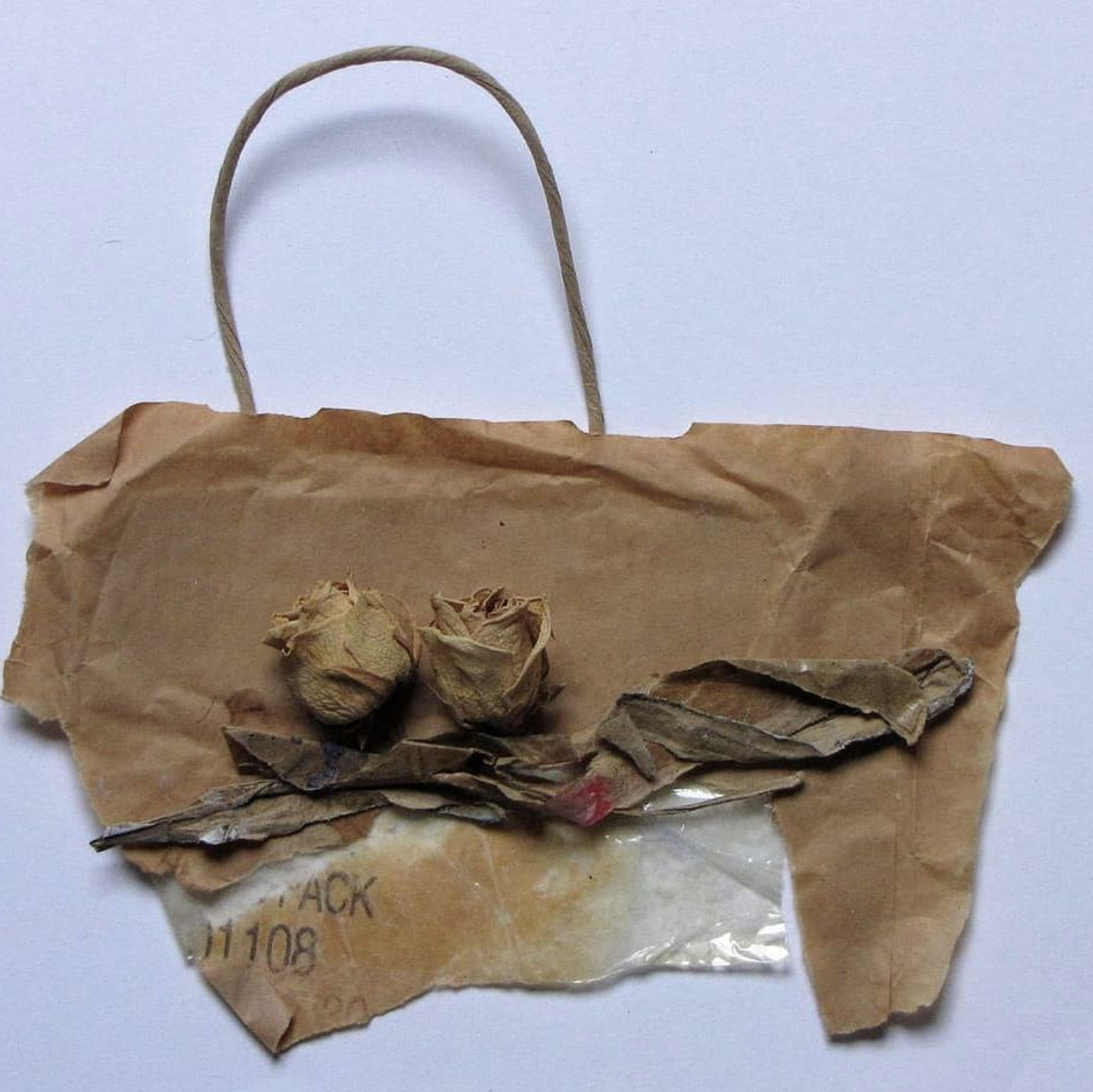

Josephine studied at the Rijksakademie in Amsterdam and the Free Academy in The Hague. Among her mentors were Jan van Heel, Jan Sierhuis, and Wil Bouthoorn.She also pursued psychology at the Universities of Utrecht and Leiden, specializing in clinical psychology with a focus on art psychology and a secondary study in art history.









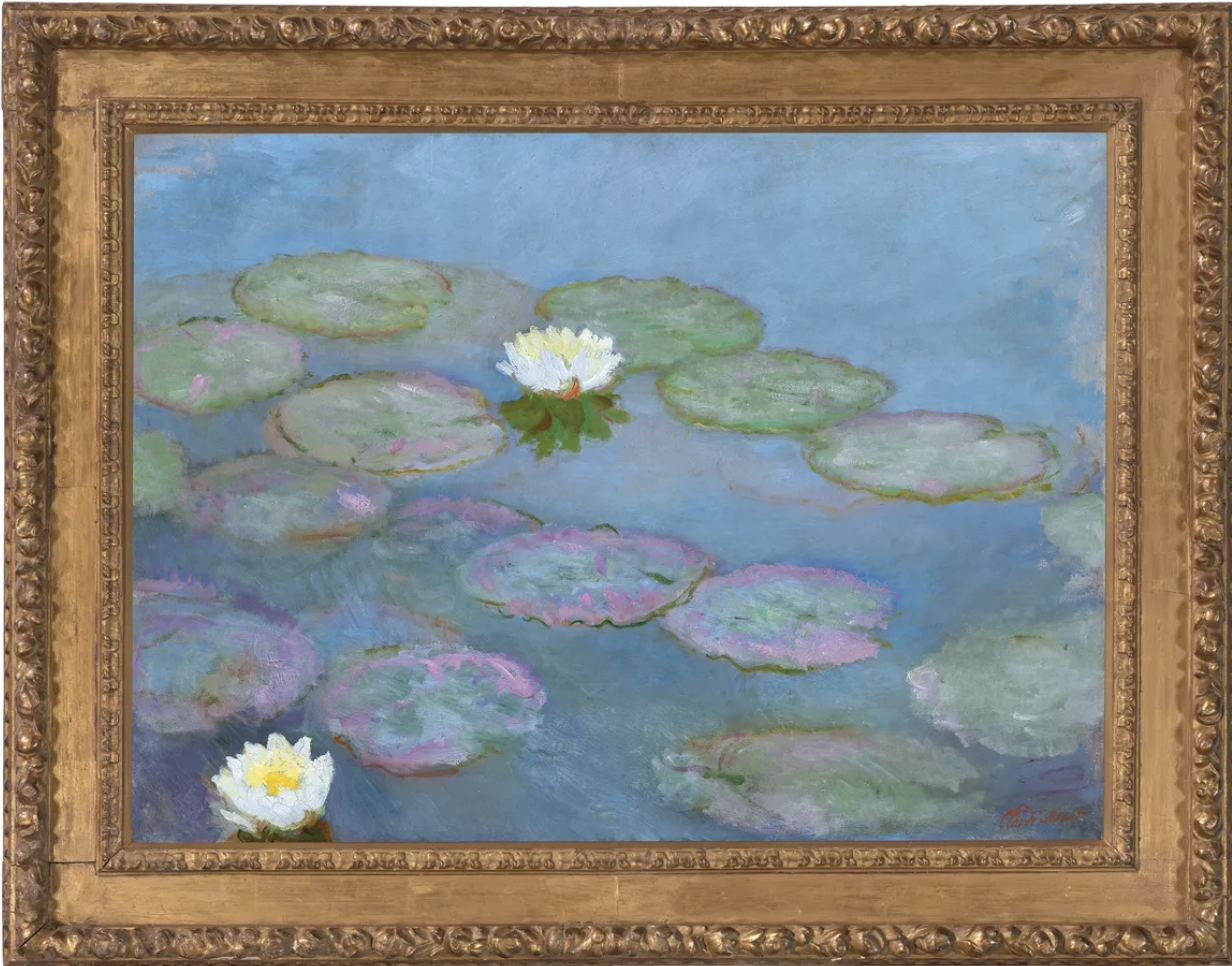
$25m Claude Monet's "Nymphéas" paintings is up for grabs
.
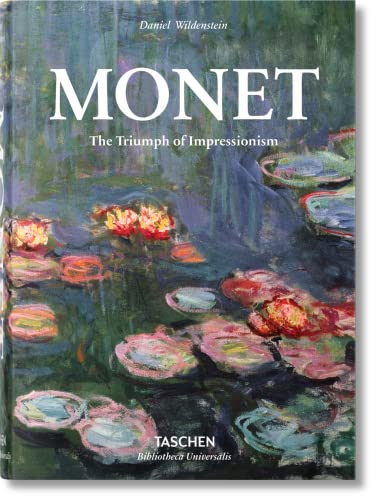
Claude Monet, the renowned French Impressionist painter, created a series of approximately 250 oil paintings depicting water lilies in his garden at Giverny. These works, known as the "Nymphéas" series, are among his most famous and valuable. In recent years, some of Monet's Water Lily paintings have sold for astronomical sums at auction, with prices reaching well over $25 million. For example, in 2014, one of Monet's Water Lily paintings sold for nearly $54 million at Sotheby's in London. The high prices these works command reflect their importance in art history, Monet's status as a master of Impressionism, and the enduring appeal of his serene, light-filled depictions of his garden pond.
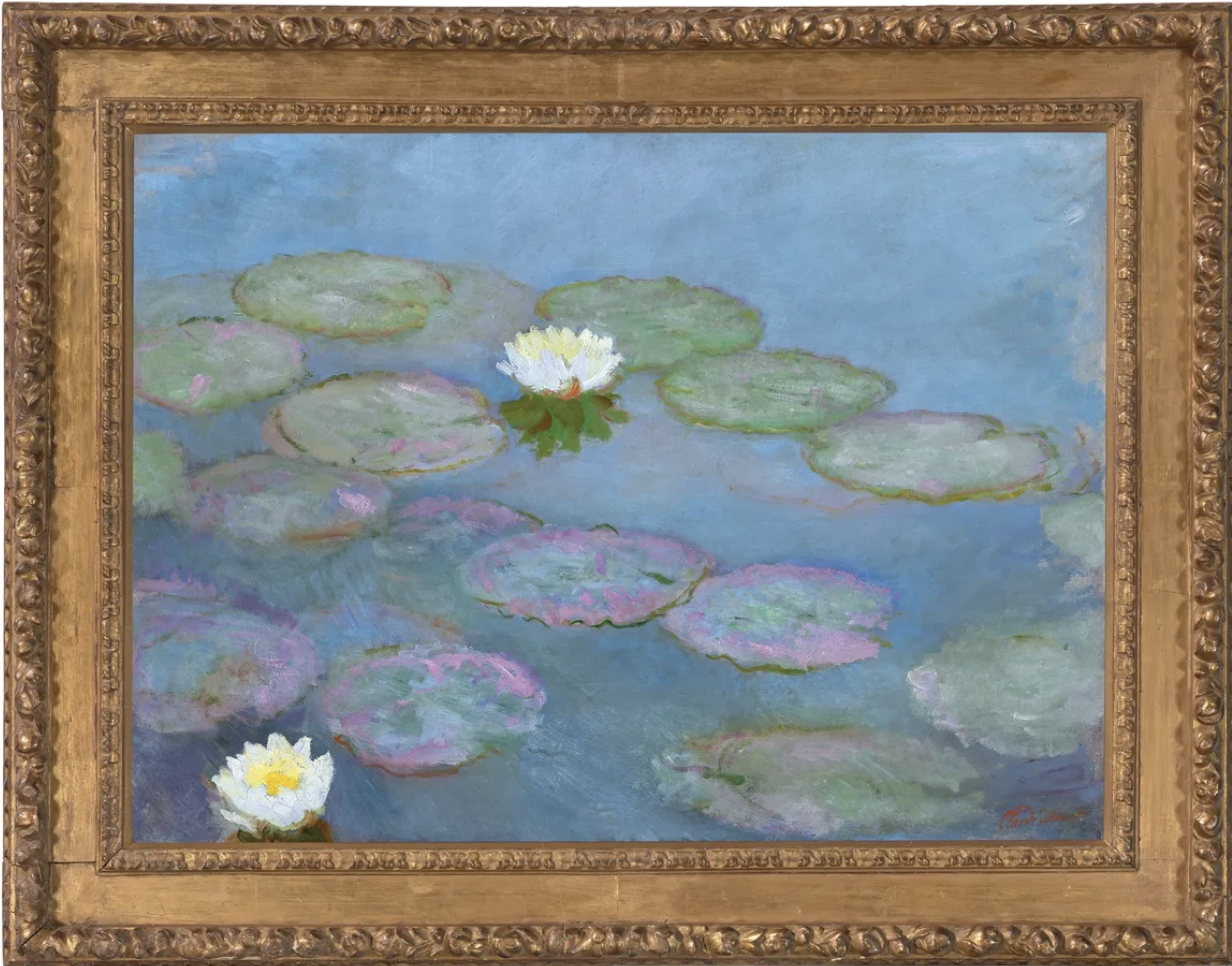
Claude Monet, Nymphéas (1897–99) Image: Courtesy Christie's Images Ltd 2024.
Christie's Hong Kong is set to host a landmark auction on September 26, marking the opening of its new Asia-Pacific headquarters in The Henderson building. The star of this inaugural sale will be one of Claude Monet's "Nymphéas" paintings, a water lily work created 125 years ago. This piece is particularly significant as it represents one of Monet's earliest forays into the water lily theme, which would later become his most famous subject.
This auction marks the first time this particular water lily painting has been offered for sale publicly. Christie's has placed a pre-sale estimate of HK$200 million to HK$280 million on the work, equivalent to approximately $25 million to $35 million.
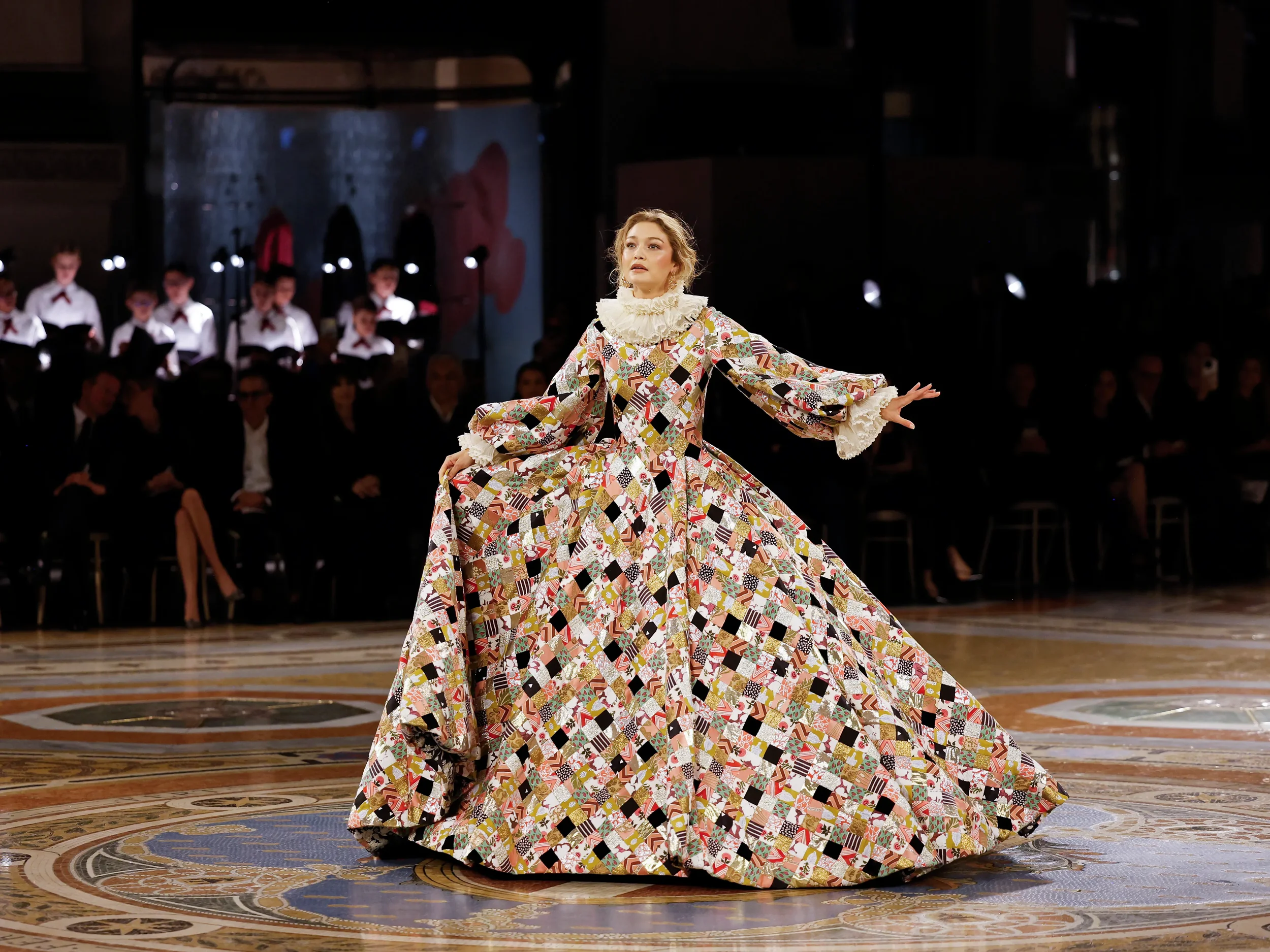

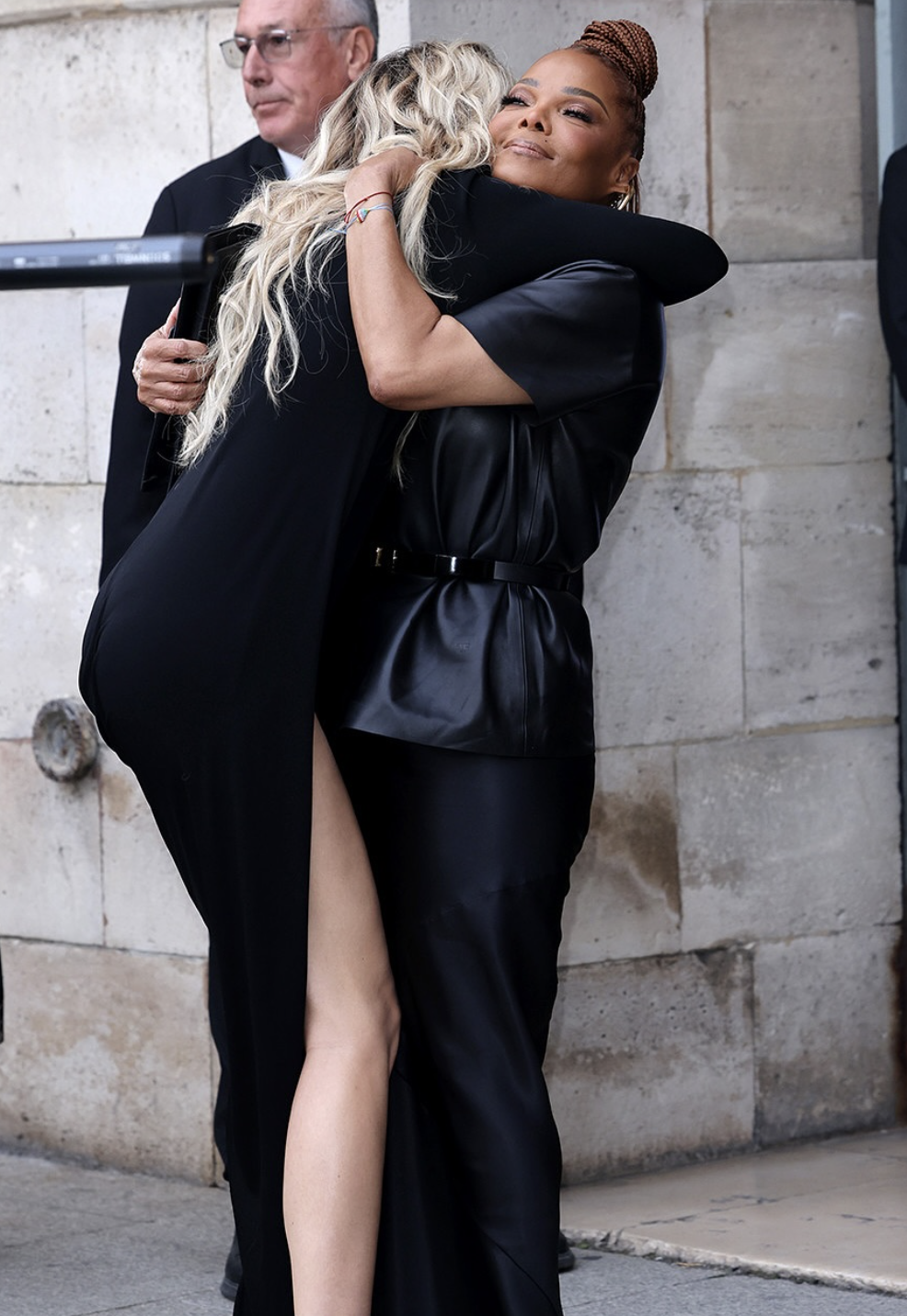
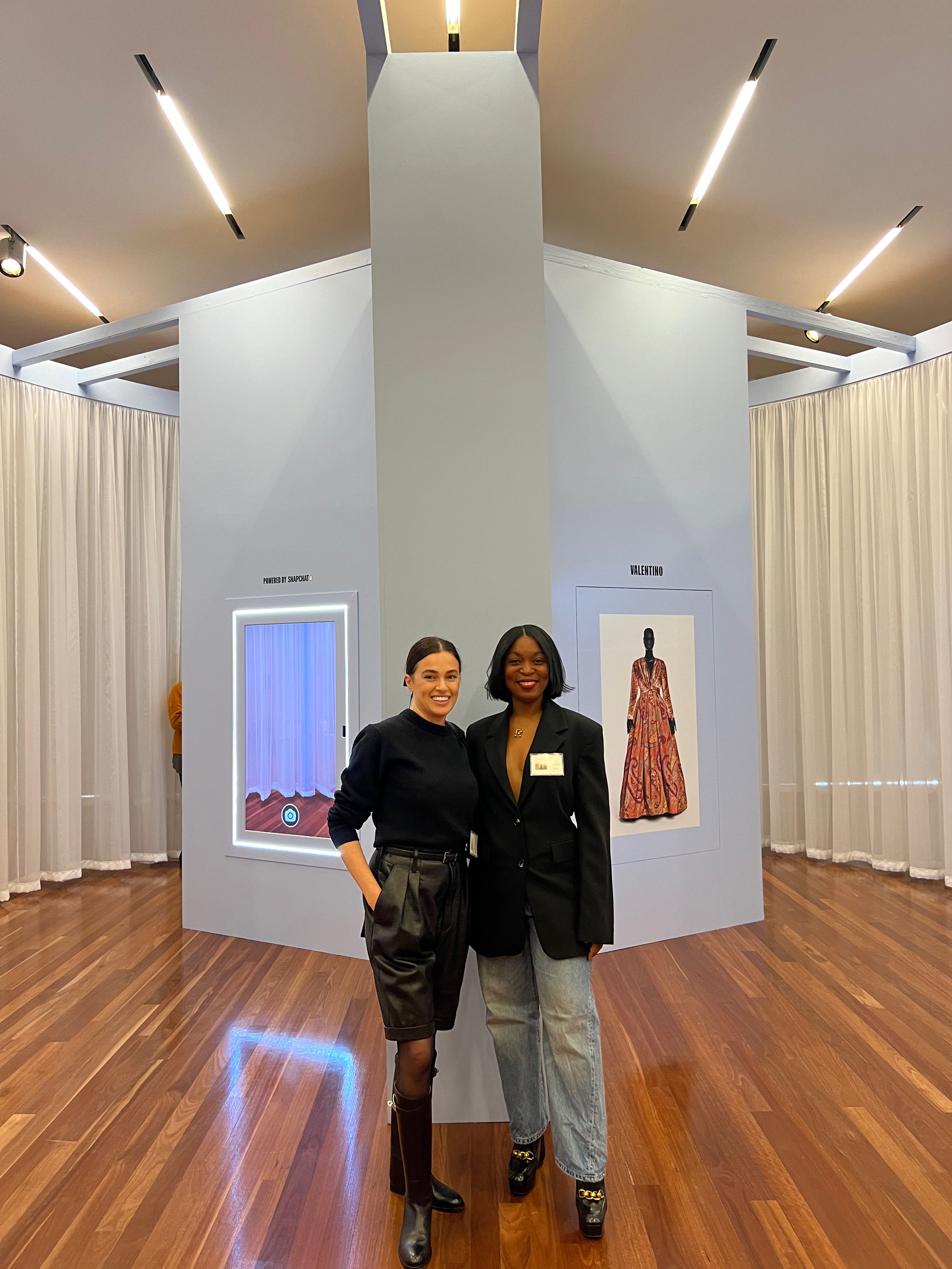
.The Fine Arts Museums of San Francisco and Snap Inc in "Fashioning San Francisco: A Century of Style."
.
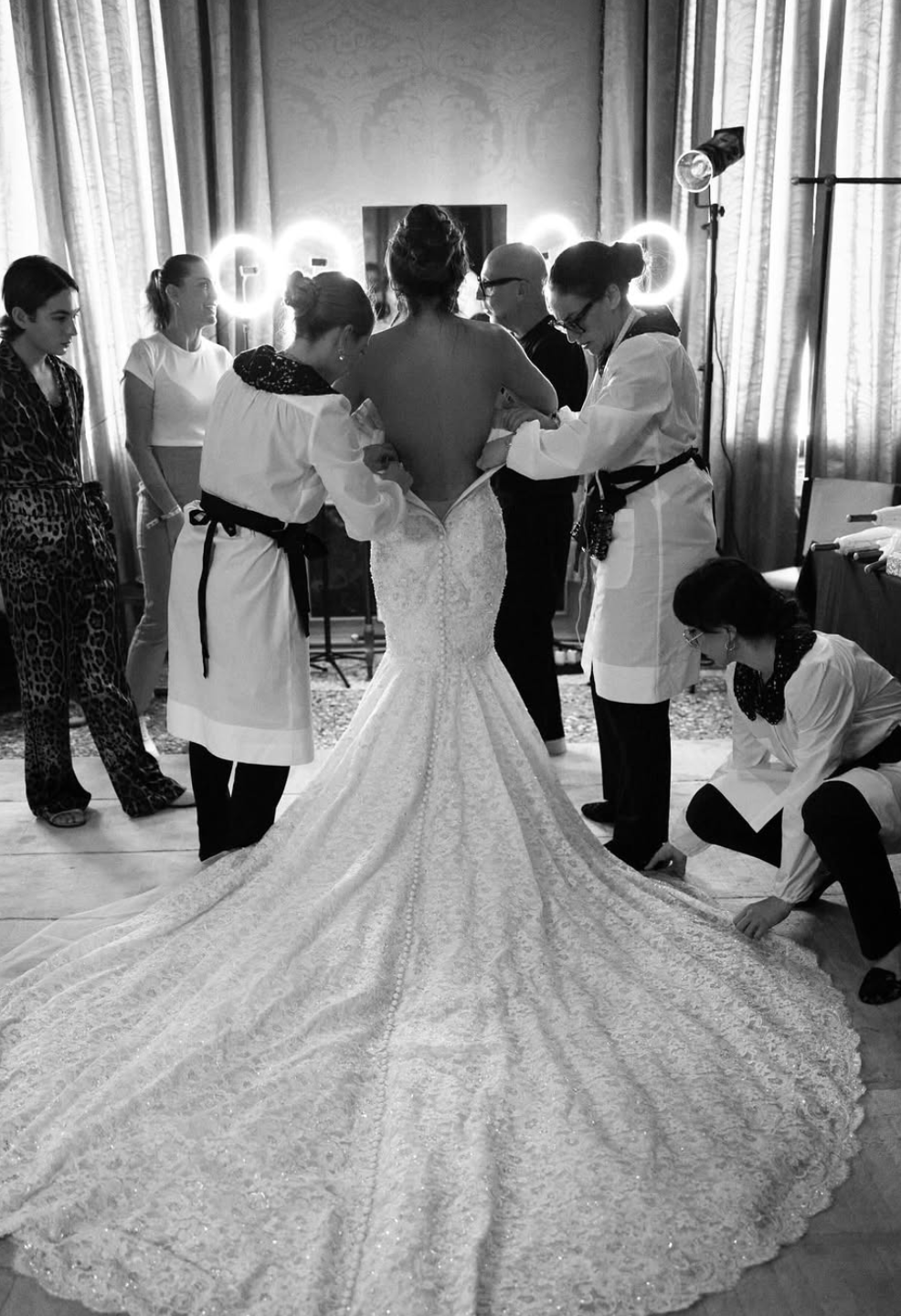
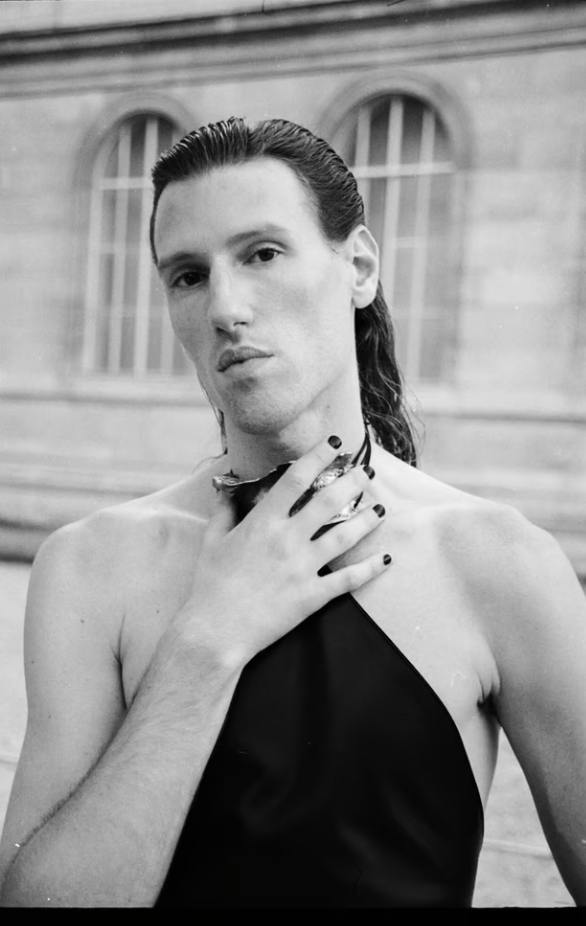
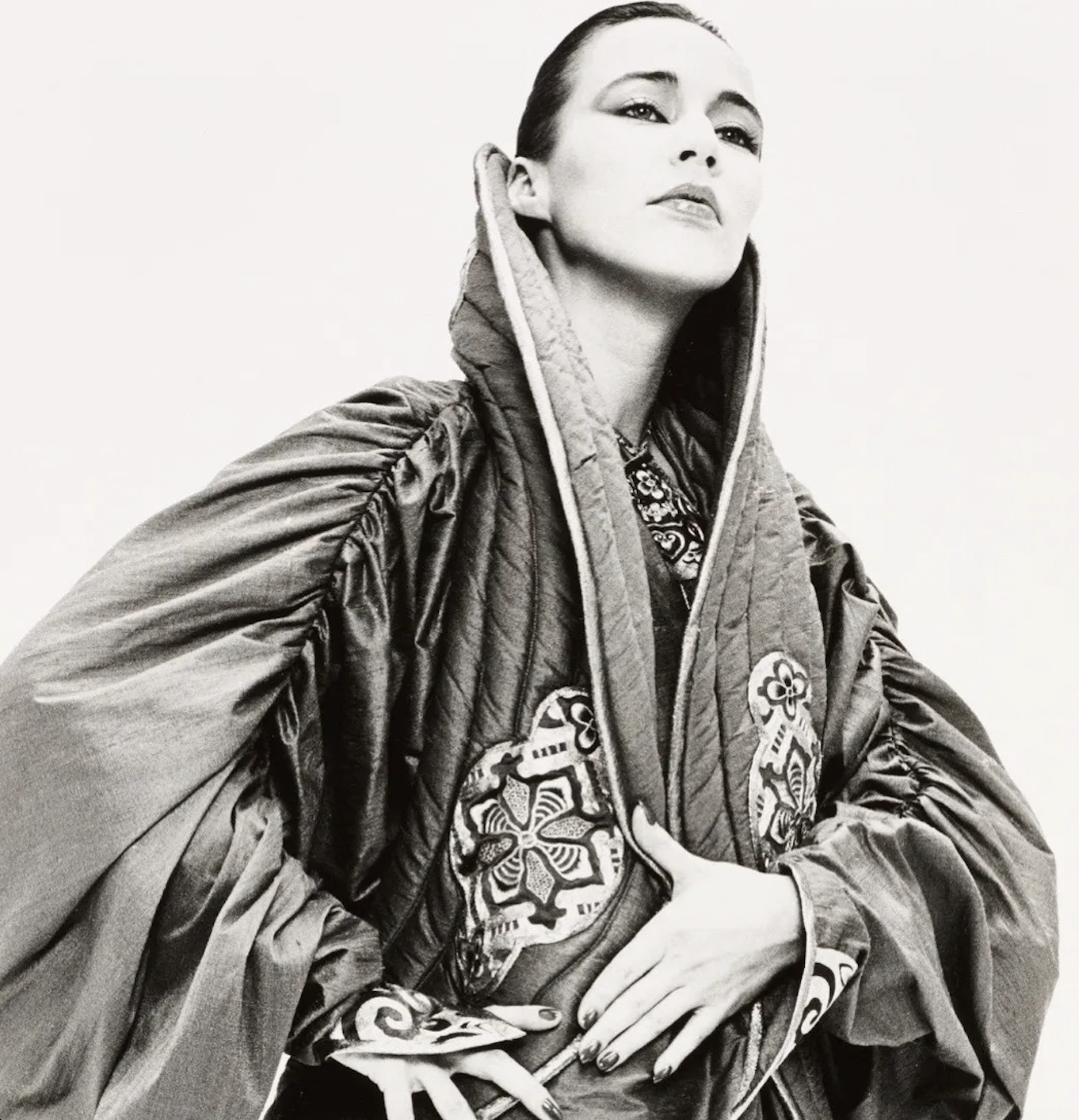
The Fine Arts Museums of San Francisco house one of the most notable collections of 20th- and 21st-century women's costumes in the United States. This collection includes exceptional gifts of high fashion and haute couture from philanthropic women in the Bay Area. "Fashioning San Francisco," the inaugural exhibition in over 35 years to showcase the richness of the costume collection, will delve into the ways in which women's fashions have shaped and been shaped by the city of San Francisco.
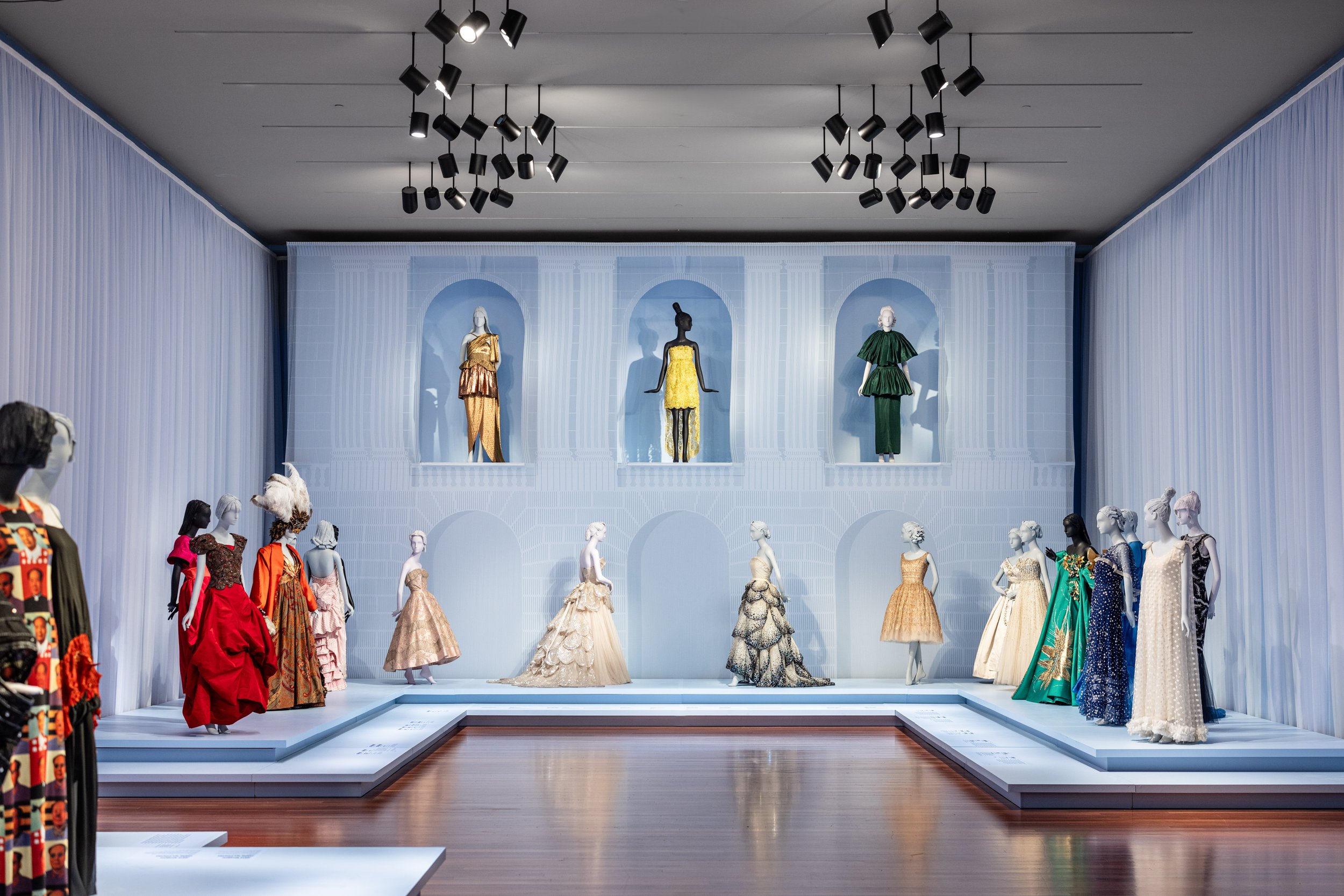
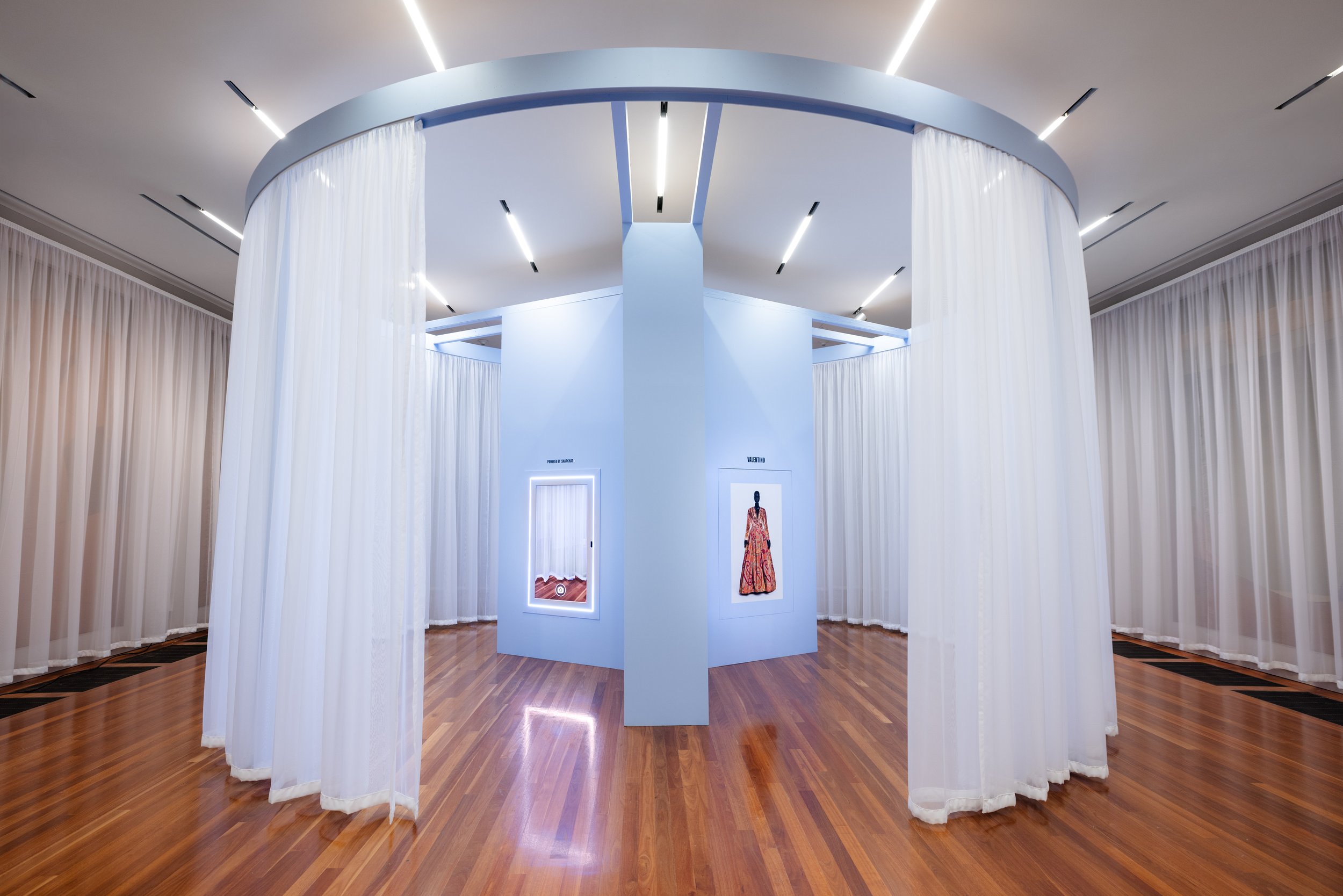
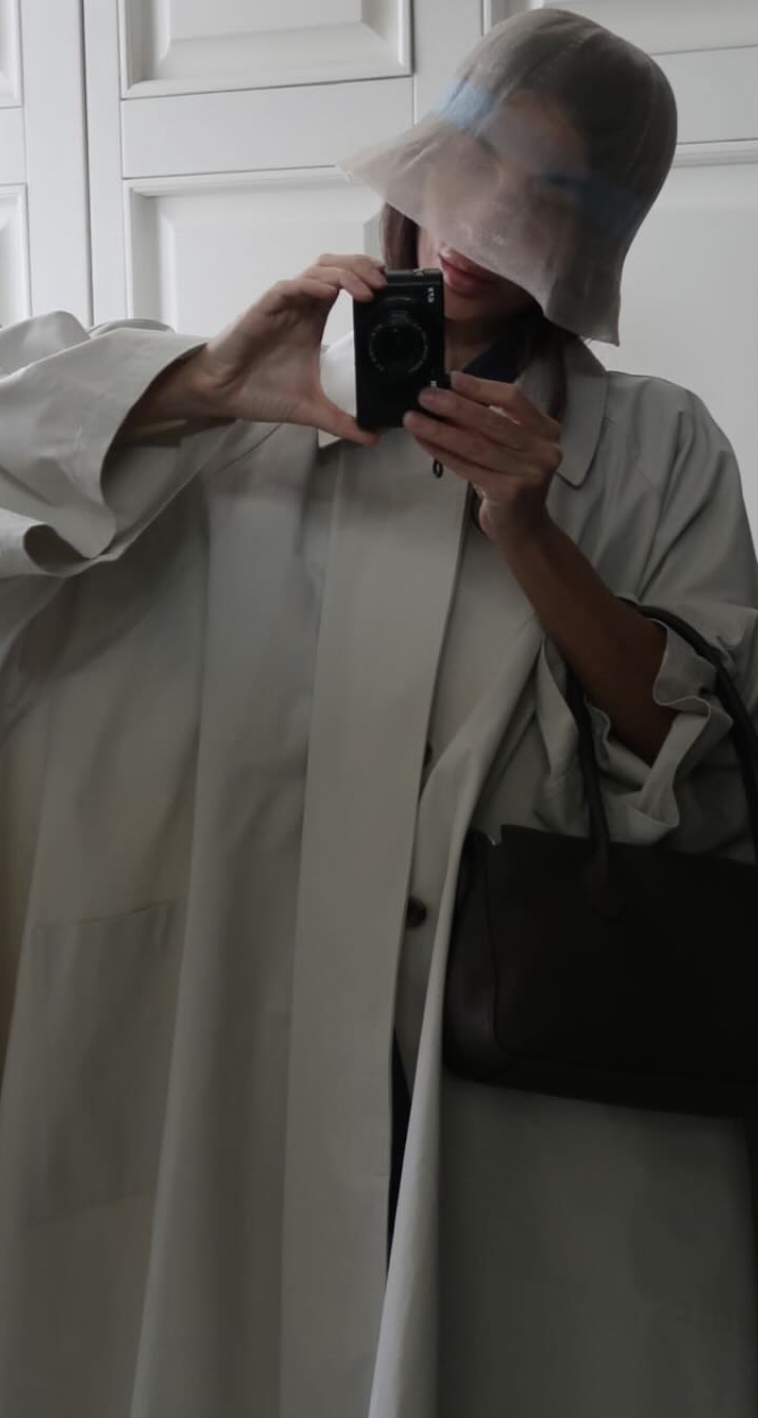
San Franciscans have a rich history of early adoption of experimental dress, actively supporting and donning garments designed by those with a penchant for the avant-garde. A section of the exhibition will highlight Japanese designers such as Rei Kawakubo, Issey Miyake, Junya Watanabe, and Yohji Yamamoto, showcasing how these avant-garde creatives redefined conventional fashion in the 20th and 21st centuries. "Fashioning San Francisco" will also delve into the contributions of Western designers who drew inspiration from the aesthetics of Asian, African, and other international cultures, addressing the contemporary discourse on cultural appropriation.
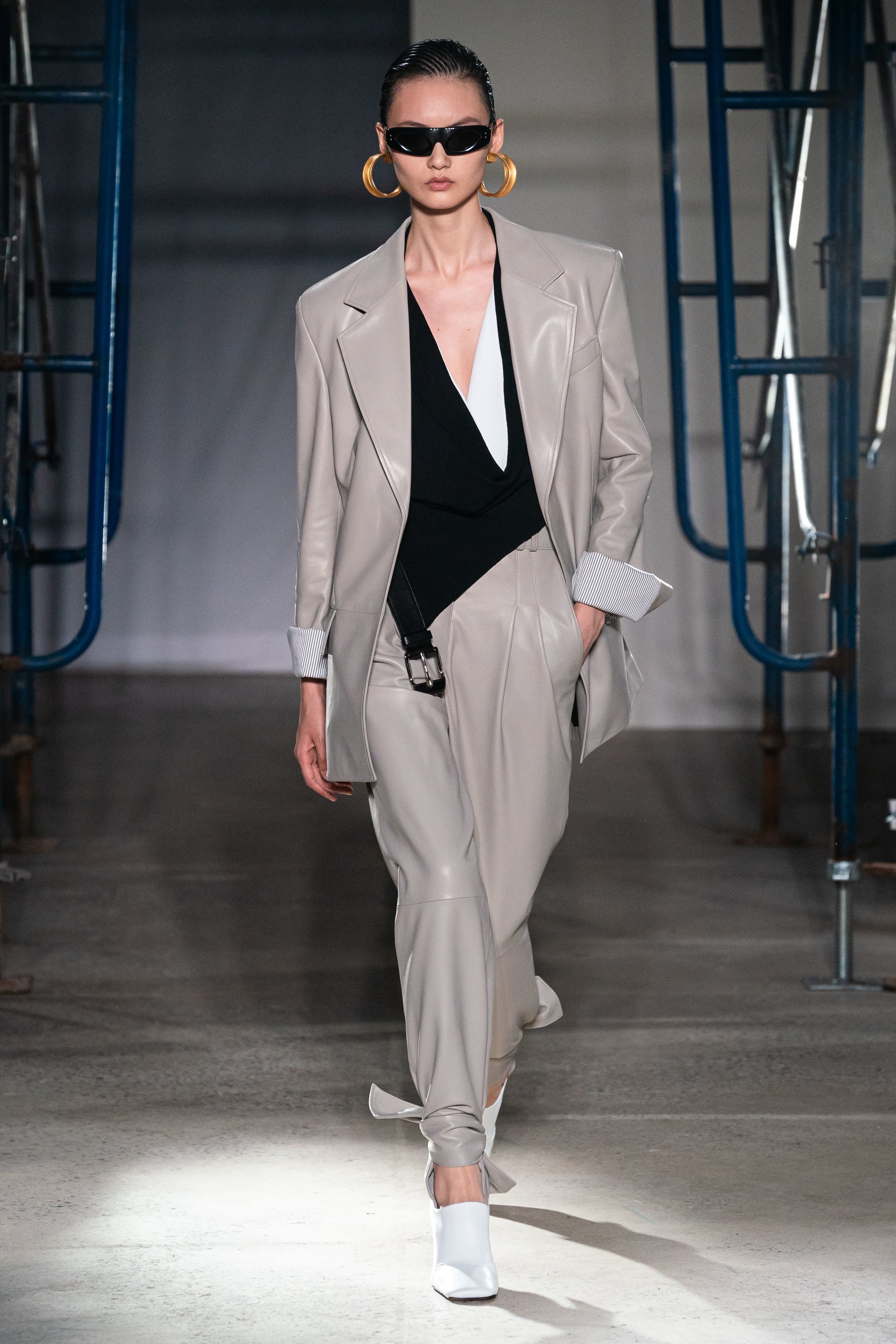
In paying tribute to San Francisco, "Fashioning San Francisco" will celebrate the women civic leaders, business owners, and public influencers of the Bay Area. The exhibition will spotlight their "power suits," symbolic of their instrumental role in shaping and constructing the city. Reflecting the distinct climate, terrain, and diverse aesthetics of San Francisco, these suits portray the city as a dynamic and empowering environment for confident women.





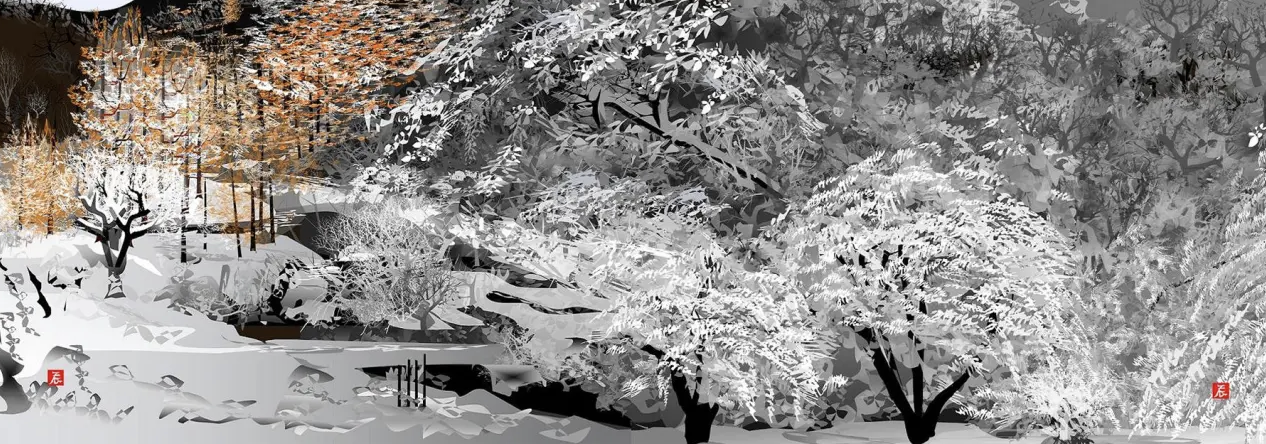
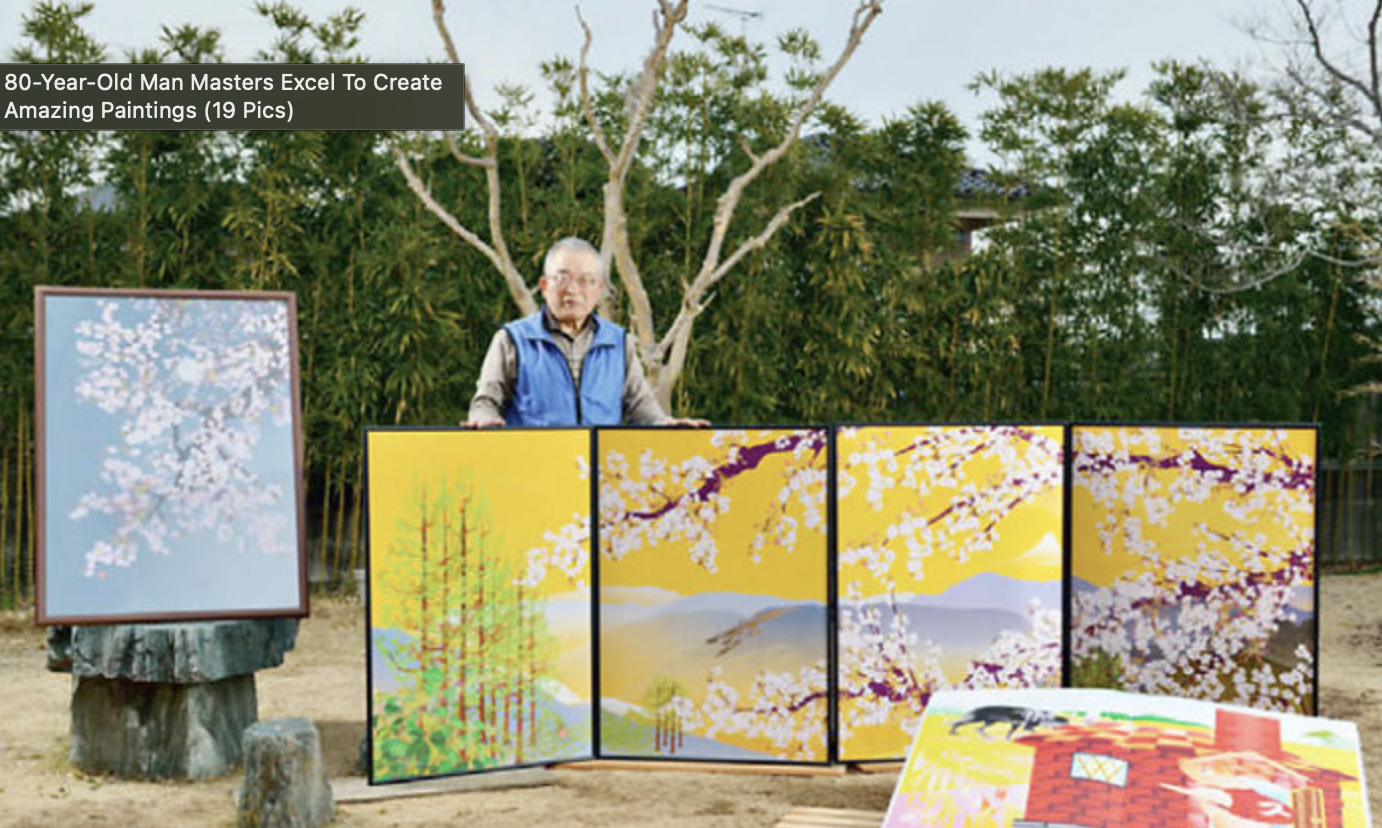
Using Microsoft Excel, Tatsuo Horiuchi, a Japanese artist, has depicted the intricate details of mountains, cherry blossoms, and dense forests.
.
Using Microsoft Excel, 77 year Tatsuo Horiuchi, a Japanese artist, is creating delicate intricacies of mountains, cherry blossoms, and dense forests. The illustrator rejected investing in costly painting supplies or even opting for a basic drawing program on his computer. Instead he prefers Excel over Microsoft Paint, citing "it more functions and easier usability." How's that for creativity.





San Francisco Fall Show 2023
An exquisite San Francisco Fall Show Opening Night Gala took place at the Festival Pavilion of the Fort Mason Center for Arts & Culture on October 11th.
This year's show invites to celebrate La Dolce Vita, the epitome of the Italian "good life." It's a call to bask in the pure pleasure of appreciating and collecting art, antiques, and design. From luminaries like Botticelli to Bertoia, Fellini to Fornasetti, Schiaparelli to Sottsass, La Dolce Vita embodies poetic beauty, awe-inspiring art, groundbreaking design, vibrant colors, and refined materials. Andiamo!


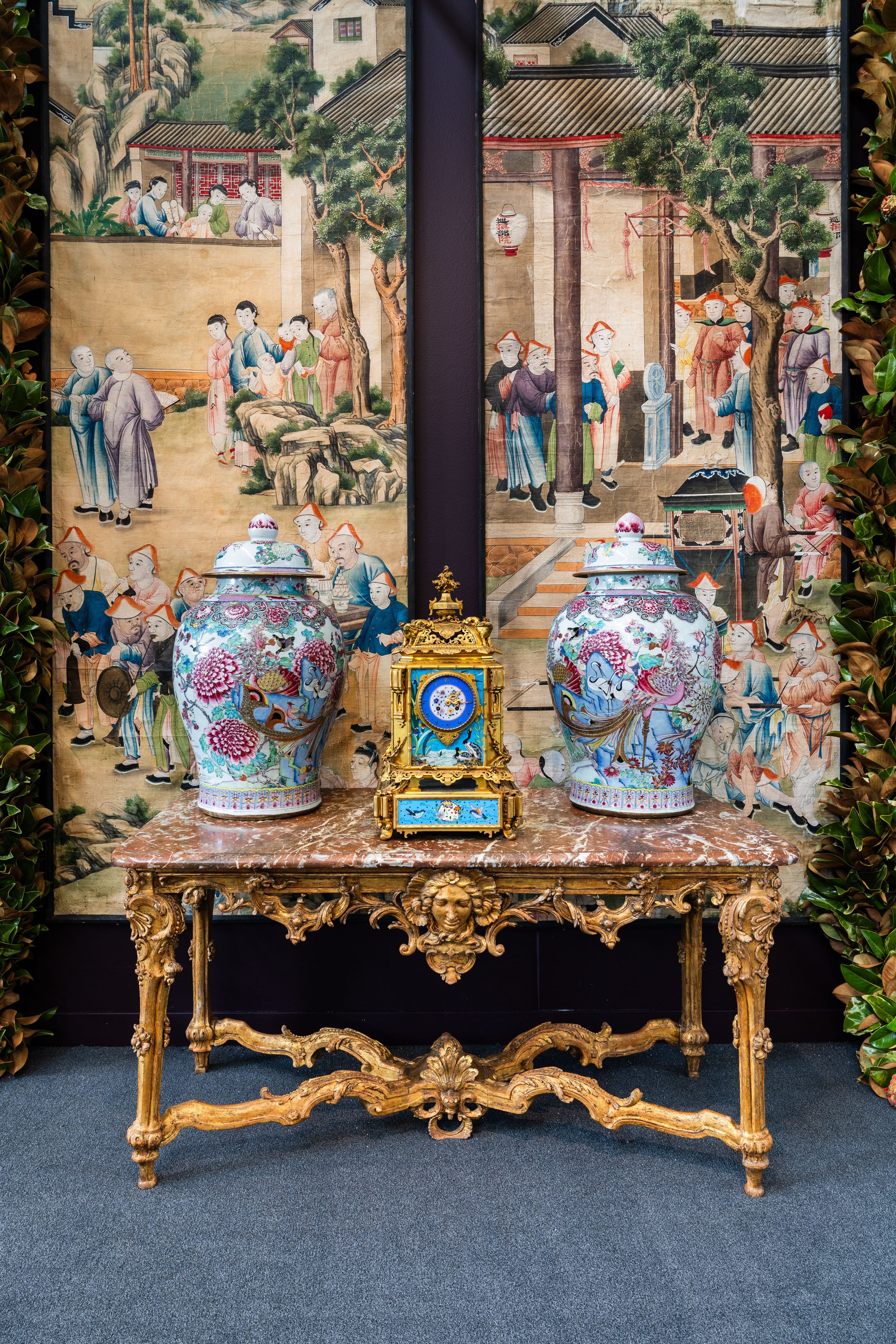


The 41st edition of the Show shows over forty international dealers, each offering an extraordinary array of fine and decorative arts spanning diverse styles and eras, encompassing American, English, Continental, and Asian furniture, decorative objects, paintings, prints, photographs, books, gold, silver, precious metals, jewelry, rugs, textiles, and ceramics. Dealers present pieces ranging from antiquity to the present day. The Show will features a popular series of book signings and lectures, with confirmed speakers including luminaries like Nina Campbell, Newell Turner, Jean Liu, Miguel Flores-Vianna, Brigette Romanek, Michael Diaz-Griffith, Noz Nozawa, William Li, Alfredo Paredes, and many more.
The 2023 Show's Honorary Chair is none other than Lauren Santo Domingo, Co-Founder and Chief Brand Officer at Moda Operandi and Artistic Director of the Home Collection at Tiffany & Co.
October 14 – 17, 2021 10:30 a.m. – 7:00 p.m., Thursday – Saturday 12:00 p.m. – 5:00 p.m., Sunday











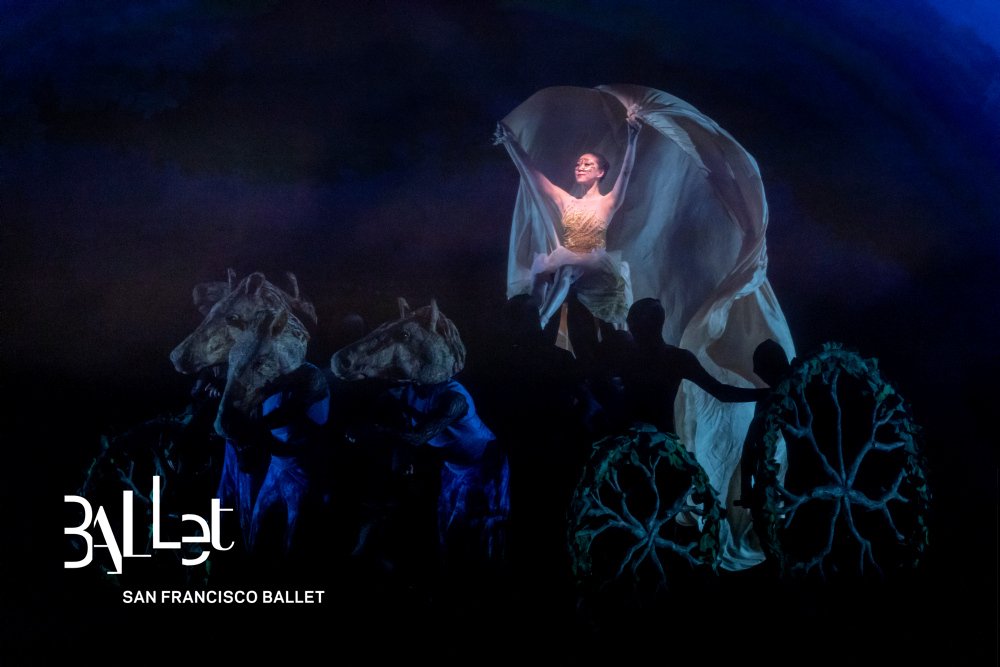
CHRISTOPHER WHEELDON’S CINDERELLA RETURNS TO SAN FRANCISCO BALLET
San Francisco Ballet's 90th Anniversary Season is featuring Christopher Wheeldon's adaptation of Cinderella©, with Sergei Prokofiev's score, opened on March 31st at the War Memorial Opera House and continuing until April 8th. Wheeldon's Cinderella takes a captivating twist on the well-known fairy tale, with the protagonist controlling her own fate after the loss of her mother, rather than relying on a fairy godmother or the stroke of midnight.
The production, inspired by the darker Brothers Grimm version of the story, boasts set and costume designs by Tony Award-winning designer Julian Crouch and San Francisco-native puppeteer Basil Twist. The dazzling end of Act I, which The New York Times describes as a "triumph of fantasy," is directed by Twist and features a tree growing from Cinderella's tears. With an enormous 197 roles and 370 costumes, including Cinderella's gold gown detailed with computer-printed feathers, the production is a co-production with Dutch National Ballet, and it premiered in the United States with SF Ballet in 2013 before touring the world.

Casting for Cinderella includes Soloist Isabella DeVivo in her role debut as Cinderella, while Principal Dancer Max Cauthorn also makes his role debut as Prince Guillaume. Additionally, Principal Dancer Isaac Hernández performs as Prince Guillaume for the first time with SF Ballet, having previously played the role at English National Ballet in 2019. Cinderella is Wheeldon's only full-length ballet for SF Ballet and one of the 15 ballets he has choreographed for the Company. The production was last performed at SF Ballet in 2020.
CALENDAR: Tuesday, April 4, 2023 at 7:30 pm Wednesday, April 5, 2023 at 7:30 pm Thursday, April 6, 2023 at 7:30 pm Friday, April 7, 2023 at 8 pm Saturday, April 8, 2023 at 2 and 8 pm






















A Classic Holiday Tradition In San Francisco - Helgi Tomasson's Nutcracker
Snow in San Francisco?! Twelve times a week as San Francisco Ballet began thirty-three performances of Helgi Tomasson’s Nutcracker. A Bay Area tradition of the past eighteen years. Across the cast are 110 SF Ballet School children slowly returning to pre-pandemic shows.
“This is a most joyous return to the stage for our students, many of whom have missed their favorite holiday tradition over the past three years,” says SF Ballet School Director Patrick Armand. “Nutcracker offers an invaluable opportunity to prepare a dancer for their career, to instill professional values and rigor in a supportive and fun environment—we are thrilled to be back.” This year Tomasson’s Nutcracker is set in San Francisco in 1915 during the Panama-Pacific International Exposition. Production features designs by Tony Award winners Michael Yeargan (scenic) and Martin Pakledinaz (costume), lighting designs by James F. Ingalls, and projection design by Wendall K. Harrington, and an iconic blizzard of 150 pounds of snow billowing from the fly space.


Fun Facts
Nutcracker features 83 Company dancers and 110 SF Ballet School students in 183 breathtaking costumes, the largest production in SF Ballet’s 90-year history.
150 pounds of “snow” are used for each performance, requiring at least 12 stagehands to deploy. The snow is also recycled from year to year, which means that some of it is from 2004, the year of the premiere.
Nutcracker uses 45 stagehands while a typical triple-bill performance uses approximately 20. The houses on the street drop in Act 1 are based on San Francisco’s iconic “Painted Ladies.”
San Francisco Ballet's Nutcracker continues through Tuesday, December 27th at the War Memorial Opera House, 301 Van Ness Avenue, San Francisco, CA. For tickets and additional information, visit www.sfballet.org or call (415) 865-2000, M-F 10am-4pm.






Rare and Unique Christmas Ornaments by Artist Rena Leinov
.
Photography by occtop.us
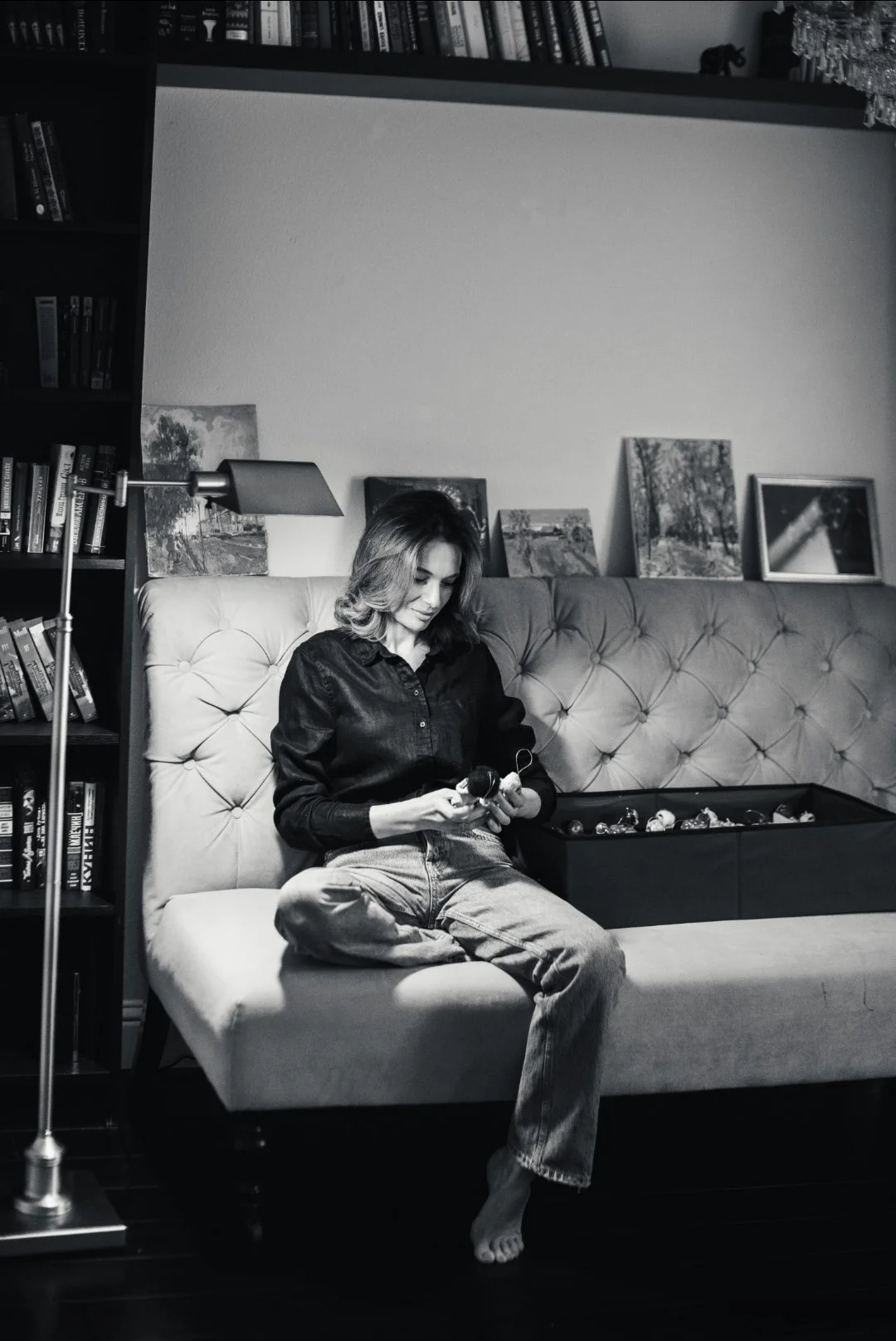
Christmas tree ornaments are significant to families during merry day. They allow families to reflect on milestones and pastimes. Decorating Christmas trees is a popular holiday tradition across the globe. Every year, most families prioritize gathering together, sharing a meal, and making memories. They also decorate Christmas trees with glass ornaments, tinsel, lights, ribbons, and numerous other ornaments.
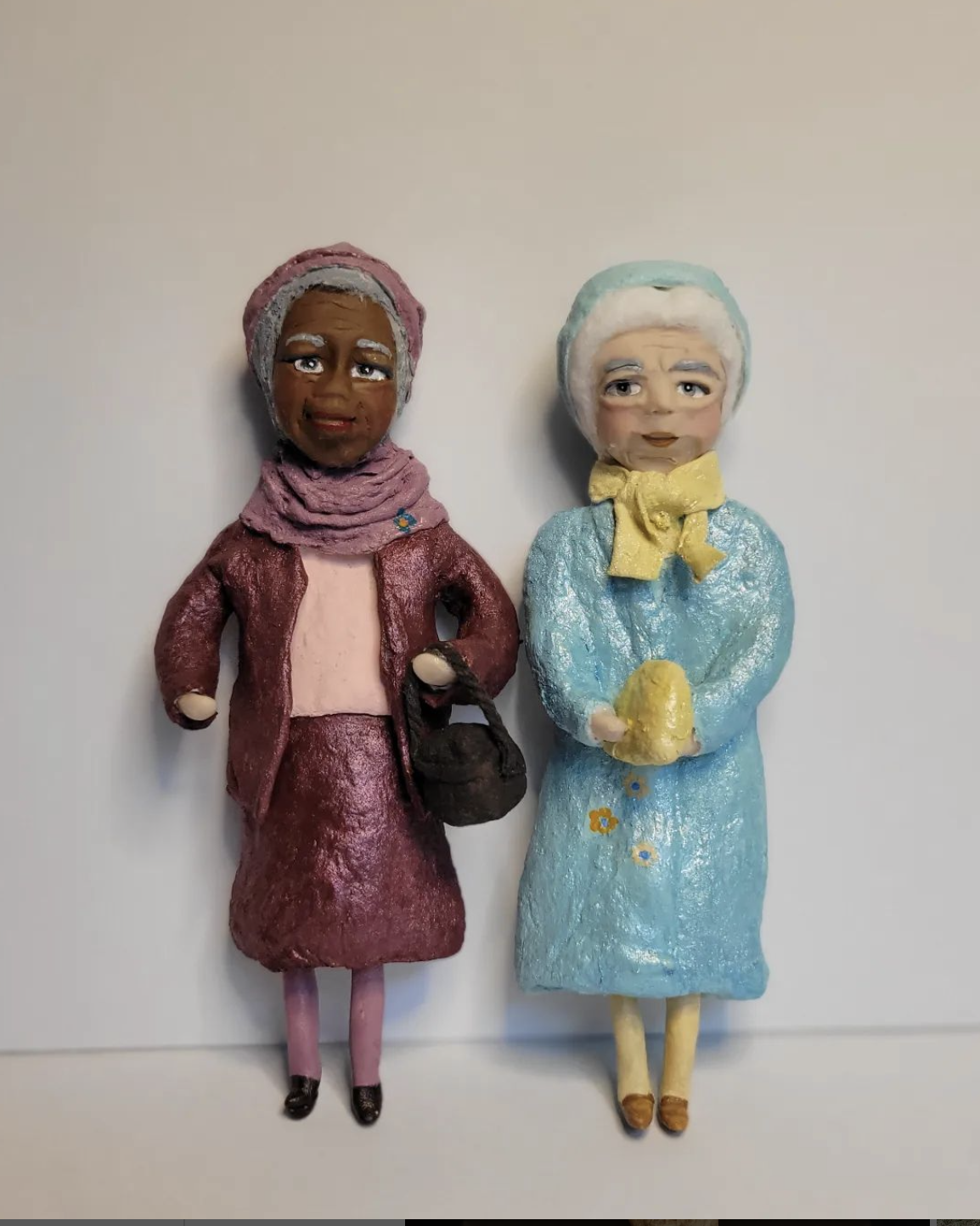
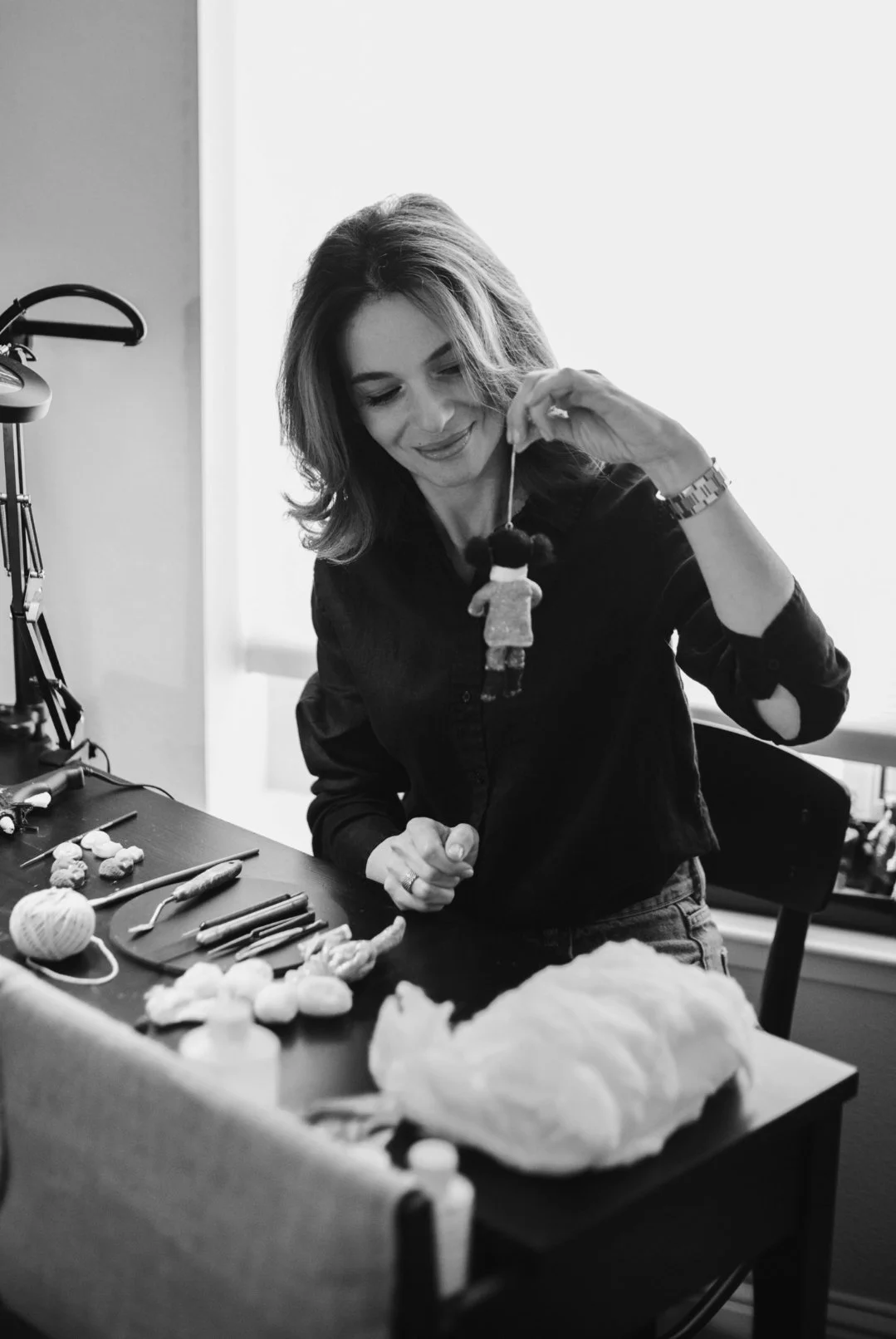
This year artist Rena Leinov introduces TheGulliverandCo collection of beautiful vintage, unique holiday ornaments handmade using spun cotton.


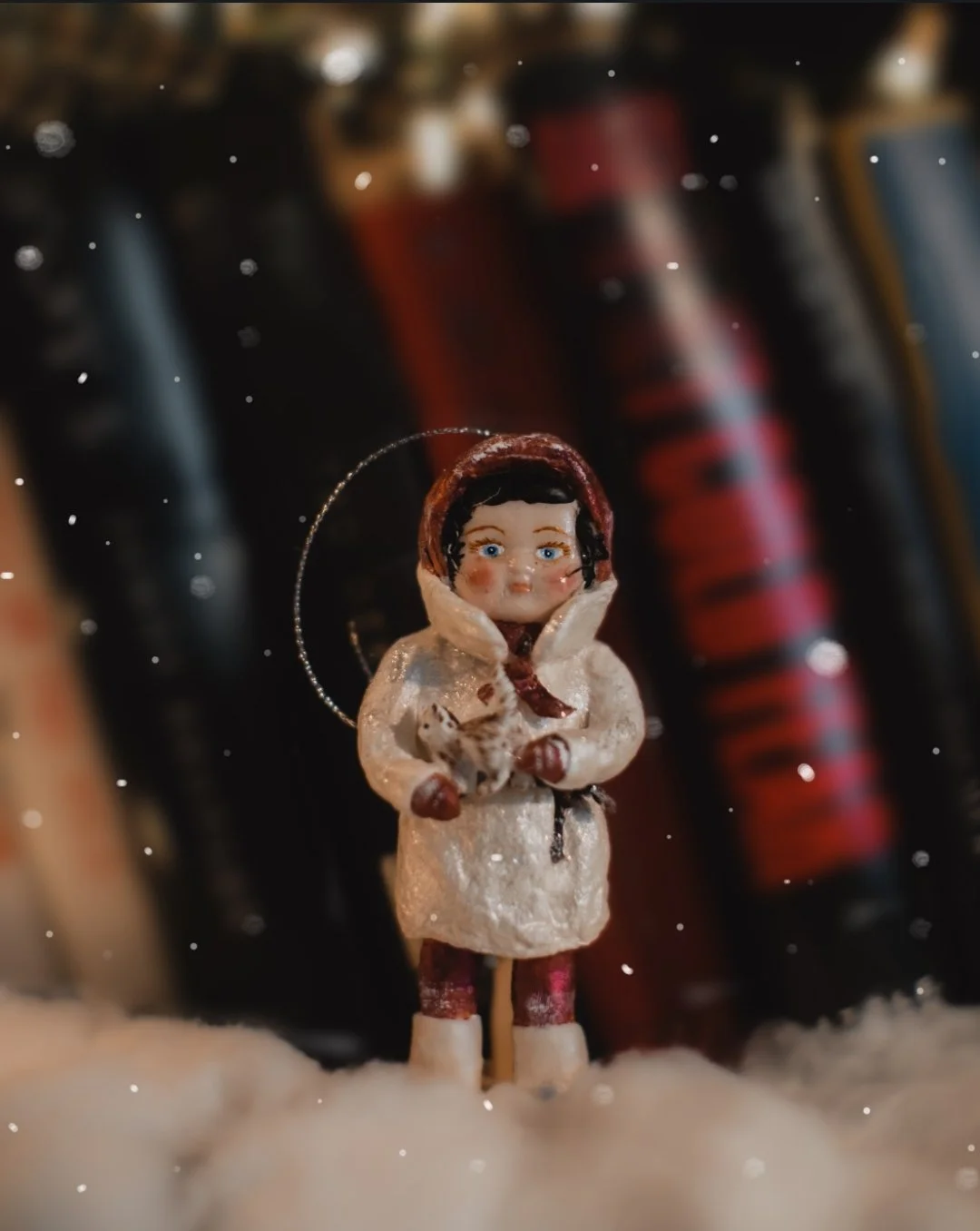
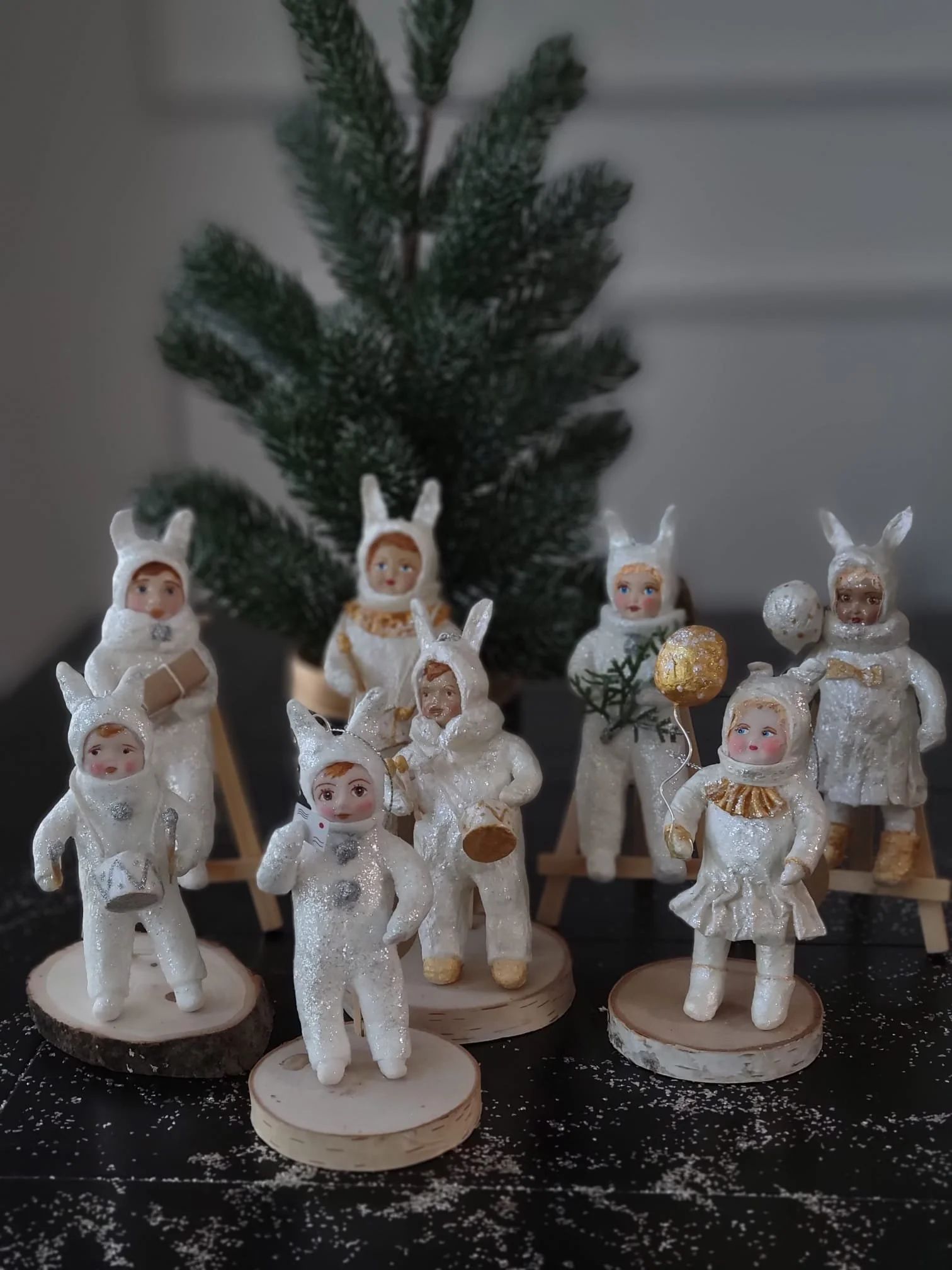

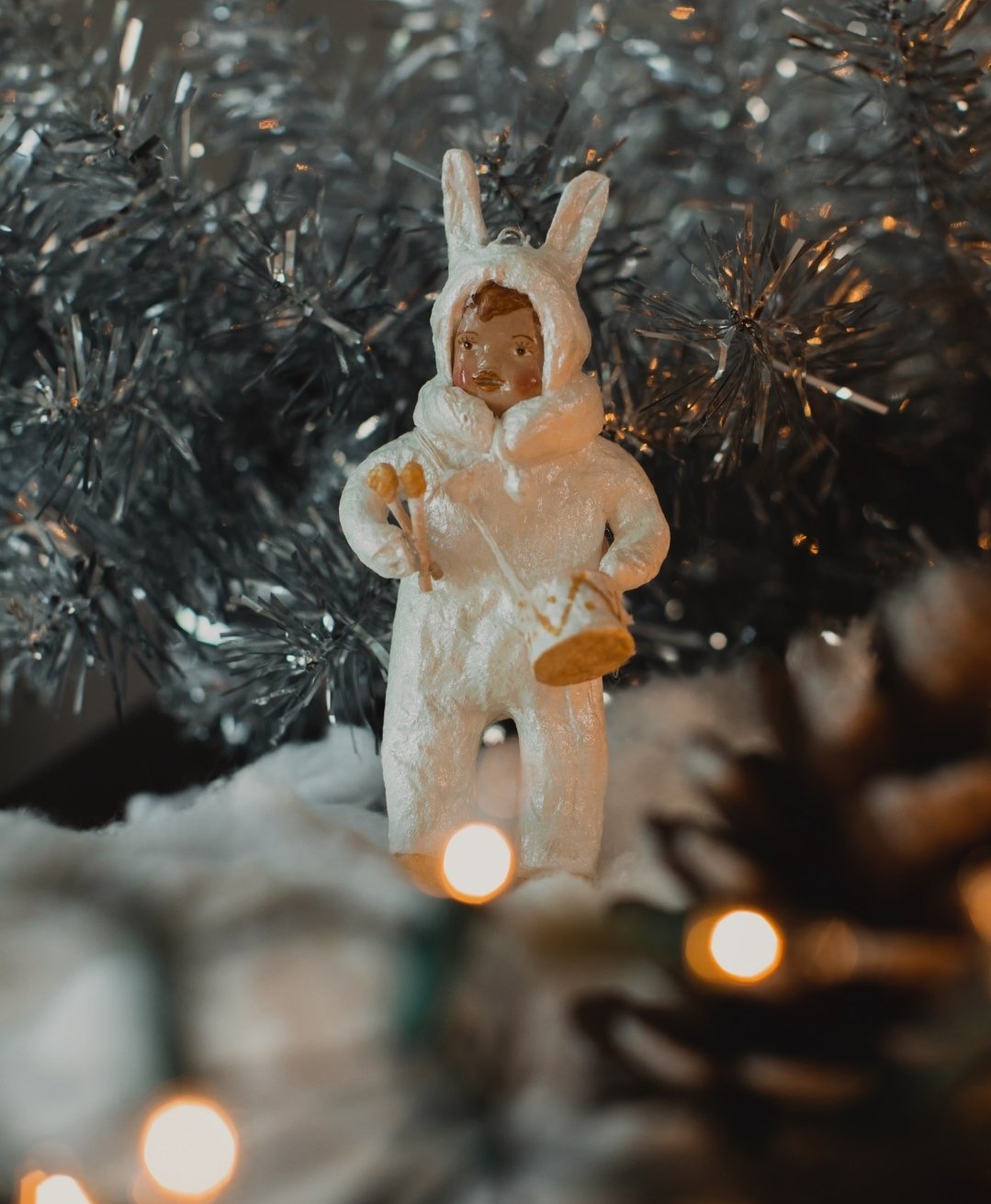

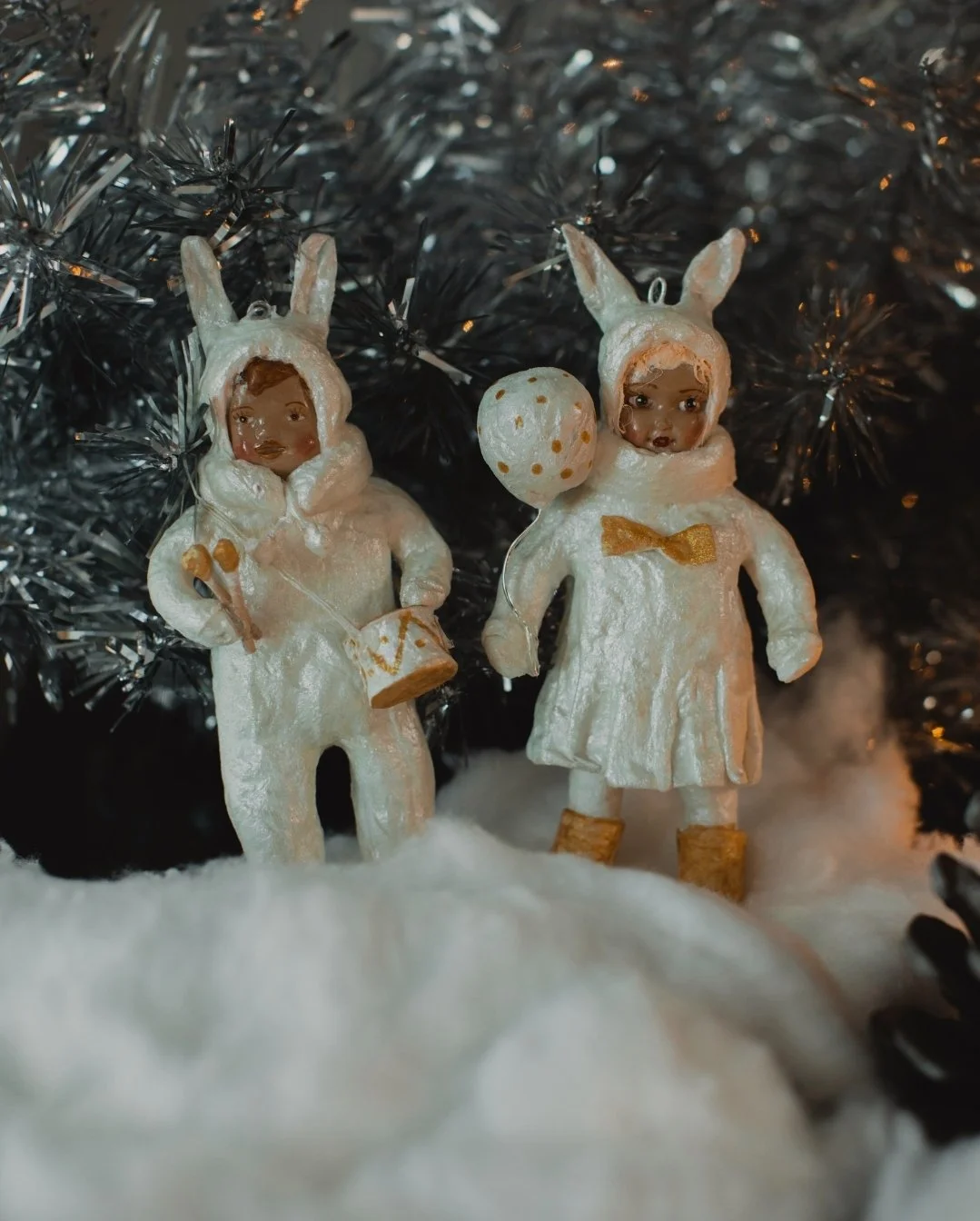
Made from organic cotton and cornstarch glue, these ornaments are light yet resistant. Hand-painted with acrylic and watercolor paints. Mica powder - a natural stone mineral - is added for that extra sparkle. Each piece made is one of a kind with unique character. Each collectible comes bundled up for the winter and ready in a box to keep or gift to your loved ones. When we asked Rena what is the most challenging part of making these ornaments, she said,
"The most challenging part of creating a figure is painting the face. Handpainting is what gives my figures personality, adding a small layer of lifelikeness and realism to each figure with distinctive touches."
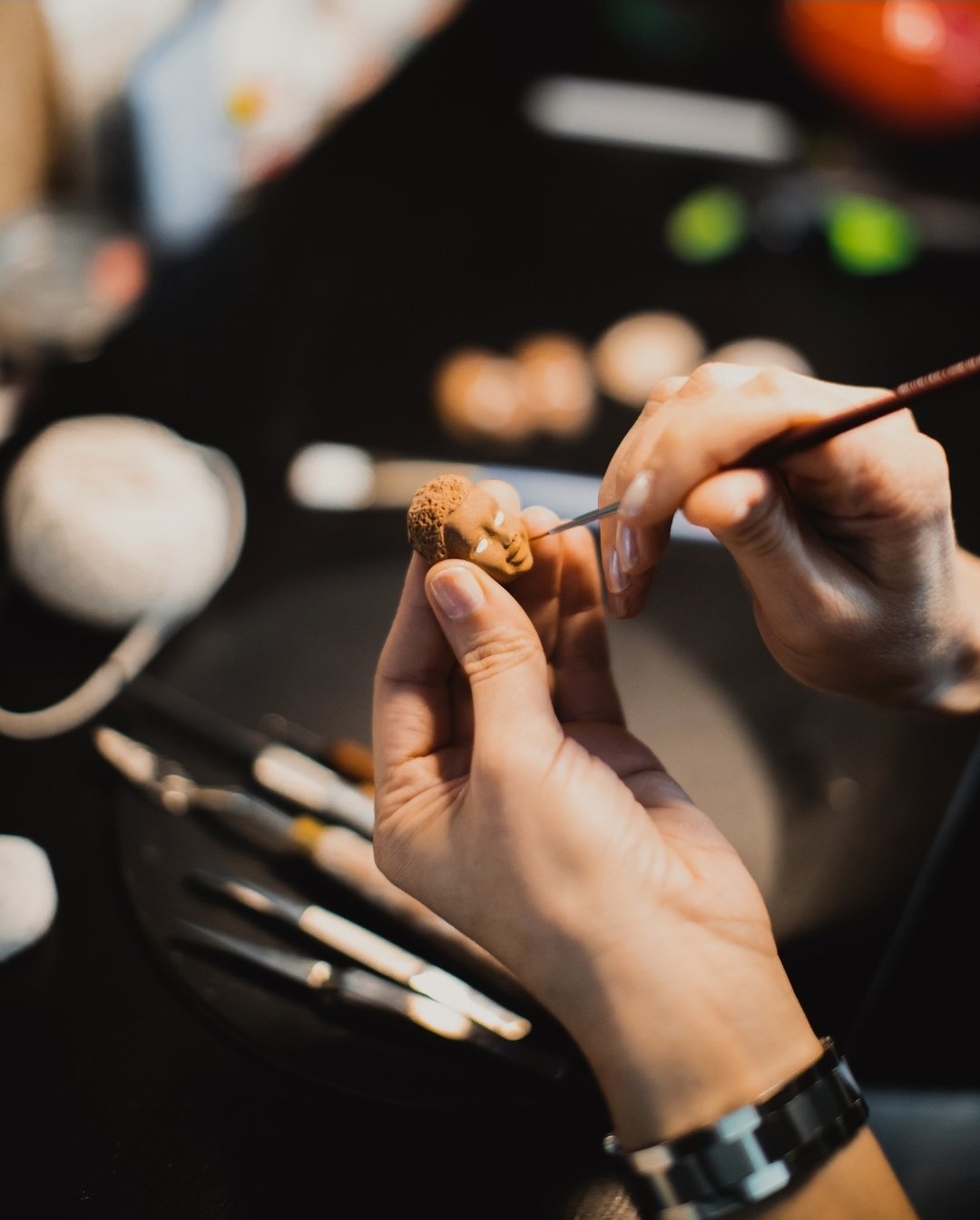
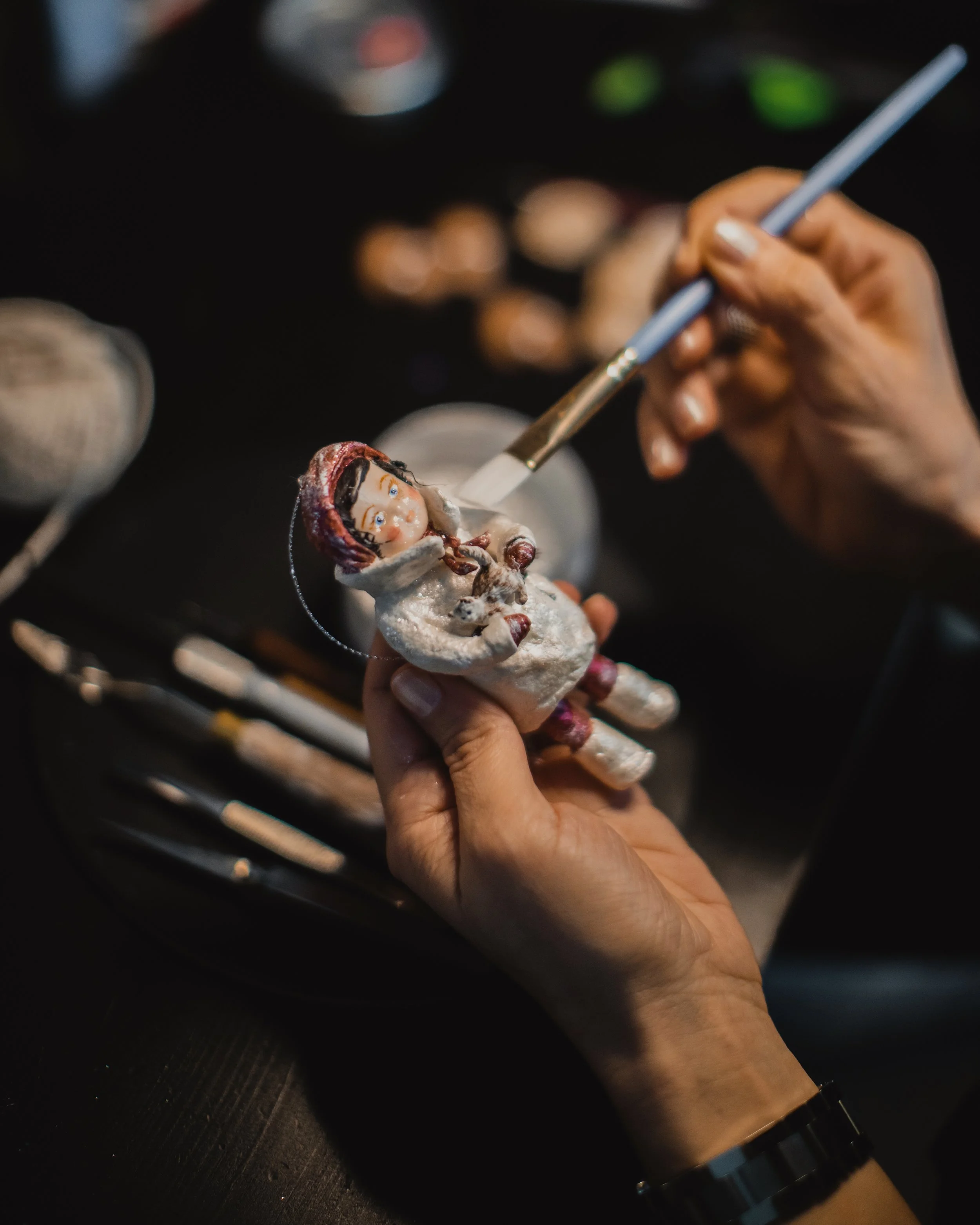
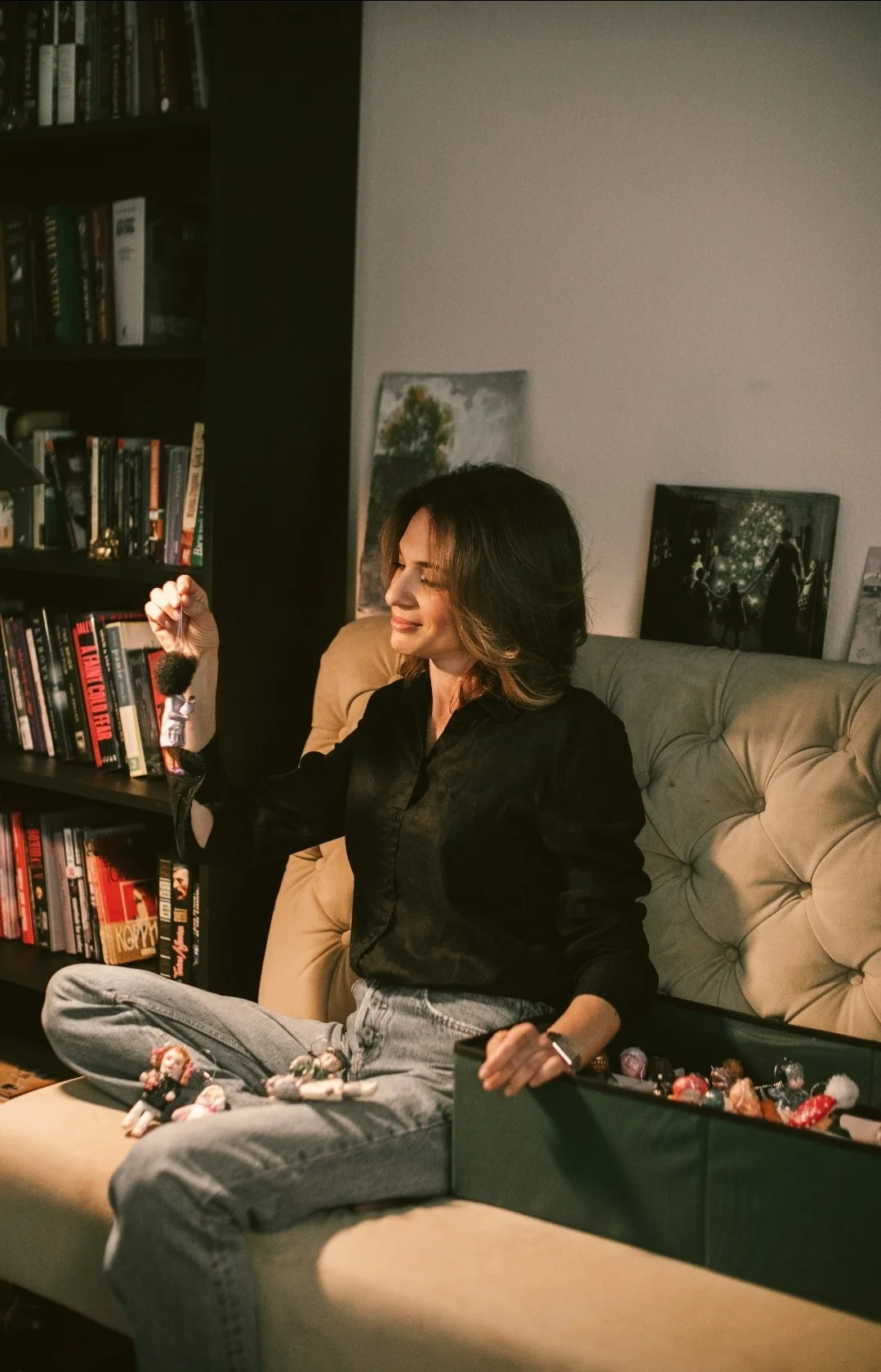
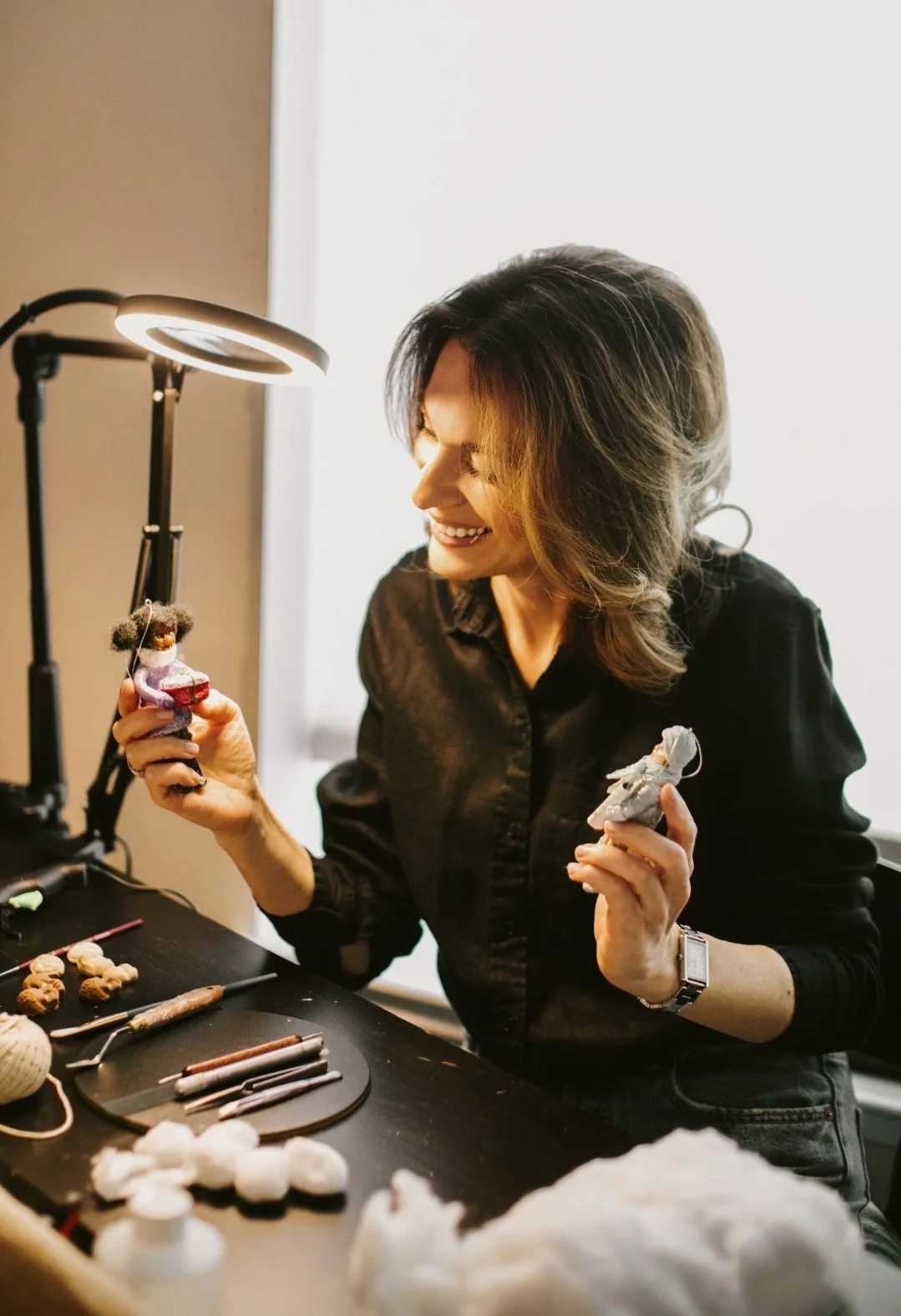

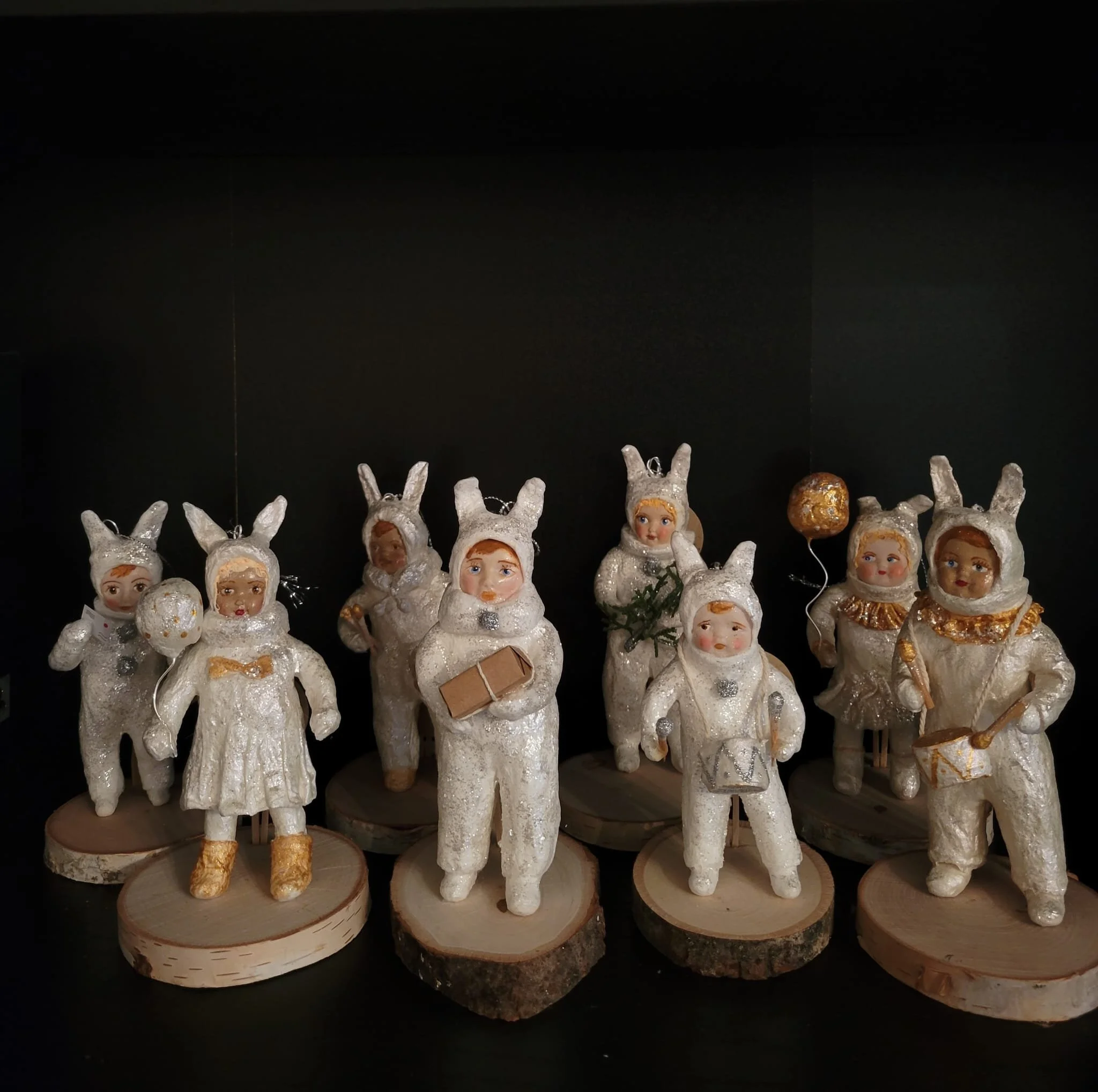
This year Leinov's ornaments will be gracing the shelves at Neiman Marcus in San Francisco, Bloomingdale's San Francisco and Gump's. But that's not it. The artist was invited to create The Ghost of Jacob Marley ornament for the 2022 Christmas Carol production at American Conservatory Theater, in memory of actor Ken Ruta who embodied the role of The Ghost of Jacob Marley for 14 consecutive seasons, but died this September due to post Covid complications.
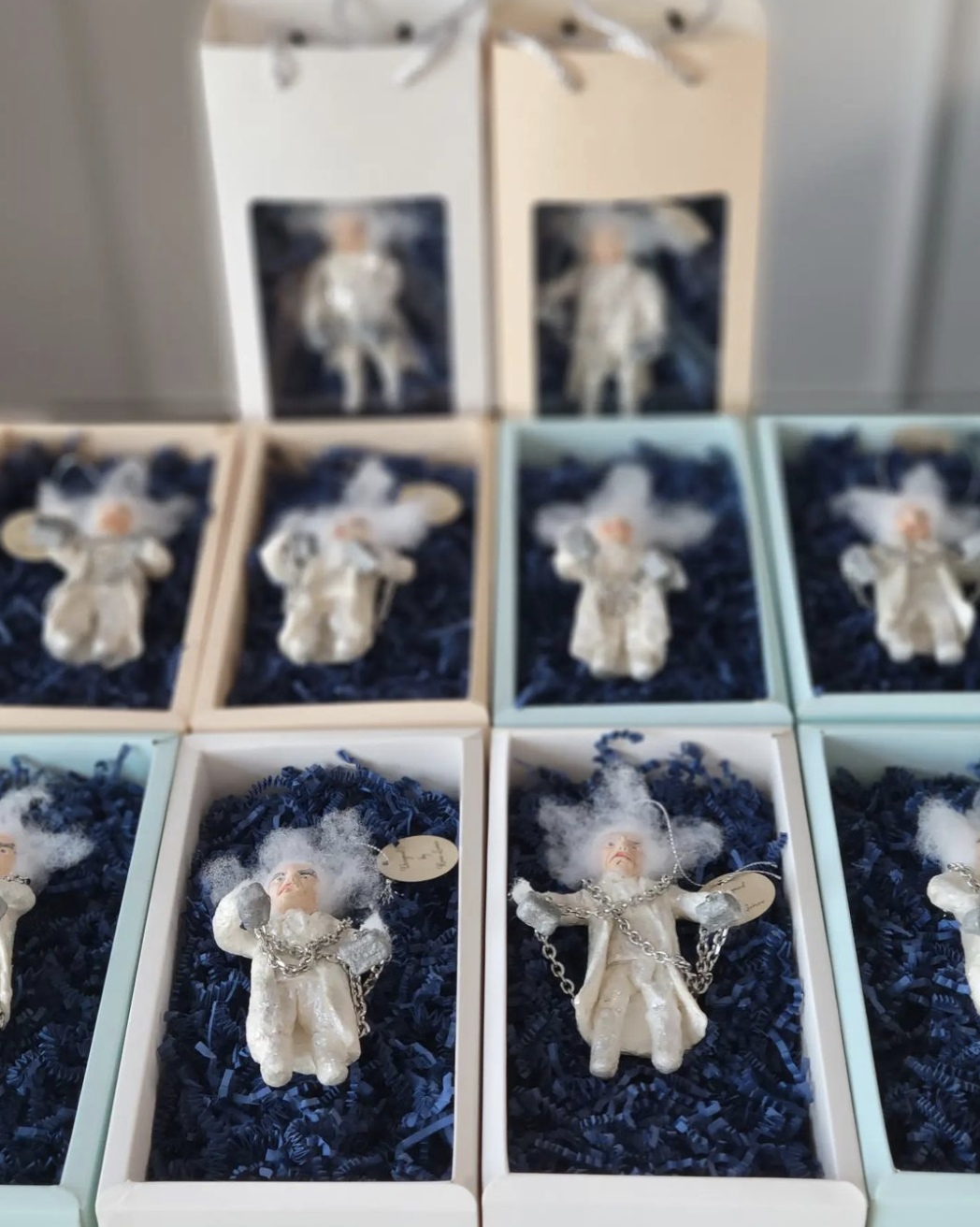
The Ghost of Jacob Marley ornament for American Conservatory Theater San Francisco by Rena Leinov
In addition TheGulliverandco creates custom made ornaments that are designed to capture a photographic moment that can now decorate family Christmas tree. A perfect gift for your loved once.
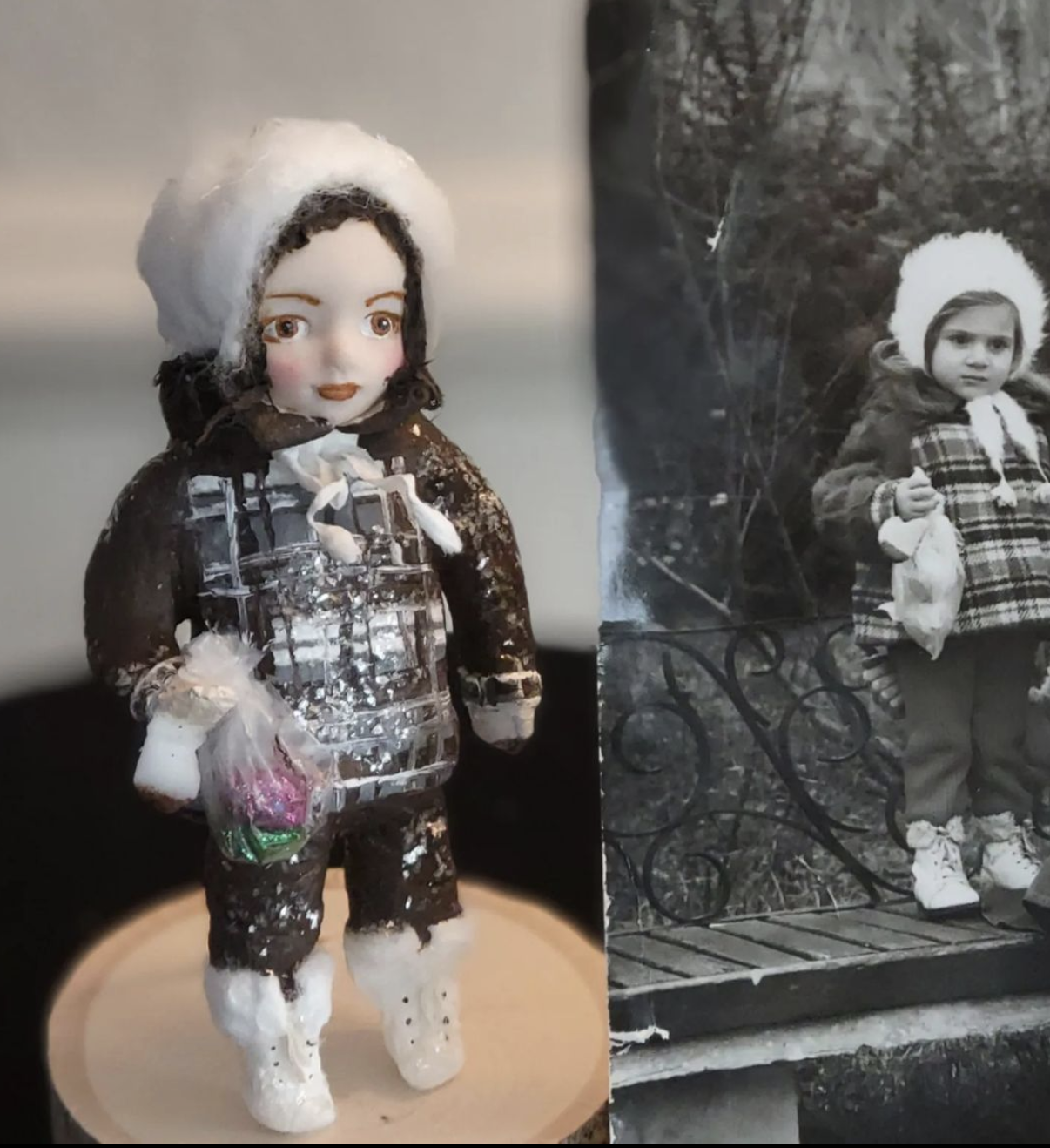
Childhood photo and an ornament figurine of artist Rena Leinov .
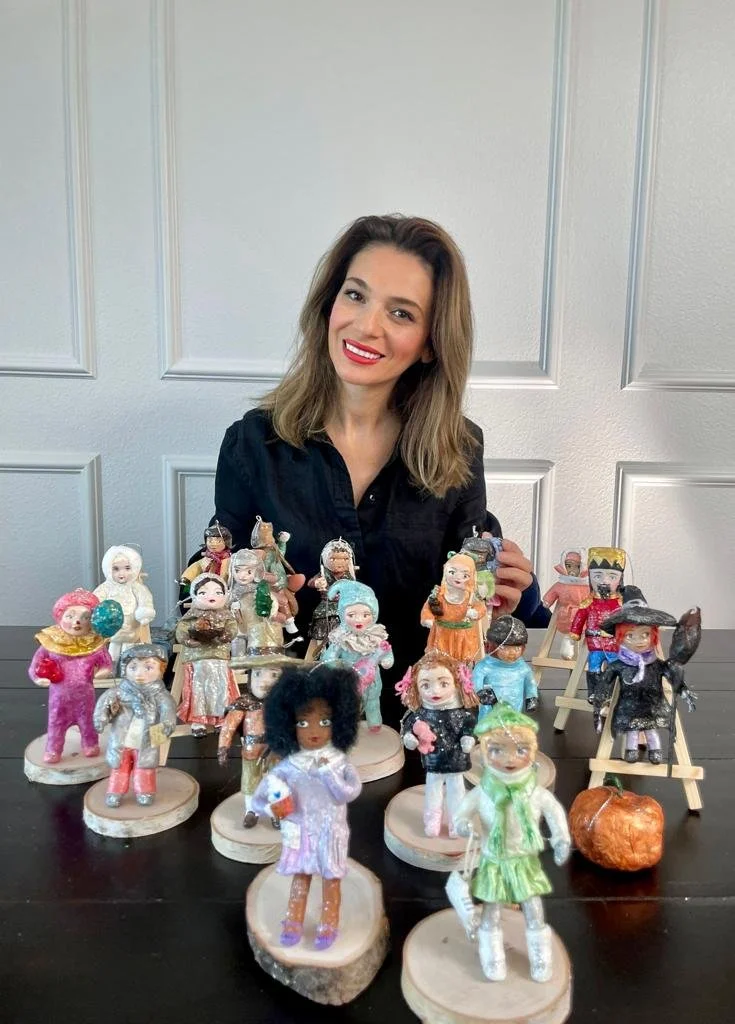
TheGulliverandco
The history of Christmas tree ornaments
Christmas tree ornaments first originated in Germany in the 16th century. This tradition began when Germans started decorating evergreen trees using apples, commonly called paradise trees. The tradition was picked up by many people who started manufacturing various Christmas tree ornaments. The first ever manufactured ornaments were called baubles and were made by Hans Greiner. During this time, people would also decorate trees with candles, painted nutshells, wafers, and pastries with heart, angel, star, and flower shapes. According to history, Martin Luther, a great religious reformer, first introduced candle decorations on a Christmas tree. Today, people use numerous Christmas tree ornaments such as glass Christmas ornaments, porcelain Christmas ornaments, candy canes, Christmas stars, Christmas pickles, angels, etc.
Importance of Christmas tree ornaments
The culture of hanging various ornaments on Christmas trees has never stopped since it started long ago. This is because the ornaments have a special meaning and significance during the festive seasons as follows:
- Red Christmas tree ornaments symbolize the blood of Jesus Christ and the sacrifice he made for us.
- Bells placed on the Christmas tree branches symbolize happiness and joy during the merry day.
- Every Christmas tree tends to be decorated with lights that symbolize the significance of family love during the festive season.
- Ribbons symbolize family ties where all family members gather together to celebrate and share a meal after a whole year of busy routines.
- Stars signify the shining hope for better days ahead. It's a symbol of Bethlehem's star that guided wise men to see baby Jesus.
- Wreaths symbolize rebirth and eternal love.










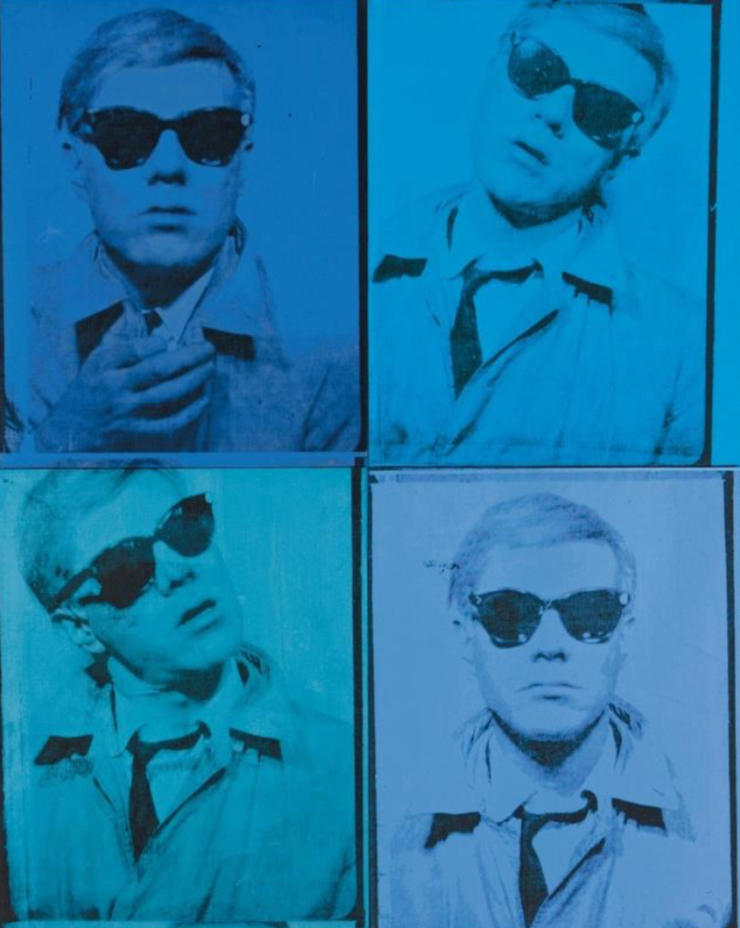

A Hidden Self-Portrait of Van Gogh Was Found Behind The Artist's Other Work
Vincent Van Gogh often used both sides of the canvas because he was low in money and over the time the reversed works were discovered here and there. Recently the National Galleries of Scotland found the another of the gems.
"Moments like this are incredibly rare," Frances Fowle, senior curator of French art, said in a statement. "We have discovered an unknown work by Vincent van Gogh, one of the most important and popular artists in the world."
The discovery occured during an X-ray of an 1885 painting by Van Gogh, Head of a Peasant Woman.
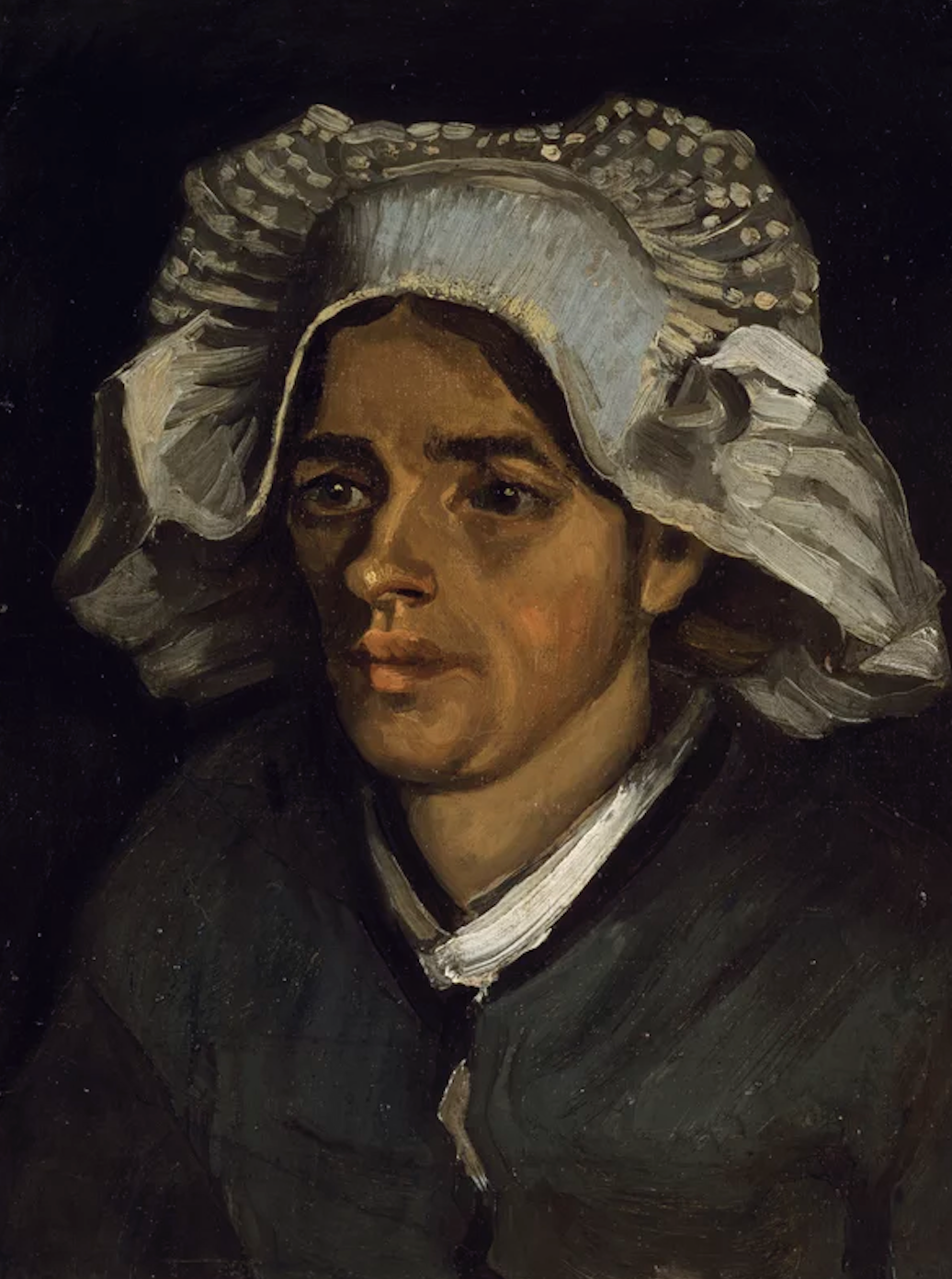
"Hidden from view for over a century, the self-portrait is on the back of the canvas with Head of a Peasant Woman and is covered by layers of glue and cardboard," the museum said in a statement on Thursday.













Mona Lisa Gets Caked
Mona Lisa gets caked. Yes, this Sunday, in a stumt that went viral. “There are people who are destroying the Earth,” the man says in the video, speaking in French. “All artists, think about the Earth. That’s why I did this. Think of the planet.” The Mona Lisa is one of the Louvre’s—and the world’s—most widely-seen artworks.

Patrick Kelly: Runway of Love
.

The career and legacy of Black fashion designer Patrick Kelly (1954–1990) is celebrated at deYoung museum in San Francisco. Patrick Kelly was born in Mississippi in 1954. Kelly learned sewing at a tender age, possibly through the help of his mother, who worked as a teacher, teaching home economics. Immediately after he graduated, Kelly moved to Atlanta, where he was employed in a thrift shop, which exposed him to a broad range of vintage designer clothes, which he would later modify into new, unique designs.

Patrick Kelly’s design career took a significant turning point after he moved to Paris in 1980. He got a chance to pursue his love for being a designer and exhibit his outstanding talent as a designer. With the help of his friend, photographer Bjorn Ameslan, Kelly established the Patrick Kelly Paris company in 1985.
1988 saw Kelly become the first-ever American to earn admission to the renowned Chambre du prêt-à-porter des couturiers et des creatures de mode, where he ascended the status of a ‘creature .’The African American culture highly informed his designs.

The San Francisco exhibition’s sections and themes include the “Runway of Love,” highlighting the designer’s heart-shaped embellishments to his clothing, often composed from his signature buttons. As a child growing up in Vicksburg, Mississippi, Kelly would often lose his buttons, which his grandmother replaced with those of many different colors, a look that Kelly later adapted for his fashion designs.
”Fast Fashion” includes designs that Patrick Kelly assembled quickly to sell on the streets of Paris after he moved there in 1979. He dressed his model friends in body-conscious knits, which they would wear around the city, becoming living advertisements of his vision. These dresses quickly caught the attention of an editor at French Elle magazine, which featured Kelly’s fashions in a six-page spread in February 1985, as well as the Paris boutique Victoire. His first collection was purchased by Bergdorf Goodman, who found Kelly’s designs fun, chic, affordable, and Parisian. The New York–based department store showcased them in a window display reserved for new designers
Kelly often incorporated humor to address serious issues in his designs, especially those pertinent to racism.
Unfortunately, Kelly succumbed to AIDS in 1990, aged thirty-five, and after having produced ten collections, which included a collaboration with Benetton.


Edward Tsokolakyan Art
Real -life Edward Scissorhands

Once in a while I stumbble upon a new talent on the internet and they never cease to amaze me. This time my guest is real-life Edward Scissorhands, artist Edward Tsokolakyan, who handles paper like a pro. And not just paper. Take a look at Edward's Instagram where he shares some of his most creative work, like portraits made out of an egg, yes, egg! And while you're at it, you can request him to make your very own portrait.
Giulia: Was art always in your life?
Edward: I loved drawing since childhood, I never studied it. I just drew and created for myself.
Giulia: How did it start?
Edward: I once saw this person on the internet who was cutting portraits from paper, I got so inspired and interested that I decided to give it a try. I assume I am not doing that bad.(laughs) I love to surprise myself and others. I always try to make or create something new that myself and others will love.
Giulia; What’s the trick to papercut art ?
Edward: Not telling you my secrets. The only thing I can share is everything that I do, I do myself, from the first attempt. It's a huge and a quiet difficult work that I do.
Giulia: What inspires you?
Edward: I love everything new and complicated that may not work from the first time, something that challenges me and requires practice. I don't look for easy way out. I always try to reach the perfection in everything that I do. The most important thing is that I get satisfaction from it.
Giulia: You’re very successful, what piece of advice can you give to young talent?
Edward: The advice I can give to a young talent is not to give up, continue to work and develop your talant. There is always something to learn.







Alexander Bronfer - ART
.
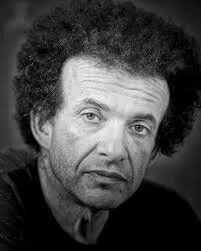
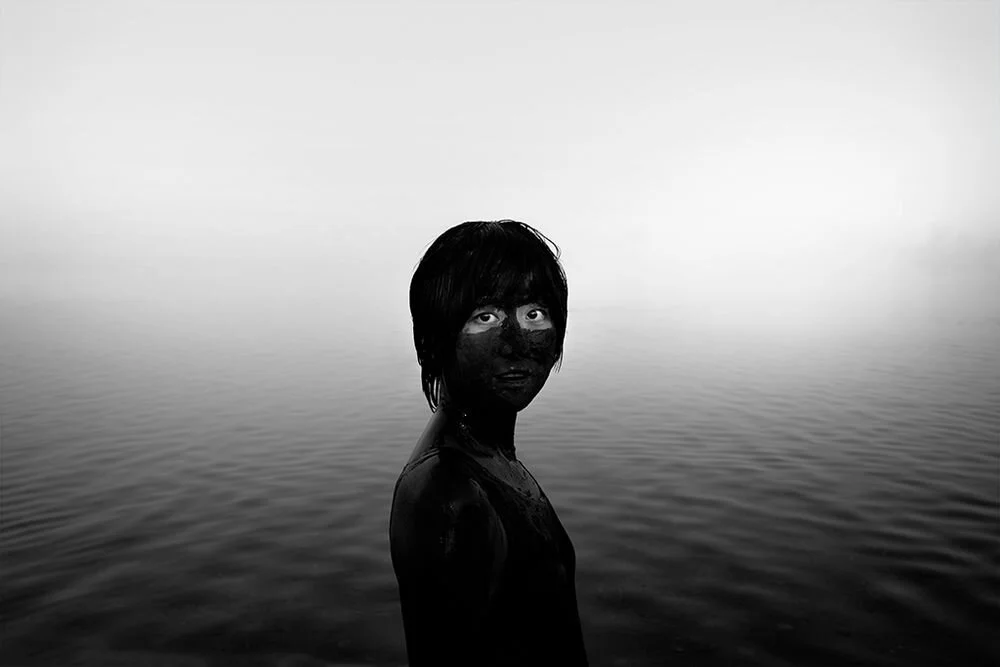
Israeli photographer Alexander Bronfer was born in Ukraine and studied in Saint Petersburg. Bronfer was the finalist of multiple international photography festivals and today, after four years living and working photographing Dead Sea, his inpsiration is derived from Israel and the beauty of the Dead Sea.
He carries his camera every where he goes. His work is inspired and created after having a conversation with the people he photographs.







Meadows Museum and Museo del Traje Will Collaborate On Fashion Exhibition
Image: courtesy of Meadow Museum by Kevin Todora; Museo del Traje, Madrid by Munio Rodil Ares
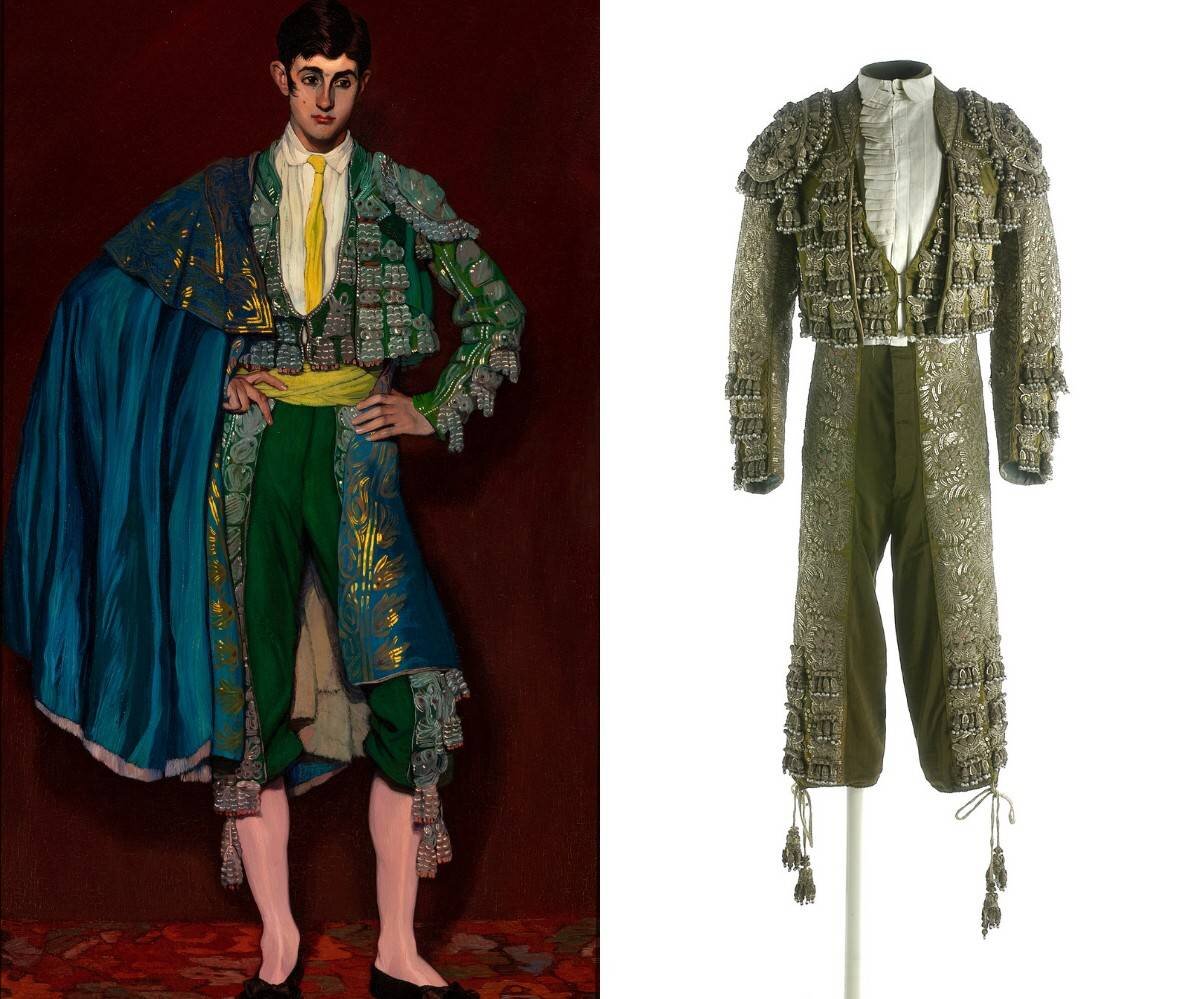
The Meadows Museum in Dallas has announced a major exhibition. The exhibition will combine paintings of Spanish fashion, pairing it from its historic dress and accessories collection from the Museo del Traje in Madrid. The exhibition which plans to open up on September 19th,2022, will present how fashion trends in Spain have changed over five hundred years.
The pairings will include Ignacio Zuloaga’s The Bullfighter ‘El Segovianito’ (1912) accompanied by a traje de luces of the same colour, Zuloaga’s Portrait of the Duchess of Arión, Marchioness of Bay (1918) displayed alongside a mantón de Manila.
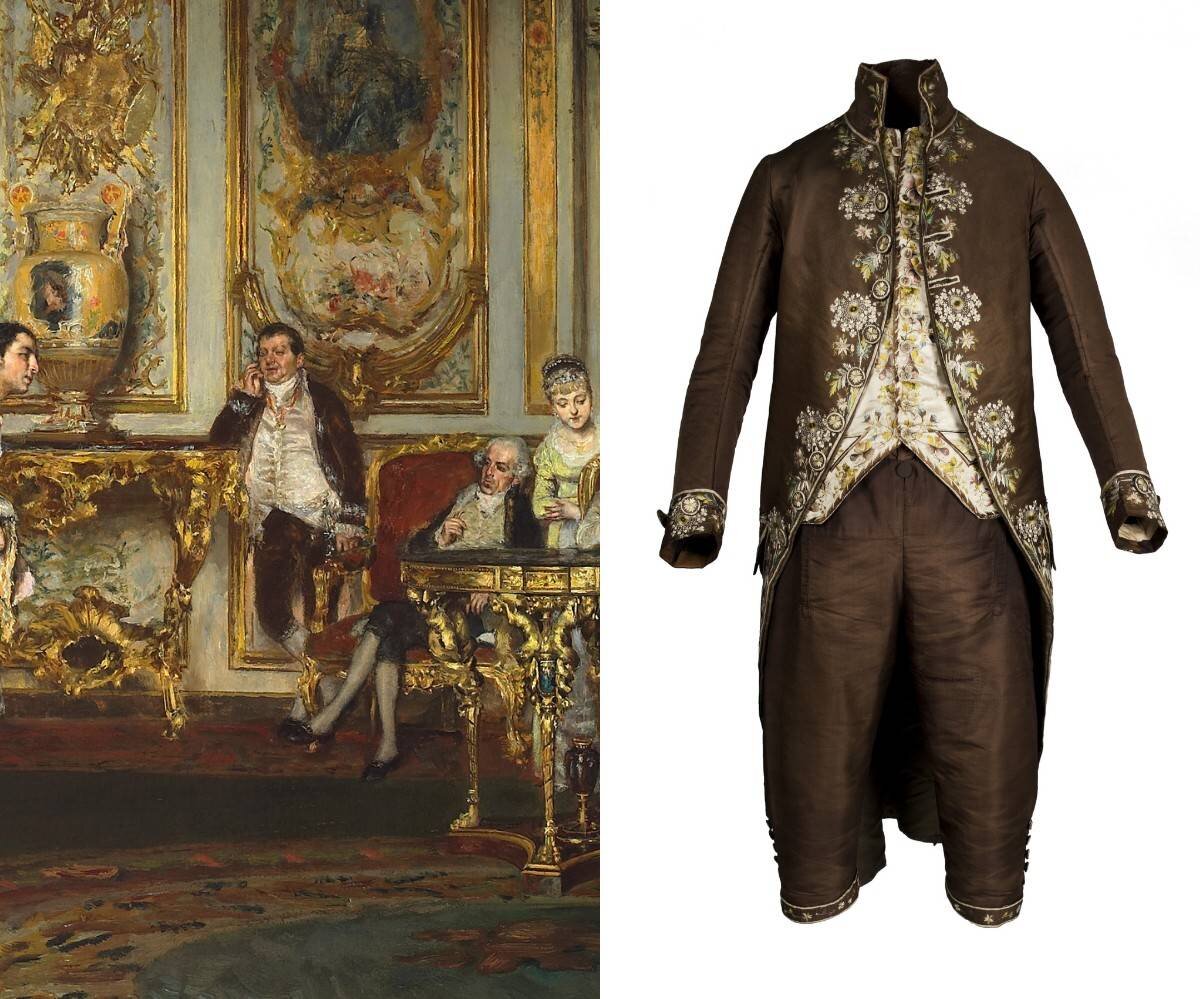
Image: courtesy of Meadow Museum by Michael Bodycomb; Museo del Traje, Madrid by Gonzalo Cases Ortega
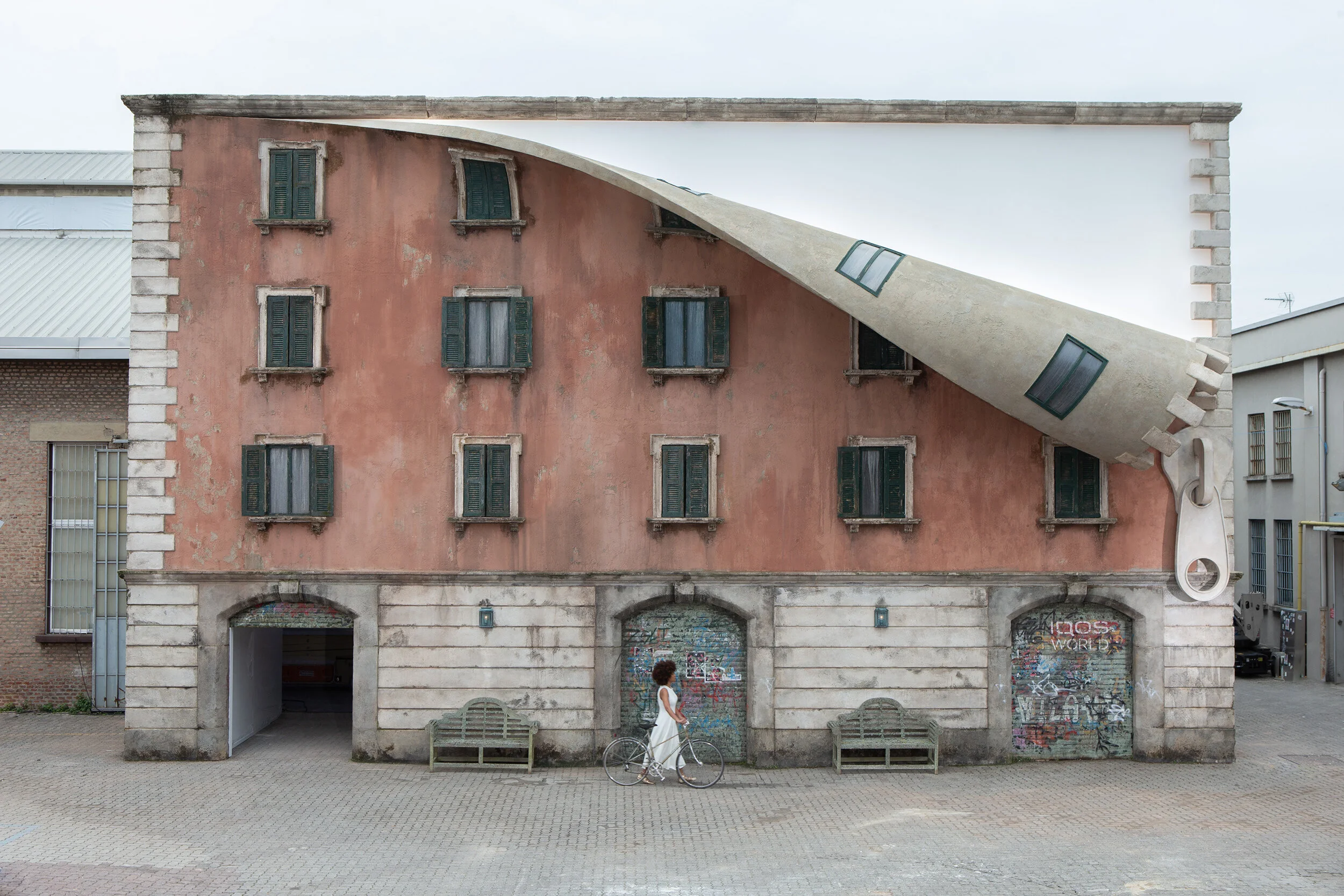
Alex Chinneck's Art
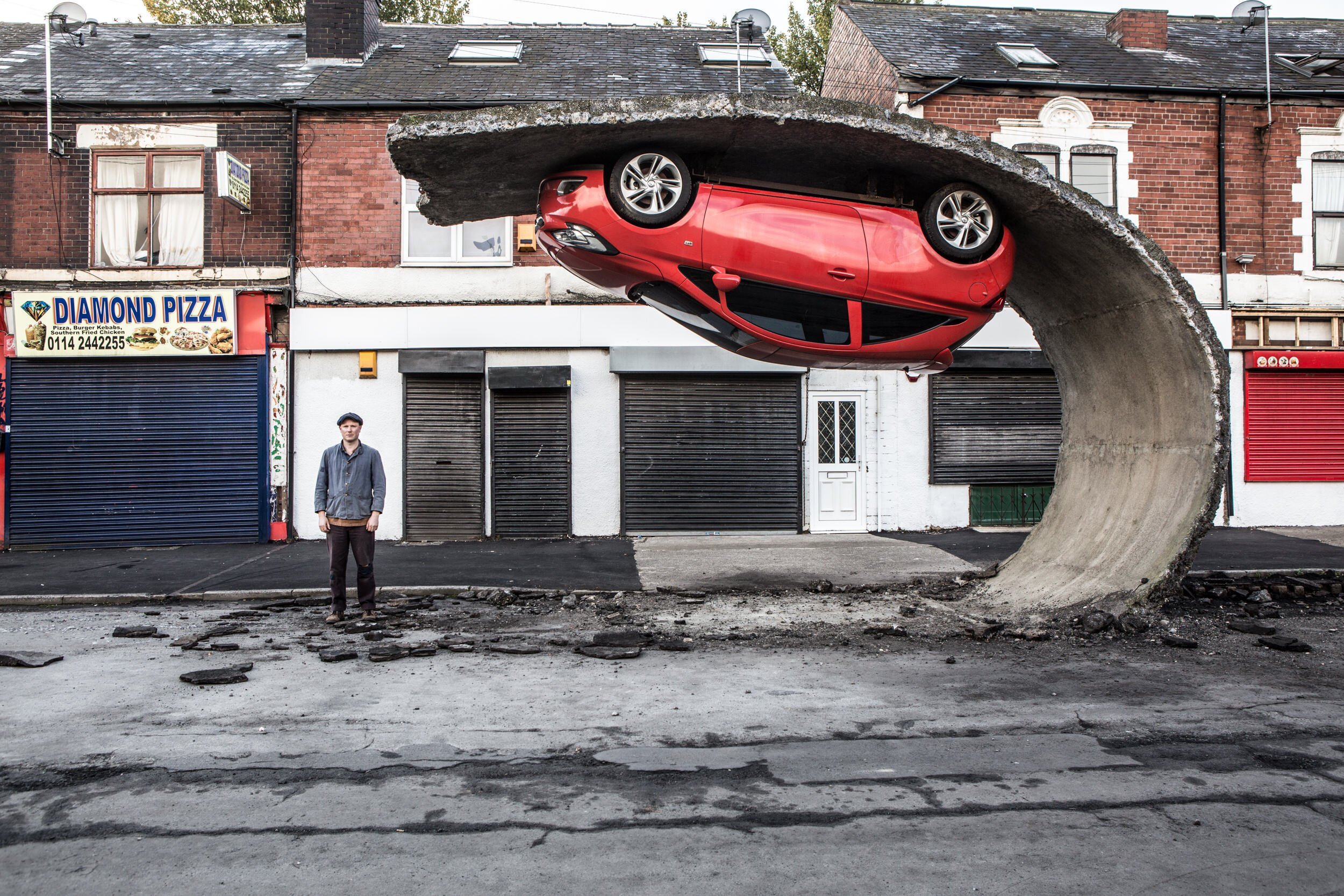
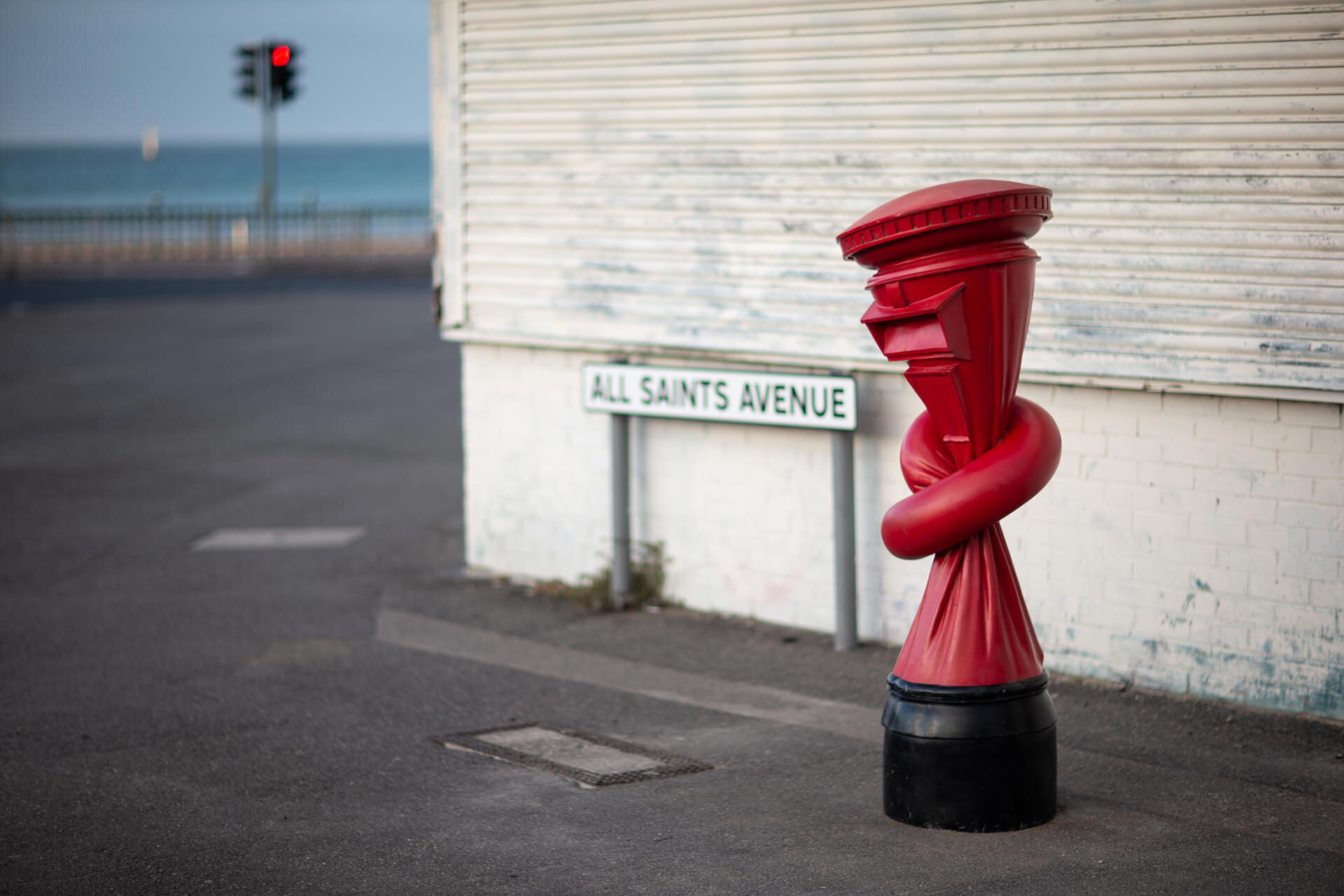
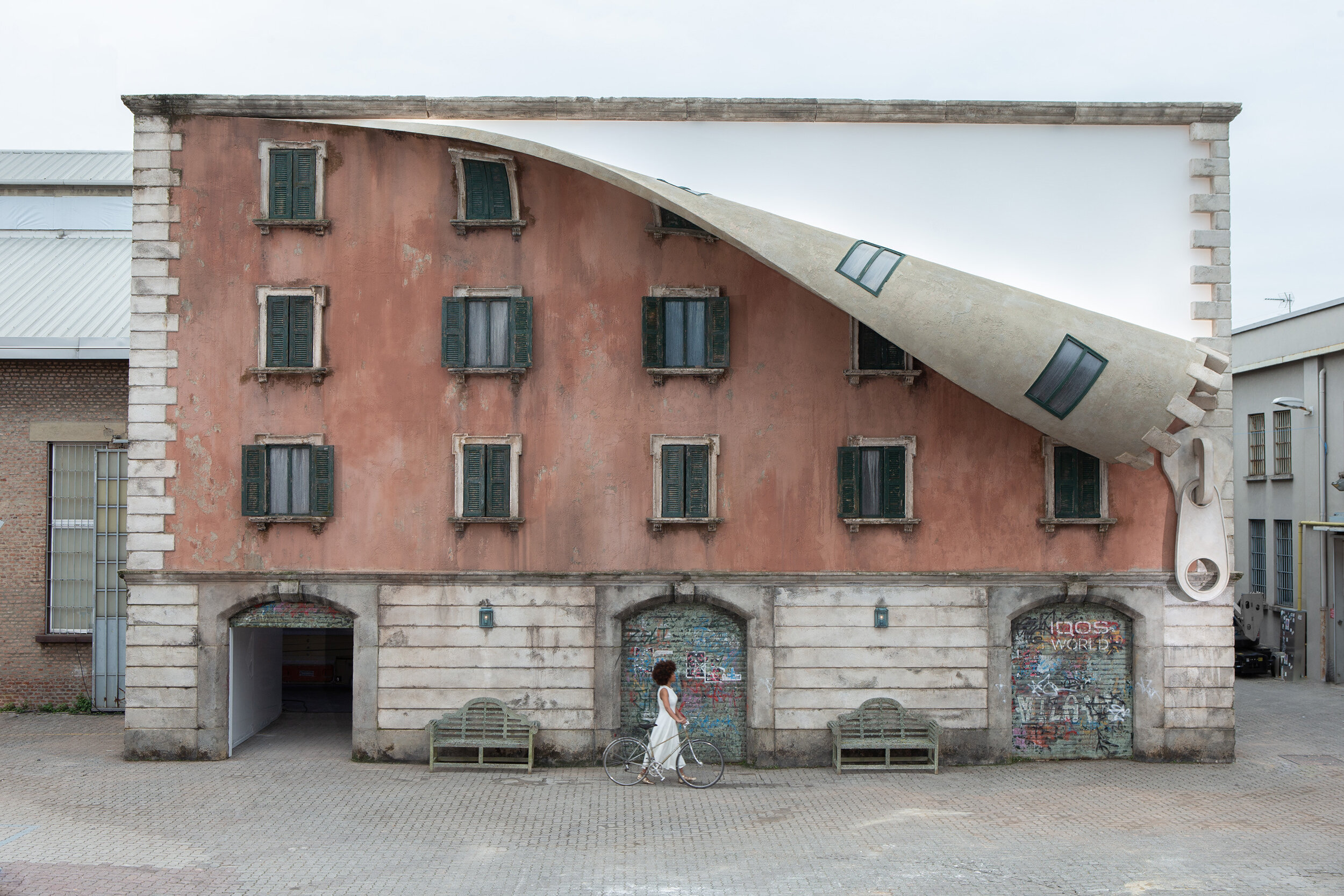
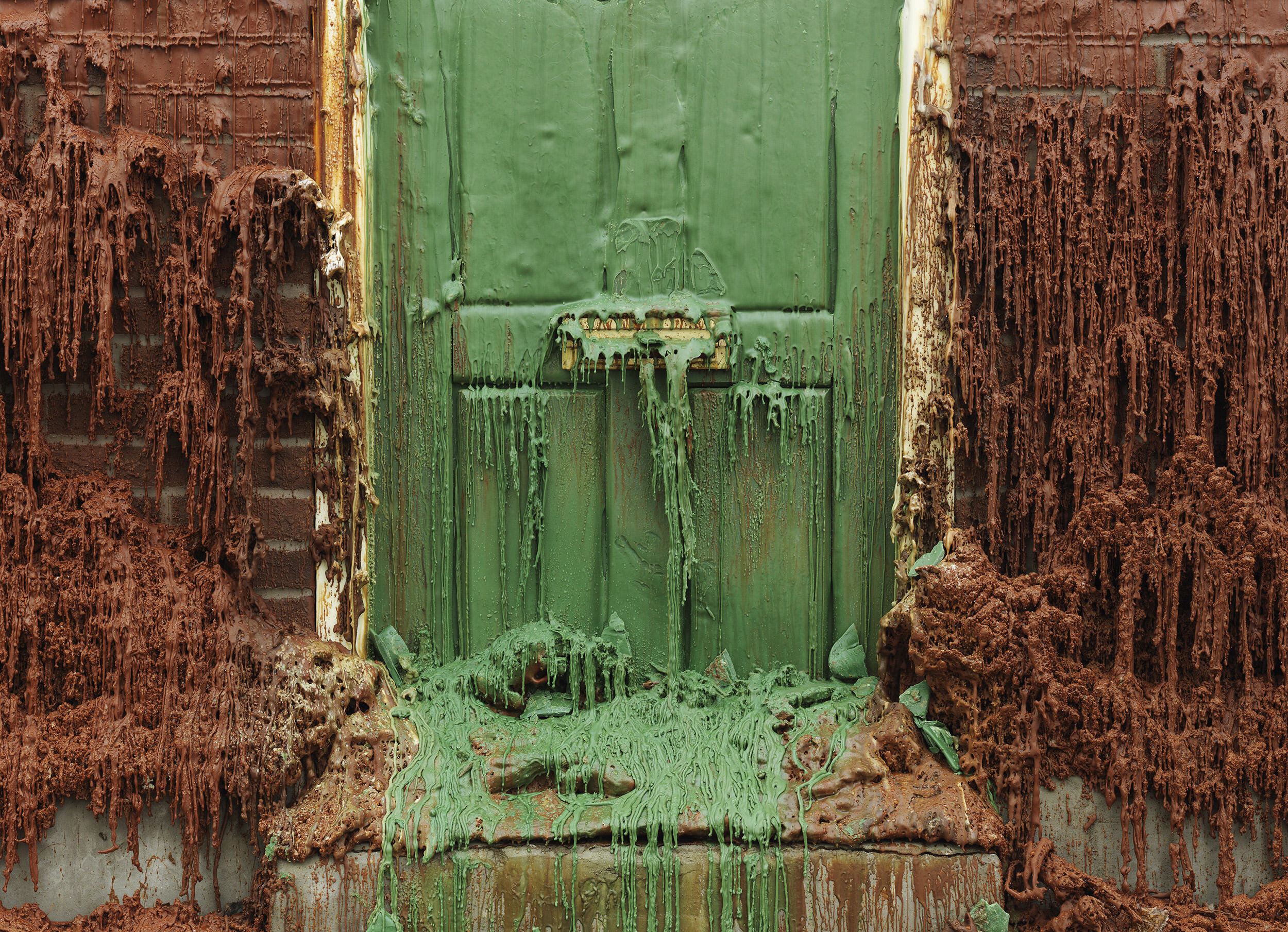
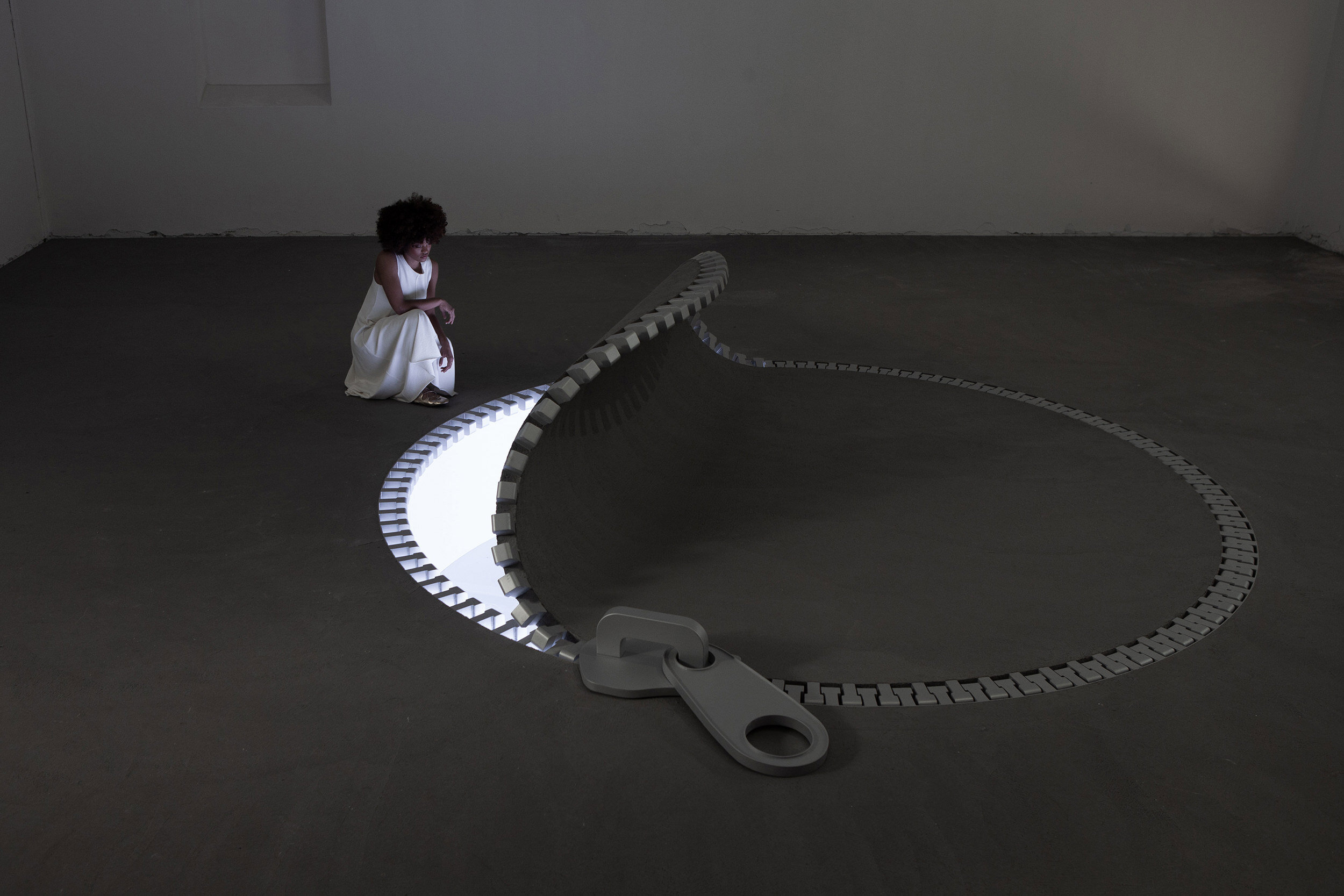
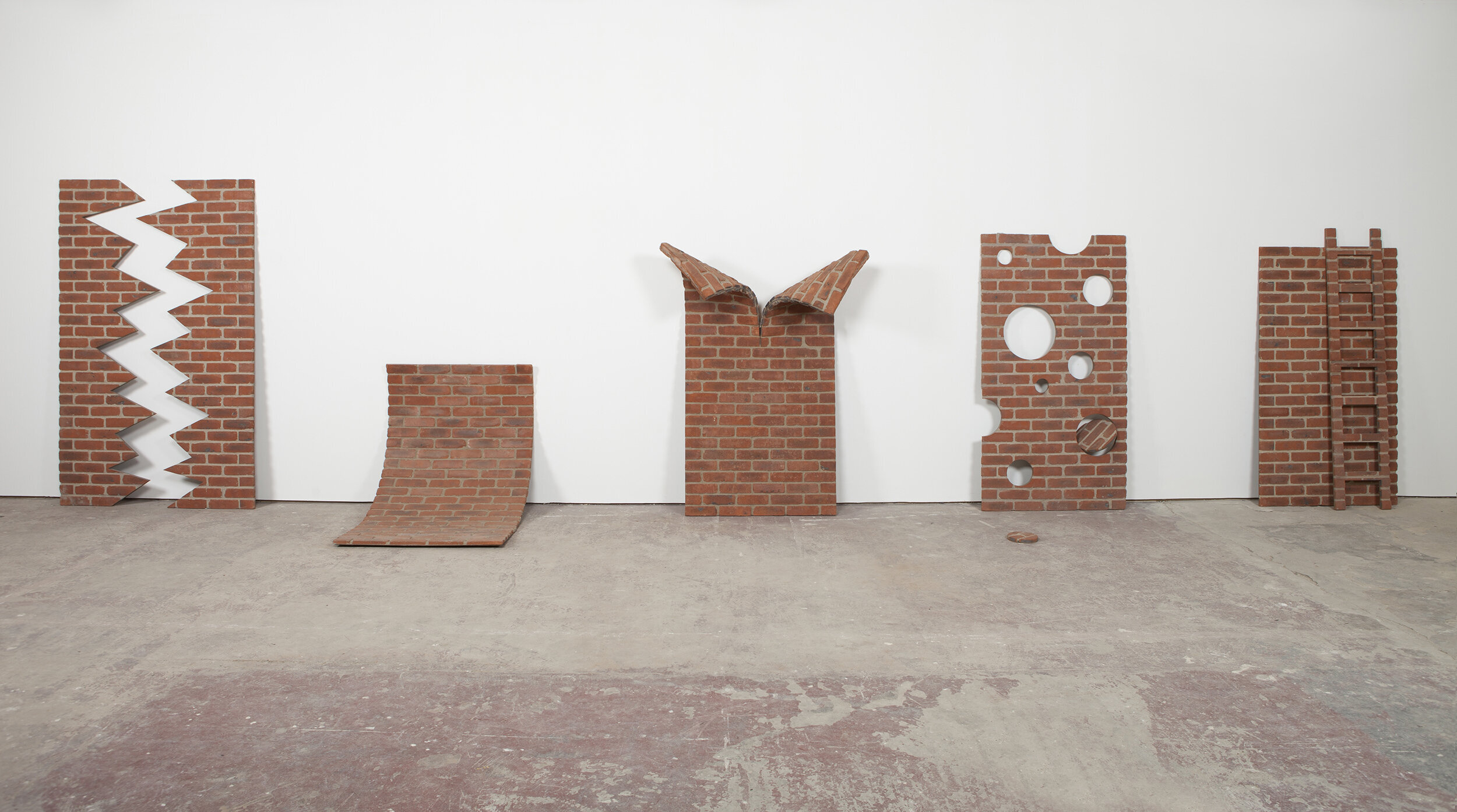
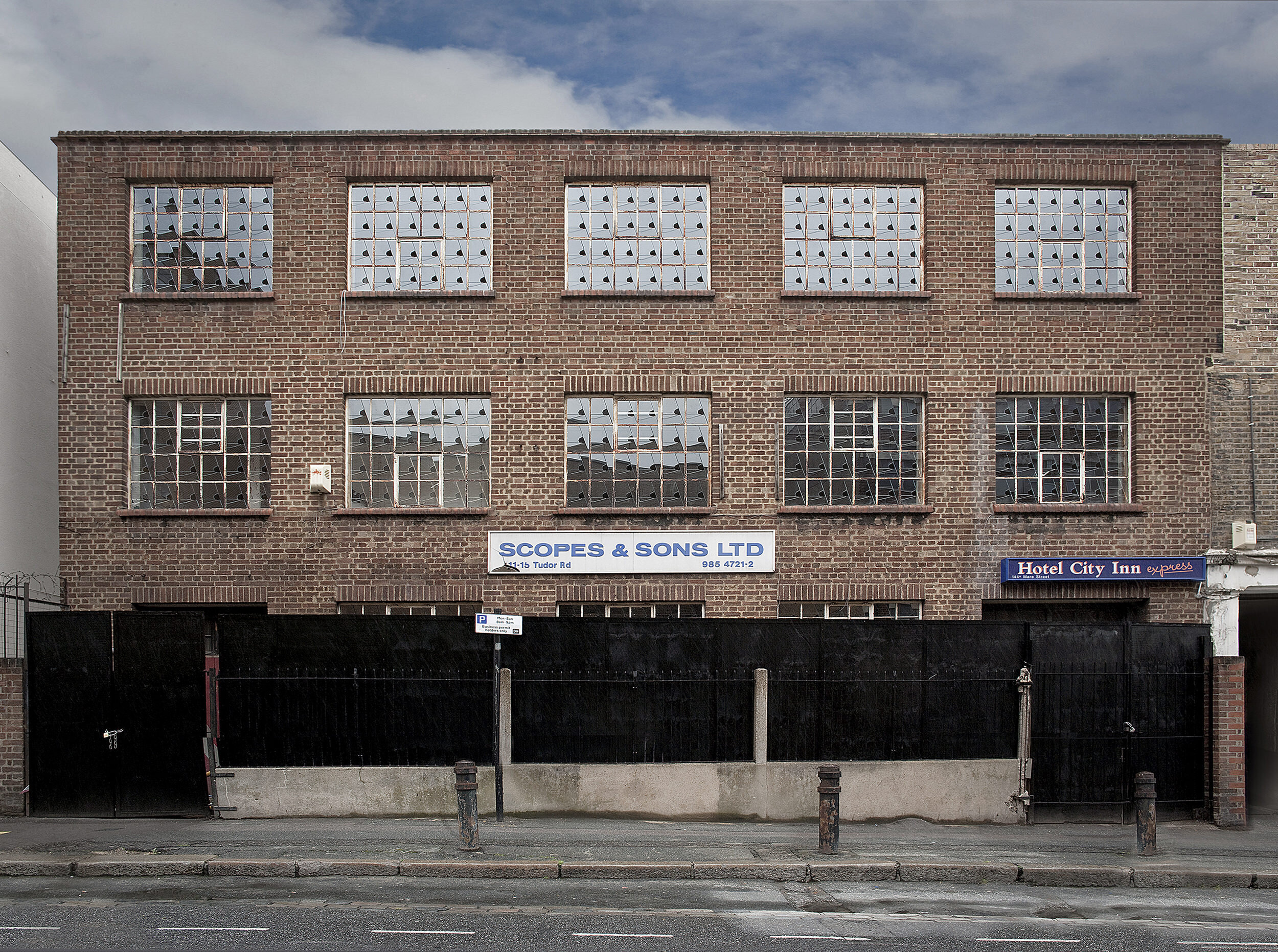
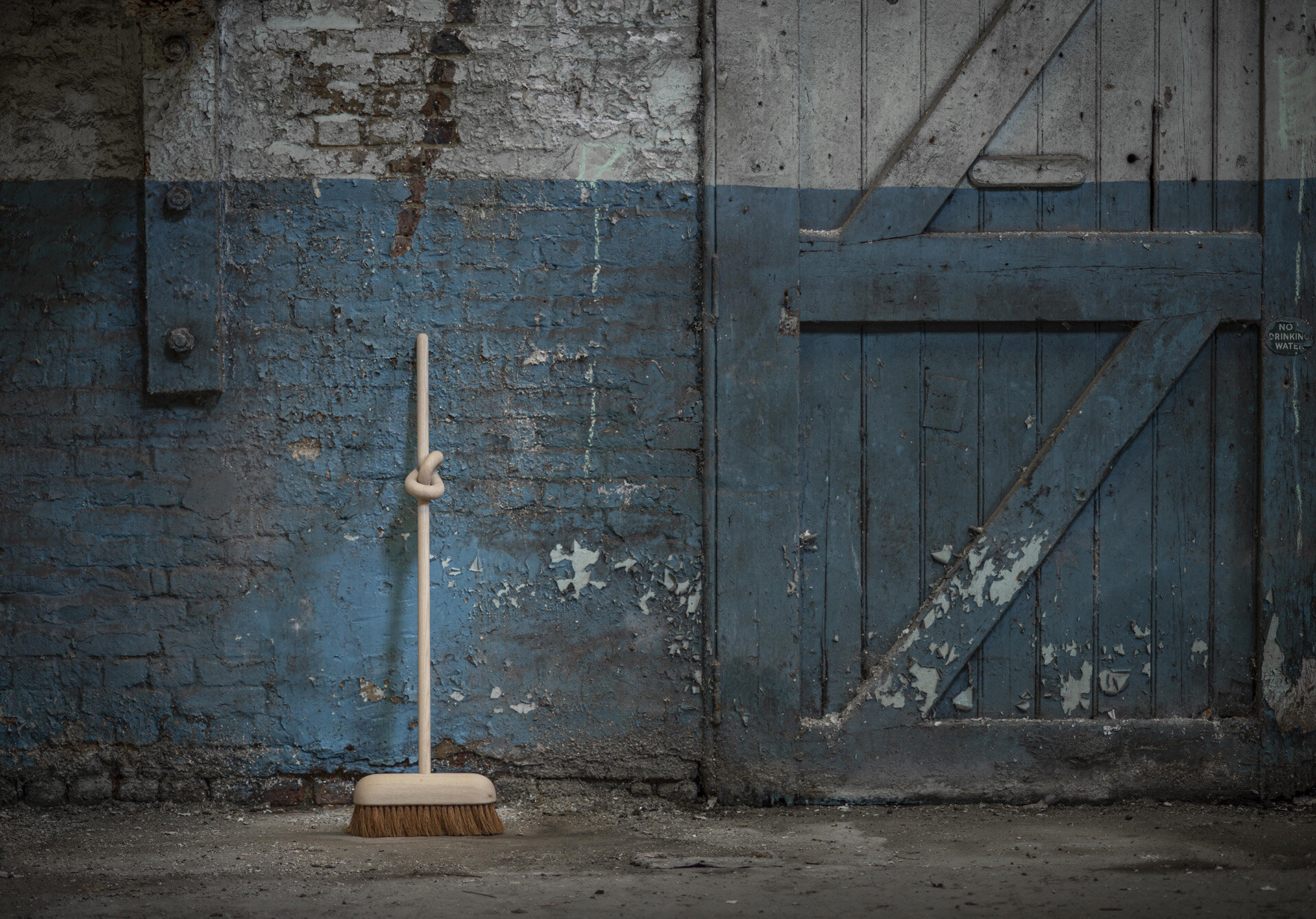
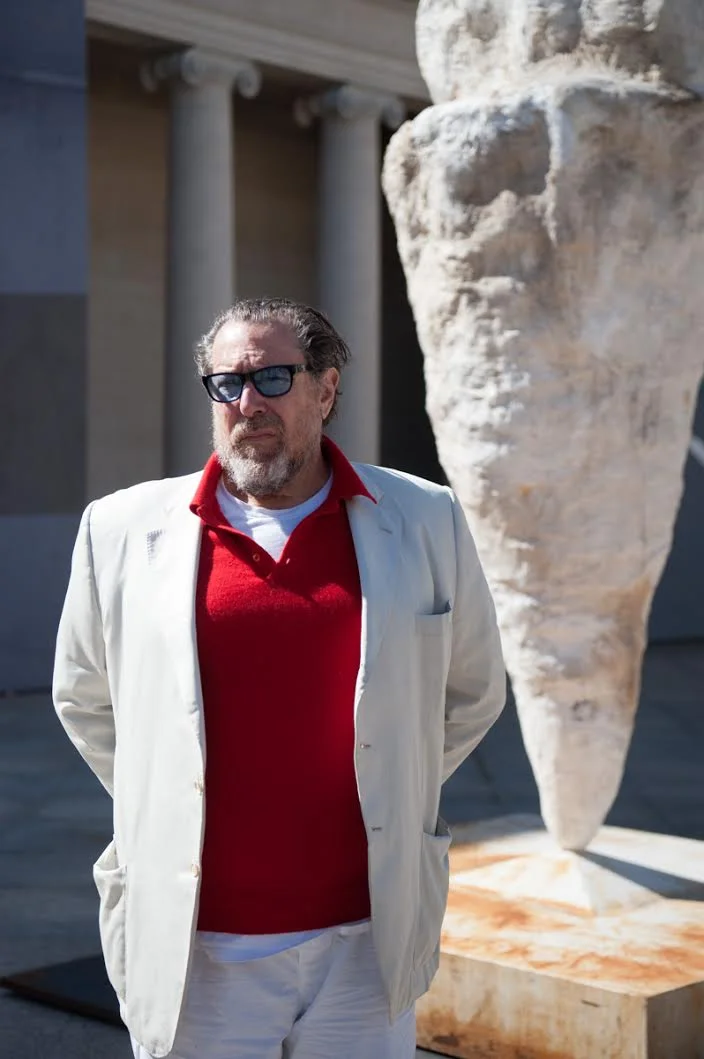
British sculptor Alex Chinneck’s surreal sculptures and public artworks playfully disrupt the world around us, igniting curiosity and sparking global interest. They challenge our understanding of familiar objects and materials, transforming the ordinary into the extraordinary.















On Selling and Suffering: A Profile of Alfred Kubin
by Adam Heardman via MutualArt
The reclusive Austrian symbolist’s dark, Schopenhauer-inspired drawings continue to shatter estimates. Here’s what you should know about Alfred Kubin.
Among the final writings of Arthur Schopenhauer is a collection of essays and aphorisms, the first of which comprises his thoughts ‘On the Suffering of the World.’ In his signature manner of subjective, personality-inflected philosophy, Schopenhauer begins: “If the immediate and direct purpose of our life is not suffering then our existence is the most ill-adapted to its purpose in the world: for it is absurd to suppose that the endless affliction of which the world is everywhere full…should be entirely purposeless and accidental.”
“Each individual misfortune, to be sure, seems an exceptional occurrence,” Schopenhauer observes, his tongue half in cheek, half clenched agonizingly between his sharpest teeth; “but misfortune, in general, is the rule.”
The general misfortune of all mankind has been the concern of certain visual artists who have, through observation of suffering and strife, lent colors and symbols to our understanding of the unendurable depths of human experience, and in so doing have seared themselves into our cultural consciousness. Artists like Francisco de Goya, Hieronymus Bosch, and Edvard Munch have achieved a timeless reputation because of their contributions to our syntax of suffering, our lexicon of bad luck, our parlance of pain.
Strange then, to come across an accomplished artist concerned with such themes who has at times fallen into a kind of obscurity (though he enjoyed some reputation as an illustrator and lithograph-artist in his own lifetime). As Schopenhauer himself says, “Not the least of the torments which plague our existence is the constant pressure of time, which never lets us so much as draw breath but pursues us all like a taskmaster with a whip.” Compared with certain other artists, Time the Taskmaster has, by turns, not been particularly kind to Alfred Kubin.
But if the art market is any kind of barometer, summer of 2019 suddenly represents the highest peak of Kubin’s influence and popularity - at the very least since an exhibition of his oils, watercolors, and drawings graced New York’s Galerie St. Etienne back in 1957. The catalogue for that exhibition admitted that it “took many years until Kubin’s strange and unconventional style found full recognition”, though in that year, the year of his 80th birthday, Kubin was maybe already considered “one of the great graphic artists of this century and one of its foremost book illustrators.”
His tenebrous star perhaps hasn’t shone as brightly since, until June this year. The Impressionist and Modern Sales at Sotheby’s on June 19 and 20 saw market highs for Kubin works. All sixteen of his pieces which came to auction over the two days sold, some of them doubling, tripling, or even multiplying by a factor of 8, their pre-sale estimates.
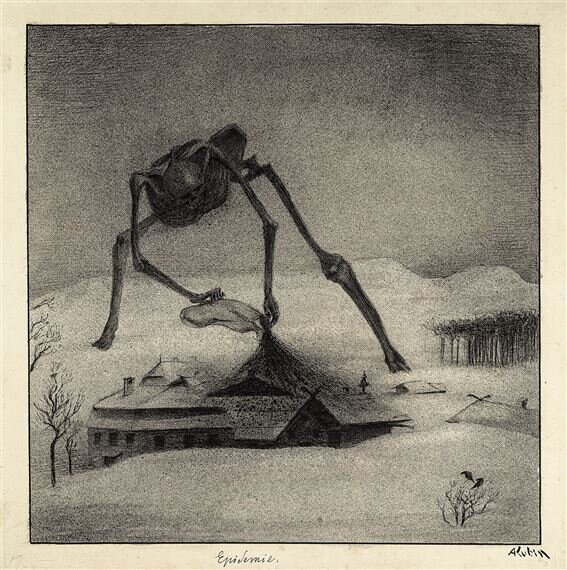
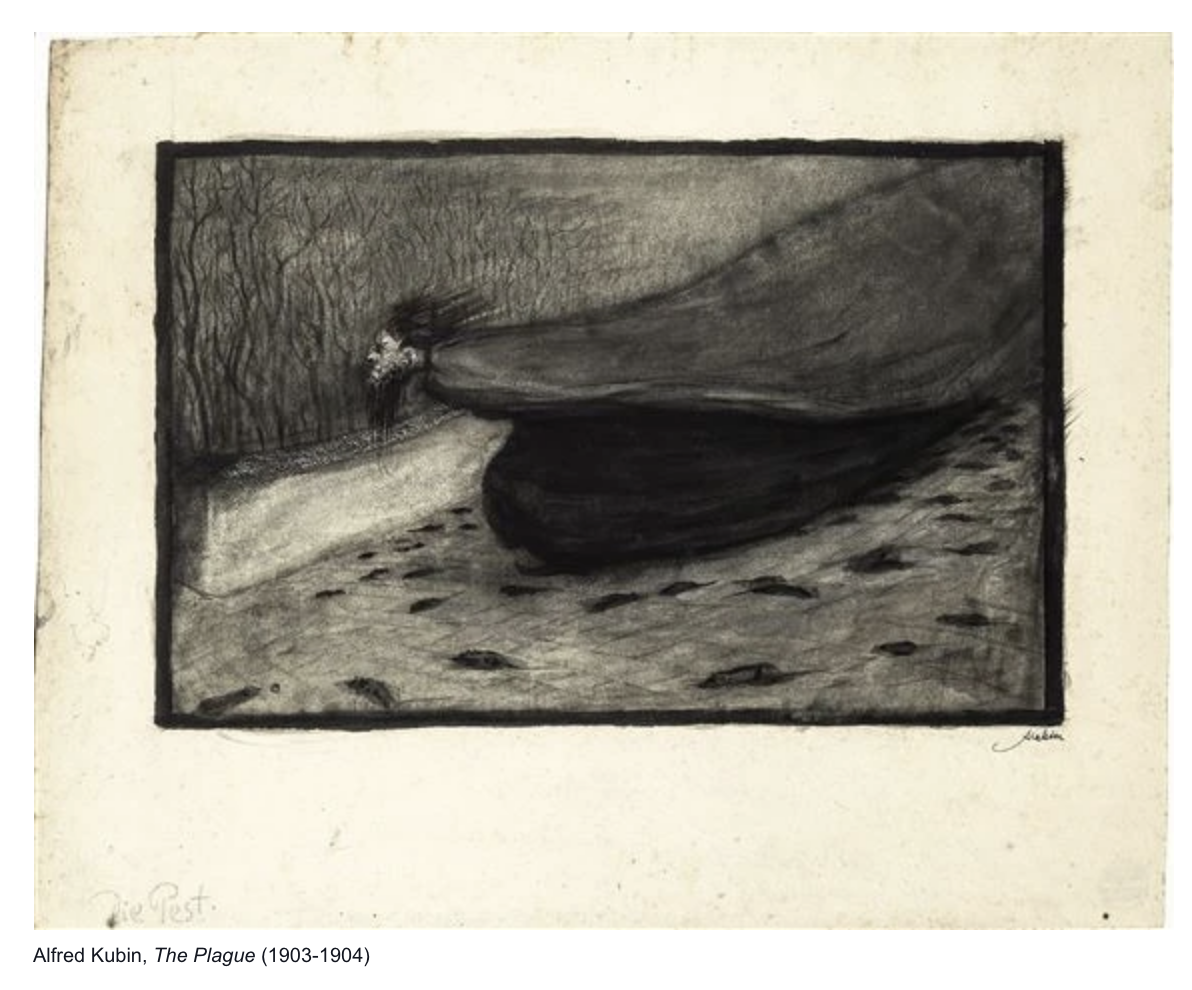
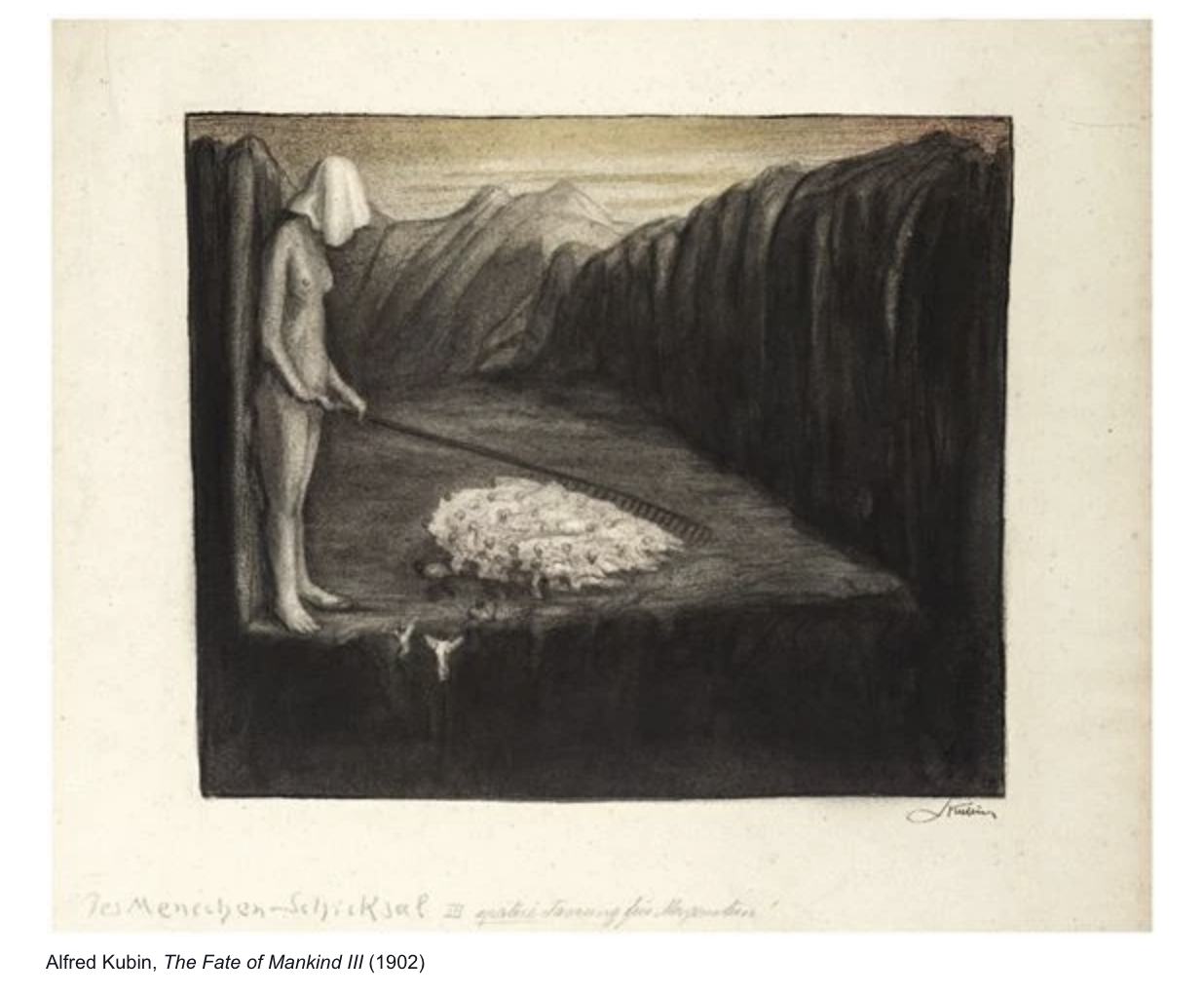
Epidemic (1900-1901) sold for £963,000 against a high estimate of £200,000. The Fate of Mankind III (1902) and The Hour of Death (1900) each raised £855,000 against high estimates of £120,000 and £150,000 respectively. The top performer against estimate was The Plague (1903-1904), which came to the Day Sale with a high estimate of £70,000 and sold for £579,000.
Strange then, to come across an accomplished artist concerned with such themes who has at times fallen into a kind of obscurity (though he enjoyed some reputation as an illustrator and lithograph-artist in his own lifetime). As Schopenhauer himself says, “Not the least of the torments which plague our existence is the constant pressure of time, which never lets us so much as draw breath but pursues us all like a taskmaster with a whip.” Compared with certain other artists, Time the Taskmaster has, by turns, not been particularly kind to Alfred Kubin.
But if the art market is any kind of barometer, summer of 2019 suddenly represents the highest peak of Kubin’s influence and popularity - at the very least since an exhibition of his oils, watercolors, and drawings graced New York’s Galerie St. Etienne back in 1957. The catalogue for that exhibition admitted that it “took many years until Kubin’s strange and unconventional style found full recognition”, though in that year, the year of his 80th birthday, Kubin was maybe already considered “one of the great graphic artists of this century and one of its foremost book illustrators.”
His tenebrous star perhaps hasn’t shone as brightly since, until June this year. The Impressionist and Modern Sales at Sotheby’s on June 19 and 20 saw market highs for Kubin works. All sixteen of his pieces which came to auction over the two days sold, some of them doubling, tripling, or even multiplying by a factor of 8, their pre-sale estimates.
As an illustrator, he has an eye for the emblematic. His symbols say no more than is necessary. They’re bold without being cloying. He draws with brevity but manages to unfold, in the suggested but unseen moments before and after his particular chosen frame, rich narratives that are as historical as they are personal.
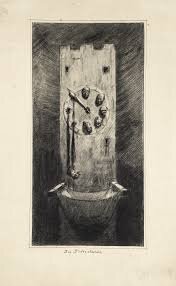
Alfred Kubin, The Hour of Death (1900)
Schopenhauer, one of Kubin’s great influences, indulges in a kind of faux-disbelief at the purposelessness of suffering, in order to flip it around into a positive cognitive experience. Kubin observes a similar split between incredulity and faith. He revels in the accidents of association which allow for a symbolic language to arise, but is strangely disbelieving in their existence as mere accidents. This is a kind of negative path to faith, to magic. He, like Schopenhauer, is a sweet darkness, like treacle or liquorice. An acquired taste, for sure, but generally rich as a rule.
Much like Schopenhauer’s late-career aphorisms, and also, weirdly, much like contemporary internet memes, Kubin’s drawings operate as self contained units of cultural consciousness, presenting a narrative as rich as a Goethe story all at once in a single frame, in one image. Like a comet with its tail of light, their immediate form trails energy, historical significance, and emotional depth.
The Fate of Mankind III shows exactly Shopenhauer’s “taskmaster,” sweeping the living towards the cliff of their deaths. Though ‘master’ is a misgendered term here - the figure is a faceless but all-powerful woman. There’s a psychosexual element at play.
The Hour of Death shows Kubin’s philosophic imagination at its most ingenious. The scything hand of the clock beheads men as it turns, the severed heads caught in a net below. Though it’s horrifying, it cannot comfortably be said to be pessimistic. We delight in its creativity and ingenuity, even as we recoil from the graphic imagery and stark invocation of mortality. By turns we are repulsed and compelled, like with all the best horror.
Schopenhauer the philosopher is often said to have had the mind of a poet or artist, but the overwhelming achievements of his predecessor, Goethe, meant that he (and his near-contemporaries in German metaphysics) turned to philosophy as their imaginative outlet. Certainly, he takes a sort of monochrome delight in conjuring images, correlatives and metaphors to elucidate his theory of the metaphysical ‘will’ of the world. In the compulsive picture-making of the Austrian Kubin, many of Schopenhauer’s rhetorical imagery find its visual form.

Alfred Kubin was born in 1877 in the town of Leitmeritz. His mother died when he was young, and at the age of 19, Kubin attempted suicide at the site of her grave. His preoccupation with death began early, and developed through his experiences in the Austrian army and in his artistic practice throughout two world wars. It’s now well known that Kubin spent his entire life in Austria, and from 1906 until his death led a reclusive existence in a 12th Century castle estate, Zwickledt, in upper Austria. From here, he drew the phantoms and spectres that haunted Europe through conflict, strife, and the rise of fascism.
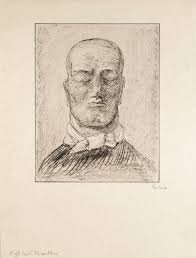
Alfred Kubin, Head of a Sick Man (1921)
It’s tempting, though worrying, to read in his contemporary significance some intimation of similar dark forces beginning to rear up in the fractious politics of the West. Schopenhauer talks metaphorically of the “torments that plague our existence.” Kubin draws The Plague manifest and embodied, sweeping down in an exponential curve towards a pock-marked ground, like the trend of a collapsing economy, or the menace of fascistic impulses, or literal sickness itself.
But the clamour for his works in the market is of course also influenced by the feeling of revelation whenever they do appear. It’s significant that the 16 works which sold last month were “restituted to the heirs of Max and Hertha Morgenstern.” Max was Kubin’s friend and great patron during his lifetime. He was a great and renowned collector of literature and art but was forced to leave behind many possessions when, as an Austrian Jew, he was compelled to flee to England in 1938.
His collection was looted severally, mostly by advancing Russian forces. In their appearance at auction after being restituted, these Kubin works gain an extra layer of pain-inflected revelation. The excitement of their rediscovery and return nevertheless conjure the darkness inherent in their initial loss. This atmosphere chimes well with the weird wisdom of the pictures themselves.
Each gouache or drawing which emerges feels like some precious insight into the human psyche, or a dark slice of illustrated history wrested from the gothic seclusion of Zwickledt.
The performance of this most recent and most significant collection of Kubin works at auction confirms his strange power, and suggests a robustness to his reputation. He’s a divided figure - by some metrics almost wildly popular, but retaining an air of mystery, evasiveness, and intrigue. Through him, we can discover the compulsions of our darker zones. But maybe we find it difficult to look too long or too directly into such spaces. Perhaps we love and are horrified by Kubin because he knows what Edgar Allan Poe (whose works he famously illustrated) knew, and shows it to us unflinchingly: “The boundaries which divide Life from Death are at best shadowy and vague. Who shall say where the one ends, and where the other begins?”







Highlights from the Art Basel - Miami Beach 2019
A really expensive snack at Art Basel Saturday afternoon costing $120,000. But don’t worry, once eaten it can be replaced, according to the work of Italian artist Maurizio Cattelan and titled “Comedian.” The work comes with a Certificate of Authenticity.
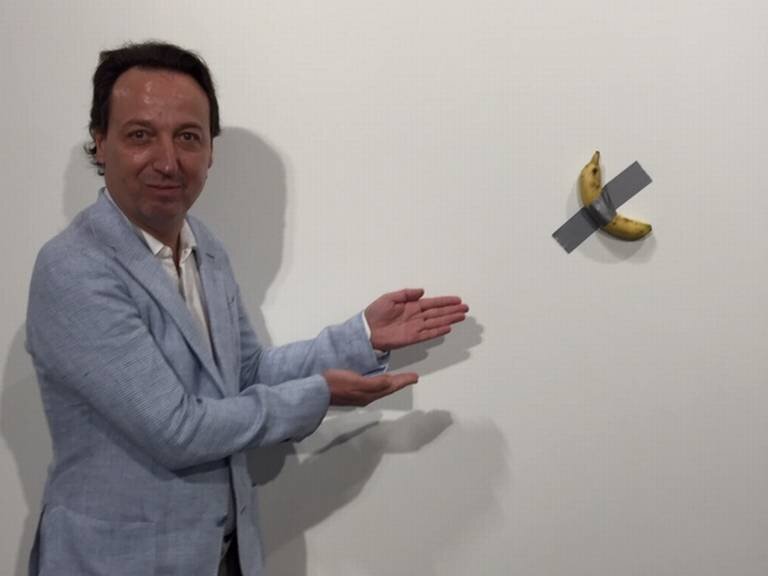
Gallerist Emmanuel Perrotin shows off ‘Comedian,’ a work by Italian bad-boy artist Maurizio Cattelan that consists of a banana taped to the wall. The piece, one of three bananas on exhibit at the Art Basel Miami Beach fair, sold for $120,000
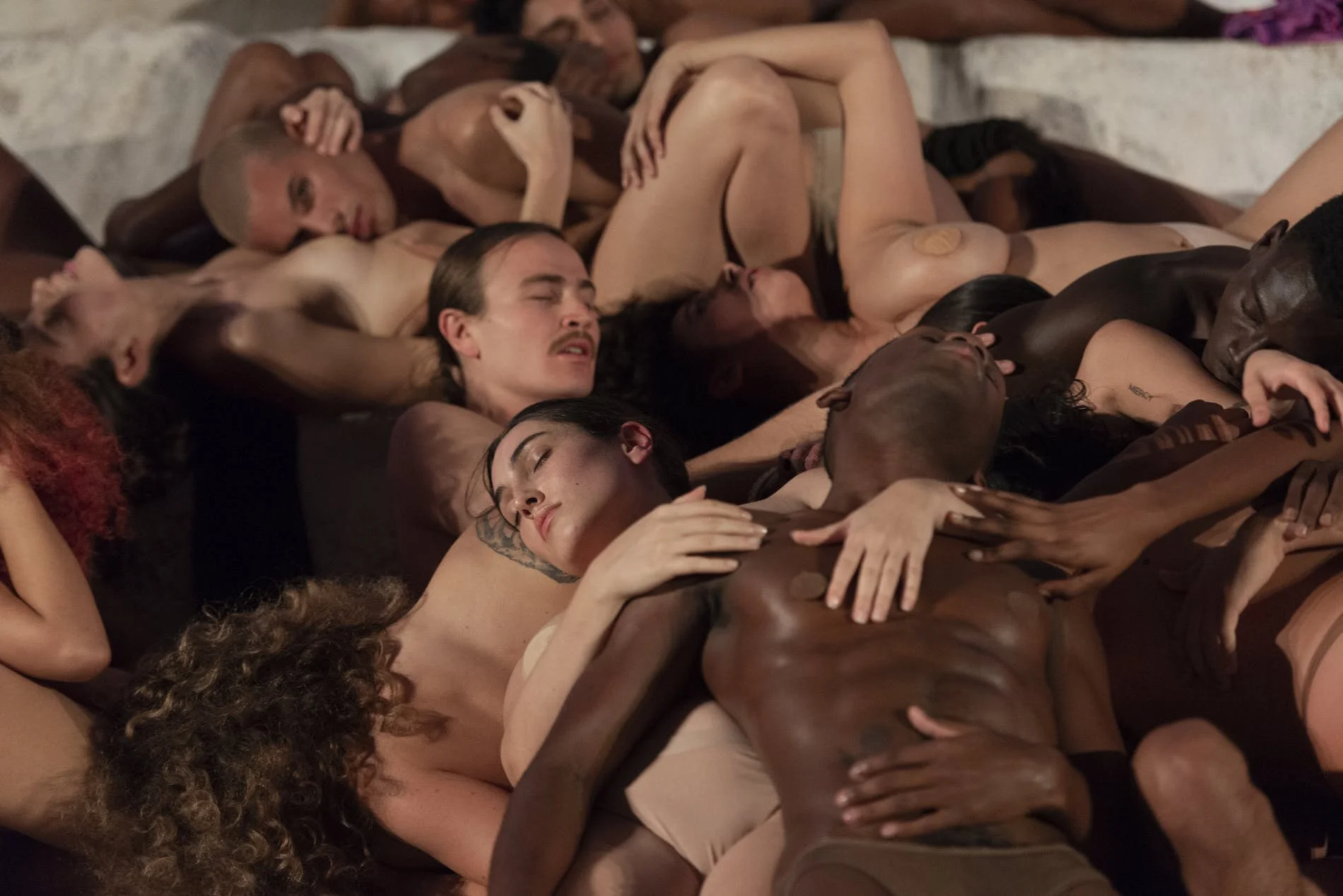
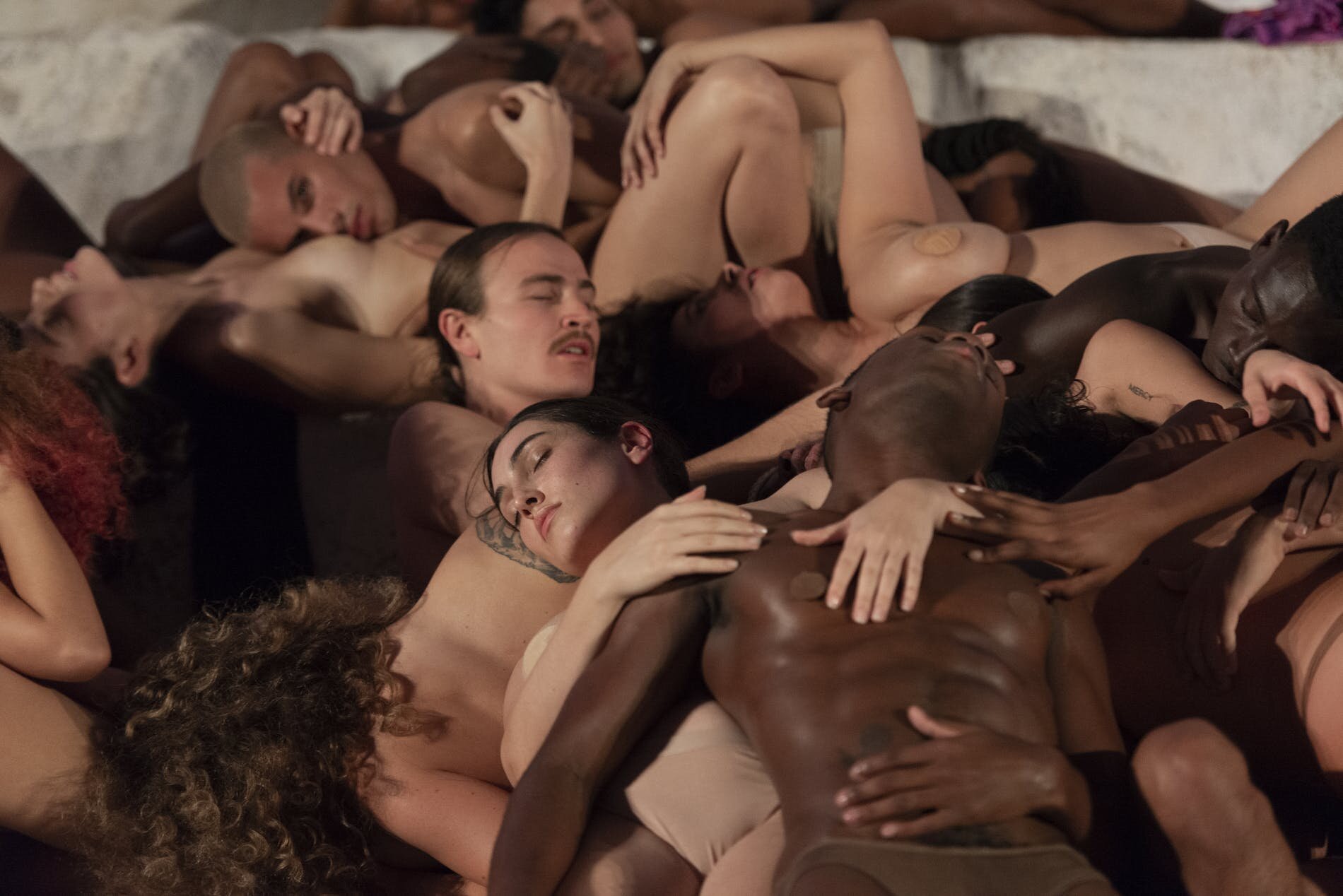
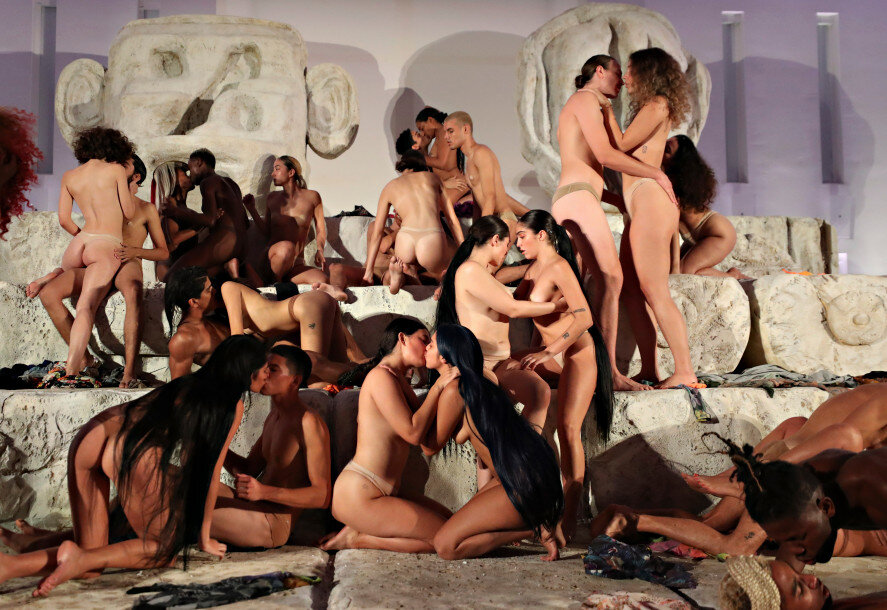
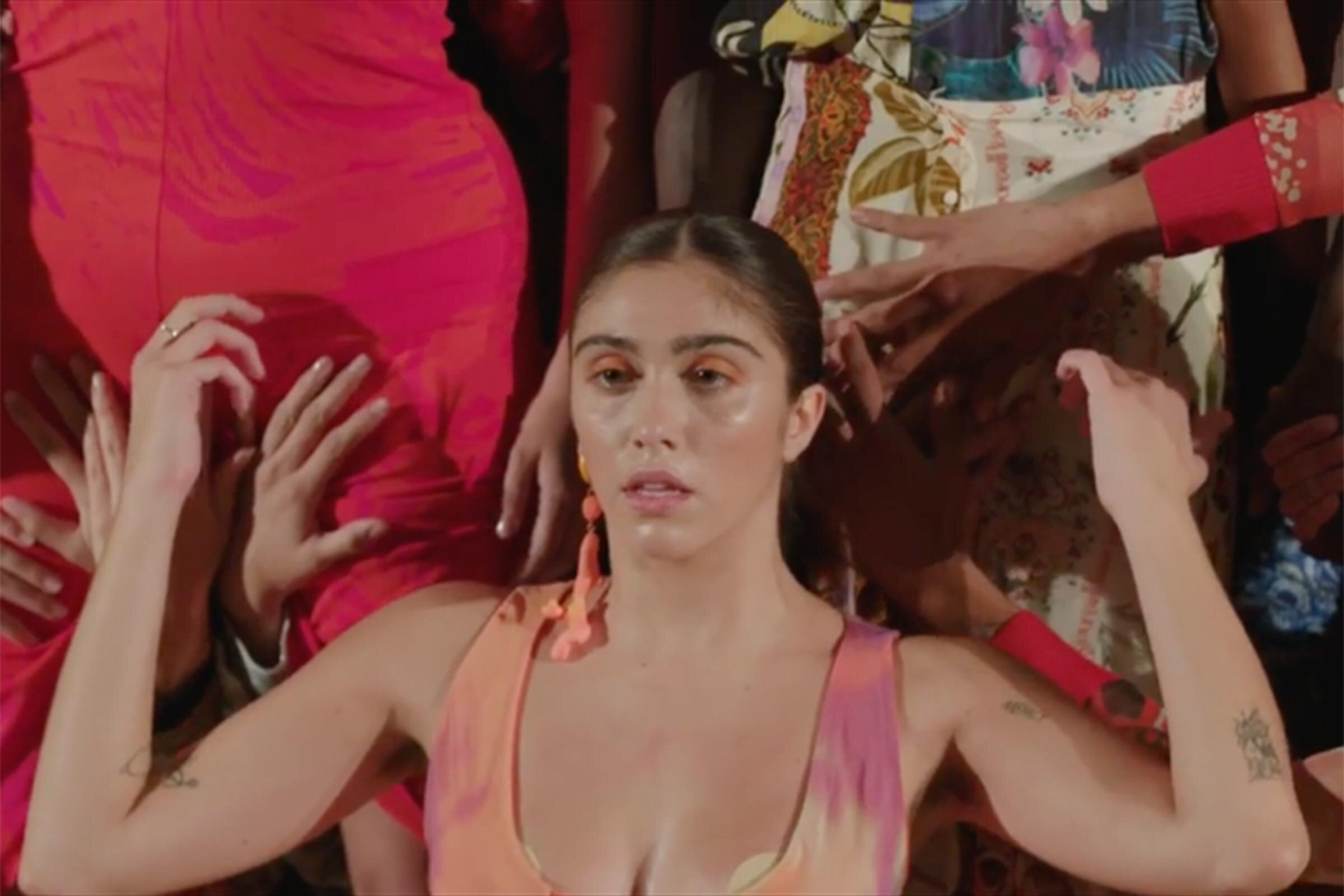
Lourdes Leon has appeared nearly nude in a simulated orgy at Art Basel in Miami - all in the name of art.
Madonna’s daughter Lourdes Leon has taken part in a simulated orgy for Desigual fashion show called “Love Different” . It’s “a representation in which the Catalan artist affects the most basic and universal act of love: the kiss”. The 23-year-old kissed and undressed another female model as the space transformed into an elaborate orgy. Models simulating sex acts on one another.
A Traffic Jam on the Oceanfront
The Argentine conceptual artist Leandro Erlich has turned one of Miami’s beaches into a traffic jam. Erlich’s work feature 66 life-size sand sculptures of vehicles, bumper-to-bumper along the beach.

Intersection of Fashion and Art
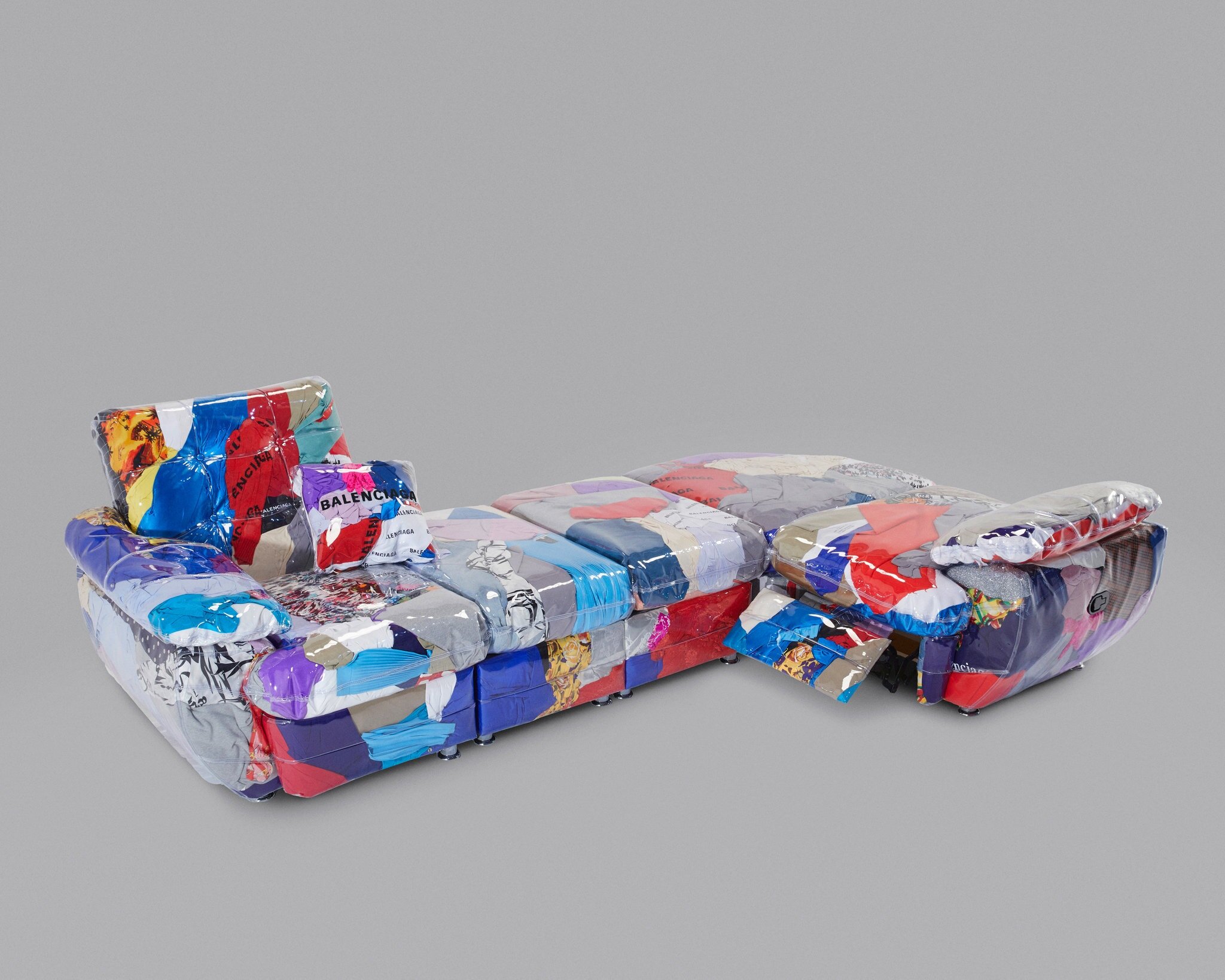
The Russian-born designer Harry Nuriev has collaborated with one of Paris’s most esteemed houses to create “Balenciaga Sofa”. The sofa which is covered in transparent vinyl and stuffed with fabric scraps is on view at Design Miami.
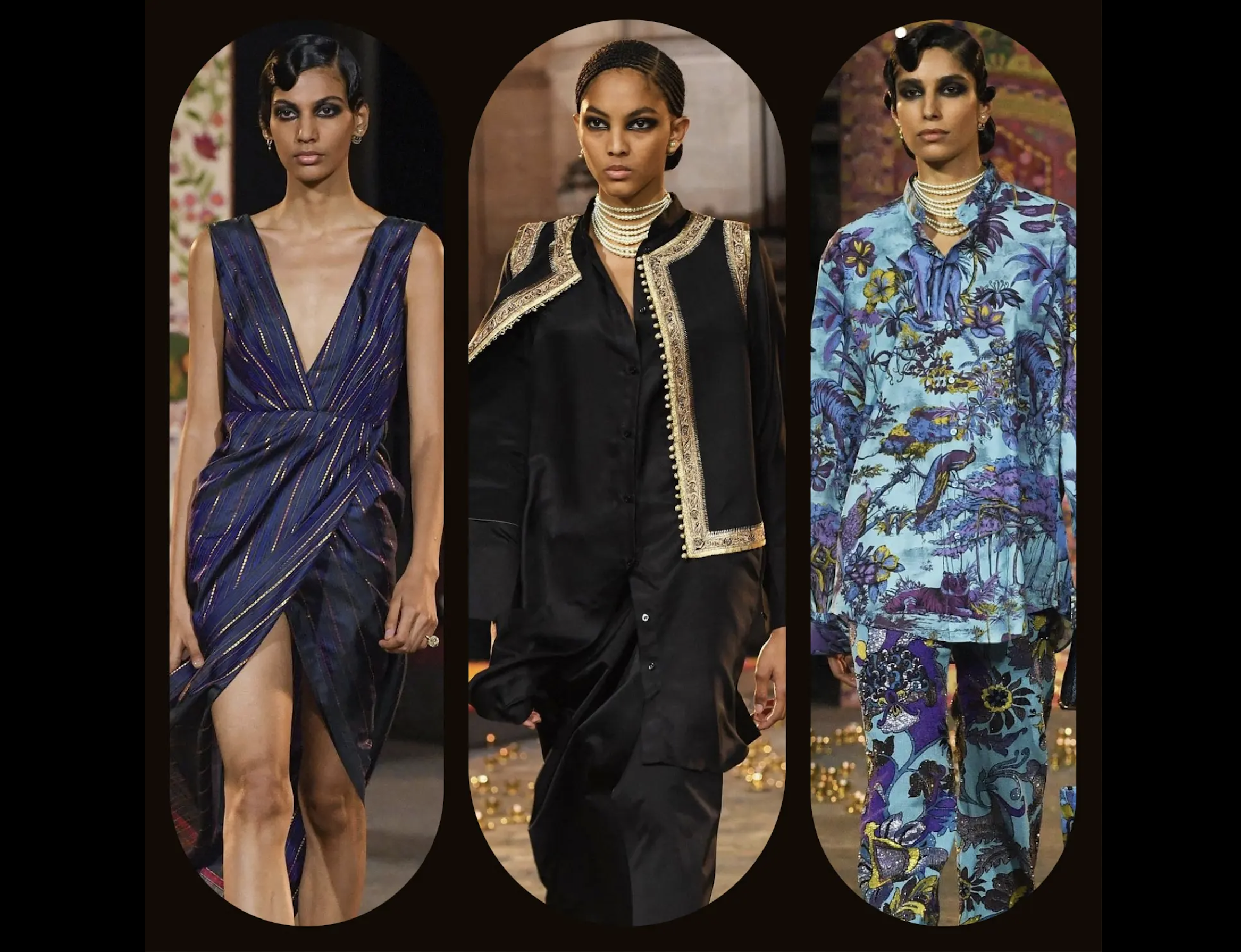
Fashion designer Thom Browne debuted his first public artwork at the Moore Building, named “Palm Tree I” (2019). The 21-foot-tall sculpture is made from pastel-hued seersucker, corduroy and gingham oxford fabrics also used in his clothes — is shaped like a palm tree.

Virgil Abloh X Baccarat
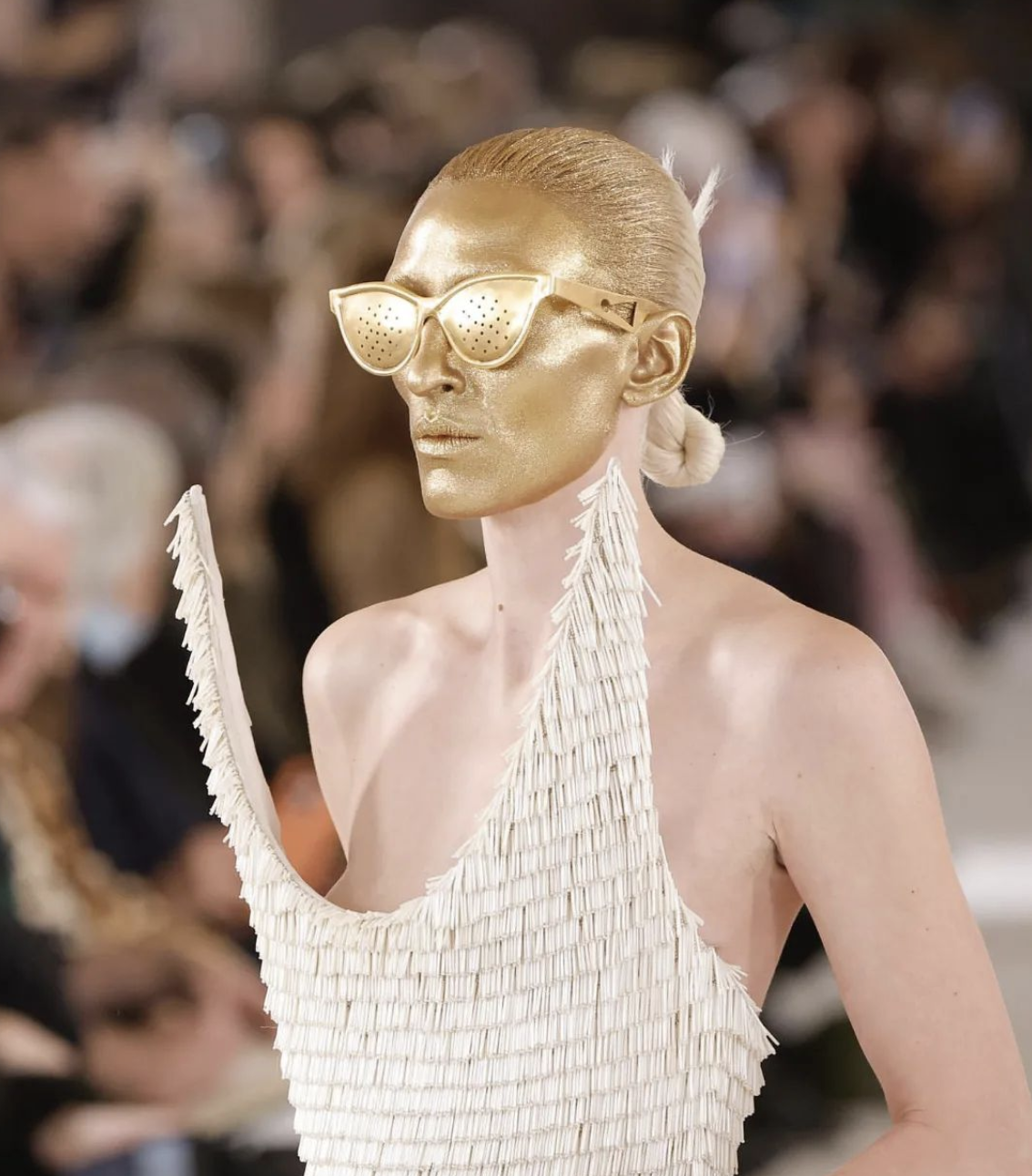
Virgil Abloh recently revealed his latest collaboration with French fine crystal purveyor Baccarat. Collection of ideas titled “Crystal Clear”. Abloh and Baccarat announced the “collection of ideas” in separate Instagram posts. It features sneak peeks of a Baccarat chain-link.



Ed Hardy: Deeper than Skin
.

(Courtesy of the Fine Arts Museums of San Francisco)
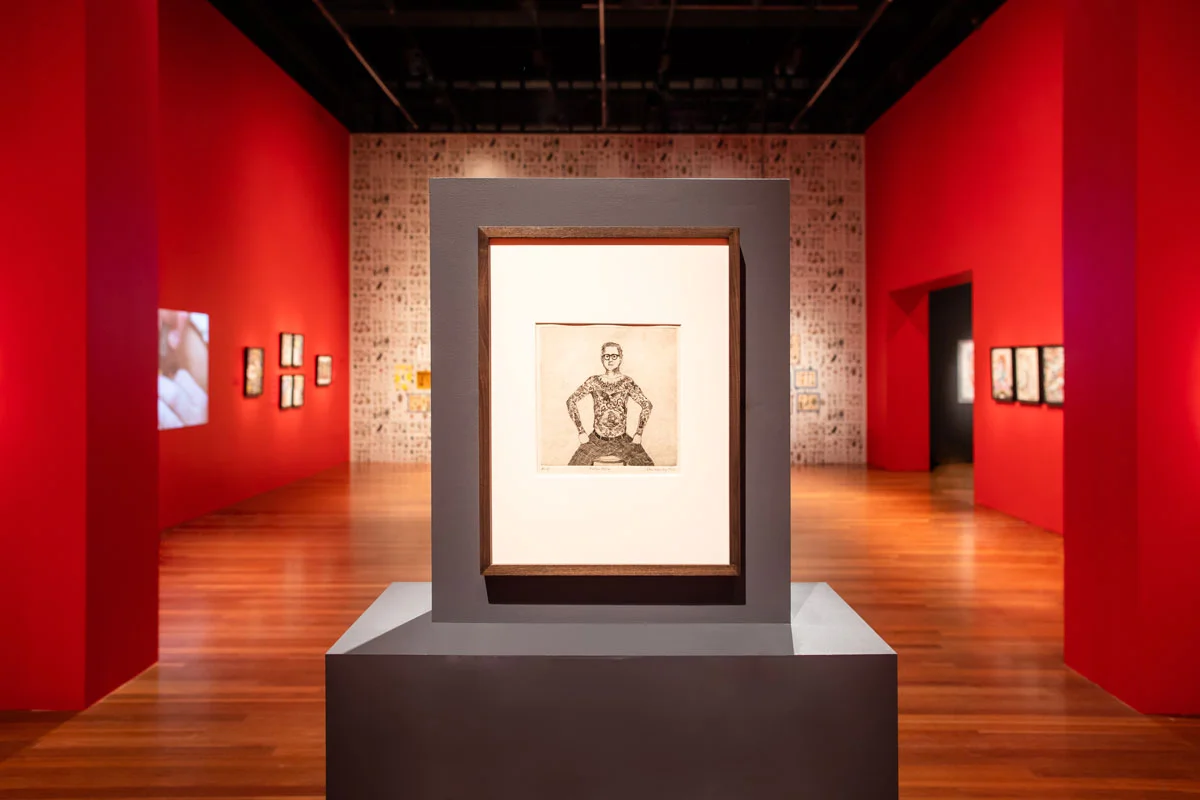
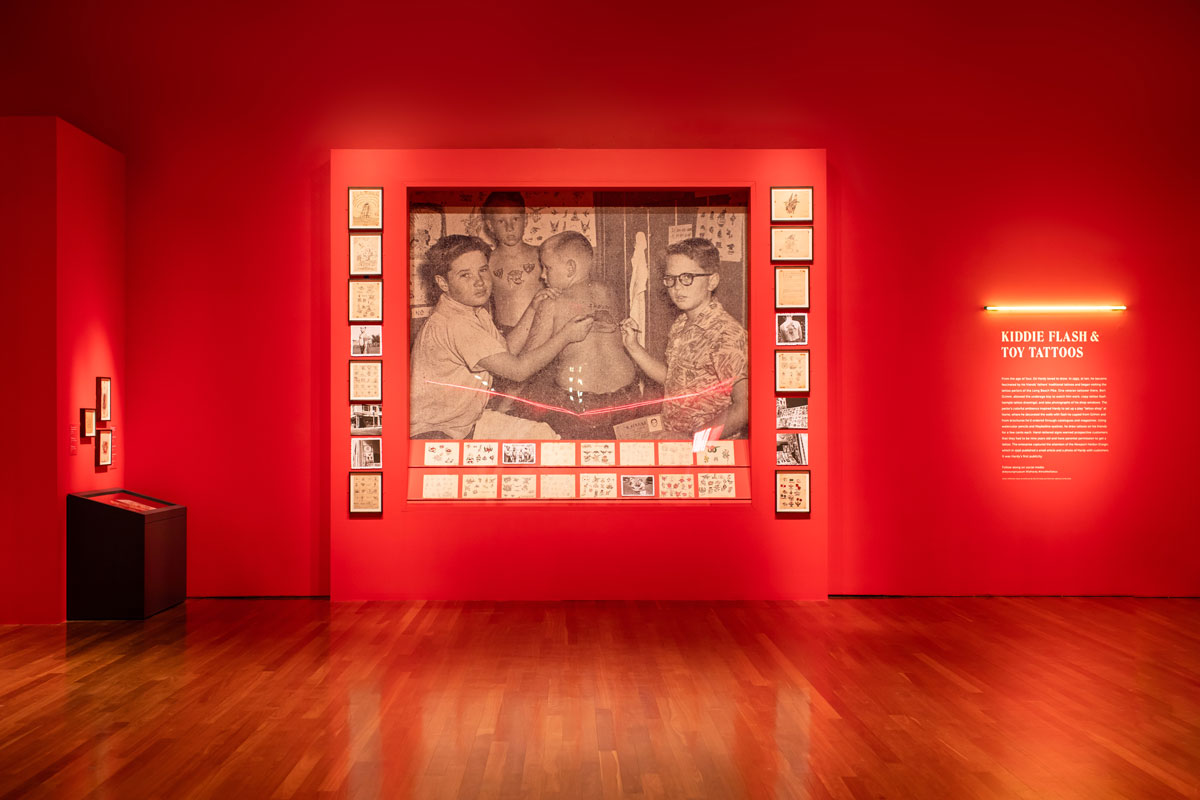
Ed Hardy: Deeper than Skin is the first museum retrospective of Ed Hardy, the renowned tattoo artist known for fueling the late 20th-century boom in the practice of tattoo. Featuring more than 300 objects ranging from paintings and sketches (including drawings Hardy created as a 10-year-old) to prints and three- dimensional works, the exhibition tracks the evolution of tattooing from its “outsider” status through Hardy’s work and influence.
Growing up in Southern California, Hardy was fascinated by the tattoos that he observed on the fathers of his neighborhood friends (mostly servicemen who had served in World War II). During this time Hardy haunted the tattoo parlors on Long Beach Pike, where he learned to draw tattoo designs for his “kiddie tattoo shop.” As a printmaking student at the San Francisco Art Institute in the mid-1960s, Hardy began to study the intricacies of prints by artists such as Dürer, Rembrandt, and Goya at the Legion of Honor’s Achenbach Foundation for the Graphic Arts, the department responsible for the Fine Arts Museums’ collection of more than 115,000 works on paper. At the Achenbach he mined for inspiration for his own work. In 1966, while getting one of his first tattoos from the legendary Phil Sparrow in Oakland, Hardy was introduced to a book on Japanese tattooing, which reignited his love for the medium and inspired his future career. Turning down a graduate fellowship in fine arts from Yale University, Hardy instead decided to begin tattooing professionally.

(Courtesy of the Fine Arts Museums of San Francisco)
“Ed Hardy reinvented the very nature of the tattoo, inspired in large part by his early exposure to the masterworks in our collection,” says Thomas P. Campbell, Director and CEO of the Fine Arts Museums of San Francisco. “His impact has transformed the tattoo industry and we are delighted to provide the opportunity for wider audiences to explore his tremendous achievement both on and off the body.”
(Courtesy of the Fine Arts Museums of San Francisco)
In 1974 Hardy opened Realistic Tattoo in San Francisco, which became the first tattoo studio in the United States to offer custom tattoos based on clients’ wishes and needs.
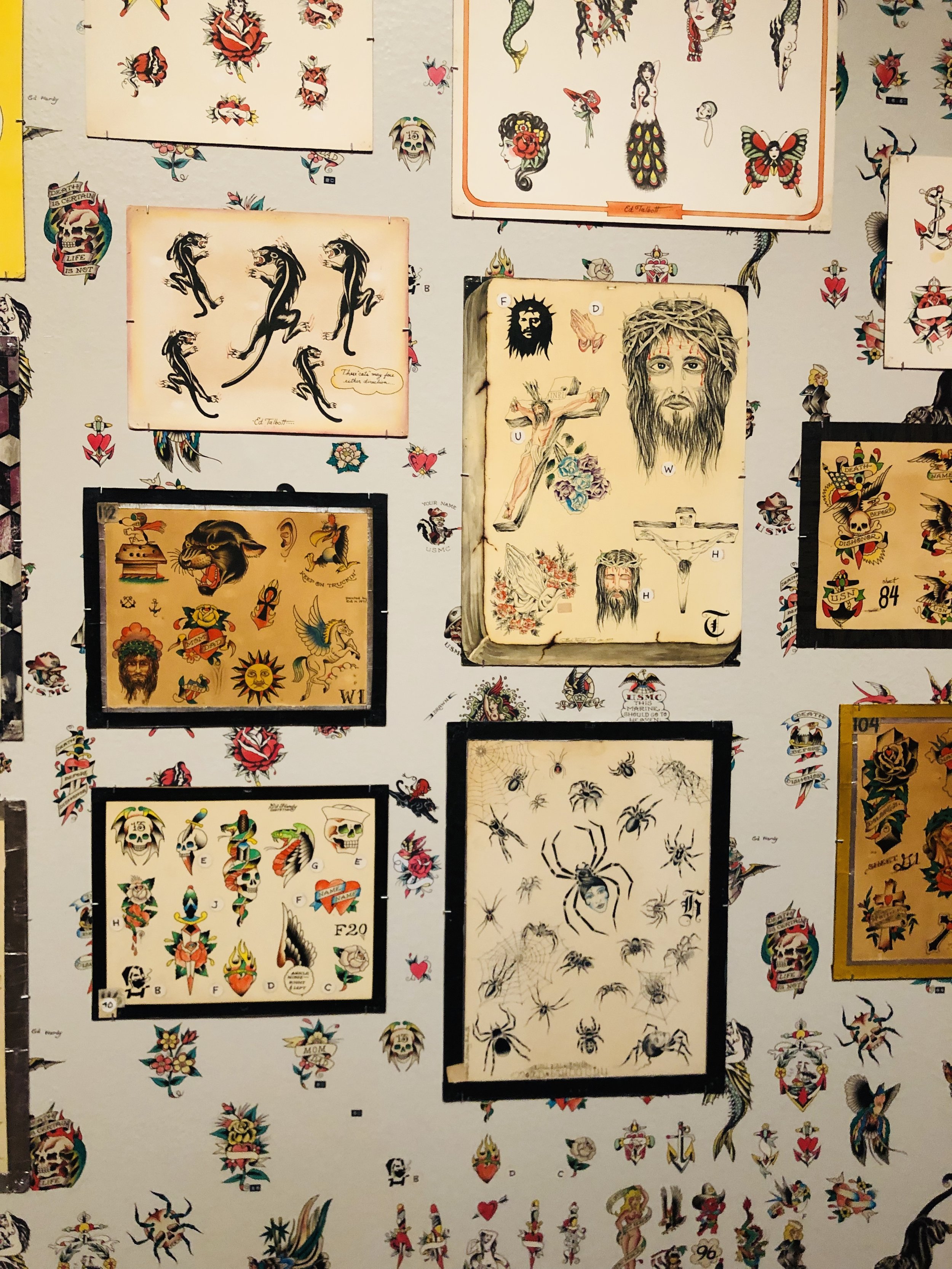
Ed Hardy On view through October 6, 2019
Visiting \ de Young
Golden Gate Park, 50 Hagiwara Tea Garden Drive, San Francisco. Open 9:30 am–5:15 pm Tuesdays–Sundays. Open select holidays; closed most Mondays.














Sed purus sem, scelerisque ac rhoncus eget, porttitor nec odio. Lorem ipsum dolor sit amet.